Gasoline Kept Domestic: Will the Export Ban Lower Prices?
06.04.2026
155
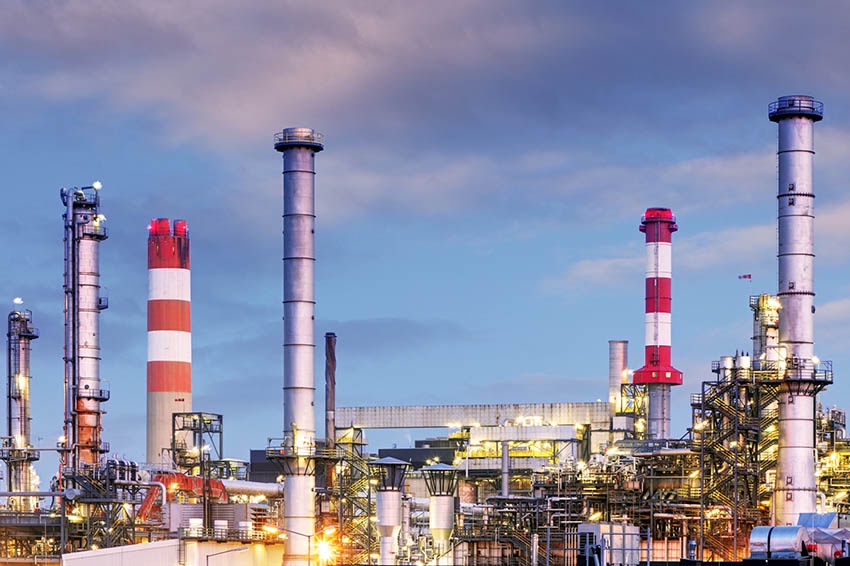
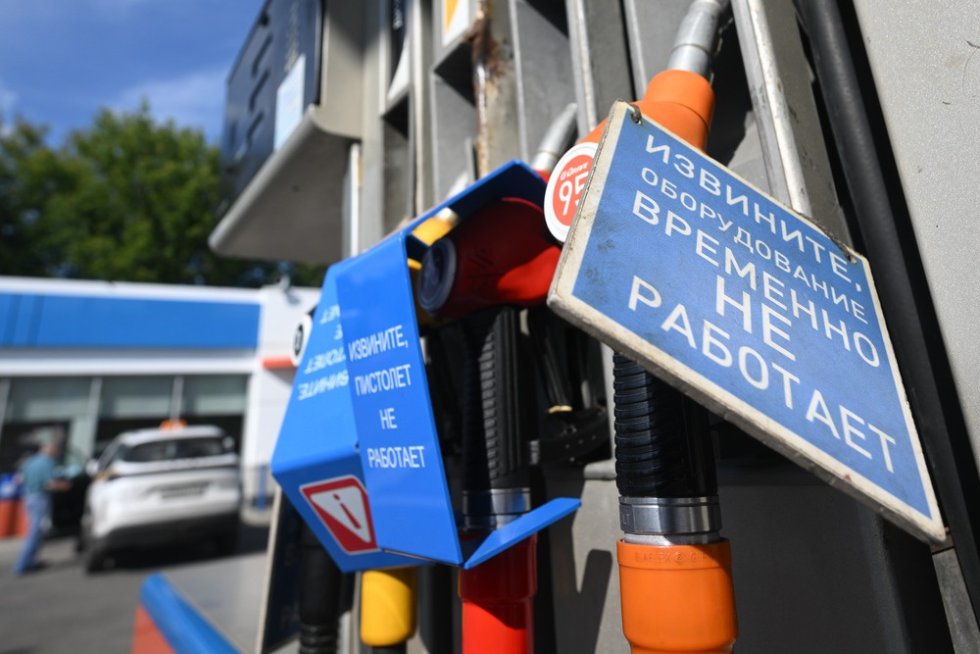
From April 2 to July 31, Russia has introduced a ban on gasoline exports for all market participants. Gasoline prices, which have been rising since the beginning of the year, immediately began to decline, even as production in the country decreases and demand grows with the onset of spring. Meanwhile, the increase in global oil and petroleum product prices, including gasoline, due to the ongoing conflict in the Middle East, has sparked a desire among producers to sell gasoline in external markets. On the other hand, these high global prices will allow oil producers to receive substantial compensation from the government. Why did gasoline prices rise, what prompted the decision to restrict exports, how long will it last, and how will it affect the business of Russian producers? This was analyzed by Forbes.
On April 2, a government decree was published introducing a complete ban on gasoline exports until July 31, 2026. "The decision was made to maintain a stable situation in the domestic fuel market during the high seasonal demand period and agricultural field work, as well as in connection with the rise in global oil prices due to the prevailing geopolitical situation in the Middle East," the government statement said. The restriction will not apply to supplies under international intergovernmental agreements, as stated in the decree.
In 2025, a complete ban on gasoline exports was imposed on August 31 due to a sharp increase in wholesale and retail prices, lasting until the end of February 2026. The ban was lifted following a drop in prices, according to Sergey Tereshkin, CEO of the Open Oil Market petroleum marketplace. Although gasoline prices have started to rise since January 12, 2026—the first trading day at the St. Petersburg exchange this year—they remain lower than in August when the ban was implemented. On February 27, prior to the lifting of the embargo, AI-92 was valued at 59,263 rubles per ton, down 13.3% from the last trading day before the export ban on August 29, when the price was 68,435 rubles per ton. AI-95 fell even more, by 20.7%, to 62,677 rubles per ton from 79,054.
Russia's customs statistics have been closed since 2022. According to the latest available data from 2021, the country exported 4.4 million tons of automotive gasoline, which is 24.5% less than in 2020. The total production volume in 2021 was 40.8 million tons. Data on gasoline production has been closed by Rosstat since 2024. Deputy Prime Minister Alexander Novak estimated 2024 production at 44.1 million tons, predicting its maintenance or slight growth in 2025.
Forbes sent inquiries to Russia's largest oil companies—Rosneft, Lukoil, Surgutneftegaz, and Gazprom Neft—regarding their cessation of gasoline exports, but did not receive a response by the time of publication.
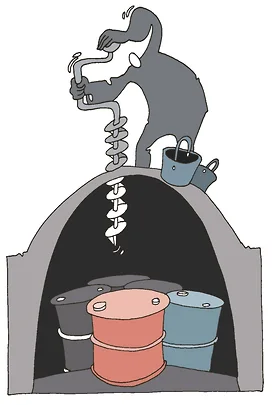
The instruction to impose a complete ban on gasoline exports was given on March 27 by Deputy Prime Minister Alexander Novak following a meeting with representatives from oil companies and relevant agencies. The day before the meeting, on March 26, Alexander Dyukov, head of Gazprom Neft, suggested introducing a full ban on gasoline exports for two to three months. He stated to reporters that he believed this measure was necessary to prevent fuel from being siphoned off to external markets, where prices are significantly higher.
### How Gasoline Prices Grew
Gasoline prices, which had been increasing since the start of the year, began to decline on March 25, likely following the first reports about authorities discussing the introduction of an embargo. On March 24, AI-92 prices peaked, rising by 25% from the beginning of the year to 68,504 rubles per ton. AI-95 gasoline saw an even greater increase of 31%, reaching 77,483 rubles per ton. By April 2, AI-92 was trading at 65,196 rubles per ton, down 4.8% from its peak, while AI-95 was priced at 70,031 rubles per ton, down 3.4%.
On March 19, a week prior to Novak's meeting with the oil industry, Anton Rubtsov, director of the oil and gas complex department at the Ministry of Energy, stated that gasoline reserves in the country amounted to 2 million tons, which is higher than a year ago. He also mentioned that the ministry anticipated an increase in oil refining volumes at refineries. However, prices continued to rise.
The increase was influenced by a hike in excise duties by 5.1% and VAT from 20% to 22% on January 1, 2026, says Maxim Shevyrenkov, head of the Commodity Markets Analysis Center at the Institute of Energy and Finance (IEF). Planned maintenance at major oil refineries, along with drone attacks, resulted in reduced processing, he notes. The conflict in the Middle East also contributed to rising global prices for oil and petroleum products.
The surge in exchange prices for gasoline was linked to attempts by oil companies to recover losses, believes Tereshkin from Open Oil Market. Payments to oil producers under the so-called damping mechanism in January 2026 amounted to 16.9 billion rubles, a 90% decrease compared to January 2025, when they reached 156.4 billion rubles. In February 2026, oil companies paid 18.8 billion rubles to the budget.
The damping mechanism compensates oil companies from the budget for fuel supplies to the domestic market at prices below export levels. If the export value of the fuel, as calculated by the Federal Antimonopoly Service (FAS), is lower than domestic prices, then the oil producers must pay the budget the difference. The formula for calculating payments under this mechanism is quite complex, Tereshkin notes, depending not only on the difference between calculated export and domestic prices but also on various special coefficients such as the price of gasoline in Rotterdam, average transportation costs at Russian ports and maritime transport, as well as the price of benchmark Brent crude oil.
According to Tereshkin, informal agreements between fuel producers and regulators may have also played a role in the rise in exchange prices, as it is presumed that oil companies were instructed to restrain fuel price increases at the end of the previous year. This is indirectly evidenced by the decrease in prices at the end of 2025. "Price restraints should have provided regulators with relatively decent inflation figures for 2025, but resulted in a spike in prices at the beginning of 2026," he says. Yearly inflation in Russia accelerated to 6% in January from 5.6% in December and remained high at 5.9% in February.
### Why the Ban is Necessary
The decision to ban gasoline exports was made considering two factors, says Sergey Suverov, an investment strategist at Arikapital. First, demand for gasoline increases with the onset of spring, as more private cars are used than in winter. At the same time, the expert notes that production is reduced due to drone strikes on refineries and energy infrastructure. By imposing restrictions, the government attempted to prevent a potential deficit in the domestic market. However, Suverov believes that prices will continue to rise due to inflation. "Saturation of the domestic market may contribute to a certain slowdown in growth," he adds.
According to Shevyrenkov at IEF, the export ban will have a minor impact on increasing physical supply in the domestic market. He states that Russia exports a relatively small volume of gasoline, with most being supplied under intergovernmental agreements, primarily with Mongolia, as well as with the countries of the Eurasian Economic Union: Armenia, Belarus, Kazakhstan, and Kyrgyzstan, which are not affected by the ban. Data on gasoline export volumes and directions are classified, Shevyrenkov reminds. However, he estimates that aside from supplies under intergovernmental agreements, Russia could export about 100,000 tons of gasoline per month while domestic consumption exceeds 3 million tons per month. At the same time, the expert believes that the ban will limit the impact of high global gasoline prices on the Russian market, as producers will lose an attractive export alternative.
Since global oil prices remained high in March due to the conflict in the Middle East, between $80 and $110 per barrel, and damping payments are calculated with a one-month lag, producers are entitled to expect significant payments in April, Tereshkin from Open Oil Market notes. He estimates that this month, oil producers could receive over 200 billion rubles from the budget. This will likely slow price growth in the exchange in April and May. However, due to the seasonal increase in demand, prices are expected to rise despite the export ban, Tereshkin does not rule out.
"Much will depend on whether regulators will revise the damping formula to guarantee high subsidies to Russian oil producers if global petroleum product prices begin to decline," Tereshkin says. In October 2025, Vladimir Putin signed a decree allowing oil producers to receive guaranteed compensations. However, this provision will expire on May 1, 2026, requiring a decision on how the damping payment scheme will operate going forward.
Despite high damping payments, producers are still tempted to sell separate batches of gasoline abroad due to high global prices, according to Shevyrenkov from IEF. Suverov from Arikapital believes that companies, even while receiving significant compensation, might continue to export gasoline to maintain their clientele overseas and achieve revenue in foreign currency, which they could use to procure equipment or spare parts.
If the situation with attacks on refineries and port infrastructure does not improve by the end of the ban's duration, the embargo will likely need to be extended, Suverov believes. Shevyrenkov from IEF also allows for the possibility of extending the embargo in case the conflict in the Middle East drags on.
Source:
Forbes