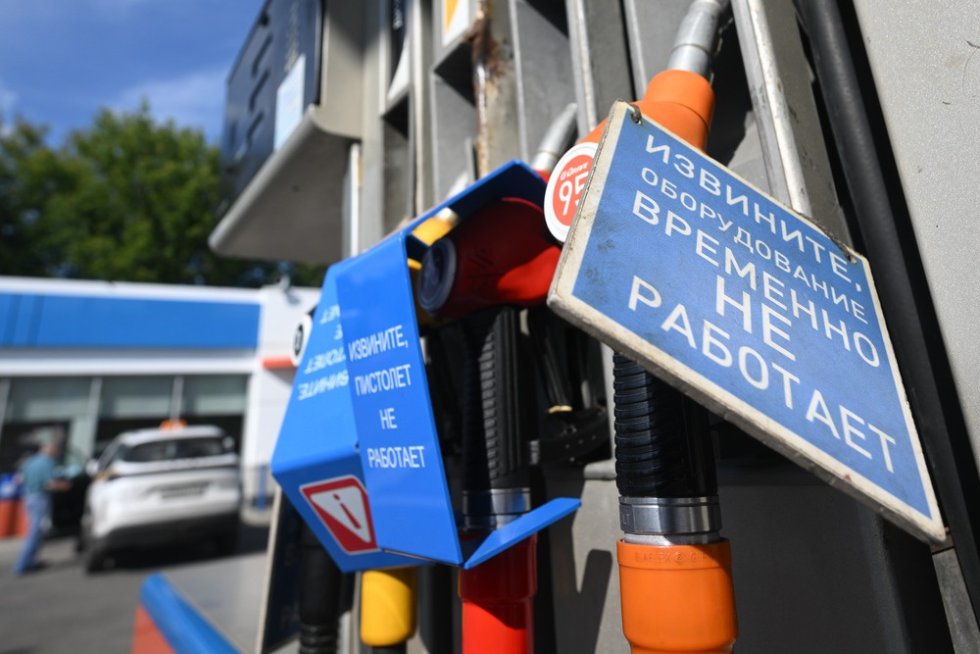
Since the end of last year, according to Rosstat, retail prices for gasoline have increased by 1.2%, while diesel fuel (DF) prices rose by 1.3%. The Moscow Fuel Association (MTA) reports that in the capital's gas stations, the price increase was even more pronounced: over the same period, fuel prices rose approximately by 1.8% for all types of fuel (more than a ruble).
The reasons for the price hike are not difficult to pinpoint; it was anticipated. From the beginning of 2026, excise duties on gasoline and diesel increased by 5.1%, making up about 20% of the price. Additionally, VAT was raised by 2%, which, as is well known, is collected in Russia with each sale of goods. Furthermore, the supply chain for fuel at gas stations rarely involves only one seller and one buyer.
Meanwhile, the wholesale segment on the exchange remains relatively calm. Quotations have dropped from their October peaks and are currently at the level seen in spring last year. Accordingly, the current interest lies in whether retail prices have fully adjusted for the rise in tax burden and what the future holds for them.
As explained by Yuri Stankevich, Deputy Chairman of the State Duma Committee on Energy, the policy to maintain retail gasoline and diesel prices within a corridor defined by inflation parameters remains unchanged. "I see no grounds for sharp price jumps at this time," he told "RG."
However, Dmitry Gusev, Deputy Chair of the Advisory Board of the "Reliable Partner" Association and a member of the Expert Council for the "Gas Stations of Russia" competition, believes that the increase in fiscal pressure has only been partially accounted for. VAT has been raised not only on fuel but also on all services, including transportation. The volumes at the new tariffs and with the new VAT are just beginning to be shipped, so there is still potential for growth. The question is what we mean by stabilization. Under current conditions, we are programmed for steadily rising gasoline and diesel prices within the inflationary framework.
According to Sergey Frolov, managing partner of NEFT Research, today, retail prices have absorbed no more than 50% of the increase in tax burden. A gradual price rise will continue until the start of the high season, after which price increases will be driven by demand, the extent of which will depend on the balance of supply and demand.
Furthermore, according to Sergey Tereshkin, General Director of Open Oil Market, the rise in gas station prices at the beginning of the year was related not only to the indexing of fuel excise taxes but also to the retail networks' efforts to recover losses incurred in late November and December 2025, when gasoline prices fell for more than a month and a half.
The fuel market has not yet fully absorbed the increase in tax burden. Tereshkin clarifies that the rise in VAT to 22% is important, but it is not a determining factor for the fuel market. Much more significant will be the payments under the damping mechanism (compensation to oil producers from the budget for supplying fuel to the domestic market at prices lower than export prices). There are no grounds for increasing these payments, as subsidies are tied to external (export) prices for petroleum products, which decline following falling oil prices. For instance, the price of the export alternative AI-92 dropped from 69,166 rubles per ton in November 2025 to 57,471 rubles per ton in December 2025 (this figure is calculated by regulators when assessing payments under the damping mechanism). Hence, subsidies for fuel producers could reach a multiyear low at the beginning of 2026.
The importance of damping payments for companies can be judged by the events of the fuel crisis in 2023. At that time, an attempt to cut them in half led to uncontrolled price increases at gas stations. Data from 2024 indicates that the share of damping payments in "Gazprom Neft's" revenue was 44%. In 2024, the companies received 1.8 trillion rubles from the budget under the damping scheme. In 2025, payments decreased and are unlikely to exceed 1 trillion rubles (December statistics are not yet available).
According to media reports, there is currently an initiative to allow direct sales of fuel to small wholesale buyers (gas stations, agricultural producers, and industrial consumers) to reduce the number of fuel resales and speed up logistics.
Stankevich notes that the FAS and the St. Petersburg Stock Exchange are striving to enhance the rules for public trading in fuel, reducing the number of intermediaries in transactions and introducing sales standards in the small wholesale segment. "Current exchange mechanisms are certainly not ideal, especially considering that the price indicators for crude oil we operate with are set on foreign platforms. However, abandoning exchange trading would be a significant step back, without having any alternatives. There is simply no other mediator capable of presenting an objective picture regarding pricing based on supply and demand."
From Frolov's perspective, this will undoubtedly be a plus for independent gas stations (which represent more than half of the gas stations in Russia), as it will create an additional procurement channel. However, he believes this will not particularly affect retail prices, nor the wholesale exchange segment.
Gusev believes that until it is possible to reduce the cost of access to services for end fuel consumers on the exchange, a refusal to use traders (middlemen) is unrealistic.
A similar opinion was expressed by Tereshkin. The idea of direct sales to wholesale is unlikely to have much impact; a more effective solution would be to raise the regulatory standards for exchange sales of gasoline and diesel, he notes. However, the very fact that new ideas are being sought in conditions where regulation of the industry revolves year after year around damping payments and export bans is significant. Regulators are searching for a way to reduce prices "off the exchange," so we will likely see more initiatives in the coming months, the expert is confident.
Source: RG.RU