The appeal of Russian diesel fuel in the global market is increasing amid the Hormuz crisis. According to data from the Price Index Center (PIC), which RBC reviewed, exports from the Baltic port of Primorsk totaled 1.4 million tons with 29 vessel calls from March 1 to March 15, almost matching the total shipments from the same port for the entire month of February.
On March 23, Alexander Drozdienko, the governor of the Leningrad region, reported that fuel tanks at Primorsk port were damaged and caught fire due to an attack by Ukrainian drones. According to Reuters, the port has suspended the loading of oil and petroleum products.
At the same time, total diesel exports from Russian ports showed a decline in February, amounting to 2.3 million tons, which is approximately 30% lower than in January. Brazil was the primary destination for these shipments, with Russia sending 680,000 tons of diesel, a 4% decrease month-on-month. Exports to Turkey decreased by 28% to 400,000 tons, while shipments to African countries fell by 46% to 531,000 tons. Exports to other destinations dropped by 19%, reaching 453,000 tons.
Gasoline is still being exported from Russia to distant foreign markets, but the volumes are insignificant, RBC was informed by two industry sources. Meanwhile, gasoline sales through the Saint Petersburg Exchange fell sharply in March: at the beginning of the month, total daily sales exceeded 50,000 tons, but by March 20, this figure had dropped to 34,000 tons.
Russia continues to supply petroleum products under intergovernmental agreements (primarily to EAEU countries and Mongolia), even during the periods of export bans on gasoline and diesel.
In March, the Deputy Minister of Industry and Mineral Resources of Mongolia, Begzsurengiin Enkh tuvsin, stated that the country will fully meet its fuel needs through imports from Russia, as China has banned the export of petroleum products due to the situation in the Hormuz Strait.
The Russian-Mongolian agreement, signed in 2024, anticipates the supply of 1.8–1.9 million tons of petroleum products and 60,000 tons of aviation kerosene per year on mutually beneficial terms.
Will Export Growth Hit the Domestic Market?
Experts polled believe that the growth in export revenues for Russian oil companies will lead to increased margins in oil refining and reduce price pressure in the domestic market.
Due to several factors, oil producers were deprived of high export revenues in 2025, which forced them to "make up for" losses by increasing prices in the domestic market, notes independent energy expert Kirill Rodionov. The net profit of Russian oil product manufacturers fell by 16% last year to 2.26 trillion rubles. Additionally, oil producers received fewer budget payments through the fuel damping mechanism—882 billion rubles compared to 1.8 trillion rubles in 2024. All of this resulted in a decrease in refining margins.
The 2025 Crisis
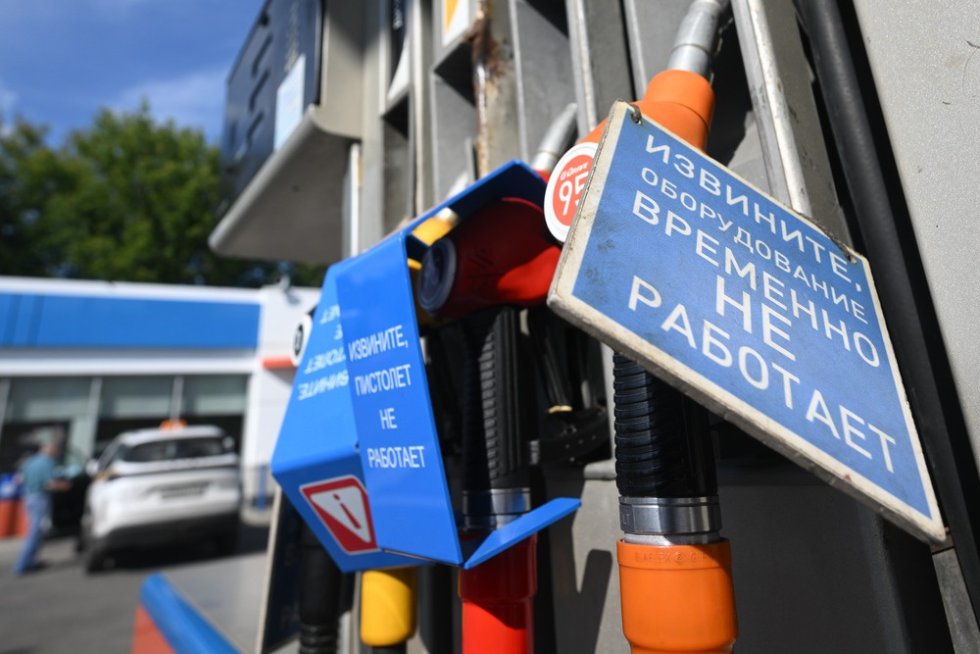
Exchange prices for gasoline in Russia hit historical highs in the summer and autumn of 2025. Meanwhile, retail prices saw noticeable growth. Heads of some regions complained about fuel shortages at local gas stations.
However, by mid-October, exchange quotes began to retreat from record levels. As Russian Deputy Prime Minister Alexander Novak explained to journalists, this occurred under conditions of export restrictions and increased production following the resumption of refinery operations.
By the end of the year, the government allowed companies with production capacities of more than 1 million tons of petroleum products per year to export diesel abroad. In late January 2026, the export ban on gasoline was also lifted for oil companies. This permission will be in effect until July 31.
"Now Russian oil companies have received a boon in the form of rising global petroleum product prices, which will lead to increased refining margins," Rodionov believes. Therefore, the expert does not see a threat to the domestic market. Accordingly, the government is unlikely to need to resort to an export ban in the coming months, despite the seasonal increase in demand from agricultural producers.
According to the National Price Exchange Agency, ahead of the high consumption season, buyers showed heightened interest in summer-grade diesel fuel, and the supply of this fuel continues to grow since the end of February. This situation is typical each year: in 2025, the demand for summer diesel fuel reached 53.3% of total sales by mid-March.
The Russian fuel market is traditionally in surplus, believes Sergey Tereshkin, the general director of the petroleum marketplace Open Oil Market. Until 2022, the export-to-domestic market ratio was 50/50, and after that, it shifted to 40/60 in favor of the domestic market, partly due to increased demand for heavy machinery. However, the surplus remains, and it logically makes sense to direct it towards external markets, especially now that the reduction in raw material transit through the Hormuz Strait has led to rising global prices, he adds.
At the same time, the price of diesel fuel on the Saint Petersburg Exchange soared by 20% since the beginning of the month, reaching 67,774 rubles per ton by the close of trading on Monday, which corresponds to mid-September 2025 levels. The prices for gasoline AI-92 and AI-95 rose by more than 12% during this period, reaching 67,603 rubles and 71,398 rubles per ton, respectively.
Sergey Frolov, managing partner at NEFT Research, believes this increase will be mitigated by damping payments. If this does not help contain prices, the government will quickly reinstate the export ban. The analyst suggests that this situation could arise as early as April.
The essence of the fuel damping mechanism is that the government, by paying a subsidy to refiners, motivates oil companies to supply more gasoline and diesel to the domestic market rather than for export. If selling fuel abroad is more profitable than selling domestically, the authorities offset with damping payments, thereby stabilizing price dynamics. However, if domestic fuel prices exceed certain thresholds, damping payments are nullified.
Tereshkin believes there is no need to impose export restrictions on diesel fuel. Thanks to the surplus, the price increase for diesel is more moderate than for gasoline. According to Rosstat, by March 16, the cumulative increase in retail diesel prices since the end of last year amounted to 1.6%, while for gasoline, it stood at 2.4%, against an inflation rate of 2.6%.
From March 1 to March 23, 2026, gasoline sales on the Saint Petersburg Exchange reached 691.21 thousand tons, 5.7% higher than in March 2025 and 16.8% more than in February this year, the National Exchange Price Agency reported to RBC. The total volume of diesel sales in March amounted to 1.2 million tons, exceeding last year's figures for the same period by 11% and 5.1% more than in February 2026. In the second half of March, market participants indeed noted heightened buyer interest in petroleum products. However, the key factor here is seasonality: the onset of spring fieldwork, increased automobile transport activity, as well as scheduled refinery repairs, the agency added.
RBC reached out to the press service of the Ministry of Energy for comments.
Source: RBC