Startup and Venture Capital News — Wednesday, February 11, 2026: The Return of Mega-Funds, Record AI Deals, IPO Revival, Major M&A Transactions, and Market Trends
The venture capital market enters 2026 showing signs of revival and new records. By mid-February, several landmark events are unfolding: the largest investment funds are attracting massive amounts of capital once again, AI startups are setting funding round records, the window for initial public offerings (IPOs) is beginning to open, and mergers and acquisitions are gaining momentum. Simultaneously, investors are focusing on promising areas — from AI technologies and defense to sustainable “green” projects. Let us take a closer look at key trends and startup venture capital news up to this date.
The Return of Mega-Funds to the Venture Market
After a period of relative calm in 2025, venture mega-funds are making a comeback in the market. Major investors are demonstrating their capacity to raise record amounts of capital. A significant event was the announcement of a new fund round from Andreessen Horowitz (a16z) — the firm has closed funds totaling over $15 billion, aimed at scaling startups, artificial intelligence, and strategic sectors. This fundraising, less than two years after the previous one, indicates that limited partners (LPs) are still willing to invest in top-tier venture teams. Despite the challenges of recent years and a decrease in new funds established in 2025, major players such as a16z, Sequoia, and others continue to attract mega-sized capital. The return of mega-funds signals a restoration of confidence in the venture market and a readiness to finance groundbreaking new projects.
Record Venture Rounds in AI
The artificial intelligence (AI) sector continues to draw the lion's share of investments, breaking new funding records for startups. The largest deals at the start of 2026 are attributed to AI companies, demonstrating that investors are willing to invest substantial sums in industry leaders. Among the most notable rounds:
- Waymo (autonomous vehicles, USA) — raised approximately $16 billion in new funding at a valuation of around $126 billion. The round was led by Dragoneer, DST Global, and Sequoia Capital; the startup plans expansion into new markets (with a goal to enter 20 cities globally, including Tokyo and London).
- Cerebras Systems (AI processors, USA) — secured $1 billion in a Series H round, with the company's valuation reaching around $23 billion. Tiger Global led the funding.
- ElevenLabs (generative audio AI, USA) — attracted $500 million in a Series D round at a valuation of around $11 billion. Sequoia Capital led the round; the company reports rapid revenue growth driven by demand for AI-generated audio.
These record investments underscore investors’ appetite for companies leading the AI technology race. Not only American startups are receiving support — similar trends are observed globally. For instance, the Japanese conglomerate SoftBank has placed its bet on AI model developer OpenAI: in December, SoftBank invested over $40 billion to acquire about 11% of the company, and it was announced at the beginning of 2026 that there are plans to invest an additional up to $30 billion in a potential mega-round that could value OpenAI at over $800 billion. Thus, major investors are essentially going all-in on AI. Corporations are also active: compared to last year, the volume of corporate investments in AI startups has nearly doubled. Clearly, artificial intelligence remains the primary attraction for venture capital, with selected companies in this sector able to attract unprecedented sums.
Revival of the IPO Market
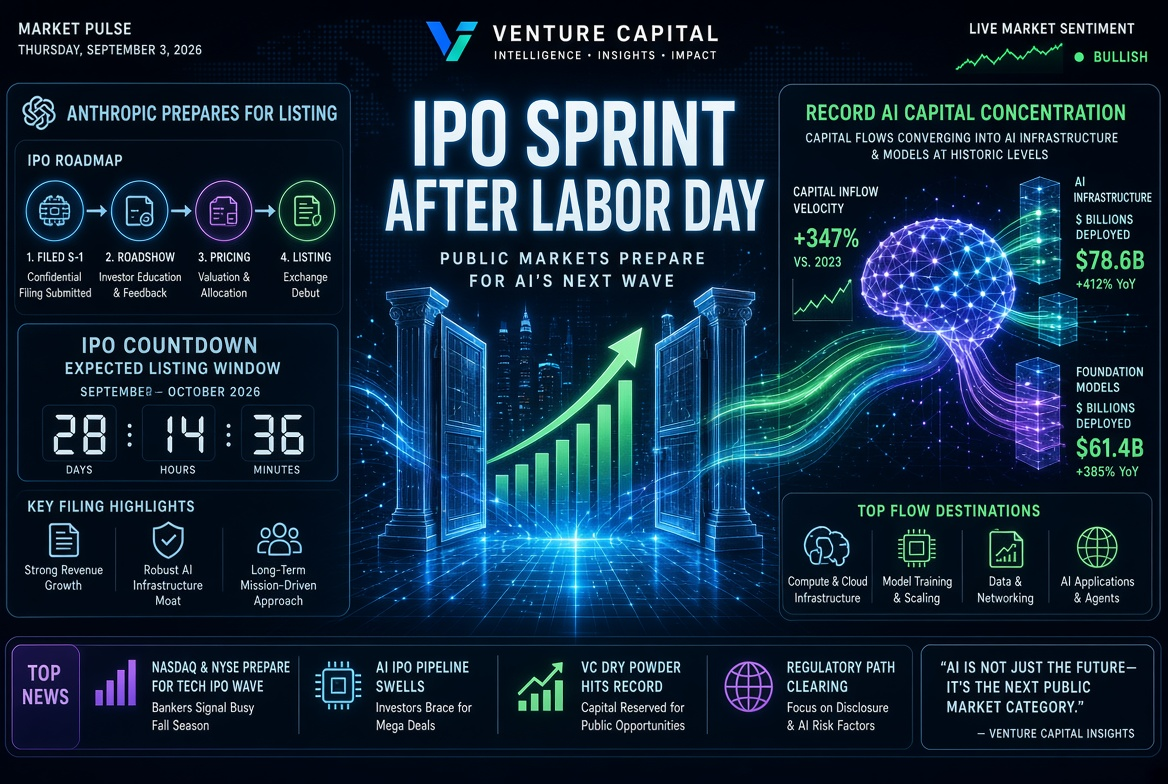
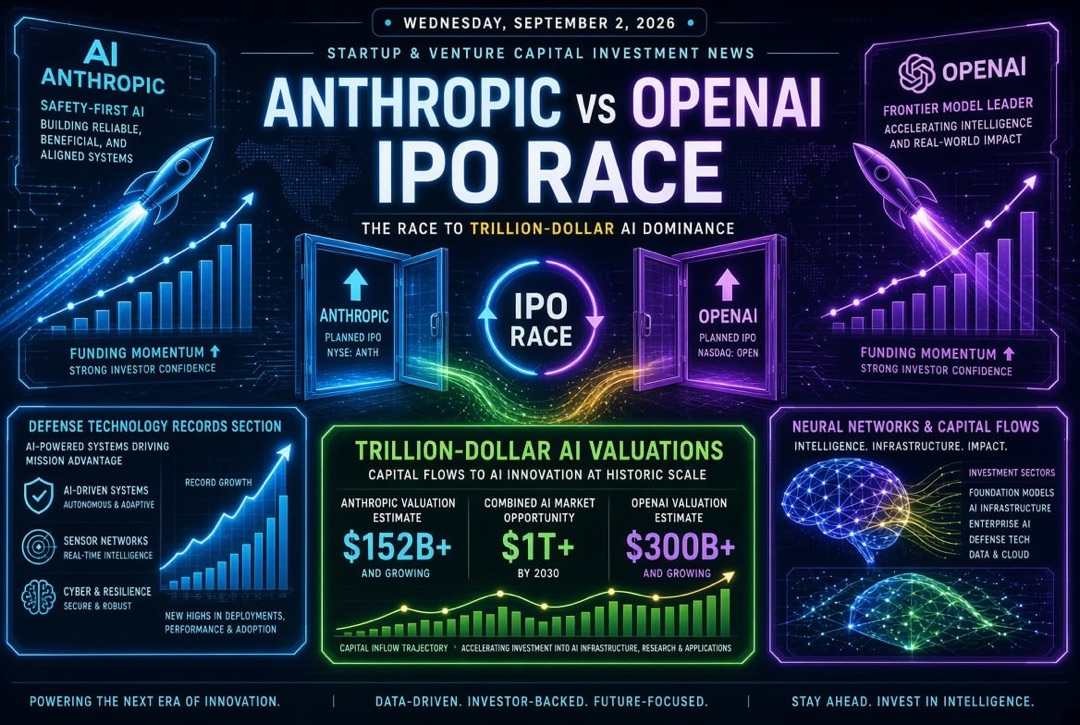
After a prolonged downturn in the public offering market, technology companies are once again preparing to go public. Experts have begun to speak of an IPO revival: investment banks and analysts are forecasting a surge in large listings in 2026. For example, Goldman Sachs estimates that the total amount raised in IPOs in the US market could reach a record $150–160 billion if the most anticipated “unicorns” go public this year. The list of potential debutants is impressive. Primarily, attention is focused on SpaceX by Elon Musk: the space company, which recently merged with his AI startup xAI, is preparing for an IPO expected by mid-2026, which could value the combined business at over $1.5 trillion. If SpaceX raises over $25 billion at the IPO, it would become the largest IPO in history, surpassing the record set by the oil company Saudi Aramco. Also looming are giants in the AI sector. According to insiders, OpenAI is exploring the possibility of an IPO by the end of 2026 with a target valuation of around $1 trillion, although the company's management is not rushing to the public market just yet. Another AI developer, Anthropic, has reportedly hired consultants to prepare for a potential listing. In addition, IPOs for several well-known fintech and software unicorns, such as Stripe and Databricks, are anticipated if market conditions remain favorable. There are already early signs: in early February, two biotechnology companies successfully went public (raising a total of approximately $350 million), indicating a recovery in investor appetite for new listings. Naturally, risks remain — market volatility or a correction in the tech sector could adjust plans. However, overall sentiment is positive: 2026 may prove to be a turning point for the IPO market after several “cold” years.
Increased M&A Activity
Major mergers and acquisitions (M&A) are once again in the spotlight as corporations strive to strengthen their positions through the acquisition of promising startups. One of the most significant events was Google’s acquisition of the Wiz startup, which specializes in cloud cybersecurity. The deal, valued at approximately $32 billion, marked Google’s largest acquisition ever and received approval from the EU antitrust authorities in February, confirming no substantial competitive threats. For Google, this step enhances its cloud business and enters the elite ranks of cybersecurity. Another unprecedented case is the announced merger of SpaceX and xAI by Elon Musk. Formally, this is the acquisition of a junior AI startup by the flagship company SpaceX, resulting in a colossal technological tandem with a valuation of about $1.25 trillion on the eve of its IPO. This move not only addresses xAI's financial challenges but also lays the groundwork for synergy between space and AI technologies, preparing the ground for future public placement. Overall, the trend is evident: tech giants actively acquire innovative companies, strengthening their ecosystems. In addition to mega-deals, targeted acquisitions continue in the fintech and SaaS sectors, as well as the purchase of startups by large industrial players looking for new technologies. The increase in the number and scale of M&A transactions indicates a phase of market consolidation, where major companies utilize accumulated capital for strategic purchases.
Fintech Emerging from Decline
The fintech sector, which experienced a decline in activity last year, is showing signs of recovery. In the first weeks of February 2026, fintech startups worldwide raised over $1 billion.
Geography of Venture Investments: A Global Perspective
The venture boom at the beginning of 2026 is global in nature. While the largest deals are traditionally concentrated in the US (Silicon Valley continues to generate the most valuable unicorns and mega-rounds, as evidenced by examples like Waymo and others), other regions are not lagging behind. Europe is demonstrating success of its own: in January alone, at least five new “unicorns” – startups valued over $1 billion – emerged. Notably, the geography of these companies is diverse, from Belgium and France to Lithuania and Ukraine. The sectors of the new European unicorns include cybersecurity, cloud services, military technology, ESG platforms, and educational apps. The participation of investors such as BlackRock, Temasek, and DST Global in European rounds confirms that international capital is actively entering European projects. Asia is also contributing: in Japan and China, large conglomerates and funds are investing in AI technologies and electronics (a striking example is SoftBank's aggressive investments in OpenAI). The Middle East is increasing its presence through sovereign funds — for example, from Qatar and the UAE — investing hundreds of millions of dollars in Western and Asian startups. India and Southeast Asia continue to grow their own startup ecosystems, with weekly news about new funding rounds for Indian tech companies, albeit at a more modest scale, indicating widespread engagement from developing markets. Overall, venture investments are spreading everywhere, and competition for the best deals is on an international scale — capital flows where promising teams and technologies are found, whether in Silicon Valley, London, Tel Aviv, or Bangalore.
Focus on AI and Defense Technologies
Analyzing overall trends, a clear focus on artificial intelligence and defense technologies can be observed among investors. The rapid integration of AI across all industries has led to almost every major fund adopting a strategy of increasing investments in AI startups. Concurrently, the heightened geopolitical climate and technological rivalry between countries (especially the US and China) have brought defense and dual-use technologies to the forefront. In the US, the launch of dedicated venture funds focused on national security and critical technologies (for example, a16z has allocated over $1 billion to the American Dynamism fund investing in defense, equipment, infrastructure, etc.) reflects a governmental priority to maintain technological leadership. Similarly, in Europe: the French startup Harmattan AI, which develops autonomous drones, secured $200 million backed by aerospace giant Dassault Aviation and contracts with the Defense Ministry — a striking example of the synergy between the defense sector and venture capital. Overall, defense startups, cybersecurity, and intelligence technologies are now being actively funded not only by the government but also by private investors who recognize the growing demand for these solutions. The AI and defense sectors are increasingly intersecting — from AI-based spacecraft to analytical systems for military purposes — creating a new niche for venture growth. It can be expected that in 2026, the share of deals in these sectors will continue to rise, supported by both private and public capital.
Sustainable Development and Green Investments
Despite the excitement surrounding high technologies, the agenda of sustainable development (ESG) remains a focal point. Climate and environmental startups continue to attract funding, albeit less conspicuously against the backdrop of AI deals. At the end of 2025, the total global investment in climate technology even increased by several percent (to ~$40 billion), despite a general decline in the number of deals — a sign that investors are looking at the long-term perspective and continue to support "green" innovations. In Europe, tightening regulations regarding sustainability are stimulating demand for corresponding solutions: a notable case is the transformation of the German ESG platform Osapiens into a “unicorn” after raising $100 million at a valuation of $1.1 billion — supported by funds created by giants like BlackRock and Temasek, focused on decarbonization. New technologies in clean energy, emissions management, electric mobility, and waste recycling are being developed worldwide, and venture capital is actively financing these areas. Large manufacturing and energy corporations are also investing in "green" startups or launching corporate venture units to seek sustainable solutions. Thus, the issues of environmentalism, social responsibility, and corporate governance continue to influence investment decisions. In 2026, sustainability expectations will become an integral part of the strategy for many funds, and startups offering climate innovations can expect stable interest from both specialized impact funds and multi-sector investors.
The Role of Corporate Investors
A notable trend in the current period is the heightened role of corporate venture in the startup scene. Corporations and industry giants are increasingly acting as investors or acquirers of technology companies. January 2026 saw a record month for corporate investments: analysts estimate that corporate venture arms of global firms participated in deals totaling over $37 billion in just one month, a maximum for the past two years. There has been a spike specifically in large rounds: a record number of rounds over $100 million involving corporations were closed in January. Corporations are particularly interested in AI startups (the number of corporate-backed deals in AI has increased by nearly 2–3 times compared to last year) and in robotics/drones. Traditional companies view startups not just for financial returns but for strategic opportunities — from integrating innovations into their own businesses to outpacing competitors. We see examples across all sectors: financial organizations are establishing venture funds to invest in fintech and blockchain, automotive manufacturers are acquiring startups in electric vehicles and batteries, oil and gas giants are investing in renewable energy, and IT corporations are investing in cloud services and cybersecurity (as demonstrated by Google’s acquisition of Wiz). New players are also emerging: well-known entrepreneurs and media personalities are entering the venture acquisition game through their companies. For instance, in February it was revealed that the media business of famous blogger MrBeast is acquiring fintech startup Step — a unique example illustrating that the venture market attracts a variety of investor types. In the end, the merger of traditional business with the startup industry is strengthening. For startups, corporate investors represent not only capital but access to resources, expertise, and large customer bases. In 2026, further growth in corporate venture is expected: companies hold significant cash reserves and are seeking ways to stay at the forefront of technology, so they will continue to actively invest in promising projects or acquire them.
Conclusions and Prospects. The start of 2026 instills cautious optimism in the venture community. We are witnessing a return of large capital to the market — through mega-funds and enormous funding rounds — but investments have become more selective, focused on breakthrough areas. Investors of all types — from classic venture funds to corporations and governmental funds — are now competing for the best startups, especially in artificial intelligence, defense, fintech, and sustainable development. The increasing activity on the IPO front indicates that successful startups have a long-awaited opportunity to go public, which could inject additional liquidity into the ecosystem. Mergers and acquisitions indicate a continued reshaping of the industry, where the strongest companies acquire niche players. Of course, global risks — economic conditions, regulatory constraints, and geopolitics — remain. Nevertheless, the venture market welcomes the new year armed with the lessons of past downturns and ready to finance the next wave of innovations. For venture investors and funds on Wednesday, February 11, 2026, the main news is that the market has revived, capital is working again, and we are awaiting new deals, records, and achievements from startups worldwide.