Latest Startup and Venture Investment News for Thursday, January 22, 2026. Major AI Rounds, IPOs, New Funds, and Key Trends in the Global Venture Market.
The beginning of 2026 has brought a resurgence in the global startup and venture capital market. Investors around the world are showing a renewed willingness to invest significant sums in promising companies, building on the successes of late 2025. The spotlight is on record funding rounds (particularly in the field of artificial intelligence), the return of "mega-funds," a wave of awaited IPOs, and an increase in investments in strategic sectors, including climate technologies, fintech, and defense. Despite ongoing economic risks, the venture market enters 2026 with cautious optimism, as evidenced by key events in recent days.
- The Return of Mega-Funds and "Big Money". The largest venture funds are raising record amounts, once again flooding the market with capital and rekindling risk appetite.
- Record AI Rounds and New Unicorns. Unprecedented investments in artificial intelligence are driving up startup valuations, particularly for leaders in the AI space, elevating several to the "unicorn" club.
- Revitalization of the IPO Market. Successful tech company public debuts confirm that the "window of opportunity" for IPOs has reopened after a prolonged lull and is expanding.
- Diversification of Investments. Venture capital is not only flowing into AI but also into fintech, climate projects, biotech, and other sectors, reflecting a broad spectrum of growth opportunities.
- The Crypto Startup Market is Reviving. Following a prolonged "crypto winter," the return of growth in the crypto market has prompted investors to focus again on blockchain projects.
- Consolidation Through M&A. A wave of mergers and acquisitions is gaining momentum, providing investors with quick exits and reshaping the industry landscape.
IPO Market Gaining Strength: A Wave of Public Offerings
After nearly two years of dormancy, the IPO market is coming alive. Late 2025 witnessed several high-profile market debuts that breathed life into public capital. For instance, fintech giant Stripe successfully conducted one of the largest IPOs of the decade, valued at around $100 billion, while corporate software developer Databricks confidently debuted in the market, confirming investor appetite for tech companies. The success of these IPOs has set the stage for a new wave of offerings in 2026. Several large "unicorns" are now eyeing the public market, waiting for the right moment. Rumors suggest potential debutants include leaders in artificial intelligence, fintech, and biotechnology. For example, industry insiders are discussing the possibility of IPOs from companies like OpenAI or major biotech startups, assuming favorable market conditions continue. Venture funds, on their part, are preparing portfolio companies for exits: if the "window of opportunity" remains open, 2026 could be a pivotal year for long-awaited public offerings.
Consolidation and M&A: The Industry is Consolidating
Against the backdrop of the industry's overall upswing, consolidation within the tech sector is also accelerating. In 2025, the number of major M&A deals involving startups surged, reaching a decade-high, and this trend is continuing into early 2026. Large tech corporations with substantial cash reserves are actively acquiring promising young companies to accelerate innovation and expand their capabilities. M&A deals are touching various sectors—from fintech and healthcare to artificial intelligence and cybersecurity. For venture investors, the M&A wave means much-anticipated exits and capital returns, often faster and more reliably than waiting for IPOs.
Already in the early weeks of January, several landmark deals have been announced. For example, reports indicate that Google has agreed to acquire AI chip developer PolyCore for approximately $2 billion, aiming to bolster its cloud business. Analysts project that M&A activity will remain high in 2026: major players will continue to acquire innovative startups at attractive valuations, solidifying their dominance. This consolidation is not only reshaping the industry landscape but also providing venture investors with new opportunities for successful exits.
The Return of Mega-Funds: Billions Back on the Market
The largest venture funds globally are kicking off 2026 with record fundraising, marking the return of "big money" to the venture landscape. American firm Andreessen Horowitz (a16z) reported raising over $15 billion in new capital, allocated across several specialized funds. This represents an unprecedented amount for a16z and is among the largest fundraisings in the history of the industry. Simultaneously, Japanese conglomerate SoftBank is reviving its activity, preparing to launch its third Vision Fund of approximately $40 billion, focusing on cutting-edge technologies—primarily projects in artificial intelligence, robotics, and deep IT infrastructure.
The return of mega-funds is particularly noteworthy against the backdrop of declining venture fundraising over the past couple of years. In 2022-2024, many funds struggled to attract capital; however, limited partners (LPs) are once again entrusting major players with substantial capital management. A significant portion of the billions raised is expected to flow into the most promising sectors—from AI startups to strategic industries like defense and climate technologies. The new mega-funds promise to intensify competition for the best deals, ensuring startups have sufficient funding for scaling growth.
The AI Investment Boom Continues
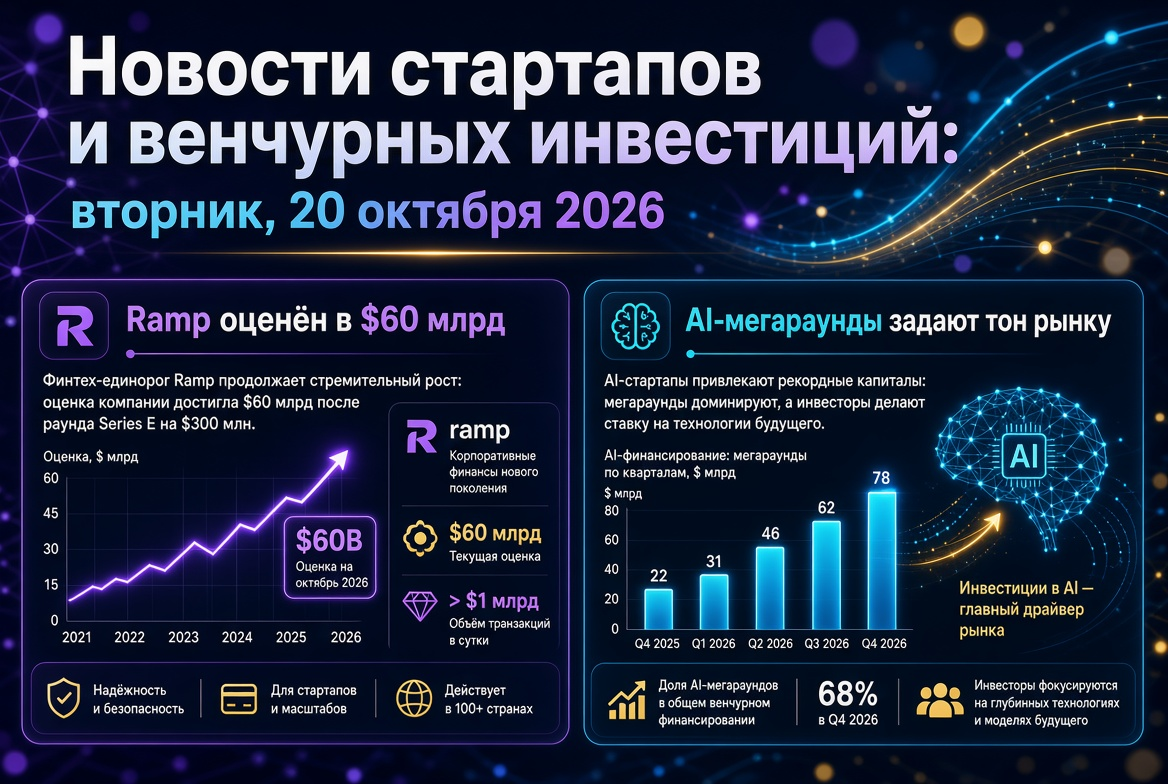
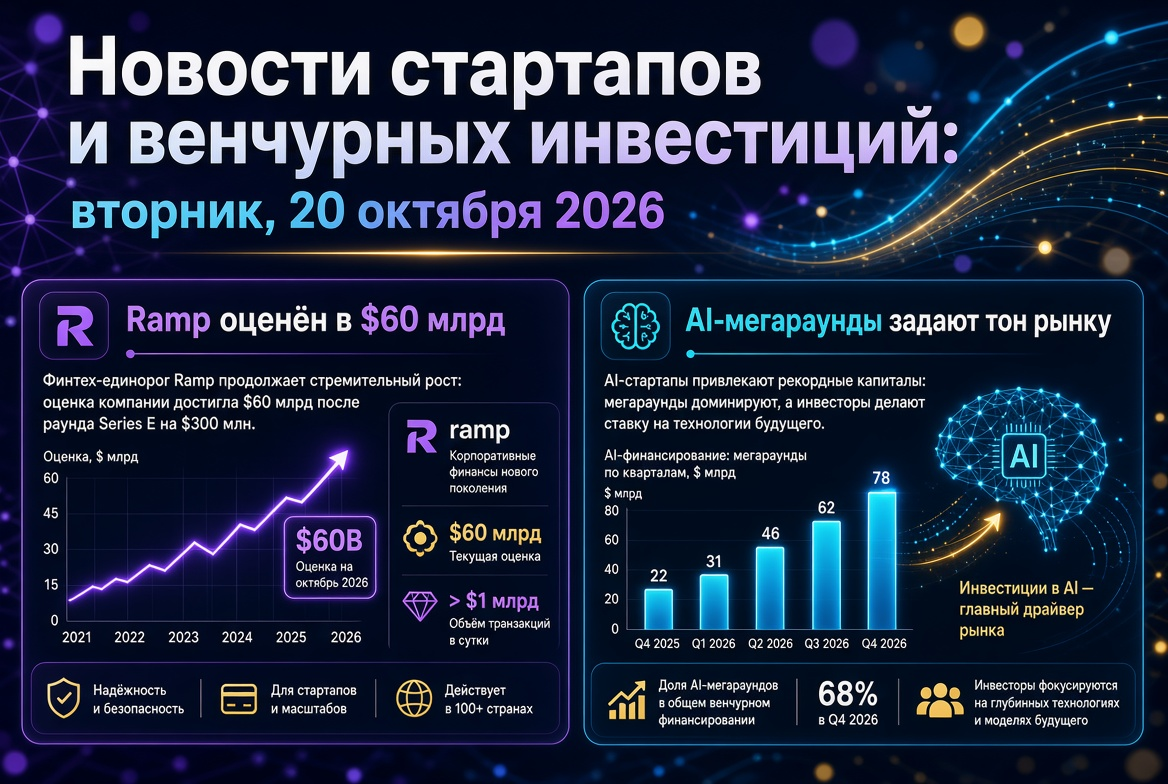
The artificial intelligence sector remains the main magnet for venture capital at the beginning of 2026. The investment frenzy around AI, which emerged in 2025, not only shows no signs of waning but is setting new records. The most remarkable news in recent days has been an unprecedented funding round in the AI sphere: according to industry sources, a generative AI startup raised approximately $20 billion in yet another round, clearly demonstrating the scale of investor appetites. Besides this mega-round, substantial investments continue to flow to other AI companies worldwide. For instance, Indian project Indra AI, developing corporate AI solutions, raised around $500 million at a valuation of $5 billion—one of the largest deals in Asia, emphasizing the global nature of the AI boom.
Such examples confirm that venture investors' interest in artificial intelligence is not isolated but rather widespread. Almost all segments of AI—ranging from generative models and voice assistants to specialized semiconductors and cloud AI platforms—are witnessing increased capital inflows. Competition for the most promising AI startups remains high, even amidst periodic concerns of market overheating. Investors are betting that AI technologies will continue to transform industries, meaning that funding for leaders in this sector will stay at peak levels in 2026.
Defense and Strategic Technologies in Investors' Focus
Startups related to national security, defense, and space are rapidly coming to the forefront of venture investors' interests. In the United States, there is a consistent push to maintain technological superiority: major funds (such as the specialized American Dynamism fund from a16z) are directing significant resources into dual-use projects—defense technologies, aerospace developments, and cybersecurity. Similar trends are emerging beyond America. In Europe, for example, investor consortia are forming new funds focused on defense startups, while government programs are stimulating the creation of technologies to bolster security.
Interestingly, already in the early weeks of the year, new "unicorns" have emerged specifically in defense and related fields. Reports indicate that a French startup working on AI for military applications has reached a valuation exceeding $1 billion after a Series B round—a rare case for the European market. In the U.S., several defense startups have also received billion-dollar valuations due to government contracts and support from corporate investors. Besides venture funds, defense giants are also stepping in: major companies in the sector are increasingly investing directly in relevant startups, seeing them as sources of innovation for their own needs. Thus, defense and strategic technologies are becoming a key priority for the venture market in 2026 amid increasing geopolitical competition.
Fintech and Crypto Startups: Investor Interest Returns
Following a downturn in recent years, interest in financial technologies and the crypto industry is reviving. High-interest rates and the turbulence of 2022-2023 hit fintech startups hard: many lost value, laid off staff, and pivoted toward efficiency. However, by 2026, the sector has adapted to the new conditions. The most resilient players are focusing on profitability and expanding their client base, regaining the trust of venture investors. In traditional segments—digital payments, online banking, and InsurTech—large deals are again being struck, especially for companies that have proven their business model's viability. In developing markets, demand for fintech remains huge, and local startups are attracting significant capital to scale financial services.
Simultaneously, the market for blockchain projects and crypto startups is beginning to thaw. After an extended "crypto winter," the recovery of prices for digital assets and Bitcoin's recent rally to record levels (Bitcoin exceeded its historical high, attracting institutional investors' attention) have stimulated a return of venture capital to this space. Funds are once again ready to finance blockchain infrastructure, decentralized finance (DeFi) projects, Web3 platforms, and other applied solutions based on crypto technologies. While caution remains—investors are demanding increased transparency and regulatory compliance from crypto startups—the gradual restoration of trust opens new opportunities for fundraising.
Climate Startups: Green Technologies on the Rise
Interest in climate and ecological technologies is steadily growing, making "green" startups one of the most dynamic sectors in venture capital. The global push for sustainable development and decarbonization is driving investors to seek innovative solutions in clean energy and eco-technologies. By the end of 2025, signs of a revival in investments in climate tech were emerging, and in the early weeks of 2026, this trend has strengthened. Significant funding rounds are taking place in segments of renewable energy, carbon reduction technologies, energy storage, and sustainable infrastructure. For instance, a startup developing compact fusion reactors reportedly raised hundreds of millions of dollars to accelerate research in nuclear fusion. Considerable funds are also being invested in carbon capture projects, "green" transportation, and agri-tech.
The growth of climate investments is supported by government policy. In major economies worldwide, new incentives for "green" projects have been implemented—from tax breaks to targeted clean technology development funds. This is attracting additional private investors into the sector. Although the overall volume of venture investment in climate tech fell slightly in 2025 compared to the peak in 2021, capital has been redistributed in favor of the most promising startups. Now, in 2026, "green" technologies are back in the spotlight: venture funds see in them not only a socially significant mission but also enormous growth potential as the world transitions to a low-carbon economy.
Biotechnology and Medicine Attract Capital Again
After a challenging period, interest in biotechnology and medical startups is revived. From 2022 to 2024, many biotech companies experienced declines in valuations, drawn-out clinical cycles, and waning interest from funds. However, a turning point has now emerged: new scientific breakthroughs and lessons from the pandemic have reminded stakeholders of the value of healthcare innovation. In the early weeks of 2026, several biomedical projects announced large funding rounds, signaling a resurgence in the sector. For instance, a leading oncology startup from Massachusetts raised over $300 million in a late-stage round to advance its groundbreaking drug into the final phase of trials. This substantial late-stage round highlighted investors' readiness to fund expensive developments with high potential.
The renewed interest is facilitated by synergies with artificial intelligence technologies. Startups at the intersection of AI and biology—from drug development using machine learning to genomic data analysis—are attracting significant capital. Major corporate players are also becoming involved: large pharmaceutical companies are launching their own venture funds and collaboration programs, seeking to invest in promising teams. For example, in the U.S., the $700 million Bio & Health fund established within a16z's new package targets American biotech projects. In Europe, the pharmaceutical group Servier has founded a corporate fund of €200 million to support oncology and neurology startups. These capital infusions demonstrate long-term investor confidence that medical innovations will yield returns—albeit potentially over a longer horizon than in software or internet businesses.
Looking Ahead: Cautious Optimism in the Market
The venture market enters the second half of January 2026 with a prevailing sense of cautious optimism. Successful deals and funding rounds at the beginning of the year indicate that investors have adapted to the new realities—the era of “growth at all costs” has transitioned into a phase of meaningful scaling. The focus has shifted to the sustainability of startups' business models and their paths to profitability. Many funds have tightened their project selection processes, more carefully assessing risks and potential before committing capital. This discipline is a reaction to the lessons of recent years when excessive funding in certain areas led to market corrections.
Nevertheless, key trends inspire optimism. The "window" for IPOs, effectively closed in 2022-2024, has now opened and may remain accessible for mature companies awaiting their turn in the public market. An active M&A market promises to continue providing startups with exit opportunities while offering investors returns on their investments. Newly established major funds ensure there is "dry powder" (available capital) to finance the next generation of innovative companies. While risks—from economic uncertainty to potential overheating in certain niches—remain, the venture community looks ahead to 2026 with hope.
The first weeks of the year have shown that the global startup ecosystem is on the rise. If positive trends persist, 2026 could be a year of further growth in venture investments and the emergence of new technology leaders. Investors, having learned lessons from the past, are approaching this growth more prudently, balancing enthusiasm with due diligence.