Global Startup and Venture Capital News for Wednesday, January 21, 2026: Record AI Rounds, IPO Revival, Megafunds, and Key Investment Trends for Venture Funds and Investors.
The beginning of 2026 in the global venture capital market is marked by a confident growth and surge of activity in the technology sector. After a prolonged downturn over the past years, investors worldwide are once again ready to invest significant amounts in promising sectors – from artificial intelligence to green technologies. According to recent data, the total volume of venture investments rose by approximately 40% year-on-year in the fourth quarter of 2025—the best performance since the boom of 2021. This confident upward trend continued into the early weeks of 2026: in just the first weeks of January, startups globally raised billions of dollars in funding, including record rounds and the launch of new megafunds. This indicates that the “venture winter” has been left behind, and private capital is rapidly returning to tech startups, fueling a new investment boom.
At the same time, the market maintains a more selective and cautious approach. Funds and investors are focusing on the sustainability of business models and profitability, preferring companies with proven efficacy. Nevertheless, the current trends in the venture market are encouraging. Below, we will examine the key news and trends shaping the venture investment landscape as of January 21, 2026.
IPO Market Revived: Exit Window Reopened
After nearly two years of stagnation, the long-awaited “window” for initial public offerings (IPOs) for startups is reopening. As recently as the end of 2025, several successful public listings occurred that demonstrated the market’s readiness to accept new technology companies. For instance, American fintech giant Stripe conducted one of the largest IPOs of the decade, with a valuation of around $100 billion, while data processing software developer Databricks confidently debuted on the stock market, confirming high investor appetite for data and AI sectors. These successful listings have breathed new life into the public capital market and laid the groundwork for a new wave of exits.
Signs of IPO revival are evident worldwide. In Asia, Hong Kong has launched this new wave of listings: several large tech companies have gone public, collectively raising billions of dollars. In the U.S., the situation in the IPO market is also rapidly improving. The success of Stripe and Databricks has inspired other “unicorns”—several highly valued startups are now eyeing IPOs in 2026, waiting for favorable conditions. There are rumors about plans for IPOs from several major projects in fintech, artificial intelligence, and biotechnology. Meanwhile, venture funds are actively preparing their portfolio champions for the public market. If the window of opportunity remains open, 2026 could be marked by a series of long-awaited startup exits via IPO.
Mergers and Acquisitions Wave: Industry Consolidation in Progress
Amid the general industry upturn, consolidation in the tech sector has accelerated. In 2025, the number of major mergers and acquisitions (M&A) involving startups sharply increased, reaching a peak not seen in the last decade. This trend has continued into early 2026: leading technology giants with significant cash reserves are actively acquiring promising companies, aiming to accelerate innovation and expand product lines. The wave of acquisitions spans various segments—from fintech and healthcare to artificial intelligence. For venture investors, this activity represents long-awaited exits and capital returns, often more quickly and reliably than waiting for an IPO.
In just the first weeks of January, several notable deals have been announced. For example, Google has agreed to acquire AI chip startup PolyCore for approximately $2 billion to bolster its cloud business. Additionally, an American software developer announced its acquisition of a European AI startup, strengthening its foothold in a new market. It is expected that in 2026, M&A activity will remain high: large companies will continue to buy advanced startups at attractive prices, solidifying their dominance and providing profits for investors.
Megafunds Make a Comeback: Big Money Back in the Game
The largest venture investors are starting 2026 with record fundraising, signaling the return of “big money” to the market. American giant Andreessen Horowitz (a16z) announced the raising of over $15 billion in new capital, distributed among several funds—this is a record amount for the firm and one of the largest in the industry's history. The Japanese conglomerate SoftBank triumphantly returned with the launch of its third Vision Fund, amounting to around $40 billion, focused on cutting-edge technologies (primarily artificial intelligence and robotics). These megafunds are particularly noteworthy against the backdrop of a general decline in venture fundraising in 2025: the largest players successfully attracted capital even in challenging conditions, thanks to the trust of limited partners (LPs).
It is expected that a significant portion of the newly raised billions will be directed towards the most promising areas. First and foremost, these are AI startups, as well as projects related to national security, climate innovations, and new infrastructure. The inflow of “big money” is already palpable: the market is filling with liquidity, and competition for the best deals is intensifying, instilling confidence in the industry regarding a new phase of growth.
AI Investment Boom Continues: Industry Sets Records
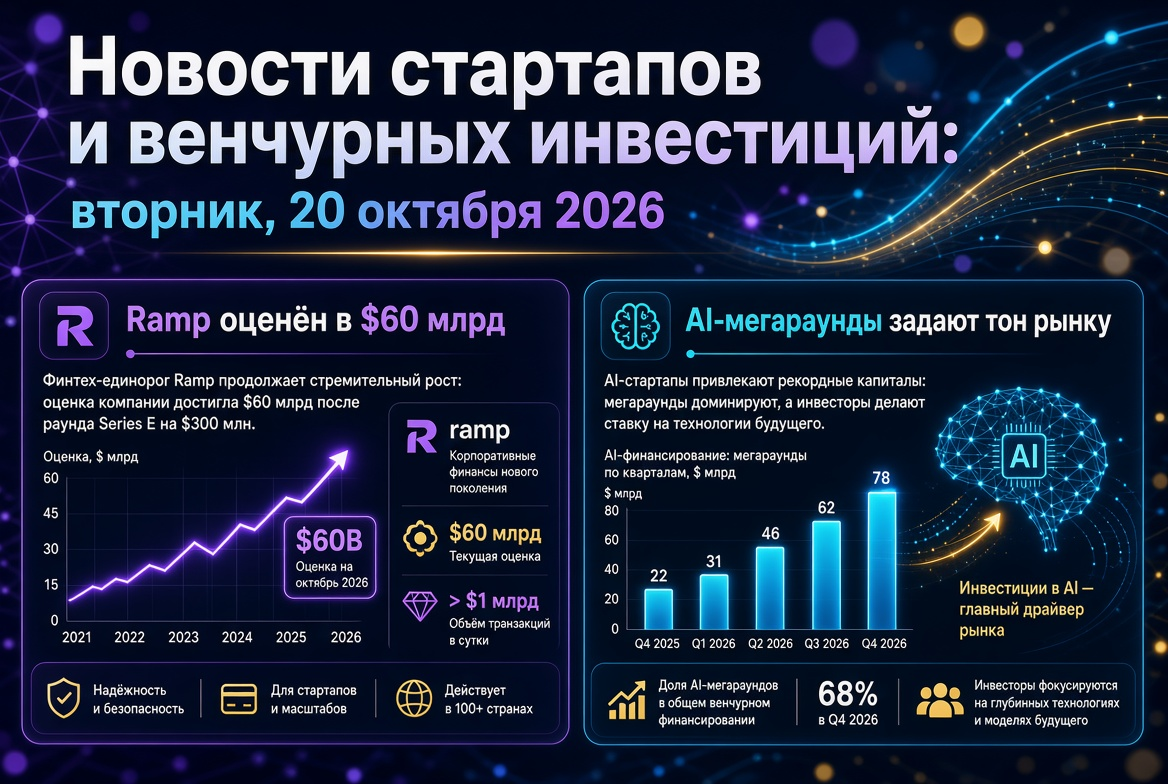
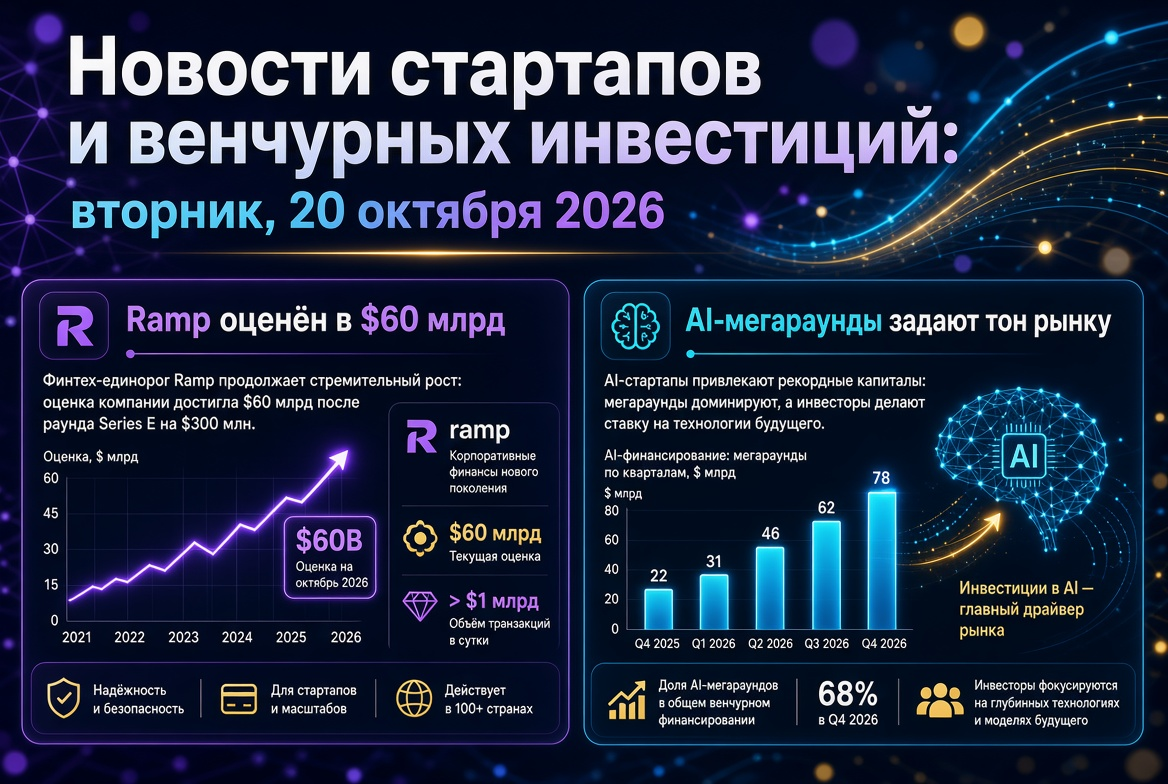
The field of artificial intelligence remains the primary engine of the current venture upturn, demonstrating record funding volumes. One of the most notable recent developments was an unprecedented round in the AI sector: the startup xAI raised around $20 billion in a Series E, vividly showcasing the scale of investor appetite. In addition to xAI, other companies are also securing impressive amounts. For instance, Indian project Indra AI closed a round at $500 million with a valuation of $5 billion—one of the largest venture deals in Asia, underscoring the global nature of the AI frenzy.
Examples like xAI and Indra AI confirm that the investment excitement around AI is not isolated. Across the spectrum of AI projects—from content generation and machine learning to cloud infrastructures and specialized chips—the flow of venture capital remains at record high levels. Demand for advanced AI solutions shows no sign of waning, despite periodic discussions about the sector overheating.
Record Seed Rounds: The Race for Promising Startups
Unprecedented activity among investors is taking place at the earliest stages. Venture funds are now literally competing for the right to invest in promising projects from their inception, resulting in seed rounds reaching unprecedented scales. A notable example is the new AI startup Humans&, founded by former employees of OpenAI and Google: in January, it raised about $480 million in seed funding at a valuation of around $4.5 billion. Another case involves startup Merge Labs, created by Sam Altman, which secured approximately $250 million in initial investments (led by OpenAI). These “mega-seeds” vividly illustrate the willingness of venture players to make huge bets on teams with outstanding experience right from the start—hoping not to miss the next “unicorn.”
Defense and Strategic Technologies in Investors' Focus
Technologies in the field of defense and national security have rapidly risen to the forefront of venture capitalists' attention. In the U.S., there is a concerted effort to maintain technological superiority: major funds, including the new American Dynamism Fund from a16z, are directing significant resources into dual-use startups—defense, aerospace, cybersecurity, and related areas. Similar trends are observed in Europe: the German firm DTCP is forming the largest venture fund for defense technologies in Europe, with around €500 million, with initial cornerstone investors already joining the initiative. As a result, new “unicorns” are emerging in the industry: French startup Harmattan AI, creating AI solutions for defense, recently reached a valuation of over $1 billion.
Global power competition is fueling interest in startups capable of strengthening national security. Moreover, venture capital is increasingly collaborating directly with industrial giants in the defense sector. For instance, American aerospace startup JetZero raised $175 million from a group of investors led by B Capital and Northrop Grumman. This deal illustrates how defense corporations are directly investing in innovations that align with their strategic interests. In 2026, defense technologies will firmly establish themselves among the priority areas of the venture market.
Biotechnology and Medicine Attracting Capital Once Again
After a downturn last year, the biotechnology and medical startup sector is again capturing the attention of venture investors. In the early weeks of 2026, several specialized funds focused on biomedicine innovations have been announced:
- Bio & Health Fund (USA) – a new fund from Andreessen Horowitz, totaling $700 million, specifically allocated for investments in American biotech startups (drug development, medical technologies, application of AI in biology).
- Servier Ventures (Europe) – a corporate venture fund from French pharmaceutical group Servier, amounting to €200 million to fund European startups in oncology and neurology.
The influx of capital demonstrates sustained investor interest in biotech and medicine, despite the challenges of previous years. After a period during which valuations for many biotech companies decreased, the market is reviving thanks to scientific breakthroughs and an increased focus on health. Major pharmaceutical players have ramped up collaborations with startups through venture divisions and partnerships, hoping for long-term returns from promising drugs and technologies.
Diversification of Investments: Fintech, Crypto, and Green Technologies
Venture activity in 2026 spans an increasingly broad range of sectors beyond AI. Following valuation declines in recent years, interest in fintech startups is once again rising. The strongest players in financial technologies have adapted to new conditions by focusing on profitability and efficiency, which has restored investor trust. An increase in transactions is already observed in the realms of digital payments, online banking, and InsurTech—primarily for companies that have demonstrated the resilience of their business models, as well as in emerging markets where the potential for fintech remains high. Simultaneously, the blockchain project market is beginning to emerge from the “crypto winter”: Bitcoin's rally to new highs and sector stabilization have led funds to once again be ready to invest in select crypto startups. The focus is primarily on projects with more mature solutions in DeFi and Web3. While caution remains, the gradually returning trust is opening new funding opportunities for such startups.
Increased investor attention is also directed towards climate technologies. “Green” startups are receiving record funding against the backdrop of the global push for sustainable development and economic decarbonization. Venture funds are actively supporting projects in renewable energy, carbon emissions reduction, and the creation of eco-friendly infrastructures. The Climate Tech sector today is one of the most dynamically growing: beyond profit, investors are considering ESG factors, seeking to contribute to solving environmental issues. It is expected that new unicorns will emerge in this area in 2026, and the interest in “green” innovations will remain consistently high.
Looking Ahead: Cautious Optimism at the Start of 2026
The venture market enters 2026 with moderately optimistic sentiments. Despite lingering economic risks and high interest rates, investors are adapting to the new reality. The focus is now on the quality of business: sustainability of models and quick paths to profitability for startups. The era of growth “at any cost” is behind us—replaced by discipline and effective capital utilization. Many funds are more selectively screening projects and carefully assessing companies before investing.
Simultaneously, the window for IPOs, effectively closed from 2022 to 2024, is beginning to open anew. The successful listings at the end of 2025 and the accumulated pool of mature unicorns create a foundation for a new wave of public offerings under favorable conditions. The M&A market is also reviving: large corporations with accessible capital are ready to acquire promising startups at more reasonable prices, providing venture funds with long-awaited exits. Thus, 2026 promises the industry new challenges and opportunities. Overall, the venture investment industry greets 2026 with cautious faith in further growth—the first weeks have already confirmed the market's readiness for a new stage of development.