Current News on Startups and Venture Investments for Friday, January 2, 2026: Major Funding Rounds, Investments in AI, Fintech and Biotech, Global Venture Trends, and Fund Strategies.
Record Investments in AI Startups
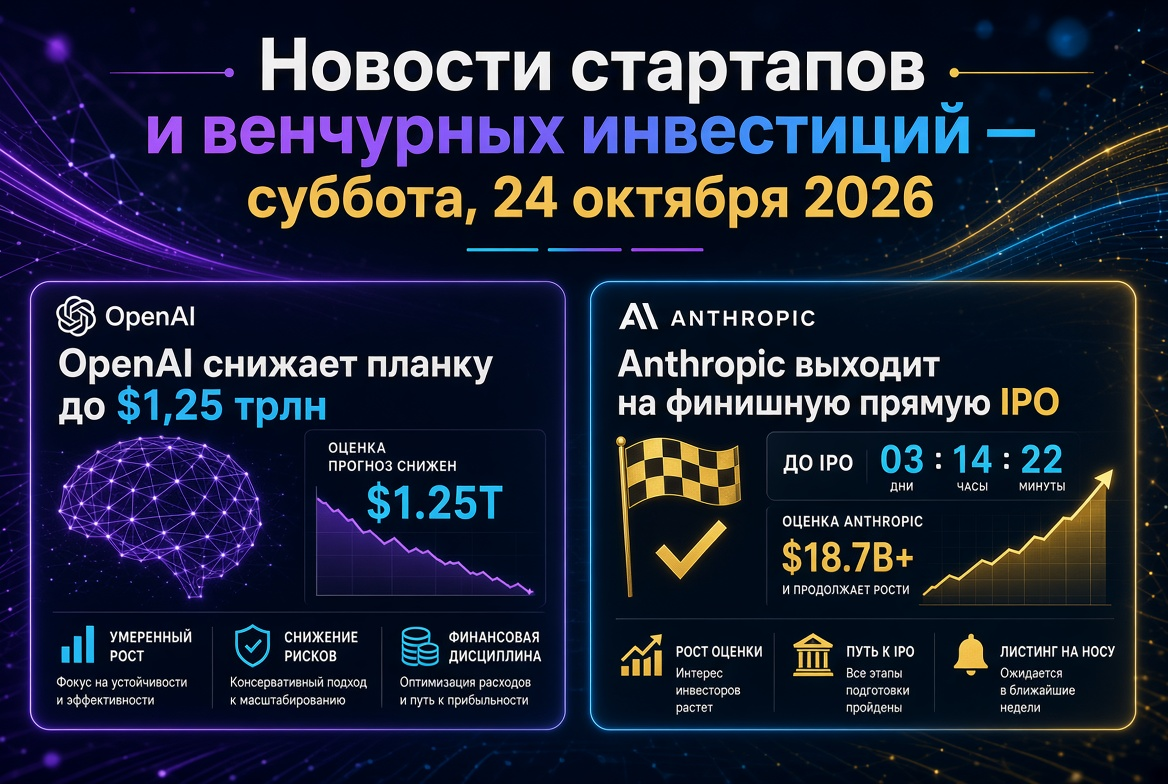
The year 2025 has set a record for venture investments in startups related to artificial intelligence. Analysts estimate the total capital raised in this sector to be around $150–200 billion, significantly exceeding previous highs (approximately $92 billion in 2021). In light of the vigorous growth in funding, startups are advised to form "fortress" balances – that is, to build reserves to protect against potential market corrections. Among the largest deals of the year, SoftBank's ongoing support has led to total investments in OpenAI reaching $41 billion (the firm now controls about 11% of the startup's shares). The American startup Anthropic raised $13 billion in a round in the fall of 2025, while Meta invested over $14 billion in Scale AI – a data preparation project for training neural networks.
- SoftBank has completed investments in OpenAI totaling $41 billion (approximately 11% of the company's shares).
- Anthropic raised $13 billion in September 2025.
- Meta invested over $14 billion in the startup Scale AI (data preparation for AI).
Major Venture Deals
In addition to the aforementioned rounds in the AI sector, the end of 2025 also saw other significant venture deals. NVIDIA invested $2 billion in Elon Musk's xAI project – these funds will be used to purchase graphics processors for the new Colossus 2 data center in the USA. NVIDIA also reached a strategic agreement with AI chip developer Groq: under a $20 billion deal, Groq transferred rights to its technologies to NVIDIA (the founder of Groq has joined the NVIDIA team). Another notable example is the $250 million raised by the fintech startup Plata from Mexico (over 2 million clients), which boosted the project’s valuation to $3.1 billion. Moreover, several other startups have attracted new investments, emphasizing the diversification of venture funds’ interests across various sectors.
- NVIDIA invests $2 billion in Elon Musk's xAI startup for GPU procurement and scaling the Colossus 2 data center.
- NVIDIA acquired AI chip technology licenses from Groq for $20 billion: the founder of Groq and several engineers joined NVIDIA.
- The Mexican fintech Plata (former managers from "Tinkoff") raised $250 million, increasing its valuation to $3.1 billion.
New Funds and Support Programs
Governments and major funds around the world are ramping up support for technology startups. China established a national venture fund worth ¥100 billion ($14.3 billion) and launched three regional funds (each over ¥50 billion), focusing on promising technologies (ranging from IoT to biotechnology). The national fund is designed for a 20-year horizon and targets small startups valued at up to ¥500 million. Additionally, China has created three specialized hardware funds of $7.14 billion each to support chip developers, quantum computing, biotechnology, and space. In the private sector, a new fund, Davidovs Venture Collective ($75 million), has been established by the Davydov family for early-stage AI startups – so far, they have raised $40 million. In Russia, "Yandex" announced a support program for startups worth 500 million rubles: it offers tripling of advertising budgets on Yandex services and preferential terms for program participants.
- China launched a national venture fund (~¥100 billion, $14.3 billion) and three regional funds (~¥50 billion each) for investments in technology startups.
- Three specialized hardware funds of $7.14 billion each have been established in China for hardware technologies (chips, quantum computing, biotechnology, etc.).
- The Davydov venture investing family launched an AI fund, Davidovs Venture Collective, totaling $75 million (currently raised $40 million).
- Yandex announced a support program for startups worth 500 million rubles: participants will receive tripled budgets in Yandex.Direct and special conditions for Yandex group services.
Breakthrough Startups and Unicorns
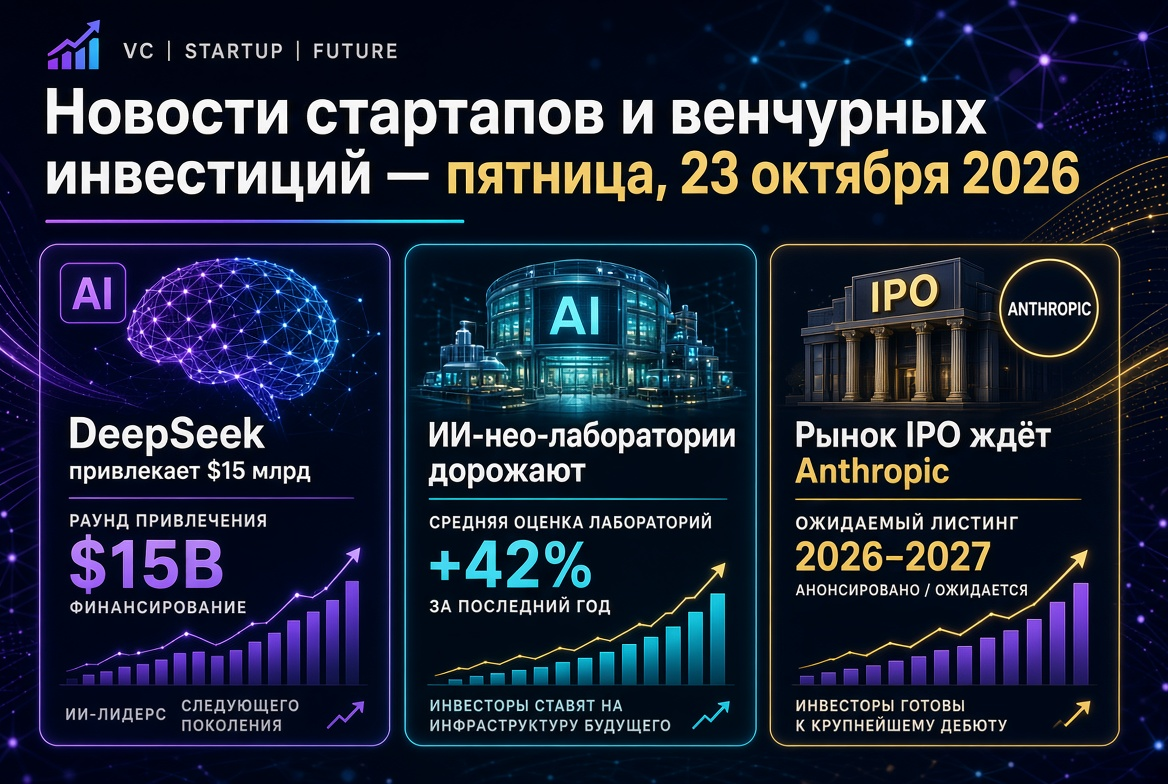
The increase in investments allows some startups to make a qualitative leap and achieve unicorn status (valued at over $1 billion). For instance, the American AI recruiting platform Mercor (founded by 21-year-old graduates) is now valued in the billions after several investment rounds. The Chinese AI search startup DeepSeek has also become one of the most valuable companies – its valuation approaches $11.5 billion. In fintech and digital services, leaders are solidifying their positions: Revolut is expanding its operations through foreign acquisitions, while the aforementioned Plata has become a notable player in the Latin American market. These cases confirm that the most significant successes emerge from the fields of AI, fintech, SaaS, and big data.
- The American platform Mercor (AI recruiting) has reached a valuation of several billion dollars and has entered the ranks of unicorns, making its founders billionaires.
- The Chinese startup DeepSeek (AI search) has also joined the notable unicorns with a valuation of around $11.5 billion.
- Fintech companies and SaaS projects continue to grow actively: Revolut is strengthening its position through external investments and acquisitions, while Plata has become one of the largest fintech startups in Latin America.
Main Trends in the Venture Market
The current upswing in the venture market is characterized by the concentration of capital in "hot" sectors. According to industry experts, projects related to AI accounted for more than $200 billion in investments in 2025, resulting in hundreds of new dollar billionaires (Elon Musk's capital approached ~$645 billion, J. Huang's ~ $159 billion). Venture investors note record concentration: the lion's share of investments went to a small number of industry leaders, while many startups struggled to secure funding. Startups are advised to achieve profitability quickly and create financial "cushions": otherwise, their business risks suffering due to changes in market conditions. In contrast, the Russian market is experiencing less activity: the number of deals with local startups has decreased by approximately 30%, and the volume of investments has declined by about 10% (to ~7.2 billion rubles).
- Investments in AI startups in 2025 exceeded ~$200 billion (an approximate growth of 75% compared to the previous year).
- Market participants noted hundreds of new billionaires among AI project founders (Musk's wealth increased nearly 1.5 times, Huang's doubled).
- Most funds were directed to a narrow circle of projects: many secondary startups did not receive funding amid fierce competition.
- Analysts recommend that startups form a financial reserve and focus on sustainable profitability to survive potential market slowdowns.
- In the Russian market (against the backdrop of sanctions), the opposite trend is observed: in 2025, the number of deals decreased by about 30%, and the volume of investments fell by 10% (to approximately 7.2 billion rubles).
Global Market Expansion and New Tech Hubs
The venture boom of 2025 is characterized by a broader geographical scope of investments. Traditional centers (the USA, Europe, China) remain important, but there has been a significant influx of capital into new regions. The Gulf region (Saudi Arabia, UAE) is emerging as a major technological hub thanks to substantial investments from state funds. In Asia, growth is shifting: India and Southeast Asia are attracting record amounts, while China has slightly slowed down due to regulatory risks. Europe is experiencing a redistribution: for the first time in a long time, Germany has overtaken the UK in the volume of venture deals. The USA continues to lead in absolute investment volume, particularly in AI projects. Africa and Latin America are also producing their first unicorns, indicating the truly global nature of the current growth.
- The Gulf region (Saudi Arabia, UAE) has become a new tech hub, with local funds pouring billions into startups.
- In Asia, capital is gradually flowing from China to India and Southeast Asia: these markets are attracting record venture sums despite the cooling in China.
- In Europe, Germany ranked first in venture deal volume for the first time in a decade, reinforcing its status as a continental hub.
- The USA maintains its leadership in absolute investment volumes (primarily in AI). Emerging regions are also producing their unicorns: startups from Africa and Latin America are drawing investor attention.
Outlook for 2026
Venture investors and experts greet the start of 2026 with cautious optimism. Following a sharp increase in funding last year, the market may slow, and startups must consider the associated risks. The main recommendation is to build businesses on sustainable models and create financial reserves in case of market correction. Success in the upcoming year will depend on the ability of entrepreneurs to demonstrate real profitability and meet the long-term needs of the market. Despite this, many industry participants are confident that the right ideas and effective management will attract new investments in promising startups, even amid tightened requirements.
- Analysts predict a slowdown in venture market growth and advise startups to build a financial safety cushion, focusing on actual profitability.
- It is crucial for startups to demonstrate sustainable revenue and market demand for their products to maintain investor interest in the new conditions.
- Government programs and corporate funds are likely to continue financing strategic directions (AI, quantum technologies, "green" innovations), which will open additional opportunities for mature projects.