Oil Market: Geopolitical Premium Keeps Brent Above $105
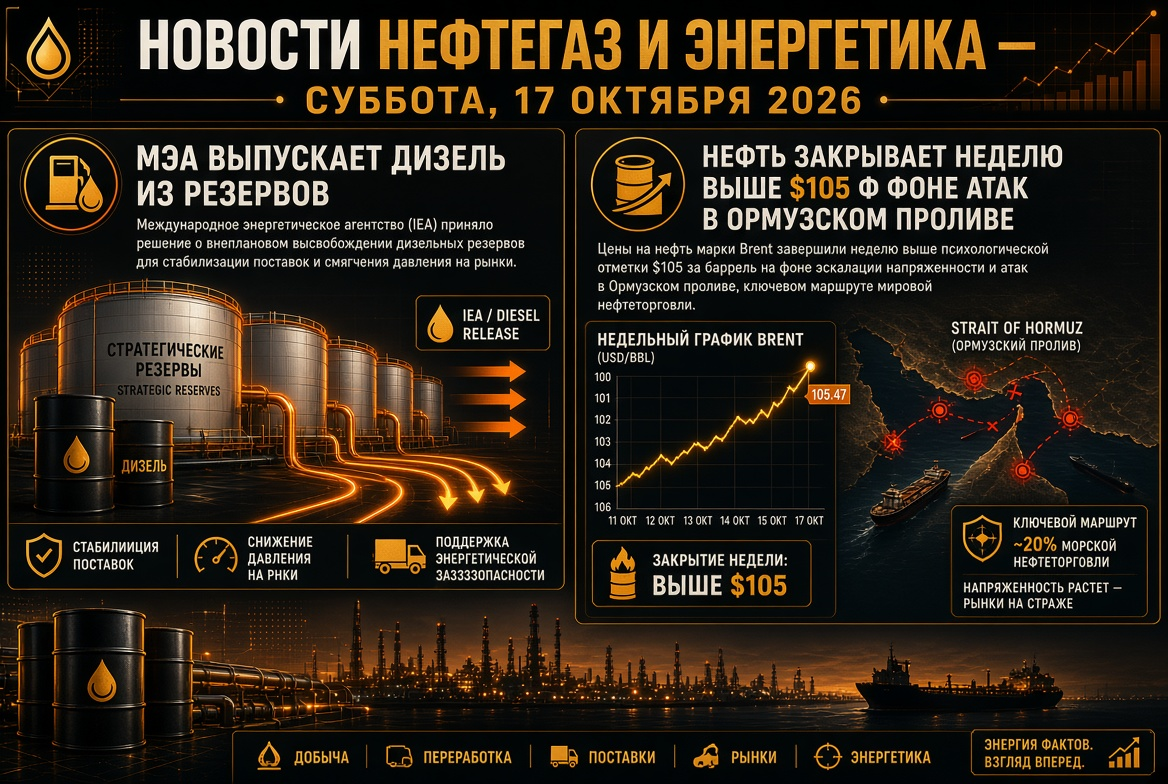
Upon closing on October 14, the December futures for Brent were trading around $106.3–106.5 per barrel, reaching intraday highs of $107.15. American WTI was trading at approximately $95. A year ago, oil priced around $62–63, indicating a growth of over 70% in twelve months.
Key price drivers:
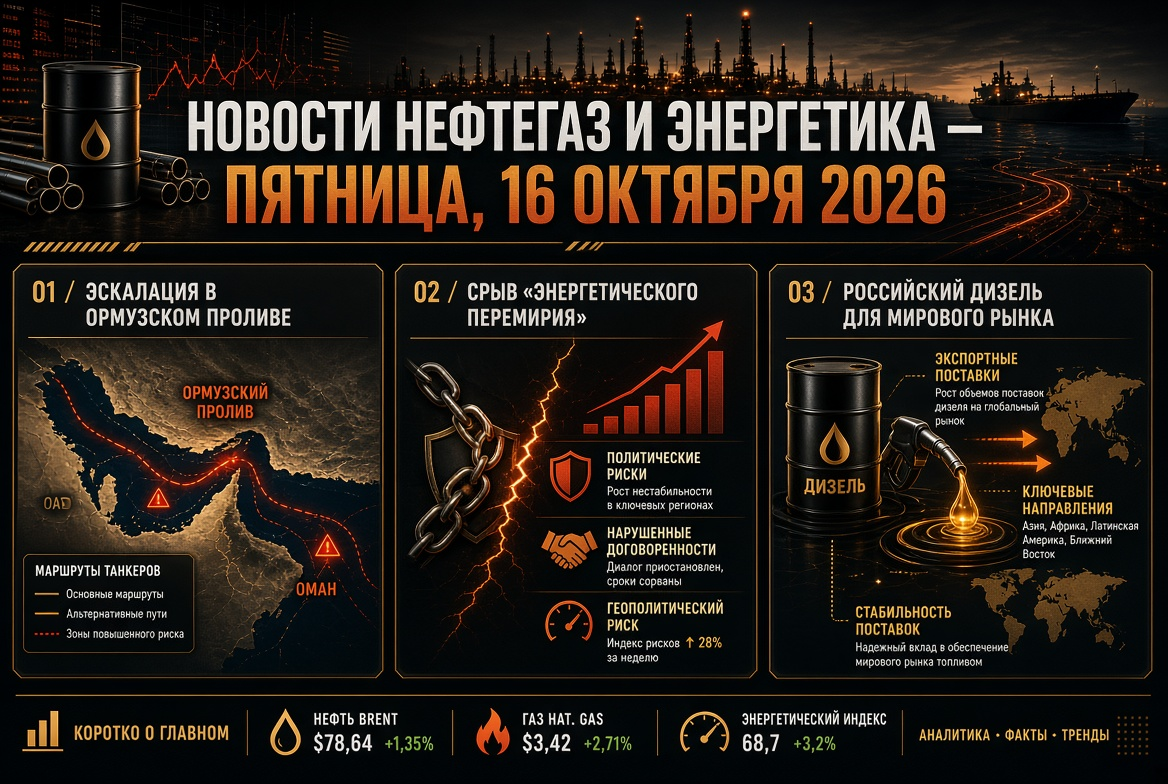
- Strait of Hormuz. Attacks on vessels continue: tankers navigating routes without Tehran's approval are being hit by mines, and on October 13, a container ship sank at the strait's exit. Iran links the complete opening of the strait to the fulfillment of seven conditions set before Washington.
- Houthi Strikes on Saudi Arabia. The "Ansar Allah" movement has claimed attacks on Saudi Aramco facilities in Dhahran and Eastern Province, a refinery in Riyadh, and the capital's airport, promising to expand the target list.
- Discrepancy Between the Exchange and Physical Market. Physical cargoes of crude oil are estimated by pricing agencies to be valued at about $129 per barrel — significantly more than paper Brent.
- Record Freight Rates. Shipping Russian oil from Baltic and Black Sea ports to India costs $27–32 per barrel, while transportation from Ras Tanura to Rotterdam has increased from approximately $2 in 2025 to over $35.
Analysts anticipate WTI fluctuations in the $90–100 range in the coming weeks; further escalation in the Middle East could push Brent back to spring peaks above $120.
IEA Report: Oil Demand Decline Comparable to Major Crises
The October IEA report was a key analytical event of the week for the oil and gas sector. Key figures include:
- Global oil demand in 2026 will decline by 2.61 million barrels per day to 102.38 million b/d (forecast downgraded by about 110,000 b/d).
- Global oil supply in 2026 will fall by 5.8 million b/d to 100.7 million b/d.
- A return to consumption growth is not expected before March 2027; in 2027, demand is projected to be around 104.38 million b/d, still below the 2025 levels.
- The largest losses are expected in distillates and petrochemical feedstock, particularly in Asia.
The IEA is also accelerating the release of strategic reserves: following the record decision in March to release 400 million barrels, the agency has urged countries to expedite diesel fuel deliveries to the market from reserves. OPEC, in turn, has reduced its 2026 demand forecast for the sixth consecutive time, but raised its growth forecast for 2027, highlighting the need to replenish depleted stocks.
OPEC+: Quotas Frozen, Actual Production Below Target
Seven OPEC+ countries have kept their oil production targets for November unchanged. The quotas are as follows:
- Saudi Arabia — 10.478 million b/d;
- Russia — 9.949 million b/d;
- Iraq — 4.431 million b/d;
- Kuwait — 2.676 million b/d;
- Kazakhstan — 1.628 million b/d;
- Algeria — 1.007 million b/d;
- Oman — 841 thousand b/d.
In practice, quotas largely remain on paper: due to the war and logistical constraints, the actual production of some participants is significantly below target levels. The structure of the alliance has changed following the UAE's departure from OPEC and OPEC+ on May 1, 2026. The next "seven" meeting is scheduled for November 1, with a monitoring committee meeting on November 29.
Russia-U.S. Diesel Deal: A New Factor for the Oil Products Market
The oil products market continues to react to the agreement reached on October 9 during the phone call between the Presidents of Russia and the USA. The U.S. Treasury issued a license temporarily easing sanctions on Russian diesel fuel. The parameters of the deal include:
- Over 300,000 tons of diesel for American and global markets in October;
- An additional 500,000 tons in November and approximately 1 million tons thereafter;
- In the future, up to 3 million tons per month depending on the state of Russian refineries.
Moscow is pre-emptively lifting restrictions on diesel exports. For Russian oil companies, this represents additional foreign currency revenue and an incentive for refinery utilization. For Washington, it serves as a tool to lower fuel prices ahead of the Congressional elections. European diplomacy has criticized the deal and announced new sanctions. The question of feasibility remains: following the strikes on refineries in the summer, some processing capacities are still recovering.
"Energy Truce": A Fragile Pause for Infrastructure
On October 11, Donald Trump announced the initiation of an "energy truce" between Russia and Ukraine — a mutual pledge to refrain from attacks on energy infrastructure. The Kremlin has described the idea as positive, although no official terms have been published. Attacks on Ukrainian energy facilities continued on October 12, with only on October 13 being recorded as the first day without such attacks. For energy market participants, the resilience of this pause is critical: attacks on refineries have been one factor contributing to the global diesel deficit in 2026.
Gas and LNG: Europe Enters Winter with Supply Shortages
The European gas market is the most strained segment of the global energy sector. Futures at the TTF hub have risen to €86–87 per MWh, a peak since December 2022; the annual increase is approximately 170%. Reasons include:
- Loss of Qatari LNG exports due to damage to Ras Laffan facilities;
- EU underground storage is about 73% full, while the seasonal norm is around 90%;
- Acute competition with Asia for available cargoes of liquefied natural gas.
Some analysts maintain a moderate forecast — around €56 per MWh in the fourth quarter due to accelerated injections. However, physical constraints in the gas market are not alleviated by diplomatic statements. Notably, Russian Arctic LNG supplies to European ports have increased by approximately 9.5% over the past nine months.
Coal: The Return of Asia's Primary Fuel
The LNG deficit has made coal the primary beneficiary of the crisis. Newcastle thermal coal is trading around $149–150 per tonne, close to three-year highs, with over a 40% annual increase. With LNG prices in Asia around $25 per MMBtu, high-quality coal is costing generating companies approximately 80% less. The IEA expects record global coal demand in 2026: China, India, Japan, South Korea, and parts of Europe are increasing coal generation. The fourth quarter is traditionally peak season for imports, so coal exports could significantly rise by year-end. In India, the number of power plants with fuel stocks below 25% of normal levels reached 85 as of October 1.
Renewable Energy and Power Sector: Generation Records and Grid Problems
The energy transition continues even amid the oil and gas shock. In 2025, renewable energy sources will surpass coal in global electricity generation for the first time in a century. Recent records include:
- Australia: On October 11, generation from rooftop solar panels in the country's main electricity system reached 17.5 GW, with solar accounting for 72% of consumption;
- India: Daily solar generation set a new record on September 30;
- USA: In May, solar generation first exceeded coal generation.
The flip side is record limitations on renewable energy generation and negative electricity prices during peak sunlight hours. This confirms that investments in energy storage systems and electricity grid infrastructure are becoming key topics for energy companies.
Russian Fuel Market: Stabilization Under Regulator Control
The domestic oil products market in Russia remains in a phase of unstable stabilization:
- The average retail price for gasoline is 78.73 rubles per liter, and for diesel fuel, it is 86.72 rubles;
- Since the beginning of the year, gasoline prices have increased by 21%, significantly outpacing overall inflation;
- On the exchange, AI-92 fell to 69.4 thousand rubles per tonne over the week, while AI-95 rose to 70.9 thousand rubles;
- The Federal Antimonopoly Service has signed price agreements for fuel with 35 regions.
The main risk lies in unscheduled refinery repairs: the expansion of diesel exports requires balancing external obligations with full support for the domestic market.
What is Important for Investors and Energy Sector Participants
- Oil: The geopolitical premium remains; the base range for Brent is $100–110 with risks of spikes amid attacks on Gulf infrastructure.
- Oil Products: Diesel remains the most scarce product; Russian supplies and the IEA's strategic reserves could partially temper the premium.
- Gas: European prices are sensitive to weather and injection rates; a cold winter could push TTF above €100.
- Coal: Price support is expected to continue through the year's end amid peak seasonal demand in Asia.
- Key Dates: OPEC+ meeting on November 1 and data on oil and gas reserves in the USA and Europe.
As of fall 2026, the global energy sector is operating under a regime of simultaneous supply shocks and demand compression. For oil and gas companies, it is a period of high revenue and increased risks, while for consumers, it is a time of expensive energy, and for the renewable energy sector and storage solutions, it represents a window for accelerated growth.