Key Updates Ahead of Trading on October 22
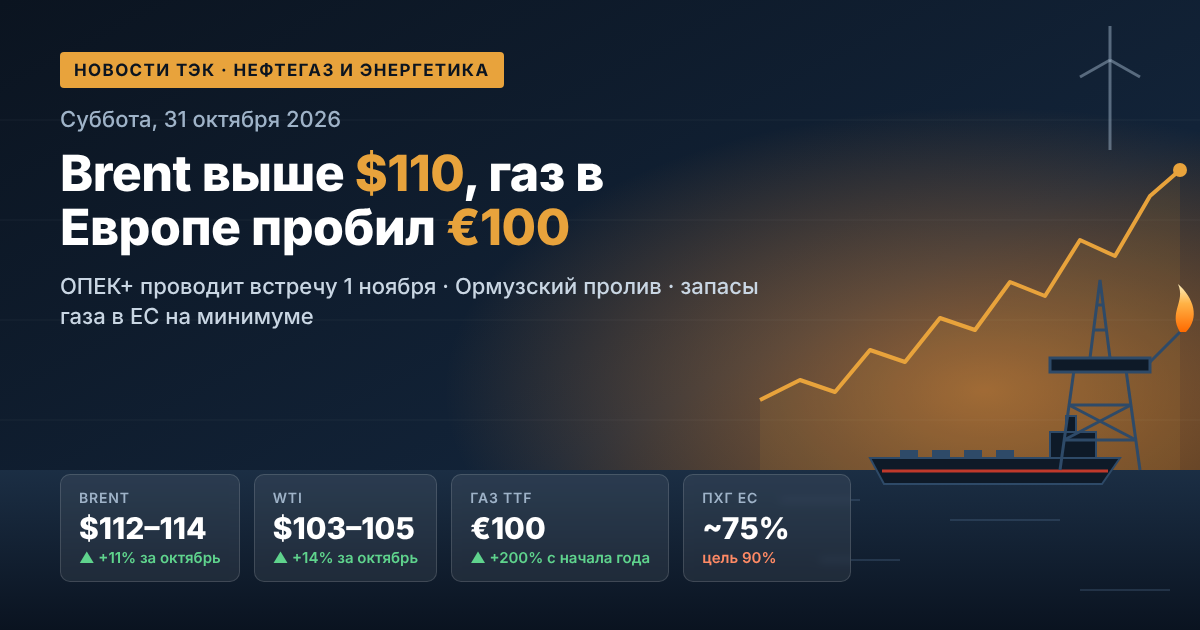
- Oil: Brent — around $110/barrel, WTI — around $99/barrel; year-to-date, oil prices have increased by approximately 75%.
- Geopolitics: Tehran has stated that the Hormuz Strait will remain closed until Washington accepts Iranian conditions.
- Gas: TTF — around €88/MWh, EU storage is approximately 74–75% full.
- Reserves: US strategic oil reserves are at their lowest since 1982.
- Coal: Newcastle — around $150/ton, a two-year high.
Oil Market: Brent Nears Five-Month Highs
Oil prices experienced one of the most volatile days of October. On Tuesday, the December contract for Brent fluctuated by more than $6: from $105.95 to $111.99 — a peak not seen since mid-May. The decline was triggered by rumors of an imminent deal between the US and Iran, however, by Wednesday, oil had returned above $110 per barrel.
Three factors are currently supporting the market:
- Declining stocks in the US. Industry data from API reported a decrease in crude oil, gasoline, and distillate inventories. A week earlier, EIA announced a reduction in commercial crude oil stocks by 8.6 million barrels to 415.6 million, approximately 3% below the five-year average.
- Global market deficit. According to EIA estimates, global oil stocks decreased by an average of 1.9 million barrels per day in Q3, with declines expected to continue in Q4.
- Risk premium. Attacks on vessels in the Gulf of Oman keep freight and insurance rates elevated.
Hormuz Strait and Tanker War: Diplomacy Stalled
The crisis in the Hormuz Strait, which began on February 28, has now lasted over 230 days. Iranian Foreign Minister Abbas Araghchi confirmed that indirect contacts with the US are ongoing through Pakistan and Qatar; however, the Strait will remain closed until Washington accepts Iranian conditions. US Secretary of State Marco Rubio termed reaching a deal as an extremely challenging task and emphasized that Iran's nuclear program remains a key issue.
Analysts have noted an expansion in the geography of attacks: strikes against tankers are occurring beyond the Strait, even into the Gulf of Oman, threatening the transfer of oil between vessels. Meanwhile, oil exports from the Persian Gulf countries have partially recovered, while LNG supplies remain nearly paralyzed.
Saudi Arabia Under Attack from Houthis: Risks for Saudi Aramco
The second focal point of tension is the attacks by Yemeni Houthis on Saudi oil infrastructure. On the night of October 14, a missile strike targeted the headquarters of Saudi Aramco in Dhahran; three upper floors of the administrative tower were damaged, but there were no casualties. Previously, the Houthis claimed responsibility for attacks on Aramco facilities in Riyadh and Yanbu. The group has vowed to continue striking oil facilities in the kingdom, which poses ongoing risks for the world's largest oil exporter and the region's refineries.
OPEC+: Quotas on Hold, Focus on Baseline Levels for 2027
Seven key OPEC+ countries — Saudi Arabia, Russia, Iraq, Kuwait, Kazakhstan, Algeria, and Oman — have kept their production targets unchanged for November. Key quotas include:
- Saudi Arabia — approximately 10.5 million barrels/day;
- Russia — approximately 9.9 million barrels/day;
- Iraq — approximately 4.4 million barrels/day.
The group’s actual production in August was about 25 million barrels/day — roughly 5 million barrels lower than pre-war levels. The alliance's decisions have limited impact on the physical market: the main discussion is shifting towards auditing capacity and baseline production levels for 2027. Following the UAE's exit from OPEC in May, this process has gained additional significance. The next meeting is scheduled for November 1.
Strategic Reserves: US SPR at Lowest Since 1982
The US Strategic Petroleum Reserve has fallen to 283 million barrels — its lowest since October 1982 and about 40% of planned capacity. The US Department of Energy has offered the market an additional 17 million barrels as part of coordinated IEA interventions. Recall that in March, 32 agency member countries agreed on a record release of 400 million barrels, and in early October, G7 countries committed to an additional 100 million barrels of oil and diesel fuel.
This means that the "buffer" is being depleted: subsequent replenishment of reserves will itself become a demand factor and support oil prices in 2027.
Gas and LNG: TTF at Four-Year Highs
The European gas market remains a key vulnerability in the energy balance. Prices at the TTF hub have risen to €88.41/MWh — the highest level in nearly four years, and since the beginning of the year, the increase has exceeded 200%. Key drivers include:
- EU underground storage levels are about 74–75% full compared to the seasonal norm of 86–89%;
- Qatar’s LNG exports in October may drop to 0.6 million tons, with QatarEnergy’s force majeure extended until the end of November;
- Unscheduled downtime at the Kårstø gas processing plant in Norway.
ING has raised its forecast for the average gas price this winter to €73/MWh. The median forecast from banks for Q4 is around €71/MWh, which is below market quotes and indicates a persistent risk premium.
Coal, Electricity, and Renewables
The gas shock has renewed demand for coal. The Australian benchmark Newcastle is trading around $150 per ton — 45% higher than a year ago; on October 6, the price reached $152.20, the highest level since October 2024.
Conversely, the electricity sector in Europe is demonstrating resilience thanks to renewable energy sources:
- The average price in the EU day-ahead market dropped by 7% — from €103 to €91/MWh;
- Clean sources accounted for around 73% of electricity generation in the EU;
- The increase in solar generation from January to August reached a record 36.4 TWh.
Renewables have effectively mitigated the transmission of the gas price shock to electricity, supporting the investment attractiveness of solar, wind projects, and energy storage systems.
Russia: Petroleum Products, Refineries, and Export Restrictions
The Russian petroleum products market remains under strict regulation. The ban on gasoline exports is in effect until January 31, 2027, and restrictions on diesel fuel exports for producers have been extended until the end of October amid postponed refinery maintenance. Data on processing volumes and fuel exchange sales have been classified as restricted access information.
High oil prices and a softening of Washington's sanctions rhetoric have pushed Russian equities to their highest levels since mid-June and supported the rouble. Discounts on Russian oil for China have decreased. Focus is now on the Bank of Russia meeting on October 23.
What Investors Should Monitor: Calendar and Scenarios
- October 22: Market reaction to the fresh EIA data on oil and petroleum product inventories, and weekly gas inventory statistics in the US.
- October 23: Decision of the Bank of Russia on the key interest rate.
- November 1: OPEC+ meeting on production policy for December.
- Early November: US midterm elections, after which a correction in Washington's policy towards Iran may be possible.
The base scenario for the oil and gas sector is to maintain Brent prices within the $105–115 per barrel range until real progress on the Hormuz crisis is made. A deal between the US and Iran could swiftly alleviate the risk premium, while new attacks on Persian Gulf infrastructure could push oil back to yearly highs above $120. For the gas market, key determinants will be the weather in Europe and the timelines for resuming LNG supplies from Qatar.