Cryptocurrency News for Saturday, January 10, 2026: Bitcoin Holds at $90,000, Increased Interest in XRP and Altcoins, Institutional ETFs, Global Trends, and Investor Expectations.
The global cryptocurrency market is starting the year in a “bullish” consolidation mode: total market capitalization is around $3.1 trillion, with major indicators showing mixed dynamics. Bitcoin is holding at approximately $90,000, having slightly retreated from recent highs near $92,000. Meanwhile, substantial ETF investments in altcoins and new regulatory developments are creating an interesting landscape for investors.
Market Overview
- Total cryptocurrency market capitalization is approximately $3.1 trillion (down about 2.5% over the last 24 hours). Most top assets are trading near their previous levels, with minor fluctuations.
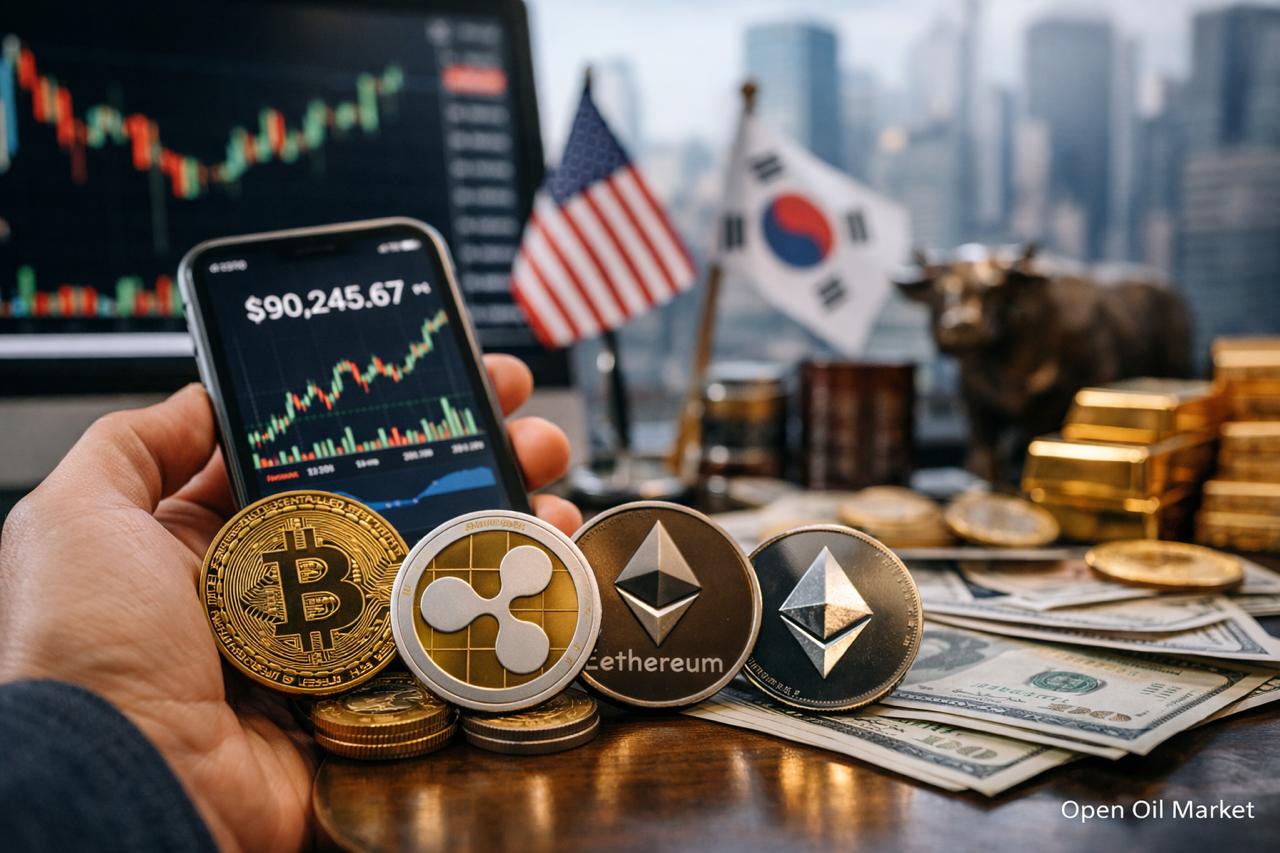
- Bitcoin is trading around the $90,000 mark, down about 2% in the last 24 hours after a brief test of $92,000. Analysts note that Bitcoin remains at the psychological boundary of $90,000, with no clear signals for a breakout above or below.
- Ethereum is holding at around $3,100 (down ~3–4%), with the network’s market cap exceeding $300 billion, confirming its status as the leader in the smart contracts sector. Binance Coin (~$880) and Solana (~$135) have also slightly retreated after a recent rally.
- Other major altcoins are mostly retreating: XRP around $2.10 (-6–7%), Cardano around $0.39 (-5.5%), Dogecoin around $0.14 (-5%). The exception is TRON (~$0.295), which is virtually unchanged over the day.
- Factors influencing market dynamics include macroeconomic expectations and the regulatory agenda. Markets are pricing in the possibility of maintaining current interest rates by the U.S. Federal Reserve in the near term and are anticipating the release of December employment data in the U.S. (Nonfarm Payrolls on January 10).
Bitcoin
The leading cryptocurrency continues to trade at record levels. Despite a recent decline, Bitcoin has reached historical highs above $90,000, driven by positive investor sentiment and inflows of institutional capital. Current trading appears consolidated, as many traders lock in profits at local peaks and assess new macroeconomic signals.
A significant driver remains the Fed's policy: the U.S. Treasury Department has openly called for a quicker reduction of rates to support economic growth, which could boost interest in riskier assets, including Bitcoin. At the same time, it is anticipated that the Fed will likely keep rates unchanged at the January 31 meeting, which limits short-term market movements.
- Significant outflows from U.S. spot Bitcoin ETFs have been observed in the early days of January. This may indicate profit-taking by institutional investors after December's rally.
- Investors continue to monitor key support/resistance levels ($90–95K). A key task remains to hold positions above $88–90K to regain a medium-term upward trend.
Ethereum and Other Altcoins
Ethereum (ETH) remains in second place by market capitalization, trading at around $3,100, facing some selling pressure. The Ethereum network is operating steadily, and in the long term, investors are considering the development of the DeFi ecosystem and the implementation of new technical improvements. However, in the short term, ETH prices are correlating with the overall risk sentiment in the market.
Among other altcoins, projects like Solana and Cardano are also experiencing pullbacks amid general consolidation. Solana is trading at about $135, while Cardano is at approximately $0.39. Meanwhile, rising mining difficulties for Bitcoin (-1.2%) and high electricity prices have led to expectations of reduced rewards for miners, which is suppressing activity in the Proof-of-Work market.
XRP and the Unexpected Growth Leader
The cryptocurrency XRP (Ripple) has come to the forefront. Following the resolution of Ripple's long-standing conflict with the SEC and the launch of the first spot XRP ETFs at the end of 2025, demand for XRP surged. In the early days of 2026, XRP's price soared over 8%, temporarily allowing it to surpass Binance Coin in market capitalization and secure the fourth spot among the largest coins.
This situation is bolstered by the influx of institutional capital: approximately one billion dollars have been raised for new XRP ETFs (Grayscale, Bitwise, etc.), effectively removing it from circulation and creating a scarcity effect. According to exchanges, XRP whale activity has reached a three-month high, indicating potential increased volatility in its price.
Additional interest in XRP is fueled by new partnerships formed by Ripple. In particular, collaboration with players like Mastercard and Gemini is expanding XRP's use in cross-border payments and cryptocurrency transactions through credit cards. However, risks remain: a significant portion of XRP supply is still controlled by Ripple, increasing the asset's centralization, and high volatility requires caution from investors.
Institutional Investments and ETFs
- Morgan Stanley has officially filed for spot Bitcoin and Solana ETFs – this marks the first instance of a major U.S. bank participating in the cryptocurrency market on such a scale.
- A few months after Bitcoin ETF approval, BlackRock's portfolio for these funds has approached $100 billion, becoming a significant revenue source for the company.
- Bank of America has allowed its financial advisors to recommend crypto assets to clients, recognizing the further growth of institutional adoption of digital currencies.
These developments indicate that Wall Street is actively engaging with the crypto industry. Even the largest players in the financial market no longer perceive cryptocurrencies solely as a reputational risk, but rather as promising sources of profit and diversification.
Regulation and Legislation
- South Korea intends to permit trading of spot Bitcoin ETFs in 2026 and tighten rules for stablecoins (mandatory 100% reserve and guaranteed redemption of user funds).
- USA: Last year, the GENIUS Act was passed to regulate stablecoins, and the start of 2026 is expected to see approval of the Crypto Clarity Act, which aims to provide clear operational rules for the crypto business instead of extrajudicial prohibition.
- Europe: The MiCA regulation has come into effect, establishing unified rules for crypto operators. Major exchanges and banks are preparing to launch the first UCITS-compatible cryptocurrency ETFs to provide European investors access to digital assets.
Overall, the global regulatory agenda is becoming more defined and often favorable for the market: governments are looking to implement rules that facilitate the integration of the crypto industry into financial systems rather than completely limiting it. Nonetheless, investors should take into account that new laws and their implementation timelines can create short-term uncertainty in the market.
Top 10 Most Popular Cryptocurrencies
- Bitcoin (BTC) — the first and largest cryptocurrency, seen as digital gold and the foundation for many investment strategies.
- Ethereum (ETH) — the leading platform for smart contracts and decentralized applications, second in capitalization after Bitcoin.
- Tether (USDT) — the largest stablecoin, pegged to the U.S. dollar, serving as a "safe haven" for cryptocurrency trading.
- XRP (XRP) — the cryptocurrency of the Ripple payment platform, actively promoted for international settlements and asset tokenization.
- Binance Coin (BNB) — the token of the Binance ecosystem; used for exchange fee payments and has applications in blockchain projects on the Binance Smart Chain.
- Solana (SOL) — a high-speed blockchain platform with low fees, often used for decentralized applications and NFTs.
- USD Coin (USDC) — a major stablecoin backed by the dollar and widely used in the Ethereum ecosystem and other blockchains.
- TRON (TRX) — a cryptocurrency focused on the entertainment sector and scalable applications, popular in Asia.
- Dogecoin (DOGE) — a "meme coin" that gained notoriety through community support and mentions from celebrities; often traded as a speculative asset.
- Cardano (ADA) — a decentralized platform with a scientific approach to development, emphasizing security and scalability through research-based methods.
Global Economic Factors
The global macroeconomic landscape is still dominated by low interest rates and a gradual decline in inflation, creating a favorable environment for risky assets. Investor expectations are linked to the upcoming U.S. employment report (January 10), which may adjust the Fed's plans regarding future monetary policy. In the coming year, regulators in major economies, including the U.S. and Europe, are likely to maintain moderate conditions for the market, which could potentially support the growth of stocks and cryptocurrencies.
On the flip side, geopolitical and economic instability remains a source of risks. Any sharp events — from unexpected oil price spikes to economic sanctions and political crises — could lead to heightened volatility in the cryptocurrency market. It is crucial for investors to stay alert to such events and diversify their portfolios considering potential shocks.
Market Expectations
Despite fluctuations, many experts maintain a generally optimistic outlook for 2026. The continued development of institutional products (ETFs, security tokenization) and the integration of technologies into the real economy are expected to stimulate demand for crypto assets. Some analysts anticipate a “supercycle of tokenization,” where the overall supply of digital tokens and stablecoins could double, facilitating price growth for leading coins (with estimates suggesting Bitcoin could reach $150,000 by year-end).
At the same time, volatility persists: technical factors, actions by large holders, and changes in monetary policy can bring about sudden corrections. Investors are advised to remain vigilant and closely monitor the publication of economic data and regulatory news, which will determine the trajectory of the cryptocurrency market in the coming days and months.