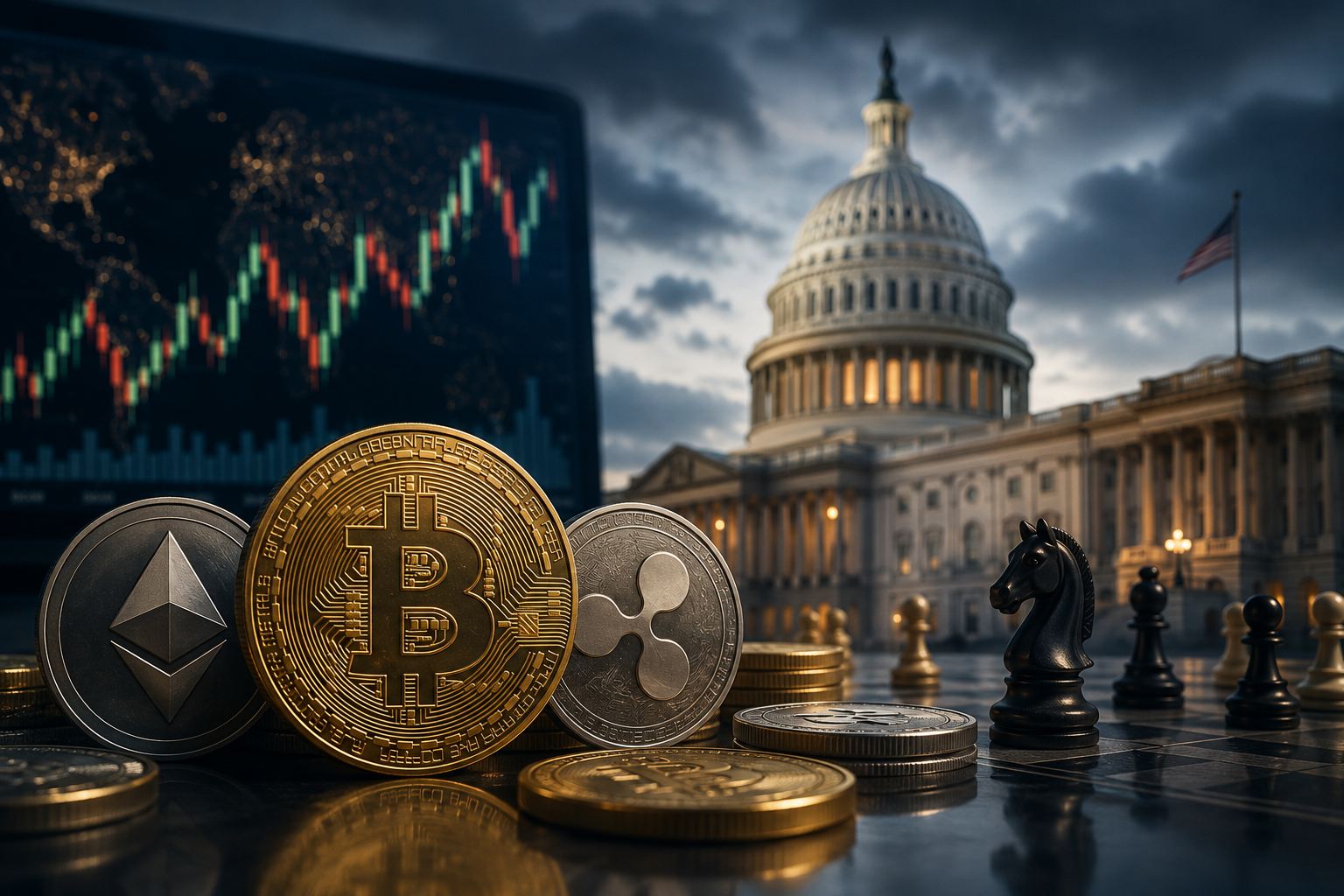
Current Cryptocurrency News for Friday, November 14, 2025. Bitcoin Holds Above $100,000, Ethereum Stabilizes, Altcoins Consolidate, and Institutional Investors Return to the Market. Comprehensive Overview and Analysis.
The global cryptocurrency market is showing signs of consolidation following the rapid rally in October. The total market capitalization hovers around $3.5 trillion, down approximately 1% over the past 24 hours. Investors remain cautious: the "fear and greed" index has dipped into the extreme fear zone, reflecting heightened uncertainty. Nevertheless, the resolution of the prolonged U.S. government shutdown alleviates some macroeconomic risks, which could provide short-term relief for the market. In this environment, market participants are focused on whether Bitcoin can maintain its psychologically significant level and whether a new wave of altcoin growth will commence.
Bitcoin: Consolidation After Record Rally
Bitcoin (BTC) continues to serve as a barometer for the entire cryptocurrency market. At the beginning of October, the flagship cryptocurrency reached a new all-time high near $125,000, driven by an influx of institutional investments and enthusiasm surrounding Bitcoin exchange-traded funds (ETFs). However, an anticipated profit-taking followed, and prices fell below $100,000 for the first time since summer this week. Currently, Bitcoin is consolidating around $102,000 to $105,000, remaining above the key level of $100,000. Market analysts note that despite the current pause in growth, Bitcoin retains about 58% of the total market capitalization, underscoring its dominance. Institutional interest remains strong – trading volumes for futures and options contracts remain high, although volatility has increased to levels unseen since the FTX collapse in 2022. Investors are closely monitoring whether Bitcoin can sustain six-figure prices and resume its upward trend by year-end or if a deeper correction will ensue.
Ethereum Amidst Market Trends
Ethereum (ETH), the second-largest cryptocurrency by market capitalization, is moving in line with the overall market. In recent weeks, Ethereum has maintained a range around $3,400 to $3,600, gaining approximately 1% over the past day. While current prices remain below Ethereum's all-time high (around $4,800 reached in 2021), the Ethereum platform continues to play a crucial role in the ecosystem. The increase in funds locked in smart contracts and sustained interest in decentralized finance (DeFi) and NFTs indicate Ethereum's fundamental value. Investors are also anticipating further network developments: following the transition to PoS and scalability upgrades, Ethereum has solidified its status as a "digital infrastructure" for numerous projects. While Bitcoin serves as "digital gold," Ethereum remains "digital oil," providing the fuel for decentralized applications. In a favorable market backdrop, ETH could catch up and reach new heights, especially if additional institutional products for Ethereum (such as the expected spot ETFs) emerge.
Altcoins and Investor Sentiment
The altcoin market is exhibiting mixed dynamics. Some major alternative coins are demonstrating relative resilience, while more speculative tokens are prone to sharp fluctuations. For instance, Ripple (XRP) stood out on the broader market with a confident rise: over the past week, XRP has increased by approximately 4%, reaching $2.40 – a multi-year high. XRP is buoyed by both improved legal clarity (following positive outcomes in U.S. court disputes) and a surge in derivative market activity. Meanwhile, some previously rapidly growing sectors are cooling down: meme tokens and niche projects (including those related to AI) have seen significant declines as part of retail speculation has exited. Bitcoin's dominance index has slightly retreated from peak values, indicating a potential rotation of capital into altcoins. Analysts are noting initial signs of a potential "altcoin season" – if this trend continues, smaller cryptocurrencies could accelerate their growth. However, overall sentiment remains cautious: investor sentiment indicators are in the "fear" zone, with many choosing to invest in proven assets. Volatility in the altcoin segment is elevated – individual lesser-known tokens can lose double-digit percentages in a day, underscoring market selectivity. As such, altcoins are generally consolidating in anticipation of a new impulse, with capital being allocated to the most promising and liquid projects.
Top 10 Most Popular Cryptocurrencies
Despite local fluctuations, the ranking of the largest and most popular cryptocurrencies by market capitalization includes the following assets:
- Bitcoin (BTC) – The first and largest cryptocurrency, the market’s "digital gold". Price approximately $102,000 to $105,000, capitalization exceeds $2 trillion. It sets the directional movement of the entire crypto market.
- Ethereum (ETH) – The largest smart contract platform. Price ~ $3,500, capitalization around $400 billion. A base for DeFi, NFTs, and many blockchain applications.
- Tether (USDT) – The largest stablecoin pegged to the U.S. dollar. Capitalization of about $90 billion. Widely used for ensuring liquidity and hedging in the crypto market.
- Ripple (XRP) – Token of the Ripple payment network for cross-border transfers. Trading around $2.40, capitalization exceeds $120 billion. Regained position due to legal clarity and interest from financial companies.
- Binance Coin (BNB) – Internal coin of the Binance ecosystem. Price near historical maximum (~$950), capitalization over $150 billion. Reflects the success of the world's largest crypto exchange and is used for paying fees and services.
- Solana (SOL) – High-speed blockchain for decentralized applications. Price ~$153, capitalization around $60 billion. After past trials (including outages and turbulence in 2022), Solana has significantly recovered losses and strengthened in the top 10.
- USD Coin (USDC) – The second-largest stablecoin, backed by dollar reserves. Capitalization around $50 billion. Trusted by institutional investors, serves as a bridge between traditional finance and crypto trading.
- Tron (TRX) – A blockchain platform known for its focus on digital entertainment and fast transactions. Price ~$0.30, capitalization around $25–30 billion. TRX remains among the leaders thanks to active use in stablecoin and DeFi applications.
- Dogecoin (DOGE) – The most well-known "meme coin," originally created as a joke. Price around $0.17 (below highs of 2021), capitalization ~$25 billion. Supported by an active community and episodic mentions by famous entrepreneurs, which occasionally spikes speculative interest.
- Cardano (ADA) – A blockchain platform emphasizing a scientific approach and scalability. Price ~$0.55, capitalization around $20 billion. Despite relatively slow ecosystem development, ADA maintains its place among the top crypto assets due to its dedicated investor base and new technology developments (e.g., recent network updates to support smart contracts).
Regulation and Institutional Participation
The regulatory environment surrounding cryptocurrencies is significantly clarifying, which boosts investor confidence. In the United States, there has been a breakthrough in the legalization of crypto instruments: in 2024, the first spot Bitcoin ETFs launched, granting broad access to Bitcoin via traditional exchanges. This trend developed further in 2025 – this week, Swiss provider 21Shares launched the first crypto index ETFs in the U.S., including a basket of several coins (Ethereum, Solana, Dogecoin, and others). These funds, registered under the stringent requirements of the Investment Company Act of 1940, are another step towards integrating crypto assets into the traditional financial sector. Concurrently, U.S. legislators have provided regulatory clarity for stablecoins: in the summer, Congress passed the GENIUS Act, establishing rules for stablecoin issuers, similar to how the European regulation MiCA operates. In Europe, by early 2025, key provisions of the MiCA package came into effect, creating unified rules for the crypto business across all EU countries. This includes requirements for stablecoin reserves, licensing of service providers, and investor protection. Amidst tightening controls, the industry is also seeing positive signals: major traditional financial companies continue to enter the cryptocurrency market. Institutional investors – from hedge funds to pension funds – are gradually increasing their exposure to digital assets, viewing them as a new asset class. In Asia, financial hubs like Hong Kong and Singapore are implementing progressive regulations and attracting crypto companies, striving to become global crypto hubs. Collectively, these trends indicate a global shift: cryptocurrencies are moving from being "wild" assets into a regulated legal framework, which in the long term may significantly boost capital inflow into the market.
Macroeconomic Factors
The overall macroeconomic environment remains a significant driver for the cryptocurrency market. In recent months, high interest rates and the fight against inflation have forced investors to reduce risk, which has partly inhibited price growth for digital assets. The prolonged 43-day U.S. government shutdown (which ended on November 12) led to a pause in the publication of key economic statistics and a delay in important budgetary decisions. This heightened uncertainty temporarily reduced liquidity in financial markets: during the budget crisis, Bitcoin volatility surged, and the correlation between cryptocurrencies and stock indices (e.g., Nasdaq) reached 0.88, signaling a close relationship with the stock market. Now that the government has resumed operations, investors are gaining a clearer picture of economic conditions – for example, inflation and employment data that influence the Federal Reserve's policy. The U.S. dollar remains relatively strong (DXY index around 100 points); traditionally, a strengthening dollar exerts downward pressure on cryptocurrency prices by reducing appetite for riskier investments. On the other hand, the anticipated conclusion of the rate hike cycle, hoped for by the end of 2025, may alleviate some of this pressure. For now, the market remains in a "wait-and-see" mode: investors are carefully monitoring signals from the Fed and other central banks. Signs of easing monetary policy or slowing inflation could serve as the positive impetus the crypto market needs for new growth. Conversely, deteriorating macro statistics or unexpected financial shocks could amplify capital outflows from risky assets, including cryptocurrencies. Thus, macro factors play a dual role, simultaneously limiting the current rally and creating conditions for the next stage of market movement.
Outlook and Predictions
As 2025 draws to a close, the cryptocurrency market stands at a crossroads. On the one hand, the impressive growth of Bitcoin and several leading altcoins this year has affirmed a long-term bullish trend: even after the correction, many assets are trading significantly above early-year levels, attracting new investors. An increase in institutional presence and progress in regulation is forming a more mature and resilient ecosystem, laying the groundwork for further market expansion. Some optimistic analysts believe that following the consolidation phase, a new surge is possible – predictions are circulating about Bitcoin's potential to surpass $150,000 or even reach $200,000 over the next year if economic conditions improve. On the other hand, risks remain: in the short term, the market may stay volatile and sensitive to news backgrounds. Delayed launches of significant projects, cybersecurity incidents (such as the recent hack of a DeFi platform causing approximately $5 million in losses), or regulatory tightening could dampen participant enthusiasm. Most experts agree that the key factor for new growth will be the emergence of clear drivers – whether it be mass adoption of cryptocurrencies by major businesses, technological breakthroughs (e.g., the launch of effective scaling solutions), or a macroeconomic shift towards stimulating measures. Overall, sentiments are gradually shifting from a "wait-and-see" strategy to moderate optimism: the cryptocurrency market has structurally strengthened and is prepared to reach new heights, though the path to them may be uneven. Investors are advised to maintain a balance between opportunities and risks, stay attuned to news developments, and continue diversifying their portfolios, as an eventful 2026 lies ahead for cryptocurrencies.