It is specifically stated that the oil for processing is transferred to foreign refineries on a tolling basis, meaning for the production of end products—fuels with specified characteristics.
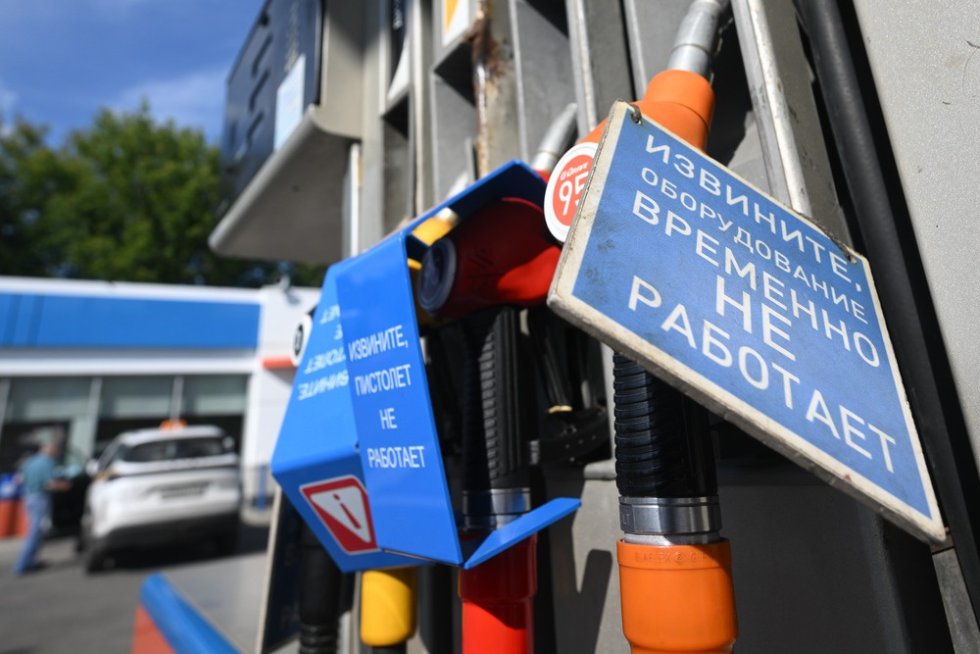
This measure is intended to prevent even the slightest hint of a risk of fuel shortages in our market. The focus is primarily on gasoline, the production capacity of which in our country exceeds consumption by only 10-15%. This year, as a result of unplanned repairs at our refineries due to drone strikes, the danger of gasoline shortages has arisen in various regions of Russia. This has been a key reason for the surge in its trading prices and the prices at gas stations.
Of course, we could simply import fuel— for example, from China or Belarus—but in that case, its price would be significantly higher than the Russian price. Our market operates mechanisms that reduce prices for domestic consumers. One such mechanism is the reverse excise tax. Its implementation will allow imported fuel to be sold at similar (or nearly similar) prices as Russian fuel.
As noted by Yuri Stankevich, Deputy Chairman of the State Duma Energy Committee, in a conversation with "RG," the decision is forced but justified under current conditions. In any case, imports should be considered a temporary phenomenon. The established capacities of Russian oil refining significantly exceed internal demand for both gasoline and diesel. The task is not only to restore production levels but also to increase them. For gasoline, in the medium term, this means an increase of at least 10% compared to the level of 2024. The capacity of Russian oil refining significantly exceeds internal demand for both gasoline and diesel.
A similar opinion was expressed by Managing Partner of NEFT Research, Sergey Frolov, who believes that in the current conditions (attacks on Russian energy facilities), this measure is justified and can serve to cover local shortages.
A reasonable question arises: where might the supplies come from? According to Stankevich, the primary sources will be Belarusian refineries.
Belarus has two refineries—Mozyr and Novopolotsk ("Naftan")—which have historically focused on foreign markets, notes Sergey Tereshkin, CEO of the oil products marketplace OPEN OIL MARKET. According to the latest available data from Belstat, in 2020, gasoline production in Belarus amounted to 3.2 million tons, of which 1.3 million tons went to the domestic market while 1.8 million tons were exported (the remaining volumes likely contributed to stockpiles, according to Belstat data). The expert points out that even with a complete reorientation to the Russian market, Belarusian refineries would be able to meet less than 10% of Russia's gasoline needs (annual gasoline demand in Russia is around 38-40 million tons).
Additionally, there is the issue of logistics. The most problematic region for fuel in Russia is the Far East, but supplies from Belarusian refineries to that region would be "golden." Gasoline and diesel fuel (DF) are already more expensive in the Far East than in other regions of the country.
Therefore, Frolov believes that China may be the main candidate for supplies, particularly as its oil refining capacities are currently underutilized due to slowing economic growth. Consequently, in terms of logistics, China appears to be one of the most attractive options.
However, as Stankevich reported, options for importing from Asian countries have been and continue to be discussed, but they seem unlikely since potential participants in such deals either have to purchase oil and fuel abroad themselves or fear being targeted by U.S. sanctions due to trade-economic relations with Russia.
As noted by Dmitry Gusev, Deputy Chairman of the Supervisory Board of the "Reliable Partner" association and member of the expert council for the "Gas Stations of Russia" competition, it is theoretically possible to rely on imports from Chinese or Indian refineries. However, such supplies are unlikely to be logistically profitable. Refineries are built either close to the market or near crude oil extraction sites.
However, if we are only discussing a temporary measure, then it will help us weather the "tough times" of peak demand—specifically, for gasoline, late spring, summer, and early autumn. From Tereshkin's perspective, the effect of this measure will be limited. To mitigate the risks of shortages, it is crucial to increase the production of oil products in Russia.
The need for additional oil refining capacities within Russia is also emphasized by Gusev, who highlights that while the implemented scheme is "working," it leads to budgetary losses.
Lastly, it's worth noting that importing fuel under such conditions may create an undesirable precedent for us. Russian companies have always found it advantageous to export crude oil. Now, this is particularly relevant as oil refineries face potential risks. Importing ready-made fuel from other countries could become a "relaxation factor" for our companies, favoring further increases in the export of crude oil over enhancing domestic oil refining capacities.
Nevertheless, Frolov believes that strategically implemented measures should not negatively impact Russian oil refining. The government always has the option to repeal the decision regarding the reverse excise tax.
Source: RG.RU