Fuel price increases on the exchange limited: what does this mean for gas station prices?
18.06.2026
95
The daily increase in gasoline and diesel fuel prices on the exchange in Russia is limited by a step of 0.01%. Prices are allowed to drop by up to 3% per day. This regulation took effect on the St. Petersburg Exchange.
In practice, this means that exchange prices are effectively frozen, at least regarding upward movement. Since the beginning of the year, prices have risen significantly: gasoline AI-92 has increased by 25%, AI-95 by 33%, and diesel fuel by 34%. Such a ceiling for prices makes it impossible for them to jump sharply due to news of attacks on Russian oil refineries or spikes in global oil prices caused by the Middle Eastern crisis. With this growth limit in place, exchange prices can increase a maximum of just over 0.2% in a month. For wholesale fuel buyers—large agricultural producers, transport, and construction companies—this means they can now be less concerned about unpredictable rising costs due to fuel price hikes. For gas stations, this means that the economics of refueling won't deteriorate from day to day or week to week. Such concerns have recently led to inflated prices at gas stations and sometimes to the complete halting of their operations. However, it is important to note that the majority of fuel is sold on the market without passing through the exchange.
As noted in a conversation with "RG" by Yuri Stankevich, Deputy Chair of the State Duma's Energy Committee, this decision was made as an emergency response to a sharp surge in exchange prices. The primary goal is to artificially limit speculative increases in fuel costs within trading sessions and cool down an overheated market. However, it is crucial to understand that this measure only functions within organized exchange trading; it does not directly apply to over-the-counter contracts and the small wholesale segment. In these areas, pricing is determined by the balance of supply and demand and long-term contracts between suppliers and buyers. Although exchange indicators serve as market benchmarks, limiting price growth on the exchange does not automatically guarantee the cessation of rising fuel prices in the over-the-counter segment or among small wholesale buyers. Nevertheless, stabilizing exchange prices can exert psychological pressure on participants in other market segments and slow down inflationary expectations there.
According to Dmitry Gusev, Deputy Chair of the Supervisory Board of the Association "Reliable Partner" and a member of the Expert Council of the "Gas Stations of Russia" competition, the increase in prices has not been frozen but rather paused, to prevent a surge in wholesale prices and maintain the economics at gas stations and in small wholesale trade. This measure will impact over-the-counter contracts because they are guided by exchange prices. The influence on the small wholesale market will be less significant, as no restrictions are currently in place in that segment. However, the expert believes that such regulations may be necessary.
Conversely, Sergey Tereshkin, CEO of Open Oil Market, takes a different view of the situation. He is convinced that the market will always find a loophole. According to current regulations, the exchange accounts for only 15% of physical gasoline sales by producers and 16% for diesel fuel. Over 80% of produced fuel is sold through other channels. Most importantly, this measure is unlikely to help the fuel retail sector, as prices for gasoline AI-92, AI-95, and diesel are close to 110,000 rubles per ton in the over-the-counter market.
Moreover, it’s essential to add that the rising prices at exchanges and gas stations are not due to the greed of oil producers or filling station owners. Presently, the challenges arise from supply disruptions, delays in fuel deliveries, and risks of shortages. While there is certainly an element of "unhealthy" panic in the market, such panic cannot solely explain the limits on fuel supplies at gas stations.
The restriction on the daily price increase for fuel on the exchange makes it impossible for prices to spike sharply upwards.
As noted by Sergey Frolov, managing partner at NEFT Research, measures to prevent a price surge are being implemented against the backdrop of a genuine shortage in supply and surge in demand. Prices at major gas station networks owned by vertically integrated oil companies (VINK) - which handle the entire production chain from oil extraction to fuel sales - will be maintained at levels closely aligned with inflation. It is simply a matter of waiting until government measures begin to take effect. The situation at independent gas stations (which make up more than half of stations in Russia) is complex—it's not just about price, but also about the ability to purchase the necessary volumes of fuel. Some will raise prices in this situation, while others may cease operations altogether. It will become even more challenging for independent gas stations to compete with those owned by VINKs. While sales of ancillary goods and services are beneficial, if your fuel is significantly more expensive or unavailable, customers simply will not visit, underlines the expert.
In Sanktkevich's opinion, there is no direct and immediate connection between the exchange's restrictions and retail prices. The cost of a liter of fuel at a gas station comprises multiple components: wholesale price, transportation costs, gas station networks' margins, and, crucially, fiscal burdens (taxes). In Russia, retail price dynamics are traditionally more inert and smoothed out compared to the wholesale market, thanks to a damping mechanism (payments to oil producers from the budget for fuel supplied to the domestic market at prices below export levels) and oversight by the anti-monopoly service (FAS). However, if exchange prices were to continue rising unchecked, it would inevitably lead to increased costs for gas station owners and subsequent price hikes for end consumers. Freezing prices on the exchange allows this chain to be broken and creates conditions for stabilizing or even possibly reducing retail prices in the future, provided stable demand continues and no new external shocks occur.
Currently, we are benefiting from falling oil prices due to decreasing tensions in the Middle East. Consequently, prices for petroleum products should decline as well. Yet, a bit of time is needed and to ensure that the truce is not disrupted by any parties involved. The question then arises, how long will this price growth limitation be effective? In the short term, it can halt price increases and smooth out fluctuations in fuel prices. However, over a period of, say, one to two months, if supply issues persist, its influence may diminish. Prolonged manual market regulation typically does not lead to favorable outcomes.
Overall, the exchange represents the most transparent segment of the fuel market, and any restrictions on exchange trading will encourage the market to "go underground," where prices exceed the exchange level, Tereshkin believes.
However, Stankevich argues that setting maximum price change values is a classic tool of administrative regulation. The state and regulatory bodies are compelled to resort to manual management to stabilize the situation in the short term. Yet, it is premature to discuss a complete shift of the fuel market to manual control. Exchange trading with established limits is merely one of the control mechanisms. The market continues to operate based on fundamental economic factors such as oil production volumes, refining, tax policies, and logistics costs. Thus, we are discussing enhanced oversight measures during a crisis period, but the fundamental market mechanisms remain operational, underscores the expert.
According to Gusev, people should still consider alternative modes of transport. Not horses or donkeys, but gas-powered vehicles and the booming electric vehicle market. An individual can choose a vehicle that consumes fuel that won’t be irritatingly priced, the expert believes.
In the meantime, in Sevastopol, the availability of gasoline for free sale has increased. Fuel deliveries have successfully increased, and authorities are preparing for a gradual lift of sales restrictions. However, fueling through QR codes will continue for now, to manage queues at gas stations. A correspondent from "RG" checked the current situation in the region. As of June 17, fuel had become available for free sale at 11 gas stations, with this number growing daily. On June 16, there were ten such stations, and on June 15, eight. Motorists have felt a sense of relief. Those who could not access fuel for an extended period were finally able to refuel, albeit only 20 liters at a time. This restriction has been in place in Sevastopol since May 22.
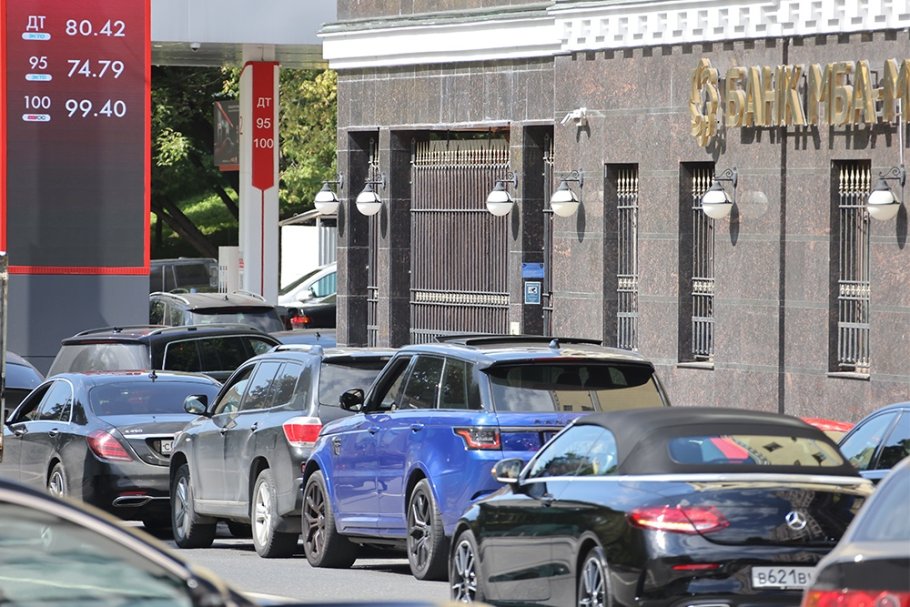
From 8 am on Wednesday, queues began to form at gas stations. Over 60 cars were waiting at the "ATAN" station on Stoletovskyi Prospekt. AI-92 and AI-95 Ultra fuel were available for free sale at this station. Motorists organized the queue in such a way as to not block the roadway or intersections. Sales start at 9 am, and at 9:20, an air raid alert was declared. During this time, the gas station does not dispense fuel. People patiently wait. Motorists respond willingly to inquiries.
"It's been easier to get fuel over the last couple of days," says Kia driver Sergey. "The AI-92 can be found almost everywhere, while AI-95 is rarer."
Primarily, gasoline and diesel are allocated for communal and emergency services, public transport, and law enforcement agencies. Remaining volumes are distributed to residents via QR codes.
Source:
RG.RU