Global Startup Market – 22 May 2026: AI Infrastructure, Mega Rounds, Biotech, Fintech, Geopolitical Risks and New Benchmarks for Venture Capital
Friday, 22 May 2026, is shaping up as a significant day for the venture market, marked by large deals in artificial intelligence, infrastructure platforms, defence technology, fintech and biotech. Startup and venture capital news shows that capital continues to concentrate around companies that can quickly turn technological advantage into revenue, scalable infrastructure and a strategic position in the global market.
For venture investors and funds, the key theme is not simply valuation growth but the quality of that growth. Against a backdrop of high interest rates, fierce competition for computing power and geopolitical control over technology assets, the startup market increasingly resembles a departure from the classic cheap-capital cycle. In 2026, venture investment is shifting toward companies that already demonstrate corporate client demand, resilient unit economics and the potential to become part of critical digital infrastructure.
AI Startups Remain the Primary Magnet for Capital
The headline for the venture market is yet another confirmation that AI startups dominate global funding structures. Investors continue to pay a premium for companies operating at the intersection of artificial intelligence, software development and access to computing resources.
A telling example is the Modal Labs deal. The company secured a large Series C round and significantly increased its valuation. For venture funds, this deal matters not only because of its size but also because of the investment logic behind it. Modal operates in a zone where several powerful trends converge:
- growing use of AI tools for writing and testing code;
- scarcity of available graphics processing units and computing power;
- corporate clients shifting to cloud environments for AI development;
- need for startups and large companies to rapidly validate AI-generated code before deployment.
Such startups are becoming more than just software providers – they are infrastructure intermediaries linking developers, cloud providers and corporate demand. For venture investors, this signals the emergence of a new asset class: AI infrastructure with potentially high gross margins, rapid revenue growth and strategic importance for the entire technology sector.
Anthropic Intensifies the Debate on AI Lab Profitability
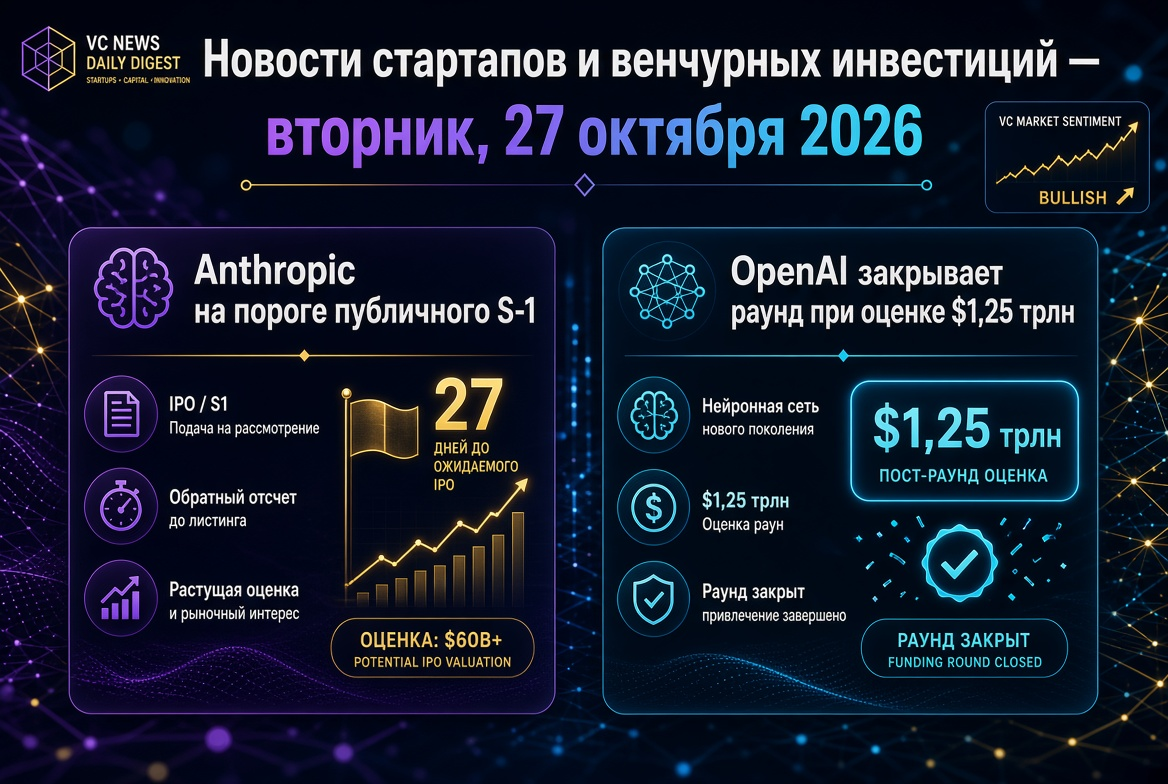
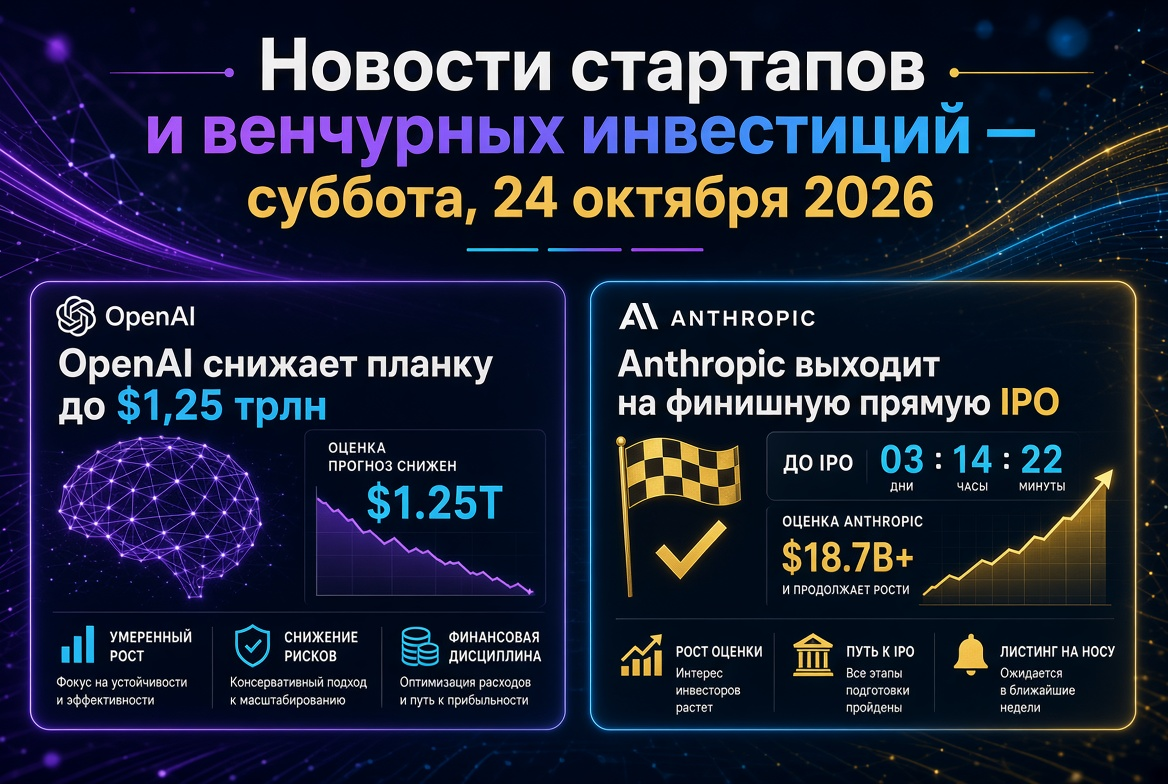
A particular focus for the market is Anthropic. According to business press reports, the company is moving toward its first profitable quarter, which could be an important psychological event for the entire artificial intelligence sector. Until recently, the largest AI labs were viewed as capital-intensive structures requiring constant multibillion-dollar injections for model training, infrastructure and computing power.
If market leaders can demonstrate operating profit amid rapid revenue growth, it will change how venture funds assess AI startups. Investors will increasingly divide companies into two groups:
- AI labs with foundational models, high capital intensity and long payback horizons;
- applied AI startups and infrastructure platforms that can achieve commercial efficiency more quickly.
For the global startup market, this is an important signal. Venture investment in artificial intelligence is no longer evaluated solely by technological scale. Increasingly, the focus is on revenue, client retention, computing costs, speed of deployment and the ability to monetise products beyond experimental demand.
Decart and Generative AI Confirm Demand for Real-Time Technologies
Among the week's large deals, the round for Decart – a company working in real-time generative artificial intelligence – stands out. Raising hundreds of millions of dollars at a multi-billion-dollar valuation shows that investors continue to seek startups that can create new formats for user experience, content and interactive AI environments.
For venture funds, the real-time GenAI direction is particularly interesting for three reasons. First, it may extend beyond enterprise software and reach mass consumer markets. Second, such technologies could become the foundation for new gaming, educational, media and communication platforms. Third, real-time AI requires serious infrastructure, creating barriers to entry for competitors.
However, high valuations in this segment also amplify risks. Investors must distinguish between a technology demonstration and a sustainable business model. In 2026, the venture market increasingly demands from AI startups not only impressive products but also proof of solvent demand.
The Sino-American Technology Conflict Becomes a Venture Risk Factor
The situation around Manus shows that geopolitics has become a full-fledged factor in startup valuations. The founders of a Chinese AI startup previously involved in a deal with Meta are reportedly seeking financing to buy back the company amid demands from Chinese regulators. This case is important for the entire venture investment industry, as it demonstrates that deals involving high-tech assets increasingly depend not only on business valuation but also on the position of states.
For funds operating globally, this means a need for deeper analysis of jurisdictional risks. Startups in the following segments are particularly vulnerable:
- artificial intelligence and autonomous agents;
- semiconductors and computing infrastructure;
- defence technology and dual-use solutions;
- data, cybersecurity and enterprise automation;
- cross-border M&A deals involving strategic buyers.
In practice, this could lead venture funds to apply an additional discount to startup valuations when an exit through sale to an international technology giant may be blocked by regulators.
Europe Strengthens Its Bet on Scaling and Industrial Technology
The European venture market also remains in the investor spotlight. In 2026, Europe is attempting to solve its chronic scaleup gap – a shortage of capital for companies that have passed the early stage but cannot yet compete with US and Asian technology giants in terms of financing volumes.
Particularly significant is the development of major initiatives aimed at scaling European technology companies. The market is discussing funds and programmes that could support startups in artificial intelligence, industrial automation, climate technology, defence solutions and biotech. For venture investors, this creates a new map of opportunities: European startups often have a strong scientific base but need growth capital and access to global clients.
A separate direction is industrial tech. Investors are increasingly looking at startups that modernise construction, energy, logistics, manufacturing and infrastructure. This is a slower market compared to consumer AI, but it may be more resilient in terms of long-term demand.
Biotech and AI Drug Discovery Remain a Strategic Focus
Biotechnology and AI-driven drug discovery continue to attract substantial venture capital. Deals around companies applying artificial intelligence to drug development confirm investor interest in the intersection of science, data and computing power.
For funds, this sector looks attractive but complex. Potential returns can be high, yet the investment horizon is longer, regulatory risks are greater, and commercialisation depends on clinical results and partnerships with pharmaceutical corporations. Therefore, in biotech, what matters most is not just the team and technology, but also access to strategic investors, scientific expertise and international markets.
Fintech and Mobility Retain Investor Interest Outside the AI Sector
Although artificial intelligence dominates startup news, venture investments are not limited to AI companies. The market retains interest in fintech, small-business platforms, digital banking solutions and mobility. Large rounds in these segments show that investors are ready to fund companies with clear revenue, scalable client bases and strong operating models.
Particularly important is the trend toward 'infrastructure fintech'. Funds are increasingly less interested in projects that simply offer a new consumer interface. Demand is much higher for startups that become a financial layer for businesses: managing payments, lending, settlements, compliance, treasury operations and cash flows.
Key Takeaways for Venture Investors and Funds
The agenda for 22 May 2026 shows that the startup market remains active but is becoming more selective. Capital exists, but it is concentrating around companies with a strong technology position, rapid revenue growth and clear strategic significance.
Key Investment Signals of the Day:
- AI infrastructure is emerging as one of the main directions for venture investment.
- Startup valuations increasingly depend on revenue, not just technological potential.
- Geopolitics is affecting deals, especially in artificial intelligence and deep tech.
- Europe is stepping up its support for scaleup companies and industrial technologies.
- Biotech, fintech and defence technology remain important sectors for funds.
- Investors demand proven commercialisation even from the most promising AI startups.
Outlook: The Market Moves from Euphoria to Capital Discipline
The 2026 venture market cannot be called weak. On the contrary, the largest rounds show that funds, corporate investors and strategic players still have a significant appetite for risk. But that risk is becoming more professionally calculated. Startups with real revenue, an infrastructure role and a global market are accessing capital on premium terms. Companies without clear monetisation face tougher negotiations and cautious valuations.
For venture investors and funds, the main task of the coming months is not simply to join popular AI deals, but to select companies that can survive a potential market cooldown. Winners are likely to be startups operating at the intersection of artificial intelligence, computing infrastructure, enterprise automation, biotechnology, industrial software and fintech.
Thus, startup and venture capital news on Friday, 22 May 2026, captures an important shift: the market retains high activity, but increasingly values proof over promises. For global venture funds, this means a transition to a more mature phase of investing, where capital goes to those who can not only grow fast but also build a technology business that is sustainable over the long term.