The Global Fuel and Energy Sector Enters a Period of High Volatility on Friday, 22 May 2026: Oil, Gas, LNG, Electricity, Coal and Renewables Become Part of a Unified Struggle for Energy Security
Friday, 22 May 2026 marks a pivotal day for the global fuel and energy sector. In the markets for oil, gas, petroleum products, electricity, coal and renewable energy, several key factors are simultaneously intensifying: supply disruptions across the Middle East, rising raw material exports from the United States, reconfiguration of LNG routes, increased pressure on refineries and accelerated deployment of solar and wind generation.
For investors, energy market participants, fuel companies, oil companies and energy infrastructure operators, the central question now extends beyond the price of oil or gas. The market is increasingly evaluating supply chain resilience, feedstock availability for refineries, the petroleum product balance, grid reliability and the capacity of nations to swiftly replace lost energy volumes.
Oil Market: Supply Deficit Persists, But Falling Demand Caps Prices
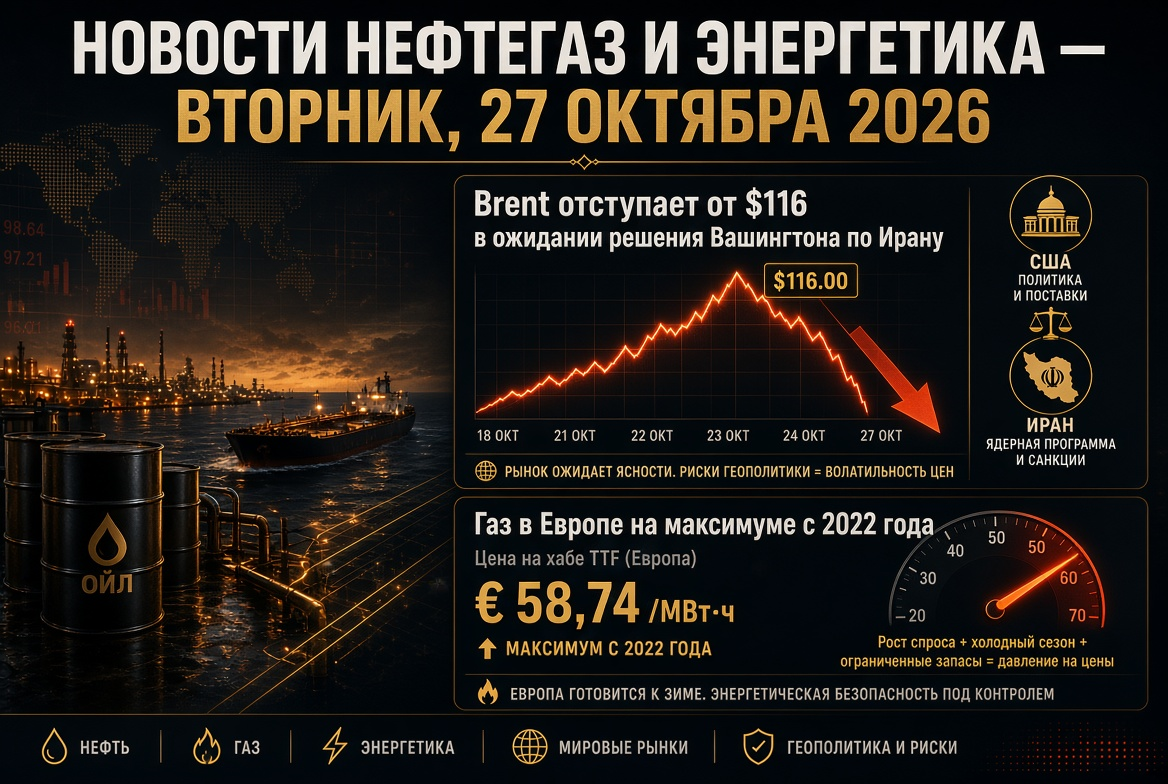
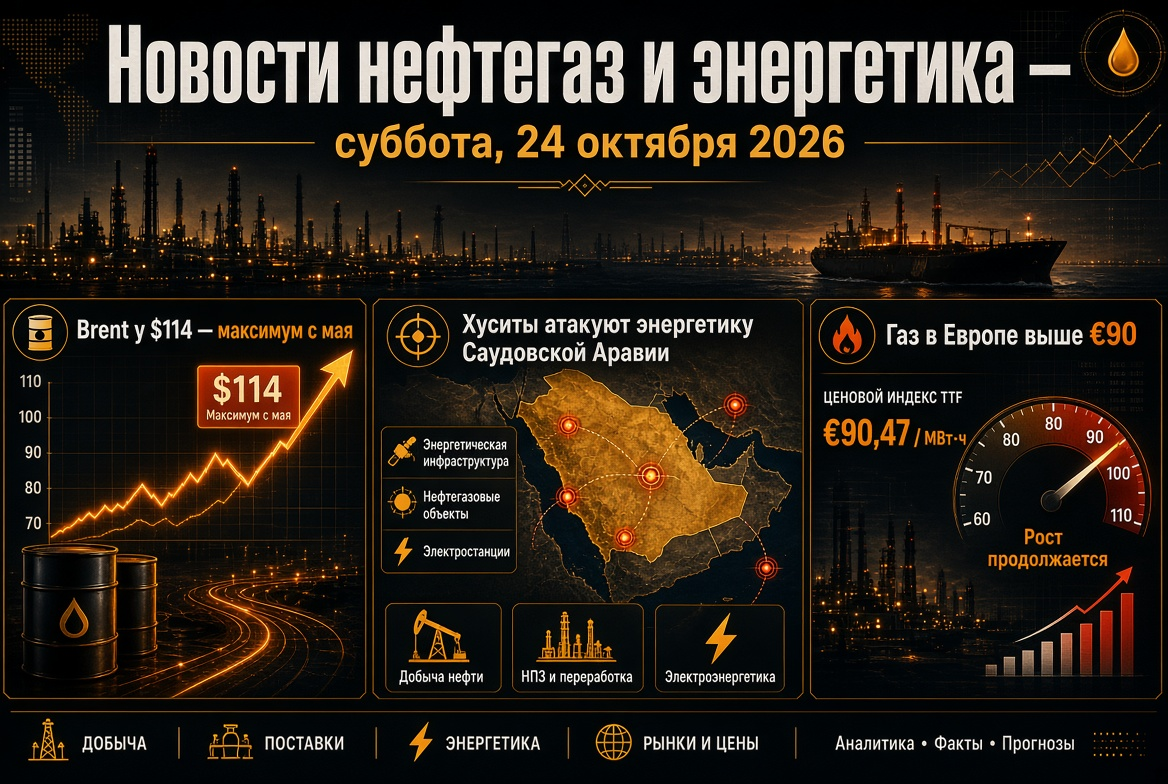
The global oil market remains strained following major supply disruptions from the Persian Gulf region. Restrictions on tanker movements through the Strait of Hormuz have amplified risks for exports of crude oil, petroleum products and LNG. Meanwhile, oil prices are not showing linear gains, as elevated quotations have already begun to curb demand from refining, aviation, petrochemicals and portions of industrial consumption.
According to international energy agencies, global oil supply in 2026 remains under pressure, with lost volumes partially offset by rising exports from the Atlantic Basin. For the market, this translates into a new balance structure:
- The Middle East loses part of its role as a stable supplier of raw materials;
- The United States, Brazil and other producers outside the conflict zone gain additional export potential;
- Asian refineries reduce imports and more actively utilise inventories;
- Traders price in not only physical deficits but also the risk of logistical disruptions.
For oil companies, the current scenario creates a dual effect. On one hand, high prices support revenue from producing assets. On the other hand, instability in logistics, insurance rates and freight raises operating costs.
United States Strengthens Its Role in the Global Oil and Petroleum Products Market
One of the key developments for the energy sector has been the sharp increase in the US role as an oil supplier to the global market. Against the backdrop of constraints on Middle Eastern supply, American crude has become an important source of feedstock for Europe and Asia. At the same time, inventory data show a significant drawdown in commercial and strategic reserves.
For investors, this is an important signal. Rising US exports support utilisation of port infrastructure, pipelines, terminals and oilfield service companies. However, the rapid decline in inventories creates the risk of a future tightening of the balance if Middle Eastern supply does not recover on a sustainable footing.
Key Takeaways for the Oil Market:
- American oil acts as a temporary stabiliser of the global market.
- High utilisation of export infrastructure supports the midstream sector.
- Declining inventories may limit the US capacity to compensate for deficits over the long term.
- Petroleum products remain a sensitive segment due to demand for gasoline, diesel and jet fuel.
Refineries and Petroleum Products: Margins Dependent on Feedstock, Logistics and Seasonal Demand
For refineries, the May 2026 market is proving challenging. On one hand, the summer season traditionally supports demand for gasoline, diesel and jet fuel. On the other hand, feedstock costs, supply disruptions and expensive logistics are intensifying pressure on processing.
In the United States, refinery utilisation remains high, indicating sustained demand for petroleum products. However, lower gasoline output alongside rising distillate production shows that refineries are adapting their processing configurations to current market economics. For fuel companies, this translates into heightened attention to inventories, regional spreads and the availability of maritime logistics.
Globally, petroleum products could become more volatile than crude oil itself. If Asian refineries continue to reduce feedstock purchases and the Middle East remains constrained, localised shortages of gasoline, diesel and fuel oil may arise even with relatively stable Brent prices.
Gas and LNG: Market Re-routes Around Deficits and Hormuz Risks
The gas and LNG market remains one of the most sensitive segments of the global energy sector. Restrictions on supply from the Persian Gulf have intensified competition between Europe and Asia for available cargoes of liquefied natural gas. In this environment, the importance of suppliers from the United States, Australia, the Eastern Mediterranean and Africa increases.
Particular attention from market participants is drawn to the Eastern Mediterranean. The prospect of using Egyptian gas and LNG infrastructure to monetise gas discoveries off Cyprus suggests the region could strengthen its role as an energy hub. For investors, this signals potential growth in interest for gas infrastructure projects, LNG terminals, pipeline linkages and long-term contracts.
The gas market is increasingly becoming an infrastructure market. Those who succeed are not only those with a resource base, but also those capable of delivering gas to the end consumer quickly.
Saudi Arabia and the Middle East: Rising Domestic Oil Burn Shifts Export Balance
One of the most significant factors for the oil and petroleum products market is the growth in fuel consumption within Persian Gulf countries. In Saudi Arabia, expectations of higher summer electricity demand and reduced availability of associated gas are intensifying the need to burn fuel oil and crude oil for power generation.
For the global market, this means that some raw material that could have been exported will instead be used domestically. This factor is particularly important in summer, when electricity consumption for cooling, water supply and industry rises sharply.
For oil companies and traders, this adds an extra layer of risk: even if some production recovers, export volumes may fall short of expectations if domestic fuel demand in the region remains high.
Electricity: Clean Generation Strengthens its Position, But Gas Remains the System Backstop
The electricity sector in 2026 is undergoing an accelerated transformation. In several regions, including the largest power systems in the United States, solar and wind generation are rapidly increasing their share of the energy mix. The growth of solar power is particularly notable, as it begins to displace coal during daylight hours and reduce the need for gas-fired generation.
However, for energy companies, this does not mean a complete abandonment of gas. Gas-fired power plants remain a critical balancing element, especially during evening peaks, in periods of low wind or unstable solar output. Accordingly, the investment focus is shifting to the combination of:
- solar power;
- wind generation;
- gas backup capacity;
- energy storage systems;
- digital grid management.
For electricity investors, the key theme is not only renewables growth but also the cost of power system reliability.
Renewables and Storage: The Energy Transition Becomes a Security Issue, Not Just a Climate One
Renewable energy is gaining fresh momentum amid geopolitical risks. Solar and wind projects are now viewed not only as decarbonisation tools but also as a means to reduce dependence on imports of oil, gas, coal and LNG.
For the renewables market, this creates a favourable long-term picture. Governments and energy companies will accelerate investment in generation, batteries, flexible grids and local equipment manufacturing. However, the industry also faces constraints: cost of capital, grid connection delays, transformer shortages and competition for land remain serious barriers.
The most attractive investment prospects are projects that combine generation and energy storage. Such a model allows electricity to be sold not only at the time of production but also during peak demand hours.
Coal: Demand Persists, But Market Structure is Changing
Coal remains an important part of the global energy balance, especially in Asia. With high LNG prices and unstable gas supply, coal-fired generation remains a backup option for several countries. However, the long-term trend shows a gradual decline of coal’s role in developed power systems and growing pressure from renewables.
For the coal market, the key issue is not just overall demand but the geography of consumption. Asia retains significant consumption volumes, while the United States and Europe continue to reduce coal’s share in electricity generation. This increases exporters’ dependence on Asian buyers and makes the market more sensitive to policies in China, India and Southeast Asian nations.
What Investors and Energy Companies Should Monitor
Friday, 22 May 2026 demonstrates that the global energy sector is in the midst of deep restructuring. Oil, gas, LNG, petroleum products, refineries, electricity, renewables and coal no longer move as separate markets. Any change in oil supply affects gas, any constraint on LNG supports coal, and growth in renewables alters demand for gas-fired generation.
Key Indicators for the Days Ahead:
- the situation with supply through the Strait of Hormuz;
- dynamics of US crude and petroleum product inventories;
- US crude and LNG export flows;
- refinery utilisation rates in the United States, Europe and Asia;
- prices for Brent, WTI, diesel, gasoline and fuel oil;
- spot LNG prices in Asia and Europe;
- share of solar and wind generation in power systems;
- coal demand in Asia.
For investors, the current market presents both risks and opportunities. Companies with access to a resilient raw material base, flexible logistics, export infrastructure, high-conversion refineries and energy assets capable of operating in volatile pricing environments will benefit. Those reliant on a single supply route, a single fuel type or a single regional market will lose.
The key investment theme of the day: energy security is once again becoming the base premium in the valuation of energy sector assets. In 2026, the market pays not only for oil and gas extraction but also for the ability to deliver energy to the consumer at the right time, via a resilient route and with controlled costs.