Current Startup and Venture Investment News as of March 4, 2026: Record AI Megarounds, Global Fund Activity, M&A Deals, and IPO Prospects in the Global Venture Market
March confirms a fork in venture capital: megarounds for AI champions are juxtaposed with stricter discipline in unit economics for B2B startups. This week, the market is driven by strategists (clouds, chipmakers), sovereign funds from the Middle East, and several notable exit events in the public markets of the US and Asia.
Context is important: according to Crunchbase, global startup funding in February reached a record level of approximately $189 billion. AI companies attracted about $171 billion, while startups from the US raised around $174 billion, highlighting an extremely high concentration of venture capital.
Key Deals and Signals (Selected Highlights):
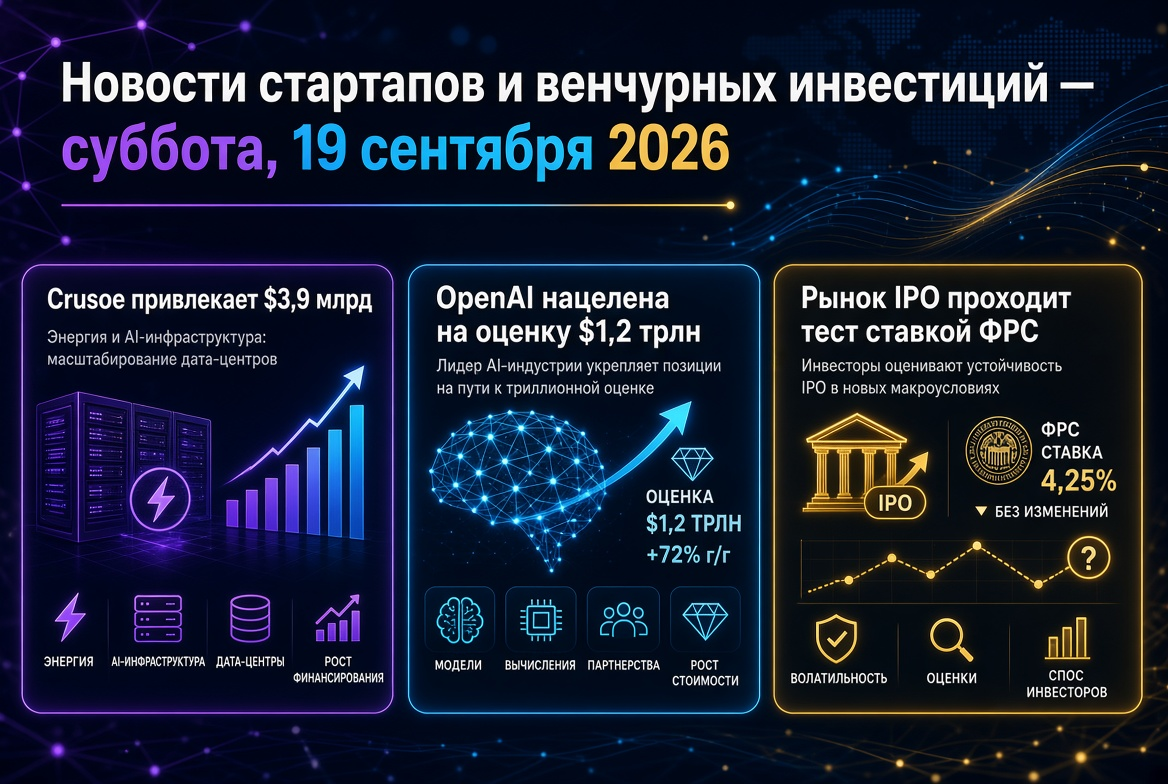
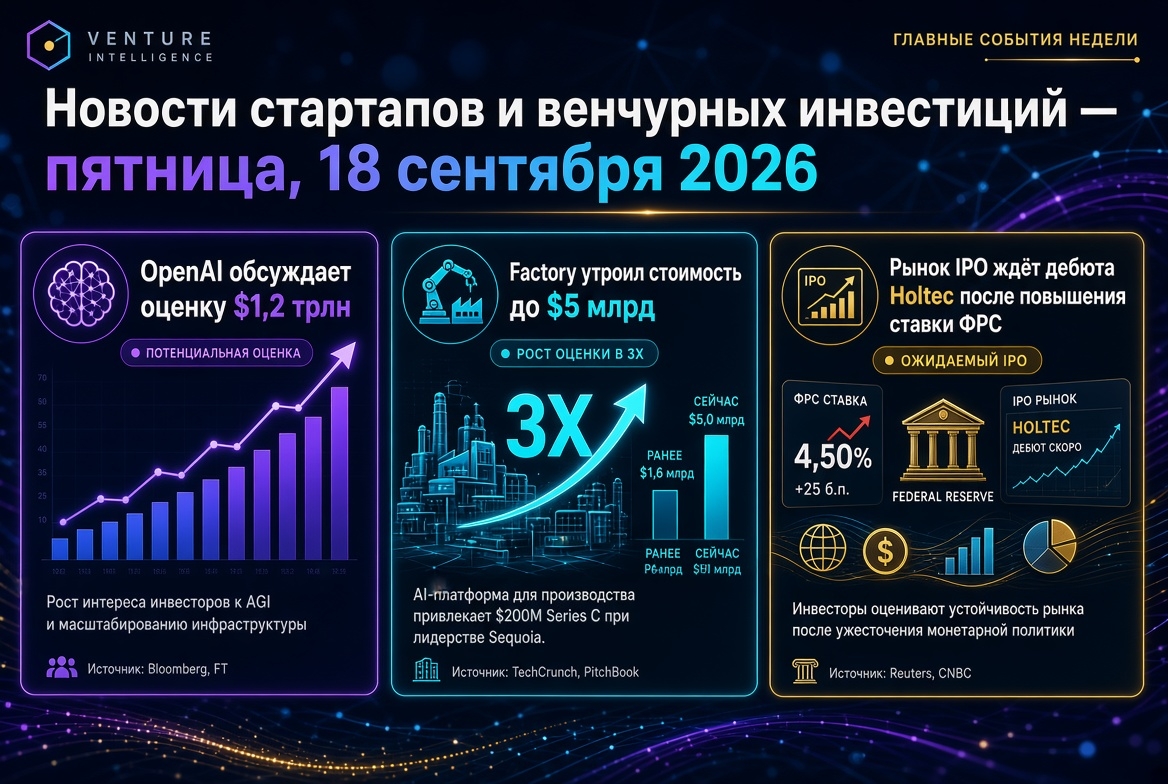
- OpenAI: announced an investment round totaling $110 billion at an estimated valuation of approximately $840 billion; the round fuels the race for computing and partnerships with cloud providers.
- Databricks: raised approximately $5 billion at an estimated valuation of around $134 billion — an indicator of demand for data/AI platforms for enterprises.
- PayPay: filed for an IPO in the US aiming to raise around $1.1 billion at a valuation of up to $13.4 billion — a test of appetite for fintech.
- Cerebras Systems and Axelera AI: significant rounds in AI hardware ($1 billion and $250 million respectively) confirm the revaluation of the "infrastructure premium."
- Agentic AI: funding for infrastructure companies (e.g., $300 million for Temporal and $100 million for Basis) reflects the demand for reliability and workflow automation.
Main Deal of the Week: OpenAI's Megaround and Bet on "Physics" of AI
The flagship news is OpenAI's funding round of $110 billion at an estimated valuation of around $840 billion. This deal stands out: a significant portion of the capital comes from strategic investors, for whom access to the AI leader is not only about financial returns but also about gaining a competitive position in the AI product creation chain (models → computing → distribution → enterprise contracts).
The market recognizes a direct link between capital and computing: agreements with clouds and accelerator suppliers are increasingly measured in gigawatts of power and long-term infrastructure commitments. For venture funds, this means that due diligence at late stages critically must examine the economics of inference, forecast CAPEX/OPEX, and guaranteed access to compute in the markets of the US, Europe, and Asia.
AI Infrastructure and Chips: Alternatives to GPU, Photonics, and the "System Layer"
Amid the computing shortage, investments are shifting towards chips for AI, network bandwidth, and software that enhances the utilization of clusters. A major marker is the $1 billion raise by Cerebras Systems (approximately $23 billion valuation) and $250 million from European Axelera AI. Simultaneously, interest continues in solutions "at the intersection of hardware and data" — from compilers and orchestration of mixed clusters to memory and network optimization.
This trend is also supported by macro-CAPEX: according to Bridgewater, Alphabet, Amazon, Meta, and Microsoft may invest around $650 billion in AI infrastructure in 2026. For venture investors, this means higher demand for components of the infrastructure stack — but also increased sensitivity to the cycle of capital expenditures and energy costs.
A separate growth point is high-speed interconnects and photonics (connecting chips and memory). For investors, this is a market where "technological correctness" is not sufficient: the winning team will be the one with a manufacturing strategy, contracts with data centers, and clear cost structures at scale.
Enterprise Software and Agentic AI: Ventures Pay for Reliability and Deployment
Agentic AI shifts the discussion from "demo" to "operations": when AI agents perform actions, the cost of failure is comparable to direct P&L loss. As a result, funding rounds are increasing in workflow platforms, observability tools, data, and durable execution tools — exemplified by the $300 million raise for Temporal at an estimated valuation of around $5 billion.
In applied cases, investors are funding "automation of functions" where ROI is calculated in person-hours and error reduction: for instance, $100 million for Basis at an estimated valuation of around $1.15 billion reflects interest in agents for professional services (accounting, finance ops). Investment committees are placing increased scrutiny on commercialization: contracts, retention, and clear monetization are valued.
IPO: Fintech and Biotech Move Forward, SaaS Remains Under Pressure
The public market remains volatile, but certain stories are making their way to listings. In fintech, demand for large national ecosystems is being tested: PayPay aims to raise around $1.1 billion at a valuation of up to $13.4 billion and plans to list on Nasdaq. In biotech, there is noticeable demand for "AI-accelerated R&D": Generate Biomedicines raised $400 million in an IPO at a price of $16 per share.
Meanwhile, classic venture-backed SaaS is experiencing a "reevaluation of risk": public multiples are compressing due to expectations of AI disruption and profitability requirements. Many portfolios are seeking alternative liquidity pathways: secondary markets, partial sales to strategics, and structured deals.
Cybersecurity and Defense Tech: New "Unicorns" and Long-Term Contracts
Cybersecurity remains a sector where venture investments are supported by regular demand: more automation leads to more vulnerabilities and attacks. In Europe, new "unicorns" are emerging in developer-security, such as Aikido Security (round of $60 million at a $1 billion valuation), and Israel continues to generate large deals for SOC automation and resilience approaches (for example, $140 million for Torq and $61 million for Gambit Security).
Defense tech is strengthening its position due to increased government contracts and a focus on secure environments (air-gapped). Deals such as the $136 million Series B for Defense Unicorns illustrate that defense software is increasingly financed as "enterprise with special compliance" — with long contracts and high revenue predictability.
Mega Funds and Sovereign Capital: Who Becomes the Anchor of Rounds
Fundraising remains difficult for small VC teams, but large platforms continue to raise significant funds: Andreessen Horowitz announced raising over $15 billion, including separate mandates for AI infrastructure and "national interests." This intensifies competition for top deals and shifts bargaining power towards funds with access to late-stage investments.
Sovereign funds from the Gulf states are expanding their presence as LPs and direct investors. A notable step is the expansion of the Qatar Investment Authority's "fund of funds" program by an additional $2 billion (to $3 billion) and participation of sovereign investors as cornerstone LPs in IPOs and large private rounds. In practice, this increases the available capital but raises demands for governance and access to data.
Climate Tech and Energy: Early Checks, Project Logic, and Demand from Data Centers
Climate tech is maturing: more solutions can be prototyped and implemented with relatively small rounds (often in the range of $1–3 million), which is bringing angels and seed funds back into the market. High-CAPEX sectors require a hybrid funding model — venture investments + corporate partners + grants + debt components.
Energy hardtech is receiving additional momentum due to increased energy consumption from AI infrastructure: nuclear and fusion projects are receiving more funding in Europe and the US. For instance, Italian newcleo raised approximately $89 million, while support for fusion testing capabilities is being discussed at the regional level in Germany. For venture funds, this presents a rare opportunity to enter "big physics," but with mandatory verification of industrial feasibility and regulatory roadmaps.
Checklist for Venture Investors of the Week
- Check access to compute for the AI portfolio and plan for reducing inference costs.
- Focus follow-on investments on companies with technological barriers and proven distribution.
- Enhance the security framework (data, models, rights, audit) in enterprise products.
- Prepare for IPO in advance: reporting, governance, metrics, and the narrative of "winning in the age of AI."
- In hardtech, evaluate capital structure, not just the funding round size.
In summary: the venture market increasingly operates by the rules of infrastructure — capital follows computation, energy, security, and contracts. For funds, strategies that connect technological moats with manufacturing and commercial viability in global markets are winning.