Overview of Key Startup and Venture Investment News as of March 25, 2026, with a Focus on AI, Deeptech, and Emerging Market Trends
The primary trend in the startup market remains unchanged: artificial intelligence continues to attract a significant portion of global capital. Venture investments in AI are increasingly viewed not as a short-term cycle theme, but as a fundamental logic of capital allocation in technology. This is particularly evident in how funds evaluate deals: growing importance is placed not only on revenue growth rates but also on the presence of strong research teams, partnerships with infrastructure providers, access to GPU resources, and the ability to swiftly turn models into commercial products.
For venture investors, this means the following:
- The premium for AI themes persists, but is becoming less universal;
- Large checks are more frequently directed towards infrastructure and enterprise applications, rather than mass consumer stories;
- Competition for top AI assets intensifies pressure on valuations, even in a more cautious market.
Capital is Shifting from "Promises" to Infrastructure and Applied Software
In the early phase of the AI boom, the market willingly financed a broad range of concepts, but now venture capital is increasingly directed towards segments with fundamental technological protection. These include legal AI, financial AI, autonomous cybersecurity systems, corporate automation tools, and infrastructure solutions for training and deploying models. For funds, this represents a significant shift: the startup market is rewarding less for just a compelling growth story and increasingly for integration within the corporate budget of clients.
This is why the following verticals appear particularly strong today:
- AI tools for legal and financial teams;
- Computational, inference, and data layer infrastructure;
- Cybersecurity with a focus on autonomous agents;
- Vertical B2B platforms with rapid ROI for clients.
Deeptech Gains Central Stage in Global Investment Agenda
Another significant story on March 25, 2026, is the strengthening presence of deeptech as an essential part of the global VC mandate. This is no longer a niche category for specialized funds but a full-fledged capital attraction center. Semiconductors, defense technologies, university spinout teams, energy solutions, robotics, and industrial automation systems are transitioning into the category of strategic assets. For many venture funds, this offers a way to step away from overheated segments of applied software and gain exposure to more complex but more secure business models.
Venture investments in deeptech are growing for several reasons:
- Governments and corporations seek technological sovereignty;
- The market values IP that is harder to replicate;
- Industrial clients are willing to pay for solutions that enhance productivity and security;
- Funds are looking for assets with a longer value horizon and less dependence on short-term hype.
Robotics and Physical AI Become a New Area of Increased Interest
Startup news in March indicates that capital is gradually extending beyond pure software and intensifying bets on physical AI. Robotics, manufacturing automation, machine vision, and AI systems for the real world are becoming some of the most discussed topics among large funds. This makes sense: after the boom of foundation models, the market is seeking the next monetization phase, which increasingly lies in integrating artificial intelligence into physical processes—from warehouses and factories to logistics and industrial control.
For investors, this area is appealing as it combines several growth drivers:
- High demand for automation amid labor shortages;
- Strong technological barriers to entry;
- Potential for long-term contracts with corporate clients;
- Higher strategic value potential in M&A.
Cybersecurity Reaffirms Its Status as a Defensive Venture Theme
Amid the rise of AI agents, expansion of corporate automation, and an increasing attack surface, cybersecurity once again appears as one of the most resilient areas for venture investment. The startup market in this segment benefits along two lines: on one hand, client demand remains essential even in budget-conscious conditions; on the other, the emergence of new threats associated with generative AI creates space for a new wave of products. Therefore, for venture funds, cybersecurity remains not just a defensive bet, but part of a new trust infrastructure in the digital economy.
New Funds in Europe Indicate Strengthening Regional Positions
The global venture market landscape is becoming increasingly multipolar. By 2026, Europe can no longer be viewed solely as a secondary market relative to the United States. The launch of new funds focused on AI-native and deeptech sectors demonstrates that an institutional base for funding early-stage companies is solidifying in the region. For the startup market, this signifies the emergence of a more robust capital ecosystem where founders can expect not only local checks but also comprehensive growth support.
For global investors, this carries several practical implications:
- Europe is becoming more attractive as a source of engineering assets and spinout teams;
- Competition for quality deals in the region will intensify;
- Funds with an international network will gain an advantage in accessing the best early companies.
The IPO Market is Reviving, but Exits Remain a Privilege for the Best
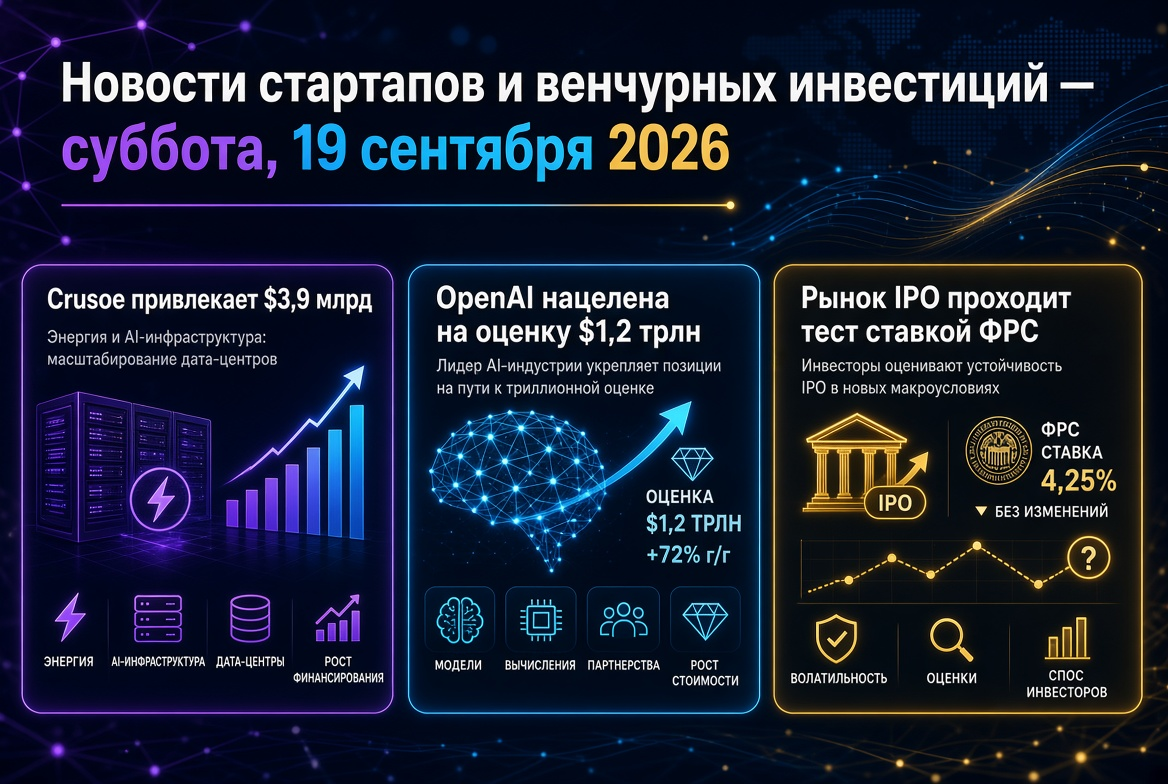
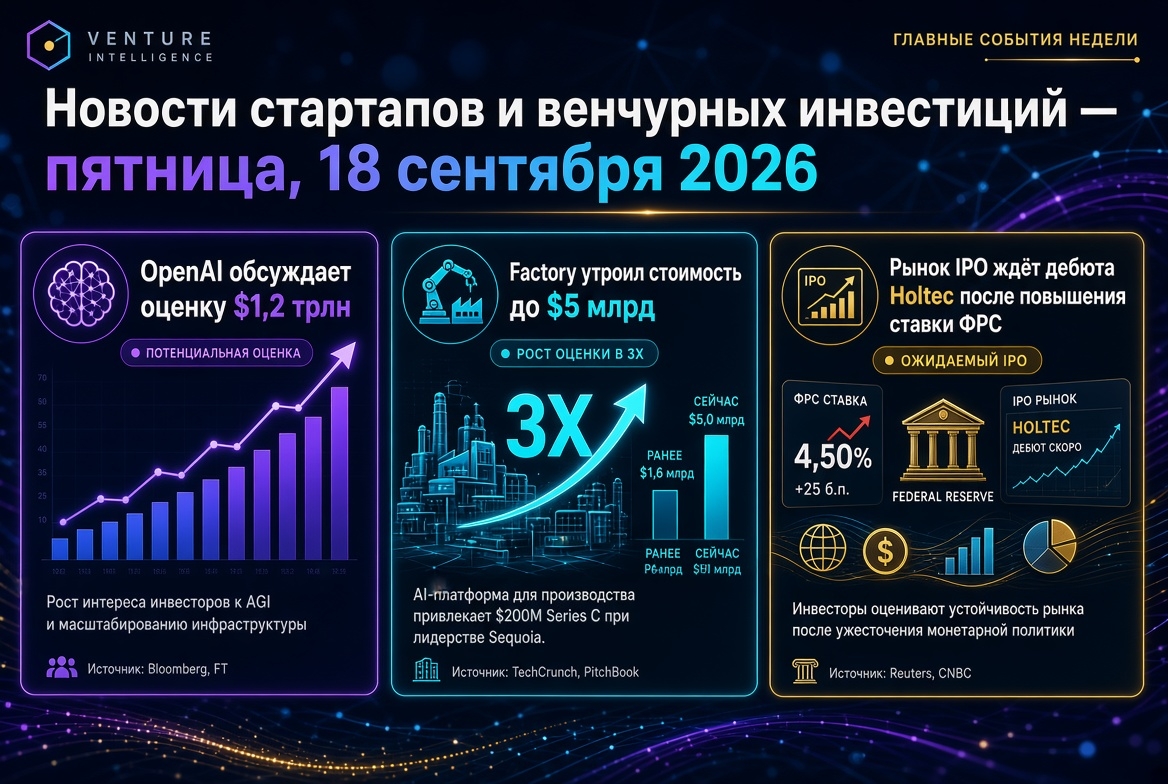
One of the most discussed topics for venture funds remains the issue of liquidity. Following challenging years, the market is gradually receiving signals that the IPO window no longer appears completely shut. However, in 2026, this does not signify a mass return of exits but rather a restoration of the corridor of opportunities for a limited range of companies. Public investors want to see mature revenue, category leadership, a clear path to margin, and a strong scaling story. For the startup market, this means that preparation for going public starts much earlier than in the previous cycle.
The practical takeaway for funds is simple:
- The exit market is improving compared to 2023–2024;
- But liquidity is returning first to the strongest assets;
- Portfolio companies must transition more quickly from growth to proven efficiency.
The Main Risk of the Year is Overpaying for the Narrative
Despite the revival in venture activity, the most significant risk as of March 25, 2026, remains unchanged: the market readily overpays for a story if it fits within the dominant investment narrative. AI startups, deeptech, and physical AI indeed constitute the next cycle of technological growth, but not every company within these categories automatically deserves a premium valuation. For venture investors, this is an environment where those who differentiate between real moats and marketing packaging will emerge victorious, rather than those who rush into deals the fastest.
What This Means for Investors and Funds Right Now
Startup and venture investment news as of Wednesday, March 25, 2026, illustrates a market that remains active but has become noticeably more discerning. Venture capital continues to be available, especially for companies at the intersection of AI, infrastructure, deeptech, cybersecurity, and robotics. However, selectivity is increasing: capital is flowing to areas where there is technological protection, a mature team, access to infrastructure, corporate demand, and a real opportunity for scaling without disrupting the business's economics.
For global venture funds, the optimal priority set now appears as follows:
- AI infrastructure and applied enterprise AI;
- Deeptech and semiconductors;
- Robotics and physical AI;
- Next-generation cybersecurity;
- Companies capable of moving towards M&A or IPO with a clear investment story.
The outcome of the current day for the startup market is clear: the next yield cycle is being formed not in a broad chase for trends but in precise capital allocation between a few truly strong themes. It is here that the most important venture investments are concentrated, it is here that global funds are shifting their focus, and it is likely that future leaders of the technology market will emerge from these areas.