Latest Startup and Venture Capital News — Tuesday, January 6, 2026: Record Investments in AI Startups, Return of Mega Funds, Revival of IPOs and M&A Deals. Analytical Review for Investors and Funds.
As we enter 2026, the global venture capital market is demonstrating robust growth, marking a recovery from the downturn of recent years. According to the latest data, the total investment in technology startups for 2025 is nearing record levels. For instance, in the third quarter of 2025, nearly $100 billion was invested (approximately 40% more than the previous year) — the best result since 2021. The protracted “venture winter” of 2022-2023 is behind us, and private capital is rapidly returning to the tech sector. Major funds are resuming large-scale investments, and investors are once again willing to take risks. Despite selectivity, the industry is entering a new phase of growth in venture investments.
Venture activity is rising across all regions. The USA continues to lead, particularly in the artificial intelligence segment. In the Middle East, deal volume has multiplied thanks to generous funding from sovereign wealth funds. In Europe, Germany has, for the first time in a decade, surpassed the UK in terms of venture investments. In Asia, growth is shifting from China to India and Southeast Asia, compensating for a cooling Chinese market. Africa and Latin America are also actively developing their startup ecosystems, with the emergence of the first "unicorns" in these regions, confirming the global nature of the current venture boom. The startup scenes in Russia and the CIS countries are striving to keep pace: new funds and accelerators, supported by the government and corporations, are being launched to integrate local projects into global trends.
Below are the key events and trends shaping the venture market as of January 6, 2026:
- The return of mega funds and large investors. Leading venture players are forming enormous funds and increasing their investments, injecting capital into the market and fueling risk appetite.
- Record rounds in the AI sector and new “unicorns.” Unprecedented investments in artificial intelligence are driving startup valuations to unseen heights, fostering the emergence of many new "unicorn" companies.
- Revitalization of the IPO market. Successful public offerings of tech companies and a rise in filings indicate that the long-awaited "window" for exits has reopened.
- Diversification of industry focus. Venture capital is directed not only towards AI projects but also to fintech, climate initiatives, biotechnology, defense technologies, and other sectors, broadening the market horizons.
- A wave of consolidation and M&A deals. Major mergers, acquisitions, and strategic partnerships are reshaping the industry landscape, creating new exit opportunities and accelerating growth.
- Global expansion of venture capital. The investment boom is spreading to new regions — from Gulf countries and South Asia to Africa and Latin America — forming local tech hubs worldwide.
- Local focus: Russia and the CIS. Despite restrictions, new funds and initiatives are emerging in the region to develop local startup ecosystems, increasing investor interest in local projects.
The Return of Mega Funds: Big Money Back in the Market
The largest investment players are triumphantly returning to the venture arena, signaling a new surge in risk appetite. The Japanese conglomerate SoftBank is experiencing a sort of “renaissance,” once again making substantial bets on tech projects, especially in AI. Its Vision Fund III (with a volume of around $40 billion) is actively investing in promising areas, while the company is reorganizing its portfolio: for instance, SoftBank has fully divested its stake in Nvidia to free up capital for new AI initiatives. Simultaneously, the largest Silicon Valley funds have amassed record reserves of uninvested capital (“dry powder”) — hundreds of billions of dollars poised to be deployed as the market strengthens.
The sovereign funds of the Middle East have also made a significant impact. Government investment funds from Gulf states are pouring billions of dollars into innovative programs, creating powerful regional tech hubs. Additionally, several well-known investment firms that had scaled back their activity are re-emerging with mega rounds. For example, following a cautious period, Tiger Global announced a new $2.2 billion fund, promising a more selective and “humble” approach to investments. The return of “big money” is already palpable: the market is becoming saturated with liquidity, competition for the best deals is intensifying, and the industry is receiving the much-needed boost of confidence in further capital inflows.
Record Investments in AI and a New Wave of “Unicorns”
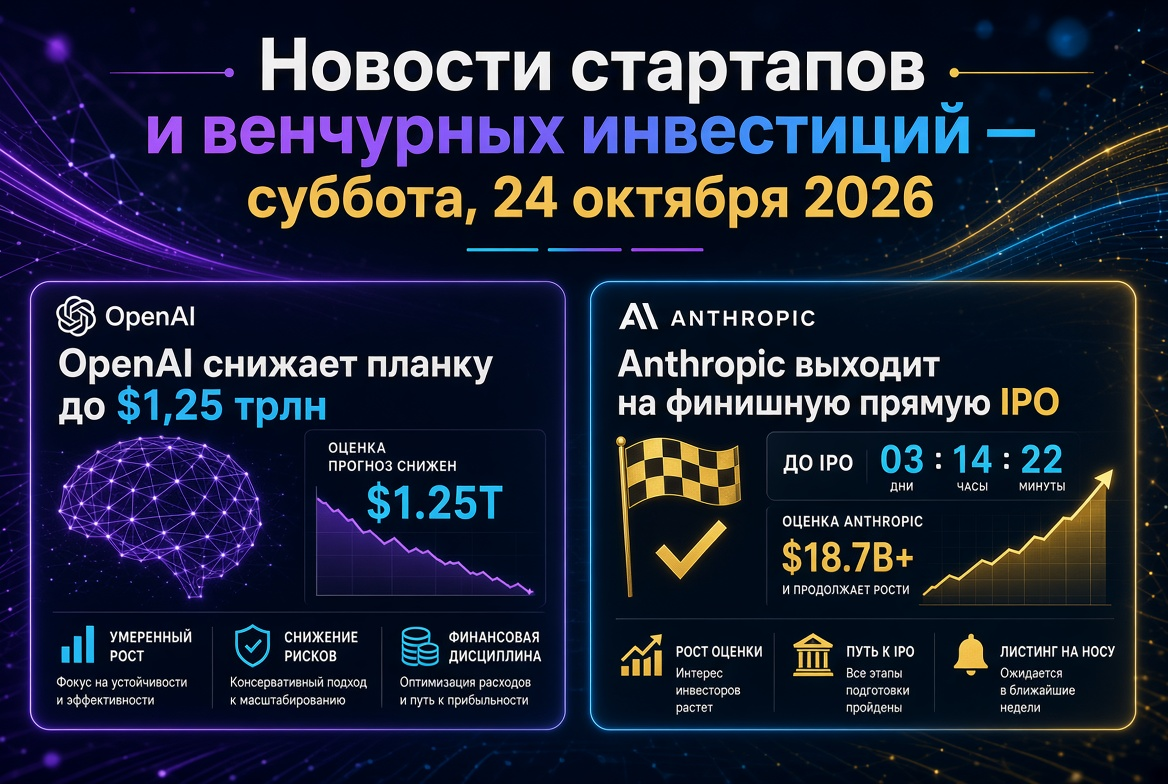
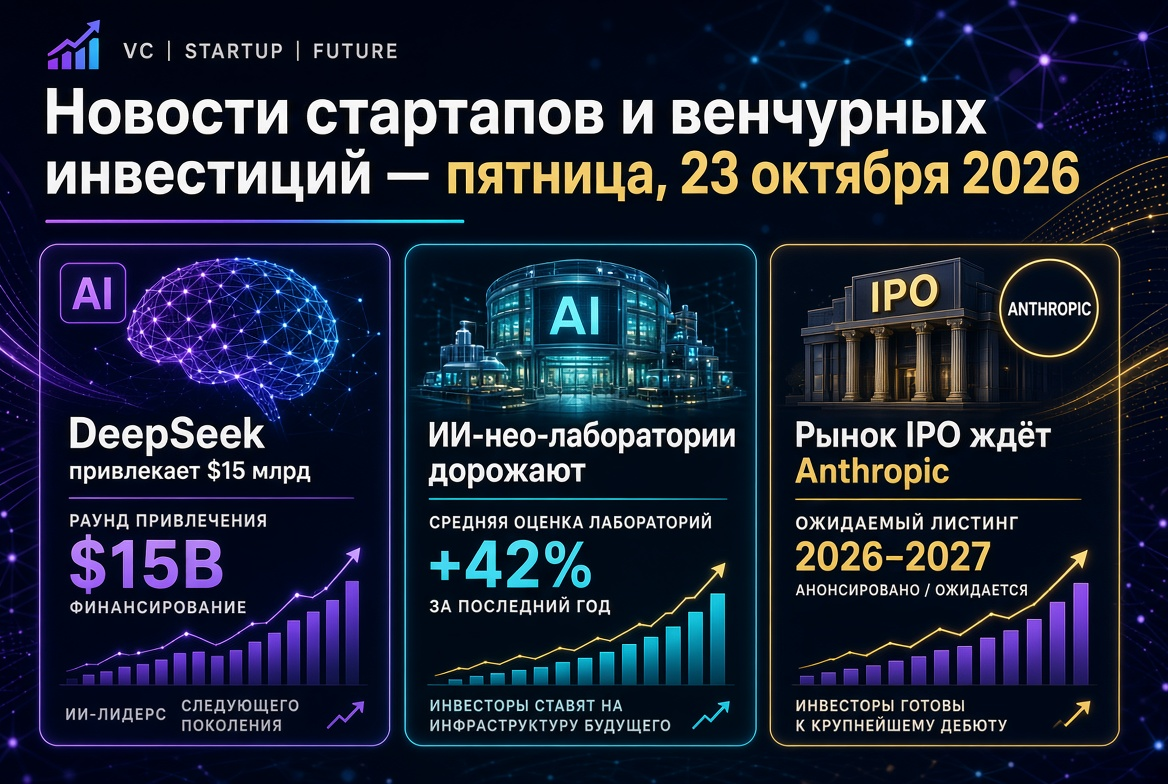
The artificial intelligence sector remains the main driver of the current venture upswing, showcasing record funding amounts. Investors are eager to secure positions among AI market leaders, directing colossal funds into the most promising projects. In recent months, several AI startups have secured unprecedented funding rounds. For example, AI infrastructure developer Anthropic raised approximately $13 billion, while Elon Musk's xAI secured around $10 billion. Such mega rounds, often accompanied by multiple oversubscriptions, confirm the excitement surrounding artificial intelligence technologies.
Funding is also flowing into critical infrastructure for AI. Venture capital is going towards the “shovels and picks” of this new digital age -- from chip production and cloud platforms to energy consumption optimization tools for data centers. It is estimated that the total investment in the AI sector in 2025 exceeded $150 billion, with projects related to artificial intelligence accounting for more than half of all venture capital funds for the year.
Revitalization of the IPO Market
The primary public offering market is experiencing a long-awaited revival after a protracted hiatus. Successful IPOs of several tech companies in 2025 have convincingly demonstrated that the downturn period is behind us. Venture investors are again receiving much-needed exit opportunities, strengthening confidence in financing late-stage startups. The number of new listing applications has noticeably increased, forming a hopeful queue of tech IPOs for 2026. Several “unicorns” that had long postponed their public debut are now eager to take advantage of the newly opened window.
Diversification of Industry Focus: New Horizons for Investments
Venture capital is now directed not only towards artificial intelligence but also towards a variety of other sectors. These include financial technology (fintech), climate and environmental projects, biotechnology and healthcare, defense, and aerospace developments. The diversification of industry focus means that the venture market is embracing a broader range of ideas and technologies. Capital is flowing into areas from financial services and renewable energy to healthcare and national security, which diversifies risks and reduces dependency on a single trend.
A Wave of Consolidation and M&A Deals: The Industry is Consolidating
Against the backdrop of the industry upswing, business consolidation is gaining momentum. Major corporations are actively acquiring startups to integrate their technologies, while young companies are merging to scale and strengthen their positions. For example, Meta acquired the Singaporean AI startup Manus for $2 billion. Such agreements provide venture investors with exits and enable companies to pool resources for accelerated growth.
Global Expansion of Venture Capital: The Boom is Reaching New Regions
The geography of venture investments is broadening. In addition to traditional tech centers (the USA, Europe, China), the investment boom is capturing new markets. Gulf countries (such as Saudi Arabia and the UAE) are investing billions of dollars into creating local tech parks and startup ecosystems in the Middle East. India and Southeast Asia are experiencing a real renaissance of the startup scene, attracting record volumes of venture capital and producing new “unicorns.” Rapidly growing tech companies are also emerging in Africa and Latin America — some of which are already valued over $1 billion, turning into global players.
Hence, venture capital has become more global than ever. Promising projects can now secure financing regardless of geography, provided they demonstrate scaling potential. This opens new horizons for investors: the search for high-yield opportunities is being conducted worldwide, and risks can be diversified across various countries and regions. The spread of the venture boom to new territories also facilitates the exchange of experience and talent, making the global startup ecosystem more interconnected.
Russia and the CIS: Local Initiatives Amid Global Trends
Despite external constraints, a revival of startup activity is once again being observed in Russia and the CIS following the decade’s downturn. In 2025, new funds totaling tens of billions of rubles were launched, aimed at supporting early-stage tech projects. Large corporations are creating their own accelerators and venture divisions, while government programs assist startups in obtaining grants and investments. For instance, in Moscow, one initiative attracted 1 billion rubles of investment in tech projects.
While the scale of venture deals in Russia and the CIS still lags behind the global average, interest in local projects is gradually returning. The easing of certain barriers has opened up investment opportunities from friendly countries, compensating for the outflow of Western capital. A number of major companies are contemplating IPOs: discussions are underway regarding the public offerings of the tech divisions of some holdings.