Startup and Venture Investment News for Monday, January 19, 2026: Mega Funds, Record AI Rounds, IPO Revitalization, Fintech, Biotech, and Climate Technology. Overview of Key Trends for Venture Capitalists and Funds.
By mid-January 2026, the global venture capital market is demonstrating a steady upturn following a downturn in prior years. Major investors are returning to the startup scene with impressive capital volumes, and governments around the world are amplifying their support for innovation. The explosive growth in artificial intelligence (AI) funding continues to break records, and venture rounds are once again reaching unprecedented scales. Simultaneously, the IPO market is coming to life: several tech "unicorns" are successfully going public, opening the long-awaited "window of opportunity" for exits. The sectoral focus is also expanding—investments are being directed into fintech, climate projects, biotech, and even crypto startups, apart from AI. At the same time, a wave of consolidation is evident: major M&A deals are reshaping the industry landscape. Below are the key trends and events in the venture market as of January 19, 2026:
- The Return of Mega Funds and "Big Money." Leading venture funds are attracting record amounts, refilling the market with capital and heating up the appetite for risk.
- Record AI Funding Rounds and New Unicorns. Unprecedented investments are inflating startup valuations, especially in the AI segment.
- Revitalization of the IPO Market. Successful public offerings of tech companies confirm that the IPO "window" remains open and is expanding.
- Diversification of Investments: Fintech, Climate Technologies, Biotech. Venture capital is actively moving into various sectors, not just AI, reflecting a wide range of growth opportunities.
- The Crypto Startup Market Awakens. Following a downturn in previous years, the blockchain and cryptocurrency sector is once again attracting significant investment and planning for major listings.
- Consolidation and M&A Deals. Major mergers, acquisitions, and strategic investments are enlarging market players and creating new pathways for startup exits.
- Government Policy and Regulators. Authorities are simultaneously stimulating innovation and tightening oversight of tech giants, influencing the rules of the game in the venture ecosystem.
- Local Focus: Russia and the CIS. Despite restrictions, new funds and initiatives are emerging in the region, supporting the growth of local startups.
The Return of Mega Funds: Major Investors Back on the Scene
The venture market is triumphantly welcoming back the largest investment players, signaling a renewed appetite for risk. At the beginning of 2026, several top funds announced record capital raises. For instance, American Andreessen Horowitz (a16z) raised approximately $15 billion for new funds—a unprecedented amount that constitutes nearly a quarter of last year's venture fundraising in the US. Concurrently, Middle Eastern sovereign funds continue to inject billions into technology projects, launching mega projects to develop startup ecosystems (especially in AI and deep tech) and establishing regional tech hubs. Overall, venture funds around the world have accumulated enormous reserves of "dry powder"—hundreds of billions of dollars in uninvested capital waiting for the right moment. This influx of "big money" fills the startup ecosystem with liquidity, supporting new rounds and growth in valuations of promising companies. The return of mega funds and institutional investors not only intensifies competition for the best deals but also instills confidence in the market regarding the continued influx of capital into startups.
Record AI Rounds and New Unicorns: The Investment Boom Continues
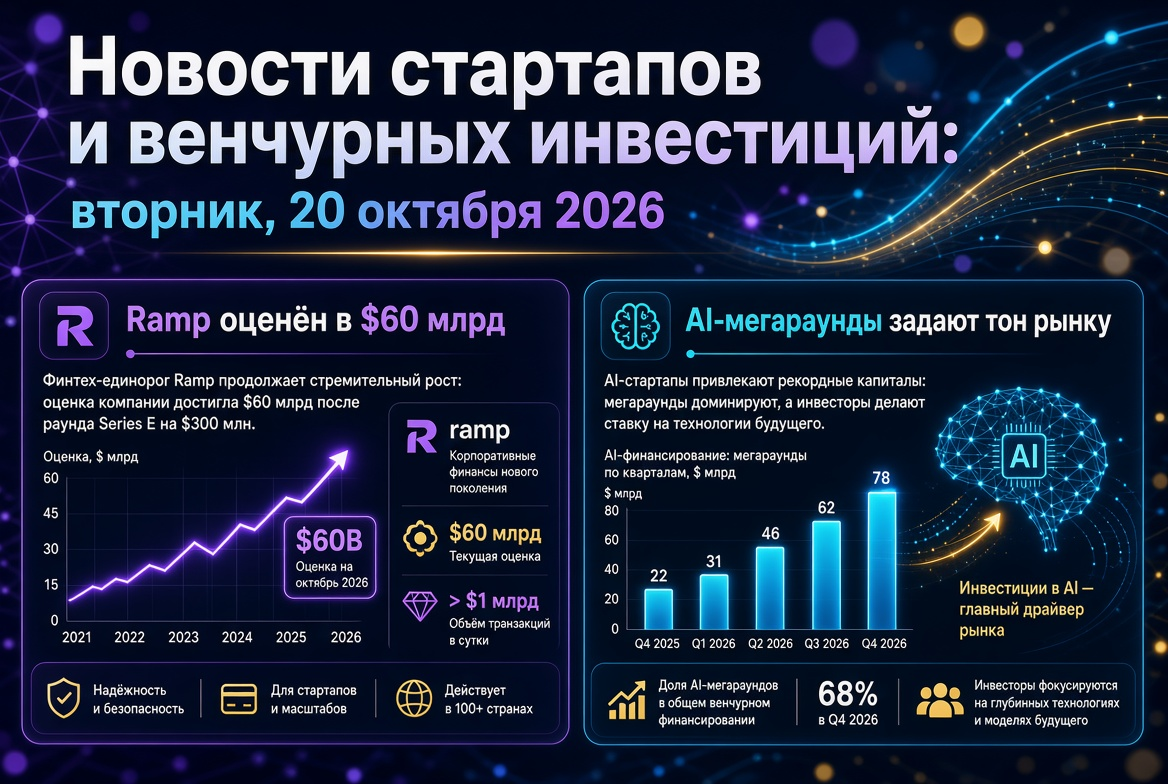
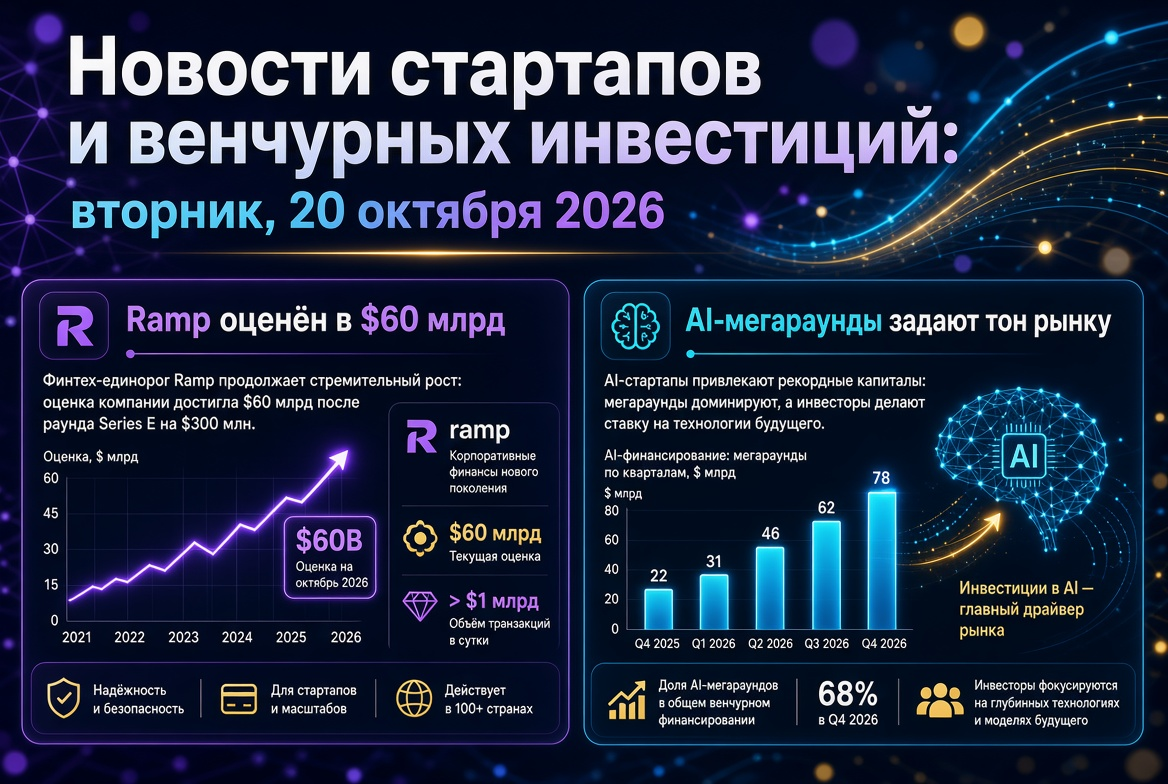
The artificial intelligence sector remains the main driver of the venture renaissance. Investors continue to chase investments in AI leaders, willing to support colossal funding rounds. At the beginning of the year, record deals were recorded: for example, the developer of a "universal brain" for robots, Skild AI, raised about $1.4 billion in investments led by SoftBank, achieving a valuation exceeding $14 billion—one of the largest venture deals in recent months. Another example is the San Francisco startup Higgsfield, specializing in generative video AI, which secured $80 million at a valuation of $1.3 billion just one year after launching its product, instantly making its way into the "unicorn" club. Such mega rounds underscore the excitement surrounding AI: venture capital is flowing not only into the models and applications of AI but also into the infrastructure needed for them (from cloud platforms to specialized chips). As a result, global investments in startups grew by approximately 30% in 2025, largely thanks to mega deals in AI, and 2026 is starting with the continuation of this trend. The wave of new "unicorns" persists, although experts warn of overheating risks: competition among AI startups is high, and only a few will ultimately justify such generous valuations.
The IPO Market Comes Alive: The "Window of Opportunity" for Startups Expands
The global IPO market is steadily recovering after a prolonged pause in recent years. Successful public offerings of technology companies at the end of 2025 and the beginning of 2026 confirmed that investors are once again ready to buy shares of growing startups. An uptick in activity is observed in Asia: several large Chinese and Asian tech companies have gone public in Hong Kong and Shanghai, raising billions of dollars and rekindling interest in initial public offerings in the region. The situation in the US and Europe is also improving: several "unicorns" took the risk to go public, and it paid off. For instance, an American fintech giant successfully debuted on the stock market with an increase in share prices on the first trading day, bolstering confidence in the sector. A series of high-profile IPOs is announced for 2026: among the most awaited are the financial service Stripe, AI model developer OpenAI, data software producer Databricks, space company SpaceX, and others. Many of them are preparing for listings in the second half of the year. Investment banks note that the window for initial offerings remains open longer than anticipated, and the market is capable of absorbing a wave of new proposals. For the venture ecosystem, this is extremely positive: successful IPOs enable funds to realize profits, return capital to investors, and direct funds toward new projects. Despite ongoing selectivity and caution, the existence of a functioning IPO window encourages more startups to plan their strategy for going public.
Diversification of Investments: Fintech, Climate Projects, Biotech, and More
Venture investments in 2025-2026 are being distributed across an increasingly broad array of sectors, making the market less dependent on a single trend. Following the AI surge, investors are once again turning their attention to other segments. Primarily, a revival is occurring in fintech: global funding for fintech startups increased by approximately 25-30% in 2025 (although the number of deals has decreased), and in the first week of 2026, several fintech companies announced major rounds. For instance, the pan-Asian digital banking platform WeLab raised around $220 million in a Series D round—one of the largest recent deals in banking fintech. At the same time, interest in climate technologies and "green" startups is intensifying: sustainable development funds and major energy corporations are increasingly investing in renewable energy, energy storage, and climate fintech solutions. The year 2025 became a record one for investments in climate and agritech projects, and in 2026, this trend persists amid the global focus on ESG and sustainability.
Furthermore, following the downturn of the previous years, there is a renewed appetite for biotechnology and medtech. New drugs, platforms for drug development, and medical services are again receiving funding. In the US, several biotech startups secured funding rounds of $50-100 million in the early weeks of January, and several venture firms announced the establishment of specialized bio funds totaling nearly $1 billion—a clear indication of the resurgent interest in the sector. Finally, in the context of geopolitical instability, investors are increasing their commitments to defense technologies and cybersecurity. Startups creating drones, cybersecurity systems, and dual-use products are receiving both government grants and private investments. Thus, the venture market is no longer revolving solely around AI: it is diversifying to encompass finance, climate, healthcare, security, and other areas. This makes the entire startup ecosystem more resilient and balanced.
The Crypto Market Awakens: New Investments and Plans for the Exchange
Another signal of market diversity has been the resurgence of investments in blockchain and crypto startups. Following the prolonged "crypto winter" of 2022-2023, venture activity in this segment is slowly recovering. In the first two weeks of 2026, cryptocurrency and Web3 companies globally attracted approximately $600 million in total—an indicator that inspires cautious optimism (although it is still far from the records of 2021). Interest is manifesting in various directions: from infrastructure for crypto trading and payments to decentralized finance (DeFi) applications and blockchain games. For example, an American crypto payment startup recently completed a round of over $50 million, and several digital asset custody projects received venture funding to expand their businesses.
An important indicator is that mature companies in the industry are preparing for the public market. The crypto exchange Kraken is reportedly preparing for an IPO in 2026 with an estimated valuation of about $20 billion, which would become one of the largest debuts in the sector's history. Additionally, developer of Ethereum infrastructure ConsenSys has plans to go public, which could attract investor attention to the Web3 sector. Even OpenAI, the primary beneficiary of the AI boom, is showing interest in adjacent areas: the company invested in January in the startup Merge Labs, which focuses on neural-computer interfaces (founded by Sam Altman), and struck a multi-billion-dollar agreement with AI chip manufacturer Cerebras. All this indicates that the crypto and blockchain ecosystem has not completely faded into the shadows—it is adapting to new conditions, cleansing itself of speculative overheating, and attracting more strategic investors. If regulators in various countries develop clear rules for digital assets, 2026 could be a pivotal year for more sustainable growth of crypto startups.
Consolidation and M&A: Enlarging Players and New Exits
Increased valuations for companies and heightened competition are pushing the industry toward a wave of consolidation. Major tech corporations and established startups are actively entering the M&A market, acquiring promising teams and products. The start of 2026 marked a significant increase in mergers and acquisitions: in the first week of January alone, over 700 M&A deals were announced worldwide, totaling around $39 billion, significantly higher than similar periods in previous years. There are notable examples in the high-tech sphere. Accenture announced the acquisition of the British AI company Faculty as part of its strategy to enhance its capabilities in the field of artificial intelligence. Simultaneously, OpenAI, in addition to external investments, has entered the acquisition market itself—purchasing a small startup Torch for approximately $100 million, which develops AI solutions for medical data to strengthen its presence in adjacent areas. In the cybersecurity realm, there is a series of acquisitions: the American sector leader CrowdStrike announced the acquisition of two startups (SGNL and Seraphic) within one week for a total sum of approximately $1.16 billion, expanding its product portfolio in access protection and browser security.
Consolidation is also impacting the largest caliber: discussions in industry circles revolve around potential mega deals that could set new records. For instance, there are rumors that several AI companies may be targets for acquisition by tech giants if their valuations continue to rise at such rates. For venture funds, the strengthening of the M&A trend has dual implications. On one hand, strategic deals offer startups an alternative exit route (selling to a larger player) if an IPO is currently unavailable or unprofitable. On the other hand, large corporations, by acquiring talent and technology, may further enhance their market power, raising concerns among regulators. Nevertheless, the wave of mergers and acquisitions reflects the maturity of certain market segments: the most successful projects are reaching a stage where their acquisition becomes a logical development for the industry. M&A transactions are expected to continue to rise in number in 2026, especially in the sectors of AI, fintech, and cybersecurity, providing investors with more opportunities to exit their investments.
Government Policy: Stimuli for Innovation and Increased Oversight
Government initiatives and regulatory decisions are becoming an important factor influencing the venture climate. Many countries initiated special programs to support startups and technologies of the future in 2025-2026. For instance, India announced a new phase of its Startup India program, as it approaches its tenth anniversary: provisions include expanding seed funding and tax incentives for tech companies, which are intended to accelerate the growth of the local startup landscape. In Europe, projects to finance innovation continue under the Horizon Europe program, alongside the establishment of government funds aimed at strategic sectors (AI, microelectronics, green energy) to enhance the region's technological sovereignty. In the Middle East, governments in the Gulf states are injecting record amounts into the creation of entire "startup cities" and tech parks, striving to attract entrepreneurs and venture capital from around the world.
At the same time, regulators are tightening oversight over the largest market players to avoid monopolization and unfair competition. In the US, the Federal Trade Commission (FTC) announced in early 2026 that it would closely scrutinize the practice of so-called "acquihire" deals, where tech giants do not buy the startup outright but poach its team, effectively "acquiring" talent without formal merger. Such regulatory actions aim to close loopholes in antitrust legislation and maintain healthy competition, which is ultimately advantageous for both startups and investors. In Europe, antitrust authorities are continuing investigations against Big Tech, and new laws (Digital Markets Act and others) impose restrictions on the largest platforms, opening more opportunities for young innovative companies. Overall, government policy currently balances between two objectives: stimulating innovation (through investments, grants, and improved business conditions) and preventing excessive concentration of power among individual corporations. This balance will largely define the rules of the game in the venture field in 2026.
Regional Perspective: Russia and the CIS Seek Growth Paths
In Russia and the CIS, the venture market is experiencing a contradictory period. On one hand, sanctions restrictions and economic turbulence have led to a decrease in the overall volume of venture investments. Estimates suggest that in 2025, the total volume of investments in Russian tech startups declined by approximately 10-18%, amounting to around $150 million (approximately 7-8 billion rubles) for the year, with the number of deals also decreasing. Nonetheless, even under such conditions, encouraging trends are emerging. The main driver of the local market has been artificial intelligence: it is AI startups that have attracted the lion's share of deals and managed to interest corporate clients. Private investors and corporations are shifting their focus from rapid growth to sustainability and profitability—in 2025, many deals were related to companies already generating revenue and capable of operating autonomously in a challenging environment.
The government is attempting to compensate for the outflow of foreign capital by creating new funds and support measures. Several initiatives aimed at early stages have been launched: state development institutions and major banks have established funds to invest in AI, import-substituting IT solutions, and industrial technologies. For instance, a venture investment fund is being established with contributions from major banks, amounting to several tens of billions of rubles, intended to support promising projects in software and electronics. Accelerators at corporations, universities, and technology parks continue their operations, helping startups to grow. Despite the challenging backdrop, new startups are emerging in Russia—especially in fintech (focused on the domestic market), B2B services for traditional industries, and solutions in agritech and, of course, in military/dual-use areas, where there is government demand. The ecosystem is slowly adapting: many teams are re-registering in friendly jurisdictions to maintain access to global clients and investments while conducting R&D in Russia. Analysts note that further easing of monetary policy (reduction of the Central Bank's key rate) in 2026 may gradually revive venture activity in the local market. Thus, the region is striving to keep up: even with minimal external financing, steps are being taken to preserve and grow the startup ecosystem, preparing for better times.