Current Startup and Venture Investment News as of February 12, 2026: Record Rounds in AI, Growth of the Global Venture Market, M&A Deals, IPO Preparations, and Key Trends for Investors and Funds.
As of mid-February 2026, the global venture capital market continues to maintain its recovery momentum following a prolonged downturn. The start of the year has been marked by impressive financing volumes: preliminary data indicates that January 2026 was one of the most fruitful months in the past two years in terms of total startup investments. Capital is once again flowing actively into the technology sector – record-sized deals are being made, and startups' plans for IPOs are back on the agenda. Major venture funds continue to launch megafunds and new funds, while governments and sovereign investors enhance their support for innovation, striving to keep pace in the global technological race. All of this has fostered a cautiously optimistic outlook for 2026, although investors remain selective about projects and are more demanding regarding business models and valuations.
Megafunds on the Move: Large Rounds and Capital Concentration
Following a period of relative quiet, so-called "megafunds" have returned to the venture stage – massive pools of capital for investments in technology companies. For instance, the American company Andreessen Horowitz (a16z) recently raised over $15 billion for new funds, bringing its assets under management to record levels. This capital is aimed at priority areas: artificial intelligence, defense technologies, cryptocurrencies, biotech, and other promising sectors. Sovereign funds from the Middle East and large corporations are also ramping up their venture activity: billions of dollars are flowing through government programs and corporate venture divisions, creating a global influx of "big money" into the startup ecosystem.
The resurgence of activity among the largest players is accompanied by unprecedented capital concentration among industry leaders. Investors are inclined to invest large sums in a limited number of top projects, seeking a stake in potential technological breakthroughs. The number of deals remains below the peak levels of 2021, but the average size of rounds has sharply increased. More funding rounds are exceeding $100 million, indicating a new phase of market maturity, where selected startups gain access to virtually unlimited capital.
AI and Robotics Boom: Record Investments in "Physical" AI
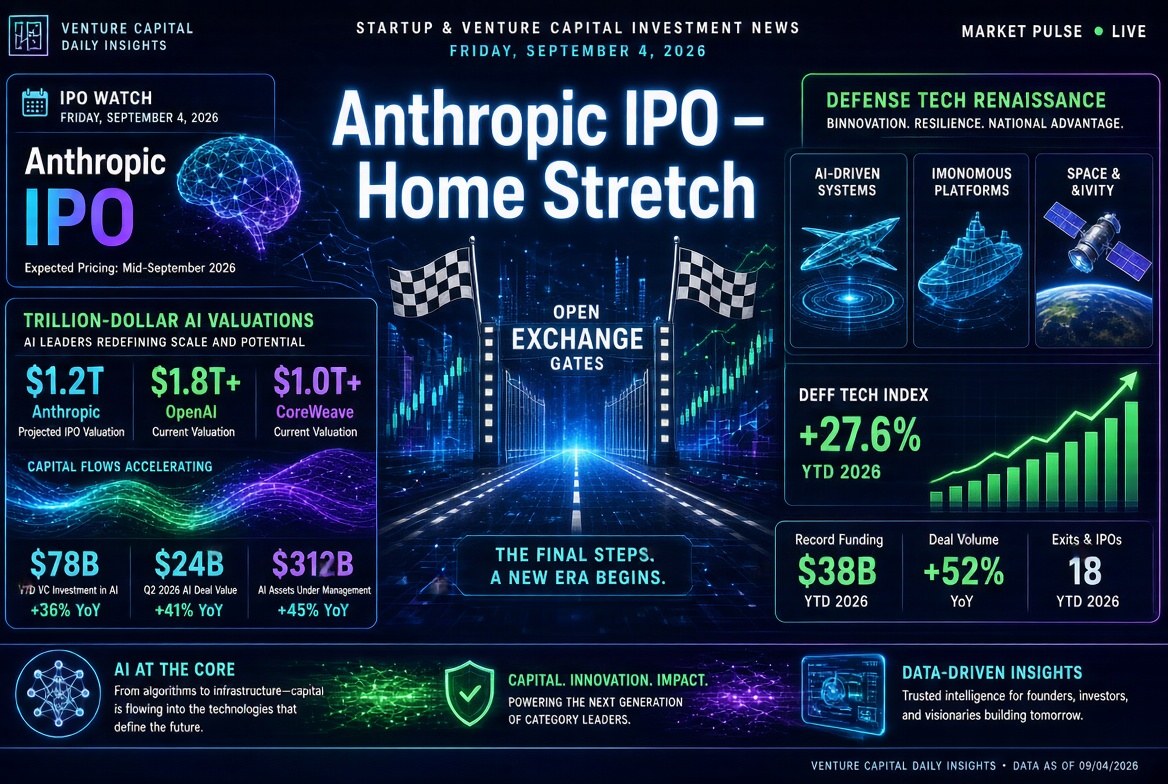
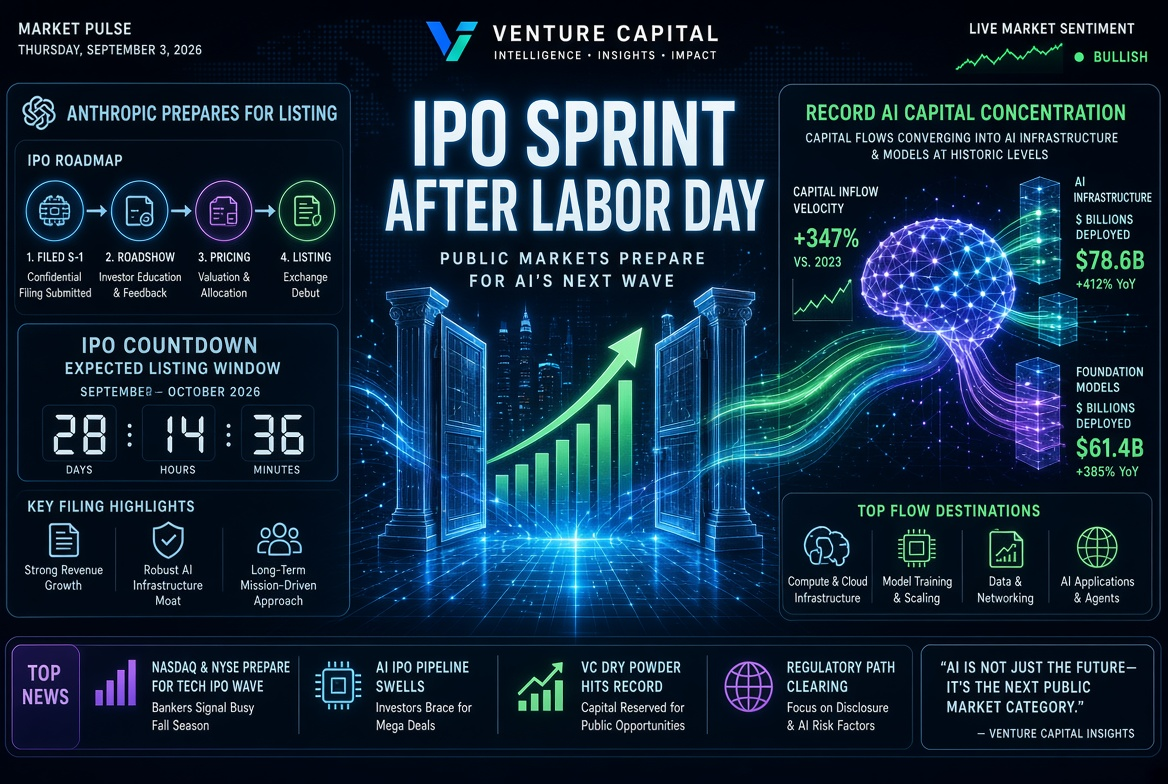
The artificial intelligence sector remains the primary driver of the current venture upturn, with a shift in focus from simple software projects to "physical" AI and deep technologies. Startups in AI and robotics are attracting record funding rounds, setting new benchmarks for the market. For instance, the autonomous driving division Waymo raised approximately $16 billion in investment with participation from a consortium of leading funds – an unprecedented amount highlighting the colossal capital needs of self-driving car technologies. AI model developer Anthropic, known for its breakthroughs in generative AI, secured about $10 billion in funding and achieved a valuation of around $350 billion, effectively becoming one of the most valuable private companies in the world. New giants are also emerging: SoftBank led a $1.4 billion round in startup Skild AI, which is developing a universal "brain" for robots, valuing it at approximately $14 billion.
Alongside these giants, younger projects are rapidly growing. Investors are willing to fund even recent teams if they operate at the cutting edge of technology. For example, the American AI video startup Runway raised $315 million in Series E funding, achieving a valuation of over $5 billion just a few years after its founding. In Europe, local AI players are gaining strength: the German platform Parloa previously secured $350 million at a valuation of around $3 billion, while in Belgium, the cyber startup Aikido Security reached unicorn status within just two years. Such enormous amounts directed toward AI and related industries reflect the sharp global race among companies and nations for leadership in this area. A lion's share of venture dollars is currently flowing into AI projects and robotics, creating new market imbalances and heightened attention to infrastructure – from manufacturing specialized chips to the data centers providing computing power.
Consolidation in Fintech: Major Exits and Mergers
In the fintech sector, a wave of consolidation is developing, signaling the maturation of the fintech market. Several high-profile M&A deals were announced in January 2026. For instance, American bank Capital One agreed to acquire startup Brex (a platform for managing corporate expenses) for $5.15 billion – this purchase marks the largest merger in history between a bank and a fintech company, underscoring traditional financial giants' desire to integrate advanced fintech solutions. The European investment fund Hg acquired the American financial platform OneStream for approximately $6.4 billion, buying stakes from existing shareholders. Concurrently, Deutsche Börse is purchasing the platform Allfunds for €5.3 billion to strengthen its position in WealthTech, while US Bancorp announced its acquisition of brokerage firm BTIG for about $1 billion.
In addition to large players acquiring fintechs, some startups themselves are acting as buyers, expanding their businesses through strategic acquisitions. For example, Australian unicorn Airwallex is actively expanding into Asia and other markets, recently acquiring Korean payment company Paynuri to enhance its presence. A clear trend is emerging: as the sector matures, successful fintech companies either come under the wing of banks and corporations or grow by acquiring niche players. Increasing activity in the M&A market demonstrates that venture investors are willing to realize profits through sales, while strategic investors are prepared to pay for technologies that will help maintain their competitiveness.
Reviving IPOs: Startups Prepare for Public Offerings
The market for initial public offerings (IPOs) of technology companies is gradually reviving after a long pause. The year 2025 surprised analysts with a significant increase in the number of large IPOs: in the US alone, at least 23 companies went public with a valuation exceeding $1 billion (compared to only 9 such offerings the previous year), and the total market capitalization of these debuts surpassed $125 billion. Investors are once again ready to welcome profitable and rapidly growing businesses to the public market, especially if the company has a strong narrative in AI or other "hot" technologies. The current market conditions favor a further revival of IPO activity, and several "unicorns" are openly hinting at preparations for stock offerings. Among the most anticipated IPO candidates are:
- Major fintech unicorns: payment platforms Stripe, Plaid, and the British neobank Revolut.
- Leaders in artificial intelligence: AI model developer OpenAI, big data platform Databricks, Canadian AI startup for businesses Cohere.
- Other tech giants: for example, space company SpaceX, provided that market conditions remain favorable.
Successful debuts of these companies in 2026 could provide an additional boost to the venture market, returning significant profits to investors and affirming valuation expectations. Of course, experts warn that volatility and external factors could suddenly close the "IPO window." Nevertheless, current examples of revived public offerings strengthen the belief that investors are willing to reward startups with strong growth and profitability metrics, and the public market is once again able to appreciate technological innovations appropriately.
Defense and Cyberstartups in the Investor Spotlight
The geopolitical tensions of recent years have a direct impact on the priorities of venture investors. In the wave of competition among powers for technological independence, significant capital is flowing into startups associated with defense and cybersecurity. In the US, the concept of American Dynamism is gaining traction – investments in companies that strengthen national security and the industrial base. Part of the resources of giant funds like the aforementioned a16z is reserved for defense and deep tech projects. Startups developing technologies for the military and state needs are closing rounds of hundreds of millions of dollars. An example is the Californian company Onebrief, which develops software for military planning: it raised around $200 million at a valuation exceeding $2 billion and even managed to acquire a related asset to expand its capabilities.
In Europe, governments and investment funds are also actively supporting the defense and security sector. According to industry analysts, European startups in defense, security, and resilience attracted about $8–9 billion in investments in 2025 – a record amount bolstered by the creation of specialized funds (for instance, NATO's joint fund of €1 billion). Such resources have allowed many projects to thrive: in addition to the aforementioned Aikido Security in the cybersecurity sector, new companies analyzing satellite data, monitoring supply chains, and developing new means of intelligence and infrastructure protection are emerging. The trend of supporting "dual-use" technologies (which have both commercial and defense applications) is evident everywhere. Governments in the US, Europe, Israel, and other countries are keen to invest in or facilitate investments in startups that can provide a strategic advantage in new forms of confrontation.
Regional Highlights: The US Leads, Europe and Asia Follow
The rise in venture activity is global, although distributed unevenly across regions. The US remains the undeniable locomotive – American startups account for the lion's share of the largest rounds, primarily in AI and deep technology. Silicon Valley continues to maintain its status as the main capital attraction center, although competition for talent and deals is intensifying everywhere. In Europe, a restructuring of the landscape is underway: continental hubs are increasing venture investments while the role of the UK is relatively declining. By the end of 2025, Germany surpassed the UK in terms of startup investment for the first time, indicating the strengthening positions of Berlin and other European ecosystems. European institutions and governments (for example, initiatives from France, Scandinavian countries, the EU) are continuing to launch programs that stimulate the emergence of local unicorns and the development of AI.
In Asia, dynamics are mixed. The Indian startup ecosystem has reached a new level of maturity: in January alone, the first "unicorns" of 2026 emerged there, and successful IPOs of technology companies took place on local exchanges, reflecting the scale and potential of this market. The Chinese venture market, on the other hand, remains relatively restrained due to ongoing regulatory pressures and a reorientation of capital towards domestic issues. Nevertheless, Chinese investors are actively investing in overseas AI and semiconductor projects to stay aligned with global technological trends. The Middle East and North Africa are exhibiting an acceleration in venture activity: funds from the UAE, Saudi Arabia, and Qatar are increasing financing for technology companies – both regionally and globally – supporting fintech, cloud services, AI startups, and other sectors. The startup movement is seeing a revival in Latin America and Africa as well, although in absolute numbers, these regions still significantly lag behind the rest of the world. Thus, the venture boom is encompassing all continents, making the global innovation ecosystem more balanced and interconnected.
Looking Ahead: Cautious Optimism and New Development Benchmarks
Despite the impressive growth in activity, investors in 2026 are still maintaining a degree of caution, remembering the lessons of the recent market cooling. The returning liquidity – from billion-dollar venture funds to revived IPOs – creates opportunities for large-scale growth, but also intensifies competition for outstanding projects. Funds and investors are now imposing stricter requirements on startups: clear business models, economic efficiency, and clear paths to profitability are expected. Although company valuations are once again rising (especially in the AI segment), there is a growing emphasis on risk management and the long-term sustainability of portfolios.
It is highly likely that in 2026, the venture capital industry will enter a phase of more balanced development. Funding for "breakthrough" areas will continue – the main focus will remain on artificial intelligence, biotechnology, climate technologies, defense, and other promising sectors. However, the influx of capital will be accompanied by more meticulous project selection, increased scrutiny of growth quality, and adherence to regulatory requirements. Such a cautious approach should help the market avoid overheating and lay the groundwork for sustainable innovation development in the long term.