Startup and Venture Capital News — Wednesday, December 24, 2025: The Dominance of AI, the Return of Mega Funds, and the Revival of IPOs
By the end of 2025, the global venture capital market exhibits robust growth after several years of decline. Investment in startups has surged significantly, with major players and institutional investors becoming active again. Various governments are also launching initiatives to support innovation. The overall trend indicates a new cycle of venture capital growth, although investors remain selective and cautious in their approach to deals.
Venture activity is rising across all regions. The United States maintains its leadership (especially in the artificial intelligence (AI) sector), the Middle East demonstrates record growth in investments, while India, Southeast Asia, and Gulf countries are attracting significant capital amidst a relative decline in China. Russia and the CIS, despite external restrictions, are striving to develop their own startup ecosystems. Africa and Latin America are also witnessing an influx of investments and the rise of new technology companies. The return of large capital is a global phenomenon, albeit unevenly distributed across countries and industries.
Below are the key events and trends shaping the current agenda of the venture market as of December 24, 2025:
- AI dominates venture investments. For the first time, startups in the field of artificial intelligence account for about half of all investments.
- The return of mega funds and large investors. Leading venture funds have increased their volumes and launched new investment "mega funds," ensuring a flow of capital into the market.
- Record mega funding rounds and new "unicorns." Unprecedented funding rounds are driving valuations of startups to new heights, resulting in dozens of new "unicorn" companies.
- The revival of the IPO market. Successful public offerings of technology companies and new filings confirm that the long-awaited "window" for exits remains open.
- Diversification of sectors. Venture capital is being directed not only into AI but also into fintech, climate tech, biotech, defense developments, and cryptocurrency projects.
- Consolidation and M&A deals. Major mergers, acquisitions, and strategic investments are reshaping the market, creating opportunities for exits and scaling.
- Local focus: Russia and the CIS. New funds and support programs are emerging in the region, aimed at stimulating the growth of local startups even amid restrictions.
AI Captures a Record Share of Venture Funding
The artificial intelligence sector has become the main driver of the venture market in 2025. By the end of the year, AI startups accounted for approximately 50% of the global venture investment volume (over $200 billion of the total). In comparison, the share of AI was about 34% the previous year. Investments in the AI sector increased by approximately 75% compared to 2024, marking an unprecedented surge.
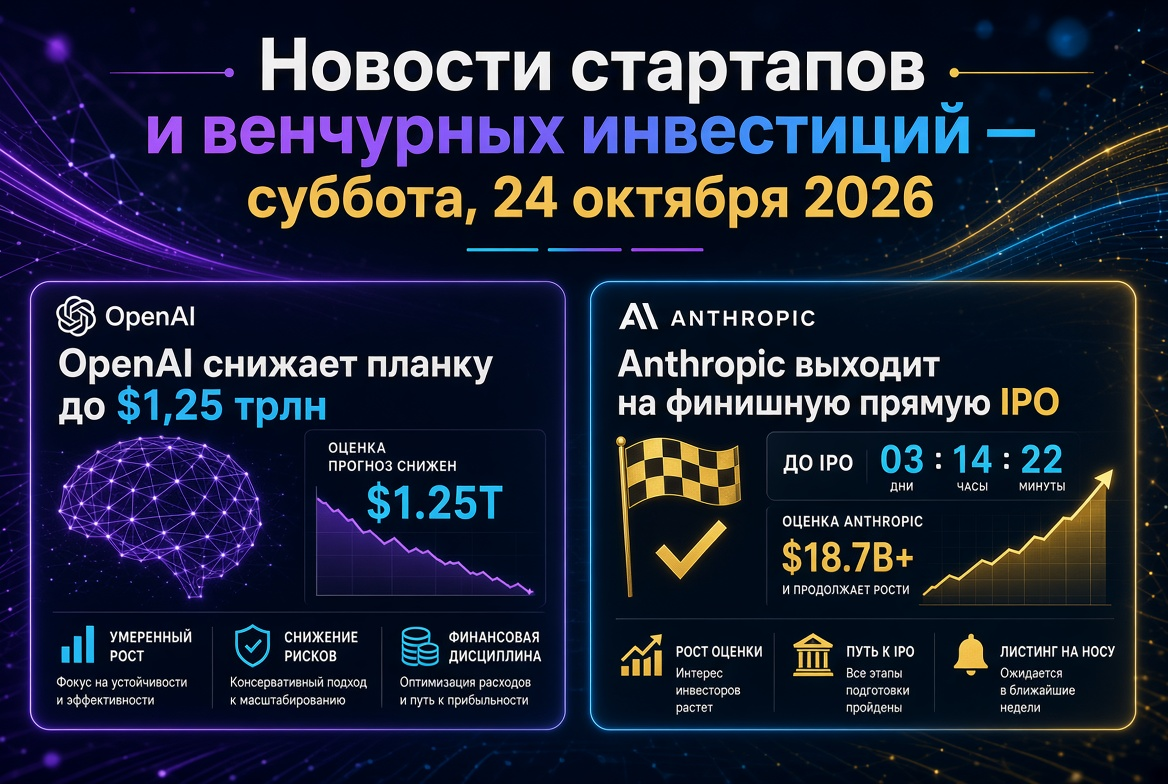
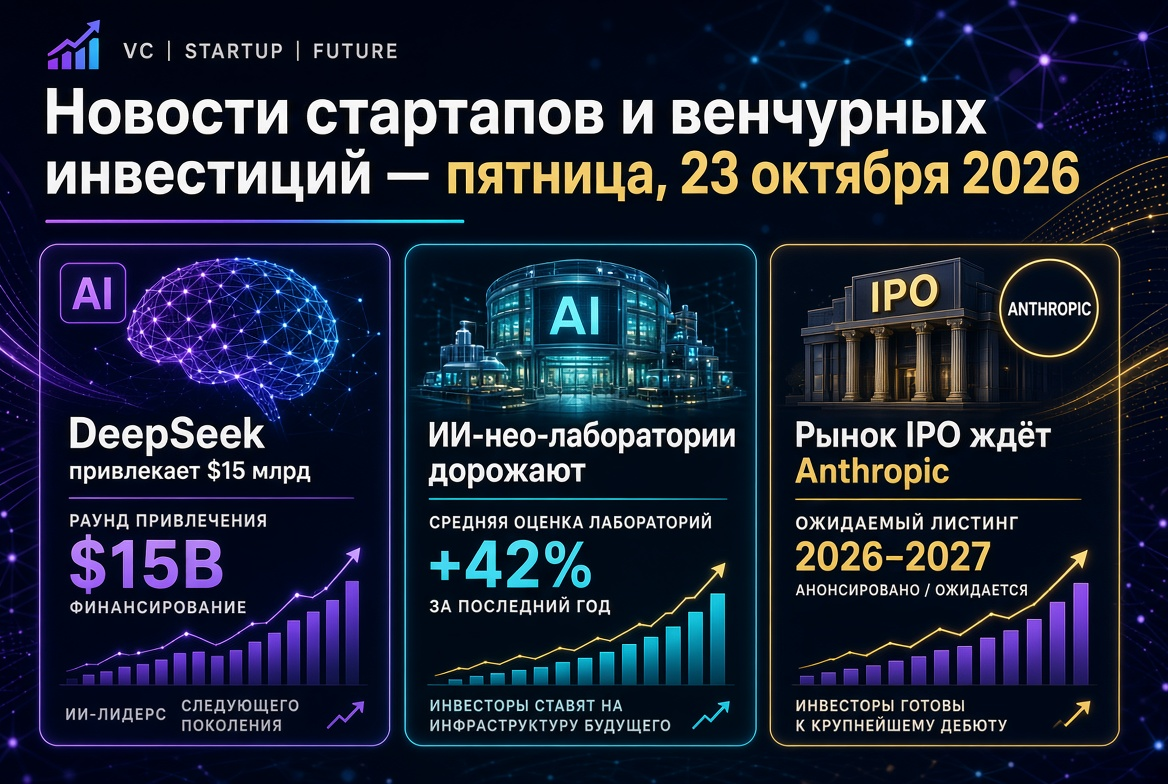
Enormous resources are being directed to both developers of generative AI models and companies building AI-based infrastructure and applications. The two most valuable private startups in the world are now associated with artificial intelligence: OpenAI is valued at approximately $500 billion (following another funding round of tens of billions of dollars), while competitor Anthropic has reached a valuation of around $180 billion. Together, these two companies attracted about 14% of all venture investments globally over the year. The United States overwhelmingly dominates this segment: around 80% of investments in AI startups went to American companies, with Silicon Valley alone drawing over $120 billion.
The AI boom is radically transforming the venture industry. Major tech corporations and funds are actively participating in massive funding rounds: for instance, Meta invested $14.3 billion in Scale AI, and SoftBank led a record funding round for OpenAI (around $40 billion). Consequently, the largest players are amassing a significant portion of the capital while simultaneously stimulating the growth of the entire sector. The question for the future is whether AI leaders will continue attracting billions in annual investments or seek alternatives (such as partnerships for access to computational resources).
The Return of Mega Funds: Big Money is Back in the Market
In 2025, the largest investment players made a triumphant return to the venture arena. After a hiatus in recent years, leading funds and investors are ready to invest substantial sums in startups once again. The Japanese conglomerate SoftBank launched its third Vision Fund, with a volume of around $40 billion, focused on advanced technologies (AI, robotics, etc.). Sovereign funds from the Middle East have also increased their activity: billions of dollars are being invested by state investors in the region into tech projects, with governmental mega-projects and tech hubs being established to support the startup sector.
Alongside this, new venture funds of various sizes are continuing to be established worldwide. In December alone, the total volume of announced new funds exceeded $9 billion (at least 16 new venture and private funds were launched that month). Major global funds have accumulated record levels of "dry powder": in the United States alone, venture investors are sitting on hundreds of billions of dollars of uninvested funds ready for deployment. This influx of "big money" is filling the ecosystem with liquidity, providing resources for new funding rounds, and supporting the rise in valuations of promising companies.
Besides private funds, significant roles are being played by governmental initiatives worldwide. For example, in Europe, the Deutschlandfonds was launched, with a volume of €30 billion, aimed at attracting up to €130 billion in private investments into tech startups, energy transformation, and industry in Germany. Governments are recognizing the importance of the venture market for economic competitiveness and are willing to temporarily act as catalysts for investment. The return of large capital sources—both private and public—instills confidence in the sector for continued growth in venture investments.
Record Rounds and New "Unicorns": An Investment Boom
The venture market in 2025 is characterized not only by overall growth but also by the concentration of capital in very large deals. Mega rounds (hundreds of millions and billions of dollars in a single round) have become a common occurrence, particularly in the AI sector. The lion's share of all funds is concentrated in a limited number of companies: estimates suggest that several dozen startups received about one-third of the total funding for the year. Late rounds (Series C and beyond) grew by more than 60% compared to the previous year, while the number of early-stage deals is declining. A "two-speed" market is forming: the largest "unicorns" easily attract billion-dollar checks, while younger teams struggle to close rounds—investors are imposing higher requirements on the product and revenue.
Nevertheless, this investment boom has spawned a new wave of "unicorn" companies. In 2025, dozens of startups worldwide achieved unicorn status (valued at over $1 billion)—for the first time since the boom of 2021, there has been such a mass emergence of highly valued companies. Unicorns are particularly emerging vigorously in the AI and fintech segments, though they are found in other industries as well. Although experts warn of overheating risks, many funds are eager not to miss the opportunity to invest in potential market leaders at relatively early stages of their growth.
Examples of major venture rounds in 2025:
- OpenAI — raised approximately $40 billion in funding over the year (a record round led by SoftBank), reaching a valuation of about $500 billion.
- Anthropic — received multi-billion financing from a consortium of investors (including large tech giants), raising its valuation to approximately $180 billion.
- Scale AI — a data startup for AI received $14.3 billion from Meta and partners, marking one of the largest rounds of the year.
- Cerebras Systems — a developer of AI hardware accelerators raised $1.1 billion in a Series G round (valuation ~$8 billion) with participation from Fidelity and others.
- Vercel — an AI-oriented web development platform closed a $300 million round (Series F) at a valuation of $9.3 billion.
- Crystalys Therapeutics — a US biotech startup raised $205 million in a Series A round to develop new drugs (one of the largest rounds in biotech for the year).
The IPO Market is Reviving: The Window for Exits is Open
After a long hiatus in 2020–2023, the global IPO window has finally opened. The year 2025 brought a series of successful public offerings by venture-backed companies, restoring investor confidence in the stock market for tech newcomers. In Asia, Hong Kong initiated a new wave of IPOs: several large Chinese tech firms went public, collectively raising billions of dollars (for example, battery manufacturer CATL raised $5.2 billion). In the United States and Europe, the situation also improved: American fintech "unicorn" Chime successfully debuted on the New York Stock Exchange (with shares rising 30% on the first trading day), followed by others, including Swedish payment service Klarna. The total number of "unicorns" that went public in 2025 exceeds two dozen, significantly higher than the zero figures of the previous two years.
Investors are once again willing to view IPOs as a realistic exit scenario. Moreover, even larger offerings are anticipated for 2026: for instance, SpaceX is publicly preparing for an IPO with a potential valuation of up to $1.5 trillion—this could become the largest tech IPO in history. Successful public exits are critically important for the venture ecosystem: they allow funds to capture profits and free up capital for new investments. Although the market remains selective (not all recent IPOs are trading above their offering price), the mere fact of having a "window of opportunity" has revitalized the later stages of the venture market. Many mature startups are accelerating preparations to go public, aiming to leverage the favorable market conditions.
Diversification of Investments: Broader Sectors, Broader Opportunities
The explosive growth of AI does not mean that all capital is flowing into just one sector. On the contrary, the year 2025 was marked by a revival of funding in many other sectors. Fintech is regaining investor attention: significant rounds took place not only in Silicon Valley but also in the European market and emerging economies. Climate technology is attracting increasing funds amid a global trend towards sustainability; in Europe and the USA, funds oriented towards clean tech and energy startups have emerged (notably, a number of significant deals took place in renewable energy and electric vehicle infrastructure).
Biotech funding is also continuing: despite risks, investors are supporting promising biomedical projects (especially in genetics and pharmaceutical developments—examples include the multi-million rounds of companies Crystalys Therapeutics and Star Therapeutics). Defense technologies and aerospace startups are also on the rise—geopolitical factors are boosting demand for new developments in security, unmanned systems, and space services. Finally, after a decline in interest in previous years, the blockchain startup and crypto-financial services segment is reviving: the rise in cryptocurrency prices in 2025 has refocused the attention of some venture funds on this area, enabling several blockchain projects to attract rounds worth tens of millions of dollars.
Thus, by the end of 2025, the venture market has become more diverse. Investors are broadening their horizons for discovering promising areas, understanding that the next "big thing" may arise not only in AI but also at the intersection of other industries—from fintech and health to energy and environmental protection.
Consolidation and M&A: The Aggregation of Players
The return of large capital and high startup valuations has led to a new wave of consolidation in the market. Major companies and leading "unicorns" have intensified mergers and acquisitions to strengthen their positions and gain access to technologies. For instance, OpenAI acquired the startup Statsig in 2025, expanding its toolset for developers. Corporations are increasingly on the "hunt" for promising teams: for example, the large corporate software developer Workday acquired the AI startup Sana (specializing in automating HR processes), while the Google-funded company Isomorphic Labs acquired several small biotech projects to enhance its portfolio.
Simultaneously, some conglomerates are optimizing their innovation divisions by spinning off non-core areas into standalone companies (spin-offs). This opens up opportunities for venture deals: new startups are emerging within larger firms and receiving initial funding for independent development. The wave of M&A deals and corporate spin-offs is transforming the industry landscape, consolidating key players and providing exit routes for investors through acquisitions. For venture funds, this means more exit options beyond IPOs.
Consolidation is particularly noticeable in competitive spheres: mergers in fintech are occurring for customer bases, in the AI sector for access to unique models or data, and in the cybersecurity sphere for the integration of solutions. Although acquisitions reduce the number of independent startups, they indicate the market's maturation: the most successful projects are attracting the attention of giants and becoming part of larger ecosystems. This is a natural path for many teams and an important indicator of the venture market's health, where the strongest get a chance to scale through merger deals.
Russia and the CIS: The Local Market Seeks Growth
Against the backdrop of global trends, the startup ecosystem in Russia and the CIS countries is attempting to emerge from a prolonged recession in 2025. Despite geopolitical restrictions and a reduction in foreign capital, there has been a revival of local venture activity in the second half of the year. New funds and investors focused on the domestic market are emerging. For instance, the communications group "Mikhailov and Partners" announced the establishment of a Rosventure fund to invest in tech projects, while the cybersecurity systems developer R-Vision launched a corporate venture fund worth 500 million rubles. Additionally, several targeted funds and accelerators (including the "Sirius Innovations" fund in partnership with the Russian Direct Investment Fund for 1 billion rubles) have been formed with government support to finance promising Russian startups.
The total volume of venture investments in Russia for the year remains modest by the standards of market leaders, but there are signs of stabilization. Major domestic IT companies (such as Yandex and Sber) continue to invest in new areas, although only around $30 million was allocated to AI projects within the country in 2025. Nonetheless, the local venture market is alive: deals are taking place, and technologies are being developed for domestic and neighboring markets. Among the notable deals of the year are investments by the KAMA FLOW fund (jointly with OSNOVA Capital) in projects developing AI platforms:
- Platformeco — attracted 100 million rubles from KAMA FLOW for the development of a platform integrating and managing APIs related to AI agents.
- Piklema Group — received 1 billion rubles in investments from the joint fund KAMA FLOW and OSNOVA Capital for scaling its technological solutions in the Russian market.
While the scale of financing in the region is small, the emergence of new funds and deals is encouraging. Local investors and corporations are taking on the role of innovation drivers in the absence of significant foreign investment. Niche areas are developing, from agri-tech to import substitution projects. Russia and neighboring countries are eager not to miss the global trend of technological entrepreneurship, preparing the ground for future growth when external conditions improve.
Conclusions: Moderate Optimism at the Threshold of 2026
The end of 2025 marks a recovery in the venture industry and the return of investor confidence. Major rounds and IPOs have demonstrated the market's viability, and the emergence of new funds promises to continue the influx of capital. At the same time, a certain caution remains: funds are meticulously selecting projects, avoiding excessive euphoria. The focus is on quality growth and the long-term sustainability of startups.
Venture investors are entering 2026 with measured optimism. Funding rates are expected to remain high, particularly in leading sectors such as AI, although some adjustment in valuations may occur following the rapid rise. A key factor for success will be startups' ability to demonstrate real business development and monetization of technologies. Overall, the venture market is emerging from a downturn stronger and more mature: accumulated "dry powder" is ready for deployment, and startups worldwide have the chance to turn the investments received into new breakthrough products and services.