Fresh Market Overview of Startups and Venture Investments as of April 7, 2026, with a Focus on AI, Mega Rounds, and IPO Prospects
By early April, the global venture market is showing not just a recovery but a sharp increase in volumes. This is no longer a local rebound after weak quarters, but a full-fledged phase shift. However, the growth cannot be considered uniform. The primary capital is flowing into a limited number of major stories, primarily in AI, compute infrastructure, next-generation enterprise software, and deep tech.
For venture funds, this creates a dual picture:
- On one hand, the market is once again providing the opportunity to deploy large amounts of capital quickly;
- On the other hand, competition for the best deals has intensified sharply;
- Many funds are forced to either enter very early stages or narrow their industry specializations;
- The standard diversified approach is becoming less effective than thematic concentration.
In other words, startups are once again gaining capital, but not all of them. Venture investments are returning to the game through selection rather than broad risk appetite.
AI Startups Have Solidified Their Position at the Core of the Market
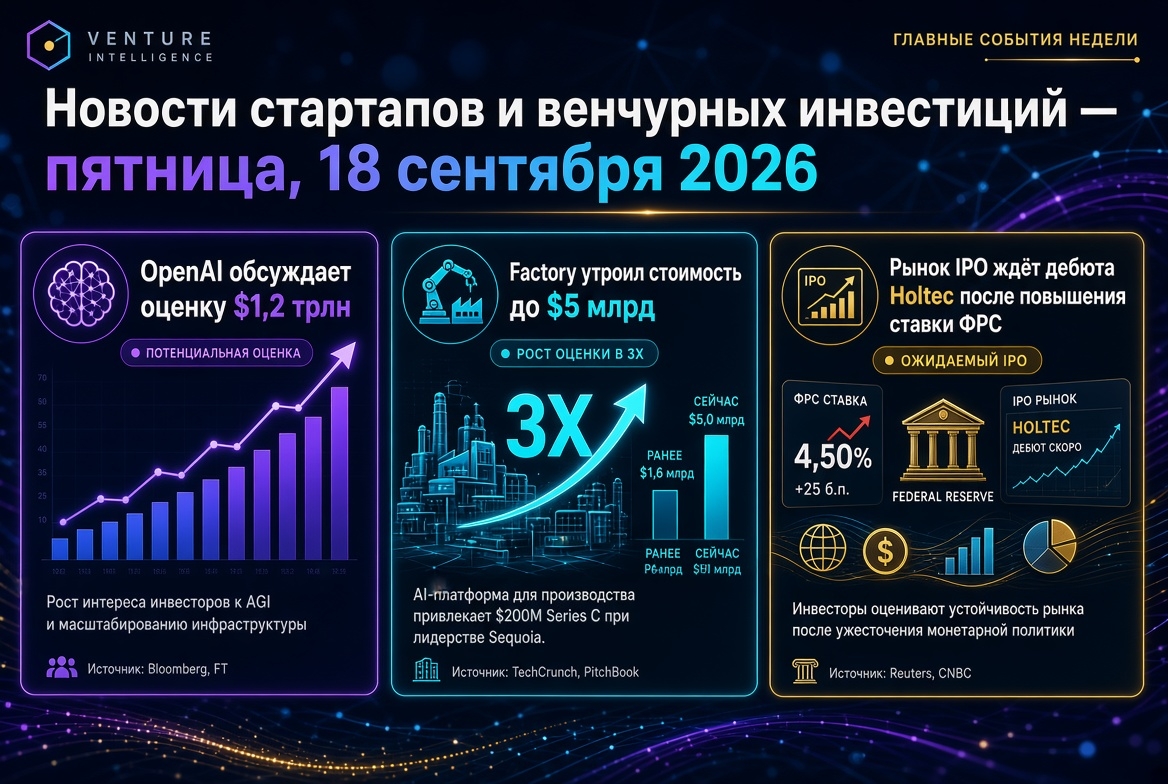
The main driver of the agenda is AI startups. It is around them that the bulk of major rounds, new funds, strategic partnerships, and asset revaluations are currently forming. Investors are increasingly betting not on “another interface to a model” but on companies that control critical layers: computing power, specialized chips, agent platforms, vertical enterprise solutions, and applied automation.
Several growth directions are evident in the market:
- Infrastructure AI companies and compute providers;
- AI labs with long horizons and substantial seed rounds;
- Vertical startups for finance, law, accounting, medicine, and industry;
- Tools for orchestration, security, and AI agent control.
This fundamentally alters the evaluation logic. Whereas earlier the venture market often paid for user growth and brand history, now capital more frequently flows to technological depth, access to data, rare talent, and the ability to quickly capture corporate budgets. For funds, this means that the analysis of AI startups must delve deeper than product presentations: into the structure of compute, unit economics of implementation, and quality of distribution.
Seed Stage Is Heating Up, While Barriers to Entry for New Deals Are Rising
One of the most noticeable characteristics of the current market is the rising costs of early rounds. At the seed stage, many startups are coming out with valuations that recently seemed more like exceptions than the norm. This is particularly evident in AI, where teams with strong technical backgrounds and even limited revenue are experiencing significant demand even before achieving full product-market fit.
This leads to several consequences for venture investors:
- Deals need to be monitored much earlier;
- The classic access “after Demo Day” is often delayed;
- The value of networks of founders, technical scouts, and thematic partners is increasing;
- The cost of entry mistakes due to high valuations is becoming pricier.
For startups, this presents a favorable window, but pressure is higher: the market is willing to pay for quality but demands proof of speed. If a company has raised an expensive seed round, it will be expected to deliver revenue, contracts, and demonstrated capital efficiency by the next round, not just promises.
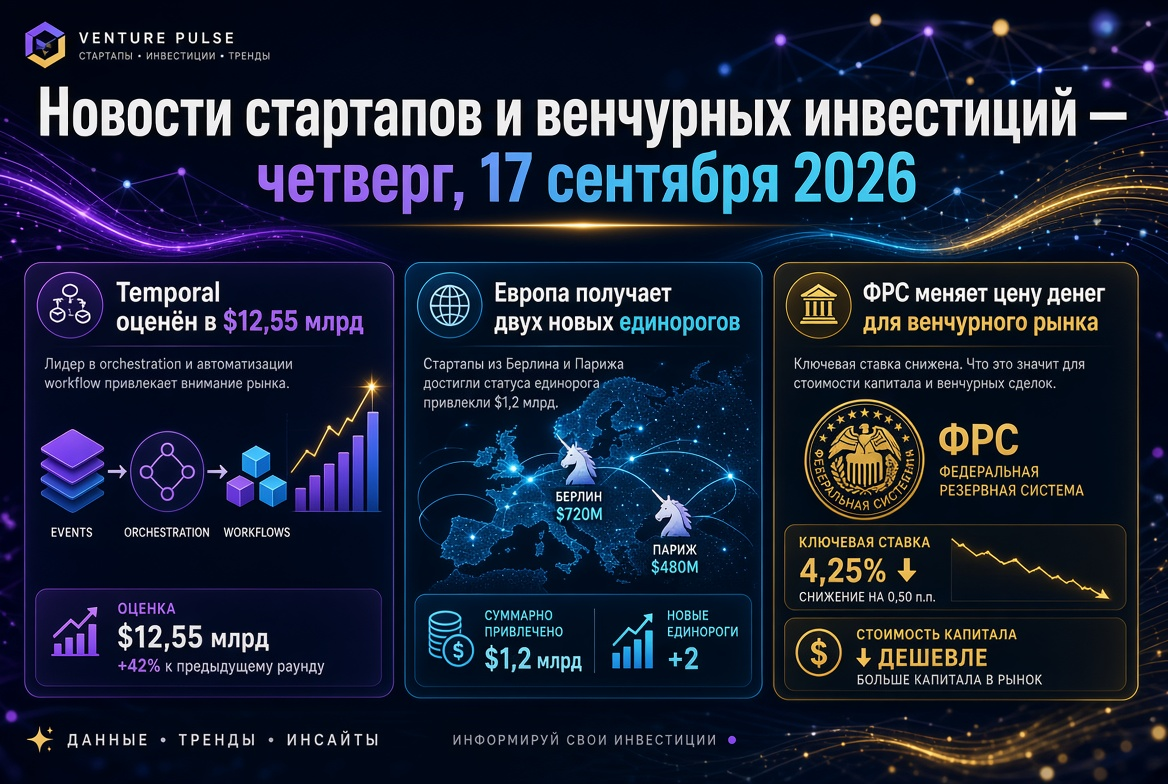
Europe Is Strengthening Its Position Through Sovereign AI, Chips, and Applied Deep Tech
The European startup market in 2026 appears significantly more confident than in previous cycles. If Europe used to lag behind the U.S. in terms of round sizes and speed, the region is now increasingly developing its own investment logic: sovereign AI, semiconductors, industrial tech, defense tech, cybersecurity, and enterprise software with a strong engineering basis.
A key shift is that European companies are more frequently raising substantial capital not just for research, but for infrastructure. This is particularly important for the venture market as it creates a longer investment chain: from models and chips to data centers, industrial implementations, and government contracts.
Currently, the following niches in Europe are especially interesting:
- AI infrastructure and local computing powers;
- Energy-efficient chips and inference platforms;
- Cybersecurity for AI-native development;
- Defense tech and dual-use solutions;
- B2B services for regulated industries.
For global funds, Europe is becoming not a “secondary market” but a platform for finding less overheated yet strategically strong assets.
China Is Exhibiting Record Capital Mobilization in Technology
Another significant signal for the startup market is the rise in venture activity in China. Here, capital is accelerating primarily due to government and quasi-government support directed towards AI, robotics, quantum technologies, and other strategic areas. This is not just an internal financial impulse but a component of long-term industrial policy.
For international investors, this means two things. Firstly, global competition for technological leadership is intensifying. Secondly, the valuation gap between different segments of the market may widen: in some segments capital will be highly accessible, while in others it will be more selective. Practically, this suggests further growth in interest in deep tech and infrastructure, not just in consumer digital services.
The IPO Window Is Again Becoming Part of Venture Strategy
After a prolonged period of caution, the market is once again beginning to factor in the probability of large placements. The main marker here is the discussion around a potentially huge IPO from SpaceX. Even if the deal has not yet been finalized, the scale of expectations is significant for the venture market: it brings the idea of exit through the public market back to the center of investment planning.
This changes the outlook for funds in several ways:
- Late stages are once again obtaining strategic premiums;
- Secondary transactions are becoming more active;
- Investors are paying closer attention to companies with clear public profiles;
- Capital is beginning to make stronger distinctions between “everlasting private assets” and potential IPO cases.
For startups, this is a positive signal but not a reason to relax. The public market in 2026 will demand not just growth but also discipline: quality of revenue, gross margins, transparency of unit economics, and a compelling narrative for institutional investors.
New Capital in the Market Is Coming Not Only from Traditional VCs
One of the less noticeable but very important trends has been the strengthening of family offices, private wealth, and corporate structures that are increasingly investing in startups directly. This means that traditional venture funds are no longer the only route to capital. Competition is now unfolding not just among startups but also among types of money.
For founders, this expands their options, while for funds, it creates pressure on their own utility. Merely providing a check is no longer sufficient. A venture investor must bring:
- Access to markets and corporate clients;
- Assistance with hiring and subsequent rounds;
- Expertise in international scaling;
- Speed of decision-making and reputational capital.
That is why in 2026, it is not the most famous funds that are winning, but those who can operate as growth enablers rather than merely financial intermediaries.
What Investors and Funds Should Watch for in the Coming Weeks
As of April 7, 2026, the startup and venture investment market looks strong but is no longer straightforward. Money is available, the appetite is present, and the window for large stories is open. However, the market is increasingly unforgiving of weak technology, slow growth, and unclear business models.
In the near future, venture investors and funds should pay particularly close attention to four areas:
- How long will the concentration of capital in AI persist, and will a broader rotation into other verticals begin?
- Will the growth of late stages transition into a true IPO window and large exits?
- Which European and Asian startups can offer alternatives to dominant American platforms?
- Will the expensive seed companies justify their valuations through revenue and efficiency?
The fundamental takeaway for the market is this: venture investments have returned, but in a more stringent and professional form. Success will not come merely to rapidly growing startups but to companies capable of becoming the infrastructure of the new technological economy. For funds, this is a good moment to focus not on indiscriminately widening the funnel but on strengthening conviction in a few strong themes—AI, chips, cybersecurity, defense tech, enterprise automation, and deep tech with global potential.