Current News in Oil, Gas, and Energy as of April 7, 2026, Including Oil Above $100, LNG Gas, Electricity, and Global Market Changes
The global fuel and energy sector enters a state of heightened turbulence on Tuesday, April 7, 2026. The main theme for investors, oil companies, refineries, gas traders, and electricity participants remains the sharp restructuring of commodity and energy flows following a new wave of geopolitical crisis in the Middle East. The oil market is holding steady near three-digit levels, the gas and LNG market is under pressure from logistical constraints, and electricity in many regions is once again prioritizing supply reliability rather than just fuel cost.
For the global market, this signifies one thing: oil, gas, and energy have once again become the primary channel for transmitting risks to the world economy. Rising risk premiums on commodities, overloaded export logistics, tensions in petroleum products, and the increasing role of coal, renewable energy sources (RES), and atomic generation are shaping a new agenda for the entire fuel and energy complex. Below are the key events and conclusions for the market.
Oil Market: Risk Premium Remains High
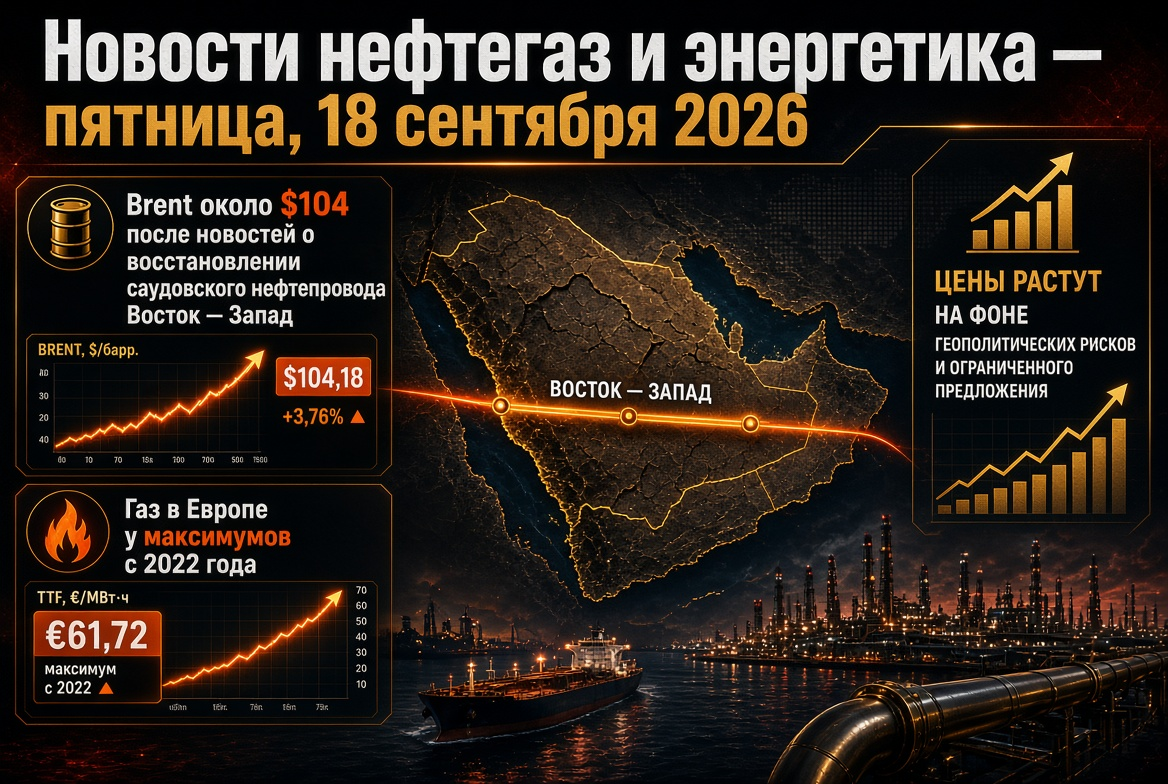
The key driver of the oil market is the ongoing risk of supply disruptions through the Middle East. Even amidst attempts at diplomatic de-escalation, market participants continue to factor in a high risk premium in their quotes. For oil companies and traders, this means that the oil market is currently driven less by the logic of supply and demand balance and more by the availability of physical barrels and supply routes.
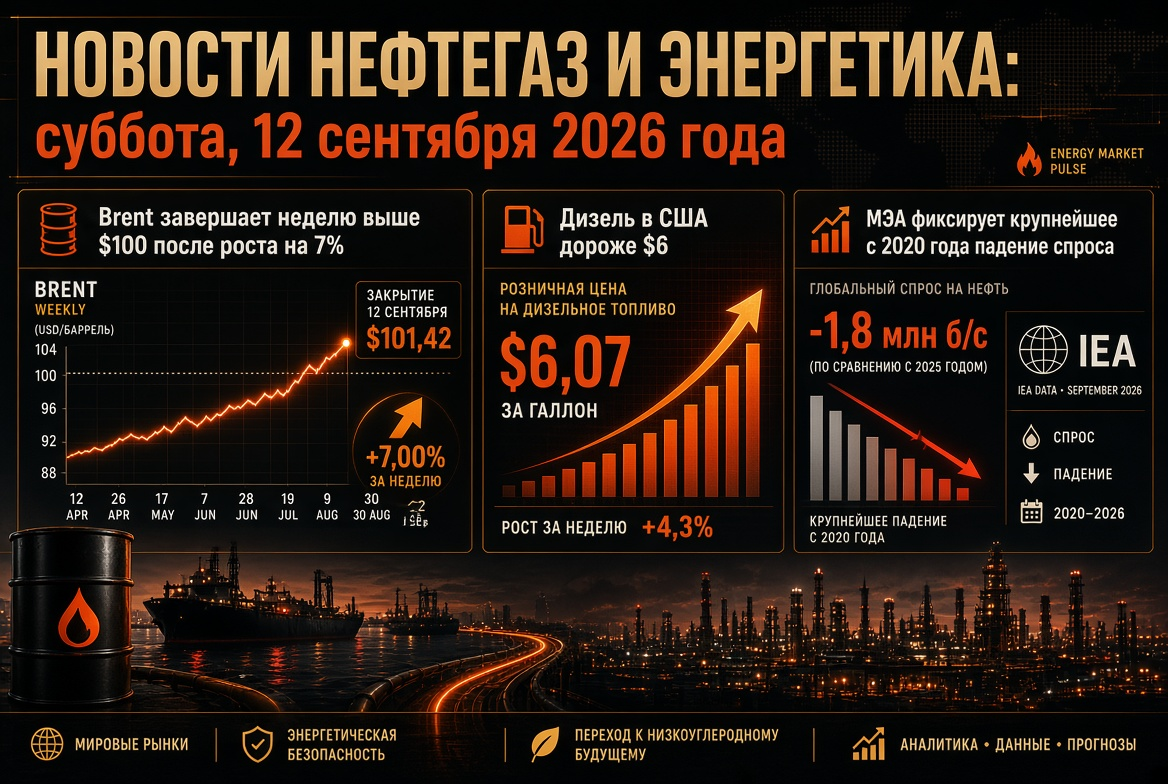
- Brent crude is holding above the psychologically important level of $100 per barrel.
- WTI is also remaining at elevated levels, reflecting a shortage of available alternative supplies.
- The focus is not just on the price of oil but also on the cost of expedited delivery and access to free export volumes.
For investors in the commodity sector, this is an important signal: the current structure of the market is favorable for producers with stable export infrastructure but creates serious risks for refiners and import-dependent economies. Growth in oil prices during this phase does not necessarily translate into uniform benefits for the entire T&E complex — those who control resources and logistics stand to gain the most.
OPEC+ and Supply: Increased Quotas Do Not Solve Physical Shortage
OPEC+'s decision to further increase production for May serves as a significant political signal; however, the market perceives it more as a limited stabilizing measure than a comprehensive response to the energy shock. Formally, supply is increasing, but in reality, the market evaluates not just announced quotas but also the ability to quickly deliver additional barrels to the end consumer.
- Some countries can indeed increase supplies.
- However, logistics in the region remain vulnerable.
- The physical market remains sensitive to routes, insurance, and freight costs.
This is why the oil and gas sector is currently divided into two layers. The first is a paper market, where OPEC+'s decision is seen as an attempt to cool price growth. The second is the physical market, where refineries and traders are forced to compete for available oil today. For the global T&E market, this means that even a moderate increase in supply does not alleviate tension in petroleum product supplies, especially in the segments of diesel and feedstock for complex refining.
Restructuring Flows: The US Becomes the Main Reserve Supplier for Refineries
One of the most noticeable events in the global commodity sector is the sharp rise in demand for American oil from Europe and Asia. Against the backdrop of restrictions in the Persian Gulf, the US is becoming a key substitution source for global refineries. This is already reflected in record premiums for certain grades of American oil and in the growing competition among importers.
For oil refining, this results in several consequences:
- Refineries in Asia and Europe are facing rising costs for imported feedstock.
- Refining margins are becoming less predictable.
- Costs for tanker logistics and insurance are increasing.
- The importance of flexibility in the technological configuration of refineries is growing.
The higher the premium on alternative oil, the more pressure on plants that rely on stable and inexpensive supplies from traditional regions. This is especially critical for fuel companies and market participants in petroleum products: in the coming days, the key question will not only be the price of oil but also the sustainability of gasoline, diesel, and jet fuel production.
Gas and LNG: The Global Market Remains Thin and Nervous
An equally important topic for the energy sector is the market for natural gas and LNG. The situation around the Strait of Hormuz has sharply heightened attention to Qatari gas supplies. Even isolated disruptions and delays are having disproportionately strong effects on the global balance, as the LNG market in 2026 remains relatively thin, with few free volumes available.
The global gas market currently exhibits three characteristics:
- Europe and Asia are simultaneously dependent on the stability of maritime routes.
- Any disruption in LNG supplies quickly reflects in spot prices.
- Buyers are increasingly diversifying their purchases and strengthening long-term contracts.
The paradox of the current situation is that the mid-term outlook for gas appears more comfortable: the world is indeed expecting a new wave of LNG projects in the coming years. However, in the short term, the gas market remains vulnerable. Therefore, for investors and energy companies, the time gap between future supply growth and today's logistical risks is particularly important.
Electricity: Supply Security Once Again Takes Priority Over Perfect Generation Structure
The electricity segment is acutely responding to developments in the T&E sector. Rising gas costs and tensions in LNG are prompting many countries to shift priorities in favor of energy system stability. In practice, this means that the electricity sector is returning to a more pragmatic model: more focus on reserve capacities, coal, atomic generation, hydropower resources, and local energy sources.
For the global electricity market, this has the following consequences:
- Gas generation remains important but is becoming more expensive;
- Coal temporarily strengthens its position in Asian countries;
- Atomic power and hydropower are being viewed as stability tools;
- Grid operators and governments are placing greater emphasis on energy security.
This represents one of the main pivots of the current moment: the energy transition is not being canceled, but in the short term, the market is focusing not on symbolism but on reliability. For T&E participants, this means a higher value for assets capable of ensuring the physical delivery of electricity without relying on expensive imported gas.
RES: Growth Continues, but Now They Are Evaluated Through the Lens of Energy Security
Renewable energy sources continue to expand globally. Recent data confirms that RES remains the fastest-growing segment of global energy. However, the current crisis has changed both the rhetoric and economic assessment of the sector: now solar and wind generation are viewed not only as climate tools but also as ways to reduce dependence on imported fuel.
For investors, this shifts the focus in the RES sector:
- Projects integrated into the energy system are more in demand, rather than just those that comply with ESG reporting;
- There is increased interest in energy storages, grid infrastructure, and generation flexibility;
- Markets where RES reduce imports of gas and petroleum products become particularly valuable.
In other words, RES in 2026 is no longer just a story about decarbonization. It is increasingly a story about strategic resilience. Against the backdrop of the shock in oil and gas, this re-evaluation may support investments in clean energy even amid overall market nervousness.
Coal Returns to the Agenda as a Reserve Resource
Despite long-term pressure from climate policy, coal is once again becoming part of the practical response to energy risks in the current cycle. For several countries in Asia, expensive LNG and supply uncertainties make coal generation temporarily more attractive in terms of systemic reliability and predictable costs.
This does not imply a long-term reversion of global energy policy, but signifies an important tactical reality:
- Coal remains a backup fuel for energy systems;
- Importers in Asia are maintaining interest in stable coal supplies;
- The electricity market is increasingly combining coal, RES, and atomic generation as a crisis management model.
For the commodity sector, this is an important factor, as the return of coal to the operational agenda sustains demand for related logistics, port capacity, and rail infrastructure.
Russia, Oil Products, and Export Infrastructure: An Additional Layer of Uncertainty
The global oil and oil products market is influenced not only by the Middle East but also by the situation with Russian export infrastructure. Restrictions and attacks on energy facilities are amplifying uncertainty regarding supply volumes, shipment schedules, and refinery loadings. Even a partial restoration of certain nodes does not guarantee a full return to normal operations.
This is significant for the global market for two reasons:
- Any disruptions from a major exporter increase the risk premium in oil and oil products;
- European, Asian, and Middle Eastern flows are beginning to compete even more intensely with one another.
As a result, the petroleum products segment may remain more strained than the crude oil market. For fuel companies, this necessitates careful monitoring of differentials, export windows, refinery maintenance, and vessel availability.
Implications for Investors and T&E Market Participants
As of April 7, 2026, the global T&E market appears as a landscape where asset prices are determined not only by fundamentals but also by the resilience of supply chains. This pertains to oil, gas, electricity, oil products, and even RES. In this environment, priorities are given not to abstract forecasts but to real physical advantages: access to raw materials, export routes, refining, reserve capacities, and technological flexibility.
Key takeaways for the market include:
- Oil and gas remain within a high geopolitical premium;
- Refineries and fuel companies face rising costs for feedstock and logistics;
- The electricity sector is shifting to increased focus on reliability;
- RES, coal, and atomic generation are seen as elements of a new energy security structure;
- Investors should monitor not just prices but also the physical movement of flows, the state of infrastructure, and regulatory decisions.
This is why the news in oil, gas, and energy as of April 7, 2026, is not merely an overview of quotes. It represents a picture of a large-scale reconfiguration of the global T&E sector, where the commodity sector, oil products, gas, electricity, and RES are once again intertwined in a single system of global risk and opportunity. For the market, the coming days will hinge upon how quickly the energy system can adapt to the new geography of supplies.