Key Updates for Wednesday Morning
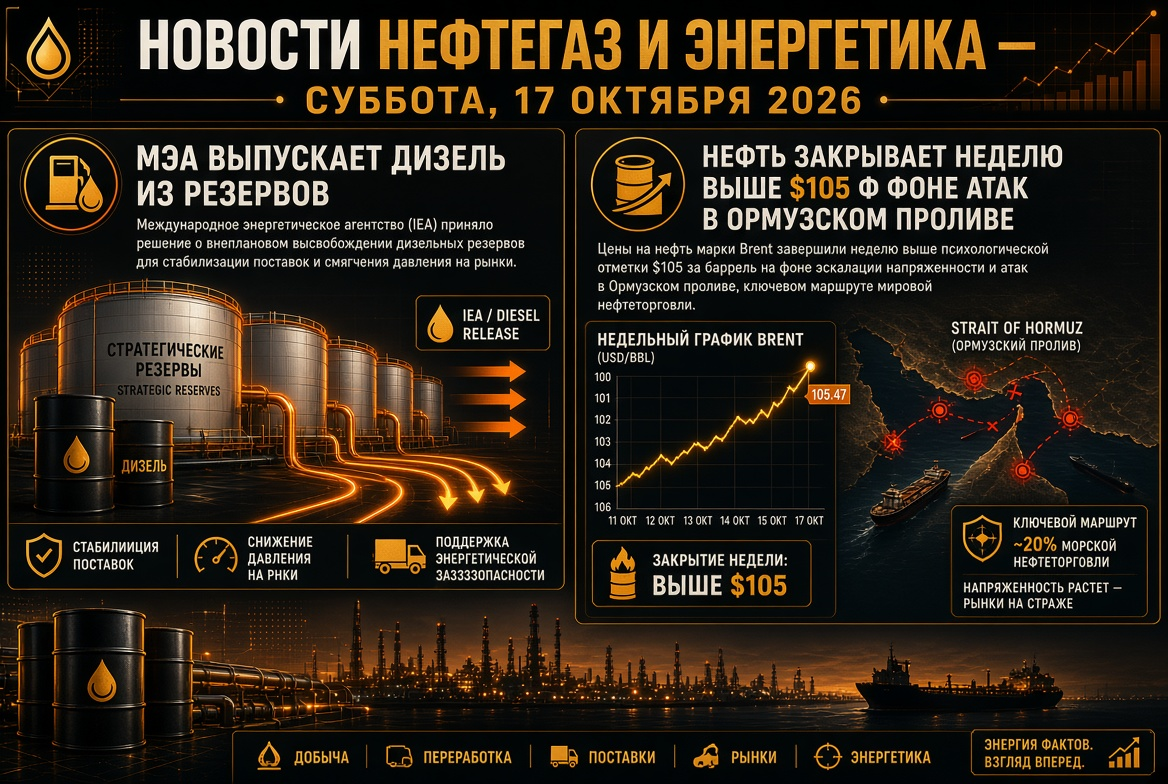
- Oil: Brent is around $105–106 per barrel, WTI is close to $93; the quotes were above $107 the previous day.
- Petroleum Products: Russia has partially lifted the ban on diesel exports and is releasing 500,000 tons onto the global market.
- Gas: TTF is trading around €83 per MWh — the highest since the beginning of 2023; EU storage is approximately 73% full.
- OPEC+: quotas for November remain unchanged, with the next meeting scheduled for November 1.
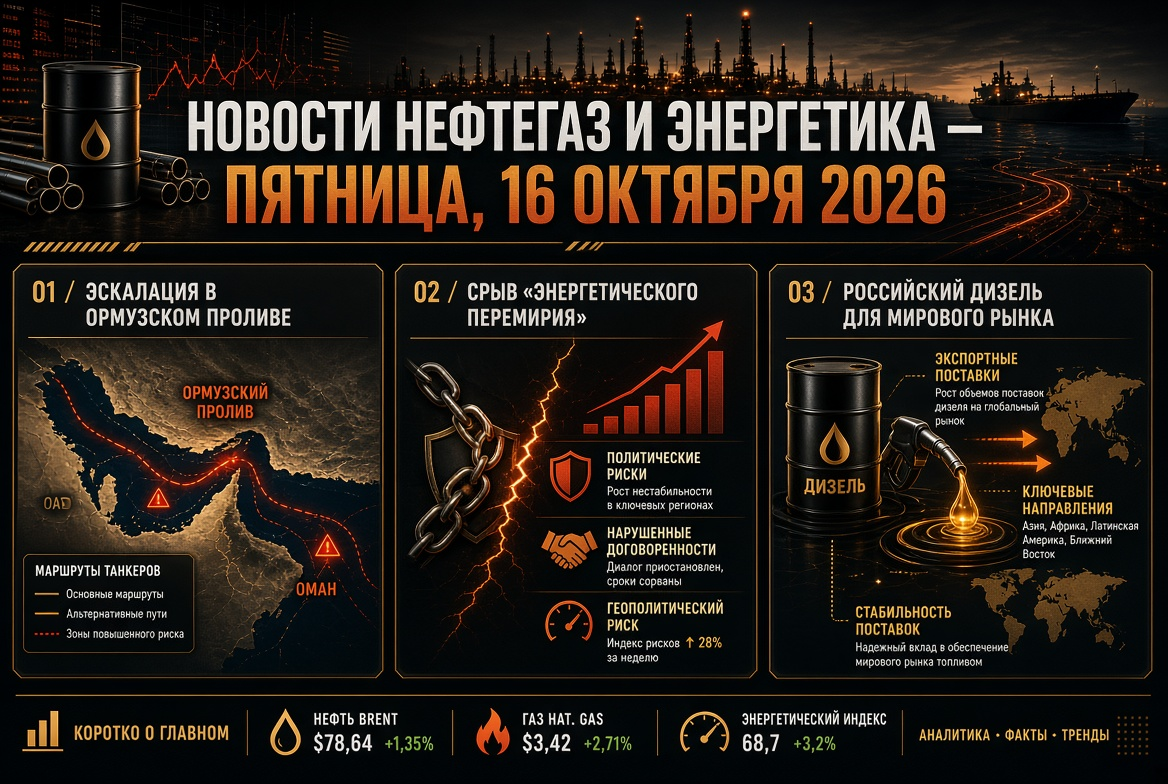
- Geopolitics: attacks on tankers near the Strait of Hormuz and strikes by Houthi rebels against Saudi Arabia continue to pose risks for supplies.
Oil Market: Risk Premium Keeps Brent Above $100
On Tuesday, oil adjusted down by about 1% after a rise of nearly $2 on Monday when Brent closed at its highest since mid-September. The conflict between the US and Iran has now lasted for eight months, and the market continues to prioritize the physical availability of barrels over the balance of supply and demand.
Supporting Factors
- A drone strike on a tanker near the Omani port of Sohar and damage to another vessel in the Strait of Hormuz; at least nine attacks have been recorded since the beginning of October.
- Houthi attacks on Riyadh airport have heightened concerns about Saudi infrastructure.
- High freight and insurance rates are widening the spread between Brent and WTI.
Counteracting Factors
- Expectations for additional volumes of Russian diesel.
- Recovery of production in the Gulf of Mexico following Hurricane Isaiah.
- Weak demand: OPEC has lowered its crude oil consumption growth forecast for 2026 to 0.4 million barrels per day from 1.4 million at the beginning of the year.
OPEC+ and Oil Price Forecasts
The seven OPEC+ countries — Saudi Arabia, Russia, Iraq, Kuwait, Kazakhstan, Algeria, and Oman — have maintained a pause in increasing production for the second consecutive month: the total quota for November stands at 31.01 million barrels per day. The actual production of the alliance remains below target levels due to export restrictions through the Strait of Hormuz.
Analyst estimates vary:
- Goldman Sachs has raised its Brent price forecast for December to $90 from $85, evaluating the risk premium at just over $20 per barrel.
- The US Energy Information Administration expects an average of $105 in the fourth quarter and $84 in 2027.
- The consensus survey of analysts gives an average Brent price of around $89 for 2026.
Petroleum Products and Refineries: Diesel Crisis Receives a Breather
The middle distillates market remains the most stressed segment of the energy sector. The gasoil premium over Brent approached $98 per barrel last week: the deficit is focused not on crude oil but on refining. US refineries are operating at around 96% capacity, with almost no free capacity available.
- Russia: as of October 10, the export of 500,000 tons of diesel fuel has been authorized; there are discussions in Washington about the possibility of additional supplies of up to 3 million tons. The US has temporarily lifted sanctions on Russian fuel.
- China: after a week-long pause, Beijing has approved the October export of gasoline, diesel, and jet fuel totaling approximately 3.7 million tons.
- IEA: the agency has urged member countries to accelerate the release of reserves with a priority for diesel.
Gasoil futures on ICE responded by dropping 2.3% to $1,449 per ton. The effect may be limited: Russian refining has been significantly impacted by drone attacks, and the authorized volume is comparable to one day's consumption in the US. Gasoline prices in the US average $4.36 per gallon.
Gas and LNG: Europe Enters Winter with Record-Low Reserves
The European gas market remains the main source of concern for the energy sector and industry. Without Qatari LNG, TTF futures are holding around €83 per MWh — about 2.5 times higher than a year ago.
- EU storage is 73% full against a seasonal norm of about 90% — the worst level since observations began in 2011.
- The target filling level has been softened from 90% to 80%.
- In the event of a cold winter, the bloc may need to reduce demand by 7%, or 14 billion cubic meters.
- A full ban on imports of Russian LNG will come into effect on January 1, 2027.
Forecasts for winter vary widely: from €56 in Citi's base scenario, where demand has already been curtailed by industrial shutdowns, to €85–100 and above at Morgan Stanley in the case of cold weather and new supply disruptions.
Electricity and Renewables: Renewable Generation Softens Gas Shock
High gas prices are accelerating structural shifts in the electricity sector. In the first half of 2026, solar generation in the EU has set a new record, wind power output has increased, and wholesale electricity prices in several countries are increasingly lagging behind gas prices. The downside is a rise in the number of hours with negative prices and evening price peaks, which boosts the investment attractiveness of energy storage systems.
In the US, a record 86 GW of new capacity is planned for 2026, with about 93% coming from solar, wind farms, and batteries. For investors, the renewable energy sector and grid infrastructure remain a defensive story amid hydrocarbon volatility.
Coal: Demand Supported by Expensive Gas
The coal market is benefiting from gas shortages. Rising gas prices following the onset of Middle Eastern conflict have enhanced coal's competitiveness in generation, and energy coal prices have recovered in 2026 from lows at the end of 2025. Major demand is coming from China, India, and Southeast Asian countries, with coal-fired plants in Europe serving as a backup in case of a cold winter. In the long term, volumes of seaborne trade in energy coal are expected to decline, according to industry analysts.
Geopolitics and Sanctions: Energy Truce in Question
The US President announced an energy truce between Russia and Ukraine; however, Kyiv accused Moscow of violating it on Monday. For the market, this implies ongoing risks for Russian refineries and export infrastructure. At the same time, the temporary easing of sanctions on Russian fuel has marked Washington's first practical step towards expanding petroleum product supply.
What’s Important for Investors and Energy Sector Participants
- Strait of Hormuz: each new attack on tankers adds several dollars to oil prices; de-escalation could quickly reduce a significant portion of the premium.
- Diesel and Refinery Margins: actual shipments from Russia and China will indicate whether the petroleum products market has peaked.
- Gas: weather forecasts for November and the rate of withdrawal from EU storage will determine TTF dynamics.
- Statistics: weekly data on oil and petroleum product inventories in the US and fresh monthly oil market surveys will be in focus.
- OPEC+: the meeting on November 1 will show whether the alliance is ready to return to increasing production.
The baseline scenario for the coming days is high volatility: oil, gas, and petroleum products remain hostage to news from the Middle East, while electricity and renewable energy receive an additional boost from expensive hydrocarbons.