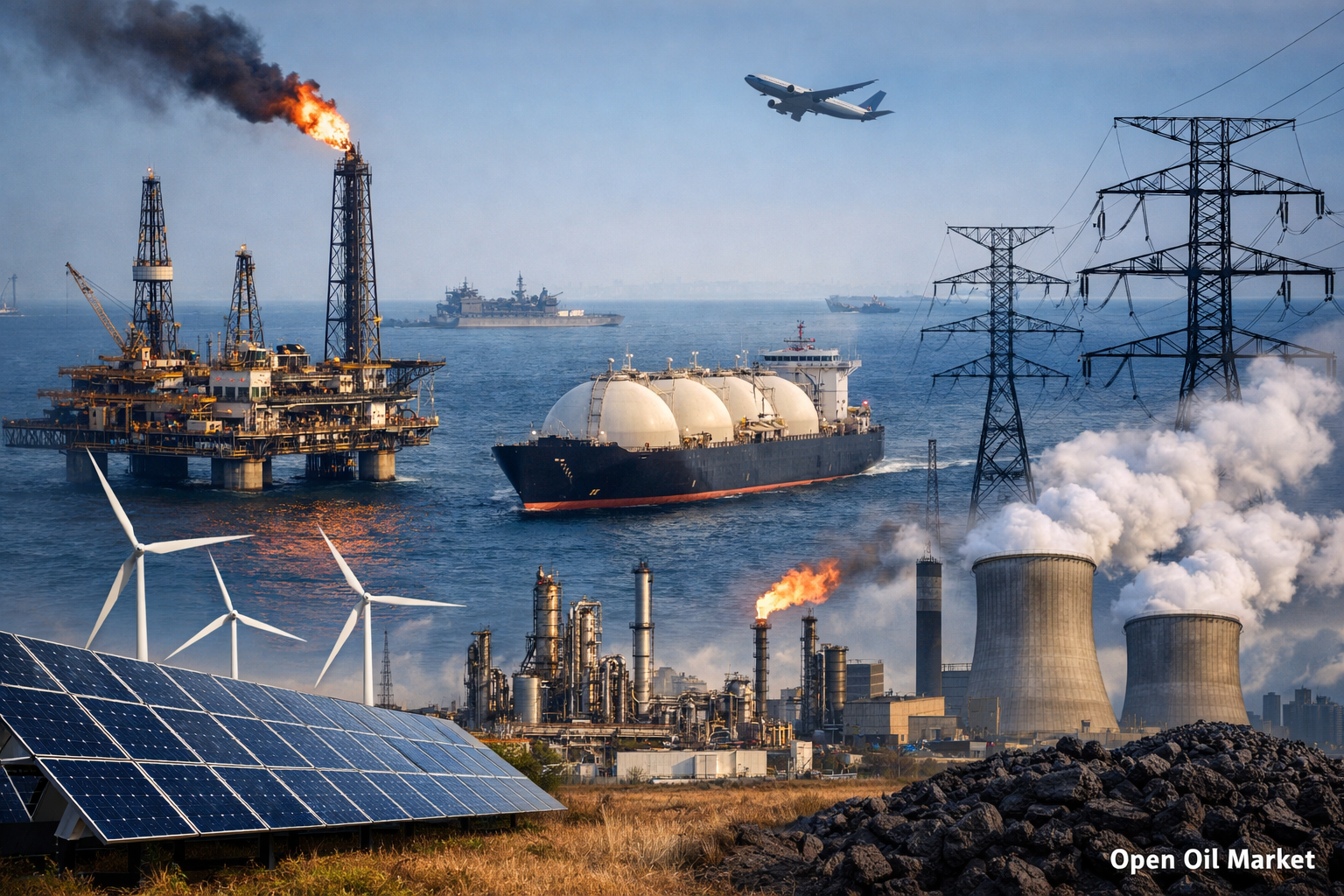
Current News in Oil, Gas, and Energy as of March 21, 2026: Oil Market Dynamics, LNG Situation, Rising Gas Prices, Effects on Refineries, Power Generation, and Renewable Energy, Key Trends for Investors
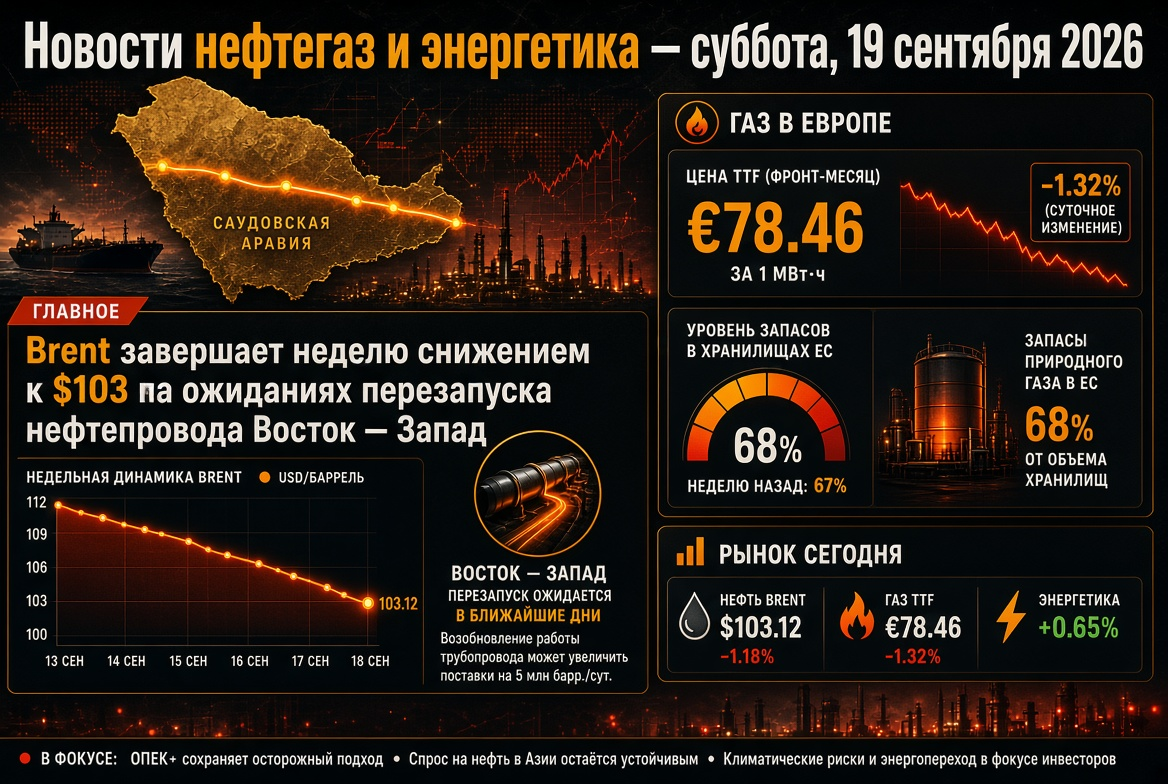
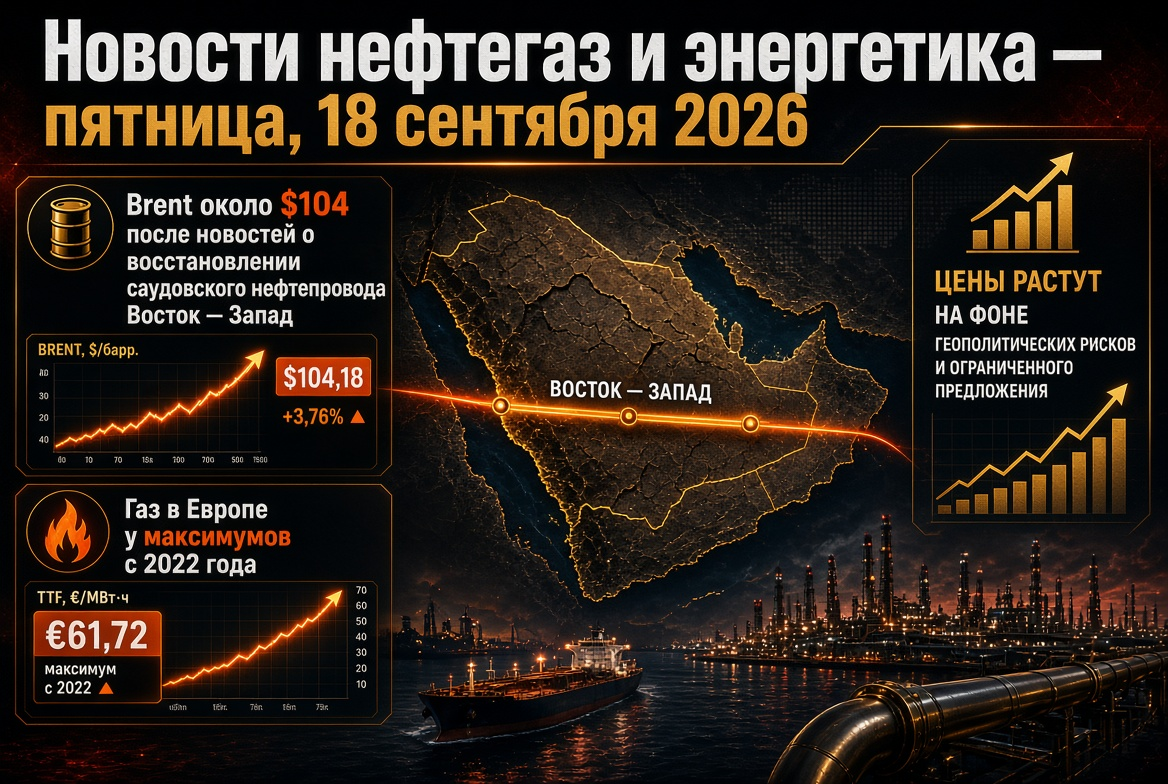
The primary focus for the global oil market is not so much the physical shortage, but rather the risk of prolonged supply disruptions stemming from the Middle East. In this context, market participants continue to price in a high risk premium for supply security, leading to sharper fluctuations in quotations even at the slightest signals of a potential easing of the situation.
Three factors are currently important for the oil market:
- the ongoing risks to shipping routes through the Strait of Hormuz;
- potential additional supplies from strategic reserves and alternative sources;
- the readiness of producers to quickly ramp up production while prices remain high.
Even if oil temporarily corrects downward after a rise, this does not indicate normalization. For oil companies and investors, a more critical aspect is that the market is once again pricing in the likelihood of more expensive logistics, elongated supply chains, and rising insurance costs. This supports not only the raw material itself but the entire vertically integrated oil and gas sector.
The Gas Market Becomes the Main Source of Nervousness for Europe and Asia
While oil remains an indicator of global stress, gas has become the most vulnerable segment of the energy complex. Disruptions in LNG supplies from the Middle East have sharply heightened nervousness in Europe and Asia, where the gas balance critically depends on external supplies, seasonal inventory replenishment, and stable maritime logistics.
For the gas and LNG market, this signifies:
- increased competition between Europe and Asia for available LNG cargoes;
- heightened spot volatility and a reassessment of price expectations for 2026;
- growing interest in American LNG as a strategic alternative.
Gas is once again ceasing to be just a commodity and is regaining its status as a tool for energy security. For industrial consumers, the power sector, and the fertilizer industry, this creates a risk of rising fuel costs and deteriorating margins, especially in regions with high import dependency.
The Oil Product and Refinery Market Gains Its Own Price Momentum
The refining segment tells a different story. For refineries and the oil product market, the current situation indicates that rising risks in raw materials are translating into increased refining margins. This is particularly evident for diesel, aviation fuel, and certain light oil products, where concerns over supply are already reflected in premiums.
Those refining capacities that currently benefit are those that:
- have flexible access to alternative grades of oil;
- operate within stable logistics frameworks away from direct risk zones;
- can quickly redirect export and domestic oil product flows.
For refineries, this represents a window of heightened profitability but also a period of increased operational responsibility. Any disruption in raw material supply, any rise in freight costs, or delays in deliveries can quickly turn a market advantage into a production risk. For this reason, Asian refiners, Indian fuel exporters, and the European diesel market remain in the spotlight.
Asia Becomes a Key Hub for Redistributing Flows
The Asian market today serves as a primary indicator of how the global energy sector is navigating the supply shock. Here, the interests of oil importers, LNG buyers, petrochemicals, coal, and oil products intersect. For China, India, Japan, and South Korea, the issue is no longer just about price but also about the guaranteed physical availability of energy resources.
The most important trends for Asia include:
- searching for substitute supplies of oil and LNG;
- growing interest in diversifying fuel sources;
- temporary strengthening of coal and alternative generation roles;
- reevaluating export and domestic fuel balances.
It is particularly indicative that the largest economies in the region are increasingly tightening protections for their domestic markets. This raises the risk that the export of fuel, gasoline, diesel, and aviation kerosene will be subordinated more to internal energy security rather than the logic of free trade.
Europe Responds with Both Market Actions and Policy
For Europe, the energy shock has once again become a matter of industrial competitiveness. High gas and electricity prices are hitting energy-intensive sectors, prompting Brussels and national governments to seek temporary support measures. Subsidies, reducing tax burdens, easing network payments, and targeted support for industry are coming to the forefront.
However, there lies a strategic crossroads:
- short-term, Europe needs to soften the rise in electricity and gas prices;
- mid-term — accelerate the development of networks, storage, and renewables;
- long-term — reduce dependence on imported fossil resources.
Consequently, European energy is now operating in dual modes simultaneously. On one hand, authorities are seeking swift crisis measures. On the other hand, the crisis again strengthens arguments in favor of electrification, expanding renewable energy generation, modernizing networks, and enhancing capacity in battery systems.
Renewables, Electricity, and Networks Cease to be Secondary Issues
The renewable energy sector in the current situation appears not as an ideological story but as a tool for reducing price risk. The greater the share of local generation from wind and solar, the lower the dependence of the energy system on imported gas and oil products. For the power sector, this means that the crisis in oil and gas is directly accelerating the investment attractiveness of renewable energy, network infrastructure, and energy storage.
In the upcoming quarters, this could lead to three outcomes:
- accelerated investments in electricity networks and inter-system connections;
- growing interest in utility-scale storage and flexible capacities;
- reevaluation of companies capable of combining traditional generation and renewables.
For investors, it is significant that amid high gas prices and volatile oil, not only the oil and gas giants appear more stable but also players in electricity infrastructure, network management, and low-carbon generation.
Coal Does Not Return as a Strategic Favorite, but Gains Tactical Role
Against the backdrop of soaring gas prices, coal is once again receiving limited but noticeable support. This does not indicate a full turnaround in the energy transition; rather, it reflects a pragmatic short-term solution: in some countries, coal-fired power stations may temporarily compensate for part of the expensive gas generation. This is particularly noticeable where existing infrastructure is already in place and there is no immediate risk of a shortage of coal of the required quality.
For the coal segment, this signifies:
- increased demand for quality thermal coal;
- sustained interest in fuel capable of partially substituting for gas;
- limited, yet significant, growth in the role of coal in crisis energy balances.
However, for the global market, this is more of a temporary stabilizer than a new long-term model. Structurally, the world is still moving toward more flexible electricity generation, LNG, networks, and renewables.
The American Factor Strengthens Across the Energy Chain
The U.S. is solidifying its positions in several segments during this phase of the crisis. Firstly, American oil production is receiving a price incentive. Secondly, American LNG is becoming one of the key candidates for partially replacing lost volumes. Thirdly, American energy policy is increasingly viewed by the market as a tool for stabilizing the global balance.
For the global market, this is important for the following reasons:
- The U.S. can enhance its influence on the oil market through additional supplies and reserves;
- American LNG gains a strategic premium as a safer supply source;
- The U.S. energy infrastructure becomes even more important for Europe and Asia.
In this backdrop, for investors in oil and gas, LNG, electricity, and infrastructure, the crucial question becomes: who can not only extract resources but guarantee reliable delivery in conditions of global instability.
What This Means for Investors and Energy Sector Participants
The main takeaway for the energy sector market as of March 21, 2026, is that the industry is once again being evaluated through the lens of resilience. It is not just companies with large resource bases that prevail but also those with stronger logistics, broader export routes, better access to refineries, higher gas diversification, and stronger positions in electricity and renewables.
In the near term, investors and market participants should monitor:
- the situation surrounding the Strait of Hormuz and maritime logistics;
- the dynamics of prices for oil, gas, diesel, and LNG;
- decisions regarding strategic reserves and sanction regimes;
- Europe's response to surging electricity prices;
- the actions of China, India, and other major importers to protect their domestic markets;
- the sectors of refineries, oil products, coal, and companies related to network infrastructure.
The global oil, gas, and energy sectors are entering a new phase: the market is no longer disputing whether there will be a risk premium, but only the magnitude of that premium. For oil, gas, electricity, renewables, coal, oil products, and refineries, this means continuing high volatility, while for strong players in the energy sector, it presents a window of opportunity to strengthen their positions in the global energy system.