Current News in the Oil, Gas, and Energy Sector as of December 8, 2025: Market Situation, Sanctions, Energy Security, Coal, Renewable Energy Sources, Russian Fuel Market, and Key Trends in the Energy Sector.
Current events in the fuel and energy complex as of December 8, 2025, unfold against the backdrop of ongoing fierce confrontation between Russia and the West, as well as relative stability in commodity markets at the beginning of the winter season. Western countries have recently intensified sanctions pressure by imposing new restrictions on the Russian energy sector and closing loopholes to bypass the embargo.
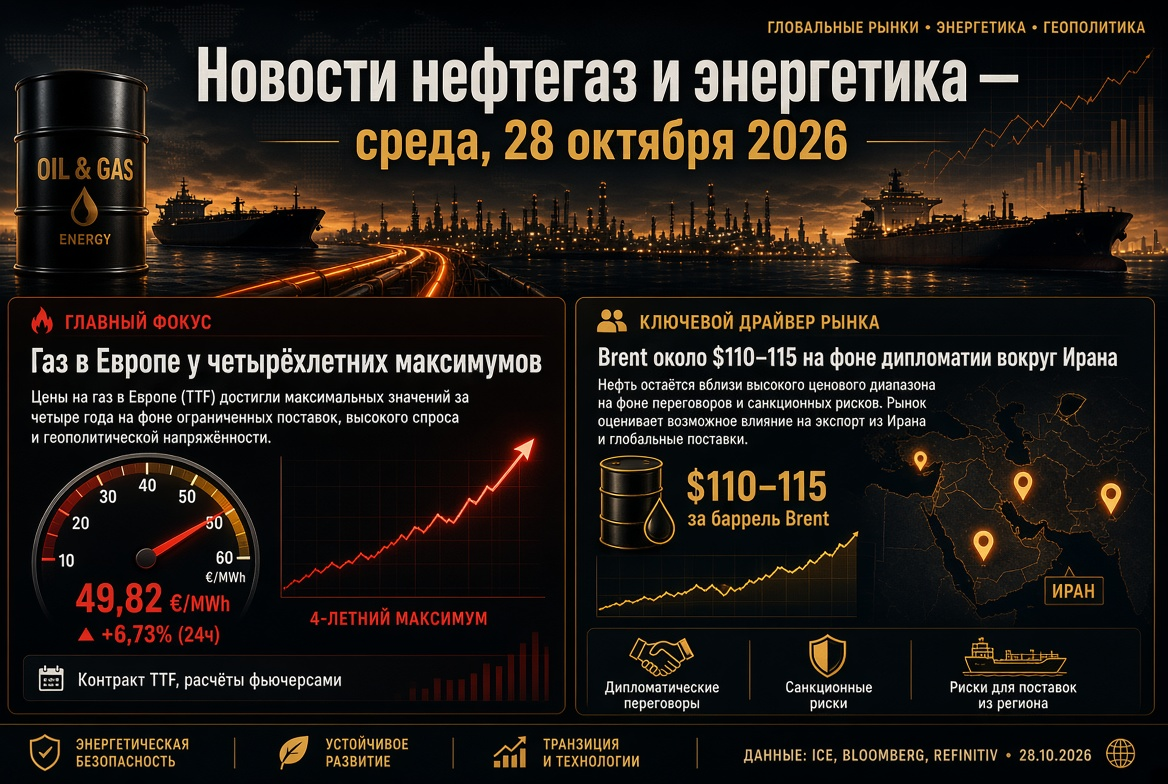
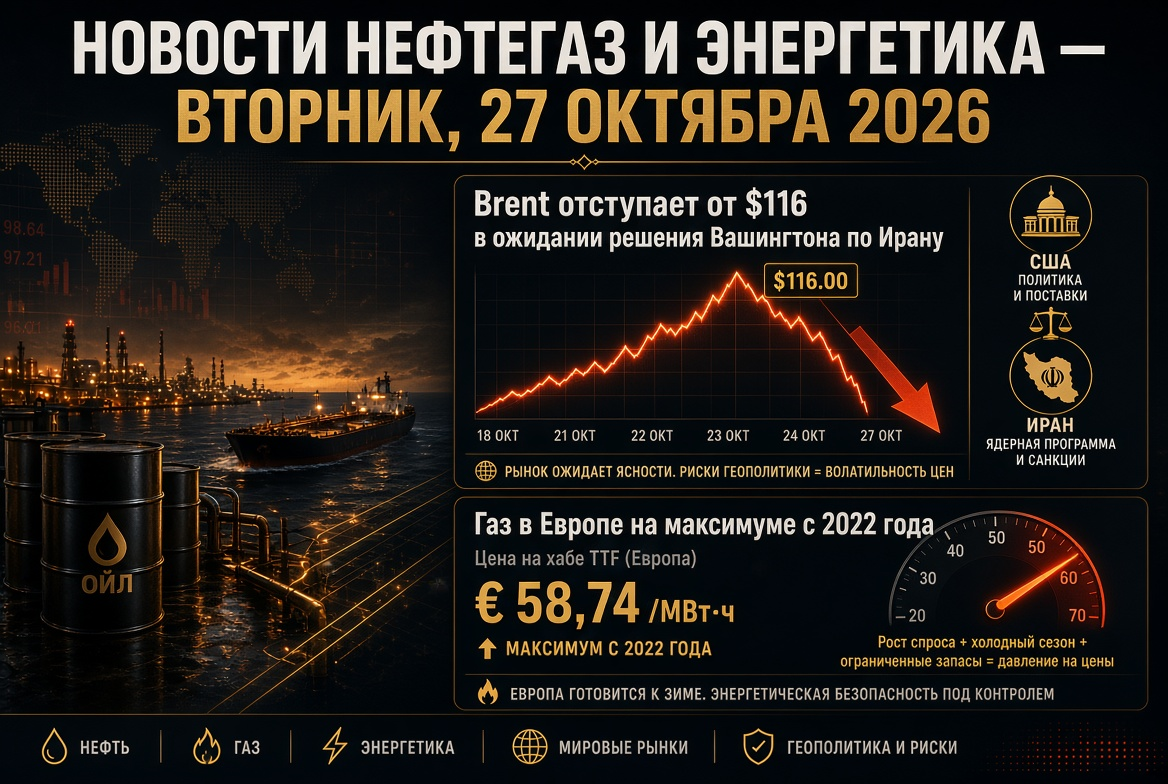
At the same time, global commodity markets are exhibiting relative stability. Oil prices remain near recent lows: Brent has stabilized in the range of $60–65 per barrel after a brief dip below $60, driven by an abundance of supply. The European gas market enters winter with very high stock levels—the EU's underground gas storage is over 90% full, keeping wholesale prices at a comfortable level (TTF around €30 per MWh).
In this context, the global energy transition is gaining momentum. Investments in renewable energy are reaching record levels and already exceed investments in fossil fuel extraction. The share of "green" sources in global electricity generation continues to grow steadily. Meanwhile, oil, gas, and coal remain the foundation of the energy balance, satisfying current demand and ensuring energy system security during the transition period.
In Russia, by the beginning of December, the domestic fuel market has noticeably stabilized due to emergency government measures taken in the autumn. The acute shortage of gasoline and diesel that emerged at the end of summer has been largely resolved: wholesale prices have retreated from peak levels, independent gas stations have resumed normal operations, and regional supply has returned to normal. Authorities are maintaining restrictions on fuel exports and support measures for oil refining to prevent a repeat price spike and shortage during the winter period.
Below is an overview of key news and trends in the oil, gas, electricity, renewable, and coal sectors, as well as the Russian fuel market as of the current date.
Oil Market: Oversupply and Weak Demand Pressures Prices
Global oil prices remain at a low level under the influence of oversupply and moderate demand. The benchmark Brent is trading around $64–65 per barrel, while WTI is at $60–61, approximately 10% lower than a year ago. Several factors influence this situation:
- OPEC+ Production Increase. The OPEC+ alliance is systematically increasing supply. In December, production quotas have been raised by around 100,000 barrels per day, bringing the total increase from April to approximately 2.7 million barrels per day. This has resulted in rising global oil and refined product inventories.
- Weak Demand Growth. Global oil consumption is growing significantly slower compared to previous years. The IEA forecasts a demand increase in 2025 of only about +0.7 million barrels per day (compared to more than +2 million in 2023). This is influenced by a slowdown in the global economy, the effect of high prices from previous years (energy conservation), and structural shifts such as the accelerated adoption of electric vehicles. Weak industrial growth in China is also limiting demand from the world's second-largest oil consumer.
Gas Market: High Stocks in Europe and Price Stability
The gas market is entering winter in a favorable state. EU underground gas storage is over 90% full, providing a solid buffer and keeping prices low. Prices at the TTF hub have stabilized around €30 per MWh, significantly lower than the peaks of last winter, indicating a balance of demand and supply in Europe.
- Europe Is Ready for Winter. Record gas stocks guarantee resilience even during severe cold spells. Tepid economic growth and high renewable energy generation are tempering gas consumption in the EU, so even in colder temperatures, a significant portion of additional demand can be met from storage—minimizing the risk of shortages.
- Diversification of LNG Imports. Record deliveries of liquefied natural gas from the U.S., Qatar, Africa, and other regions have helped fill European storage. In summer, the EU took advantage of low spot prices and weak Asian demand to purchase maximum LNG and prepare for winter.
Thanks to accumulated reserves and diversified imports, Europe enters the heating season without signs of fuel shortages, and prices remain comfortable for consumers. Despite reduced domestic production and the near-total cessation of Russian pipeline gas supplies, joint purchases, energy conservation, and accelerated investment in renewable energy strengthen Europe's energy security.
International Politics: Sanctions Standoff Without De-escalation
- New Western Restrictions. In recent months, a number of additional sanctions have been imposed on the Russian fuel and energy complex. The U.S. has blacklisted leading Russian oil and gas companies. The EU has approved a new package aimed at closing remaining channels to bypass the embargo. The UK has added several foreign companies assisting in the trade of Russian oil to its sanctions list.
- Pressure on India and China. Under Western pressure, Russia's largest Asian clients have been urged to limit cooperation. India has expressed readiness to gradually reduce purchases of Russian oil (with a minor decrease expected from December), while China has also been signaled to cut imports. So far, neither Delhi nor Beijing is rushing into concrete actions, emphasizing that their policies depend on national interests. Nevertheless, the prospect of reduced Asian demand heightens uncertainty, prompting Russia to redirect supplies to alternative markets.
Asia: India and China Strengthening Energy Security
The Asian giants remain key drivers of global energy demand growth. Despite external pressure, China and India prioritize energy supply accessibility and reliability, increasing imports of oil, gas, and coal under favorable conditions.
- China and India. China is receiving record volumes of Russian gas and remains one of the main buyers of Russian oil and coal at discounted prices. India has also ramped up imports of Russian oil to meet its needs. Both countries are in no hurry to reduce cooperation with Moscow, placing energy security above external pressure.
Overall, high demand from Asian countries compensates for stagnation in demand in the West, maintaining global usage of oil, gas, and coal at high levels. The pursuit of energy security is prompting Asian economies to diversify sources and enter into long-term contracts. While China and India are gradually investing in clean energy, it is their purchases of traditional resources that currently play a significant role in shaping the dynamics of the global energy market.
Electricity and Renewable Energy: Record Demand and New Challenges
Global electricity consumption in 2025 has reached a historical maximum, exceeding 30,000 TWh for the first time. Renewable sources now account for about 30% of this electricity. The main contribution to the demand growth comes from developing countries in Asia (primarily China and India), as well as the spread of electric transportation and electric heating.
- Infrastructure Upgrade. Worldwide, the modernization of power grids and generating capacities is accelerating. Significant investments are being made in smart grids, energy storage, and strengthening transmission lines. These efforts enhance the reliability of power supply and prepare networks for the increasing share of renewable generation.
Coal Sector: High Demand in Asia and Accelerated Phase-Out in the West
The global coal market in 2025 remains close to record consumption levels, although dynamics vary by region. In Asia, high demand persists, allowing global coal usage to stay at maximum levels, while in the West, the use of this fuel is rapidly declining.
- East and West. In Asia (China, India), demand for coal remains high: these countries are increasing production and imports to meet energy and industrial needs. Major exporters (Australia, Indonesia, South Africa, Russia) are maintaining high supply volumes to the East. Meanwhile, in the West, coal is rapidly being phased out: strict environmental standards have reduced its share to minimal levels (in the EU, it accounts for just a few percent of generation, while in the U.S., consumption has rolled back to levels last seen in the 1970s). Until Asian economies begin to significantly reduce their reliance on coal, global consumption will remain close to record levels.
Russian Fuel Market: Stabilization After Crisis and Priority for Domestic Market
In Autumn 2025, the domestic fuel market in Russia gradually stabilized after the acute supply crisis that occurred at the end of summer. Thanks to emergency government measures, the situation with gasoline and diesel has been brought under control: shortages in most regions have been eliminated, and price growth has been halted.
- Export Restrictions and Stabilization. The ban on the export of automotive gasoline, imposed at the end of September, has been extended until December 31, 2025; restrictions on the export of diesel fuel also remain in place (independent traders are not exporting, while oil companies are allowed only limited exports). These measures and subsidies to oil refiners have had an effect: wholesale prices have retreated from peak levels, and independent gas stations have resumed normal operations without supply disruptions, even in remote regions.
The government intends to maintain control over the fuel market at least until the end of winter while simultaneously developing long-term solutions to enhance the sustainability of the sector.