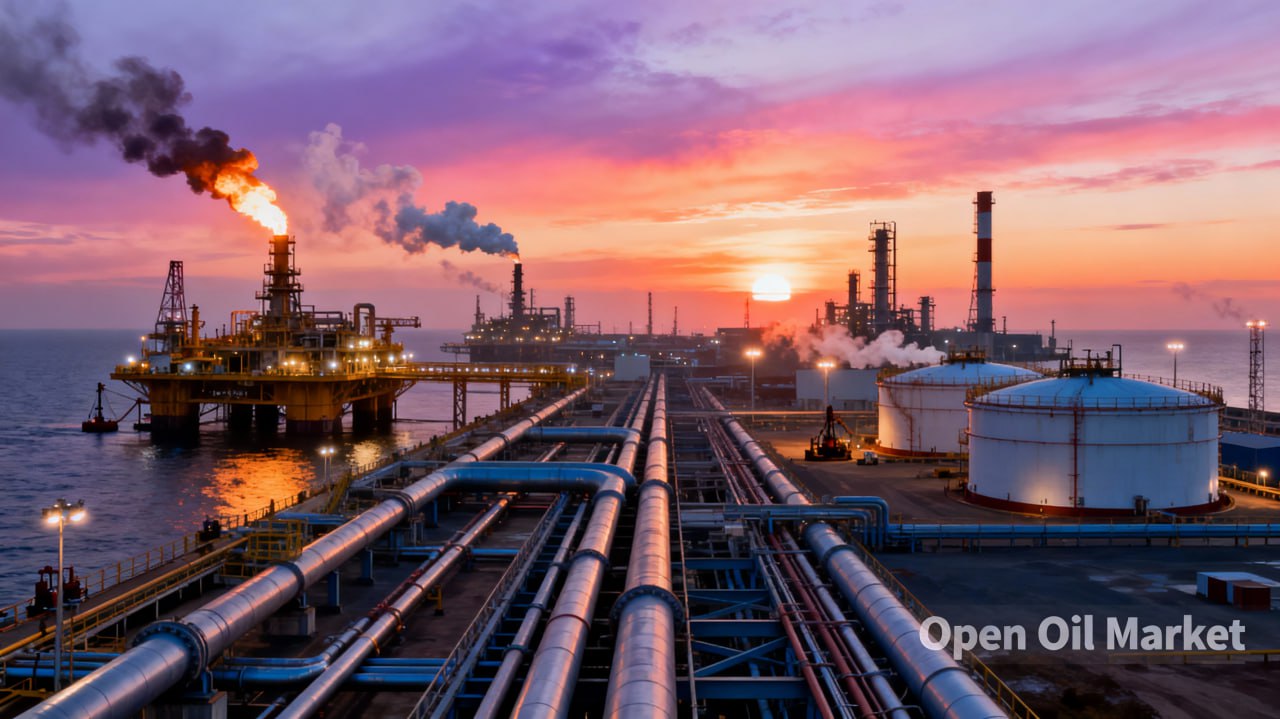
Current News in the Oil, Gas, and Energy Sector as of December 10, 2025: Price Dynamics, Sanction Pressures, Commodity Market Trends, Fuel Production, Energy Policy, and Global Trends.
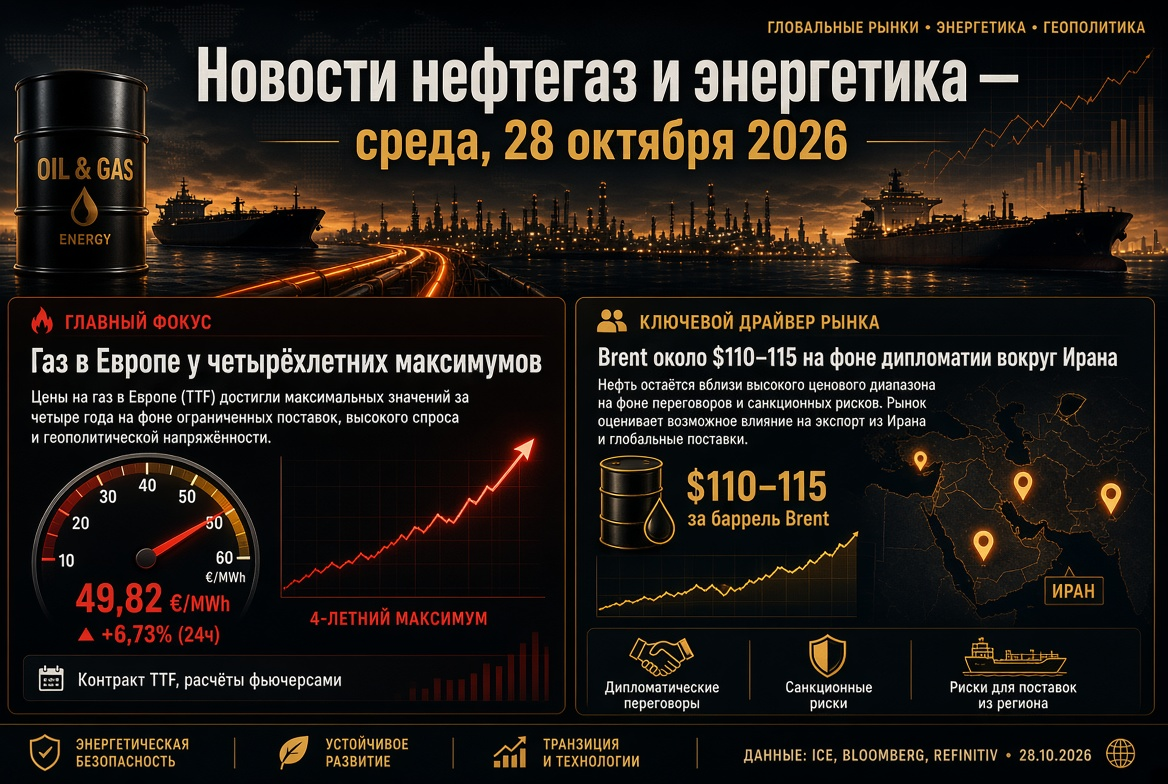
The latest developments in the fuel and energy complex (FEC) as of December 10, 2025, capture the attention of investors and market participants due to their ambiguity. The confrontation between Russia and the West continues to evolve under the pressure of sanctions: there has been no direct easing of restrictions; on the contrary, G7 countries and the EU are discussing new tightening measures against the Russian oil and gas sector at the beginning of 2026. Meanwhile, the global oil market maintains a fragile balance: Brent crude is trading around $60 per barrel, reflecting the balance between rising supply and weakening demand. The European gas market enters winter relatively confidently, with underground gas storage in the EU over 75% full at the start of December, providing a buffer and keeping prices at moderate levels. The global energy transition continues to accelerate: many regions are reporting record levels of electricity generation from renewable sources (RES), although countries have not yet completely abandoned traditional resources for the reliability of their energy systems. In Russia, following an autumn spike in prices, authorities are continuing measures to stabilize the domestic fuel market. Below is a detailed overview of key news and trends in the oil, gas, electric power, and commodity sectors as of this date.
Oil Market: Cautious Production Management Amid Excess Risk
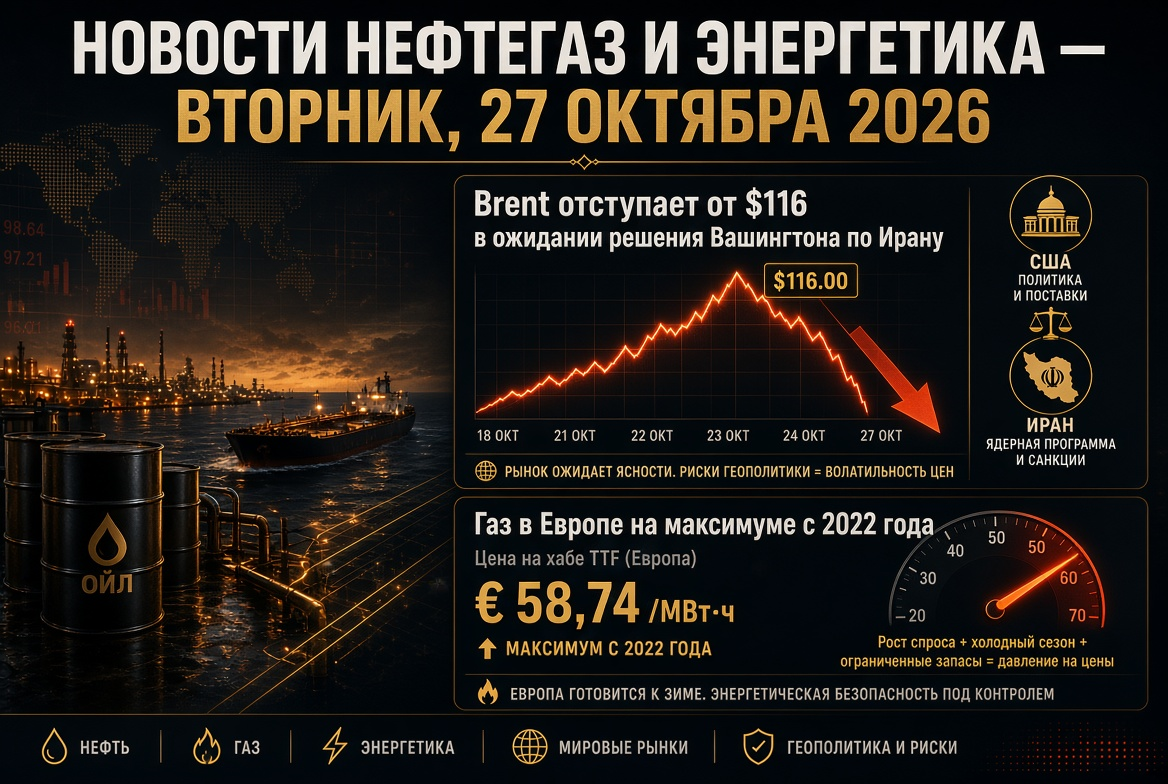
Global oil quotes remain relatively stable under the influence of multiple fundamental factors. North Sea Brent is trading around $62–64 per barrel, while American WTI is in the range of $58–60. Current prices are about 10% lower than year-ago levels, reflecting a gradual market correction after the price peaks of 2022-2023. Several key trends are influencing price dynamics:
- OPEC+ Production Growth: The oil alliance has gradually increased market supply throughout 2025. In December, key participants' production quotas were raised by another 137,000 barrels per day (as in the previous two months); however, a pause in production growth has been decided for the first quarter of 2026 to prevent excess supply. From April to November, the total OPEC+ quota increased by approximately 2.9 million barrels per day, leading to an increase in global oil and petroleum product stocks.
- Slowing Demand Growth: Global oil consumption is growing at a more moderate pace. According to updated estimates from the International Energy Agency (IEA), the growth in oil demand in 2025 will be around 0.7 million barrels per day (compared to over 2.5 million in 2023). Even OPEC’s forecasts have become more restrained, with the cartel expecting demand growth of about 1.1–1.3 million barrels per day for 2025. Reasons include a slowdown in the global economy and the impact of high prices in previous years, which promote energy saving. Additionally, a slowdown in industrial growth in China has limited the appetite of the world's second-largest oil consumer.
- Sanctions and Uncertainty: Sanction pressures create contradictory effects in the market. On the one hand, new Western restrictions—such as the U.S. and U.K. sanctions against major Russian oil companies—complicate production growth in Russia, sustaining the risk of shortages of specific crude grades. On the other hand, Russian supplies continue to be redirected to Asia at discounted prices, mitigating the overall impact of sanctions on global supply. Furthermore, certain optimism among investors has been bolstered by signals of progress in U.S. trade negotiations with major partners, which has improved market sentiment.
The cumulative influence of these factors supports a market condition close to surplus: oil supply slightly exceeds demand, keeping prices from rallying again. Exchange quotes remain significantly below the peaks of previous years. Some analysts believe that if current trends persist, the average Brent price could fall to the $50–55 per barrel range in 2026.
Gas Market: Comfortable Stocks in Europe and Moderate Prices
On the gas market, the focus remains primarily on Europe. EU countries entered the winter season with historically high gas reserves: by early November, European underground gas storage was nearly 98% full of total capacity, and by the first decade of December, stock levels remained at a comfortable ~75%. This is significantly higher than average levels in previous years and provides a reliable buffer in case of cold weather. Meanwhile, gas exchange prices remain relatively low: January futures at the TTF hub trade at about €27–28/MWh (approximately $340 per thousand cubic meters), reflecting balanced supply and demand. The continuing influx of liquefied natural gas (LNG) is enhancing market stability: by the end of 2025, total LNG imports into Europe could set a new record, compensating for declines in pipeline gas supplies. A potential risk factor remains possible colder weather or increased competition for LNG from Asia; however, the situation currently favors consumers. Moderate gas prices contribute to lower costs for industry and energy sectors in Europe at the beginning of winter.
International Politics: Sanctions Without Easing and New Measures Approaching
Despite some diplomatic contacts, there has been no notable easing of sanctions in the oil and gas sector. On the contrary, Western countries are signaling their readiness to tighten restrictions. In December, the G7 and EU held discussions about a new sanction package against Moscow. Sources indicate that a total ban on maritime transportation of Russian oil is being discussed for implementation starting in 2026, which could replace the existing price ceiling of $60 per barrel. The aim of such measures is to further reduce export revenues for Russia. U.S. authorities also imposed additional sanctions against Russian oil giants at the end of autumn, complicating their access to technology and financing. As a result, uncertainty for the sector persists: on one hand, there have been no serious supply disruptions thanks to the restructuring of logistics chains; on the other hand, the prospect of new restrictions compels market participants to act cautiously.
A positive aspect remains the preservation of dialogue channels. Contacts between relevant departments of Russia and several Asian countries continue, allowing energy flows to be redirected and mitigating the impact of sanctions. Furthermore, there is an observable improvement in global trade relations: a de-escalation of tensions between major economies (e.g., the gradual resolution of U.S.-China trade disputes) supports investor confidence and demand for energy resources. In the coming months, market attention will be focused on the development of the sanctions situation: the implementation of new restrictions or, conversely, a pause in sanction pressures could significantly influence sentiments and long-term strategies of energy companies.
Asia: Major Consumers Balancing Imports and Domestic Production
- India: Facing ongoing sanctions, New Delhi is striving to secure its energy balance. A sharp rejection of Russian oil and gas imports is unacceptable for the country; hence, Indian authorities continue to procure Russian energy resources, seeking favorable deals. Russian companies offer significant discounts to Indian refineries compared to Brent prices (estimated at around $4–6 per barrel of Urals), enabling India to increase oil and petroleum product imports to meet domestic demand. Simultaneously, India is focusing on developing its resource base: as part of its national program for deepwater field development, the state-owned ONGC is conducting exploratory drilling in the Andaman Sea, and first results are considered promising. Success in finding new oil and gas reserves may reduce the country's dependence on external supplies in the long run.
- China: The largest economy in Asia continues to follow a multi-vector strategy. On the one hand, China remains the leading buyer of Russian oil and gas, taking advantage of the situation to replenish reserves at acceptable prices. In 2024, China imported about 213 million tons of oil and 246 billion cubic meters of natural gas (an increase of 1.8% and 6.2% year-on-year, respectively), and in 2025, import volumes remain high with slight increases. On the other hand, Beijing is increasing domestic production: from January to October 2025, China produced about 200 million tons of oil (+1.2% year-on-year) and 320 billion cubic meters of gas (+5.8% year-on-year). While the share of domestic production is growing, the country still relies on imports for approximately 70% of its oil and 40% of its gas. To improve energy security, China is investing in resource development, oil recovery technologies, and expanding storage infrastructure. Thus, India and China—key players in the Asian region—continue to play a dual role in FEC markets, combining active energy resource imports with measures to increase local production.
Energy Transition: RES Records and the Role of Traditional Generation
The global shift towards low-carbon energy reached new heights in 2025. Many countries have reported record levels of electricity generation from renewable sources—solar and wind power plants are achieving new maximum generation figures. In the European Union, the cumulative share of solar and wind generation surpassed that of electricity produced by coal and gas-fired power plants for the first time in a year, continuing the trend of recent years toward replacing fossil fuels. In the United States, the share of renewable sources in total generation steadily exceeds 30%, with generation from wind and solar surpassing coal-fired generation for the first time in a year. China, the leader in RES scale, has introduced tens of gigawatts of new capacity—over 100 GW of solar panels and wind turbines were installed in 2025 alone, setting new national records. According to the IEA, total investments in the global energy sector exceeded $3 trillion in 2025, with more than half of this amount directed toward RES projects, modernization of power grids, and energy storage systems.
At the same time, ensuring the stability of energy systems still requires the participation of traditional types of generation. The rising share of RES creates challenges for the power sector: during hours when solar or wind generation is reduced, backup capacity is needed. In many countries, during peak demand periods and adverse weather conditions, gas and even coal-fired power plants are brought back online. For instance, several European countries temporarily increased output at coal-fired power plants during windless weather last winter, despite the environmental costs. Governments and companies are rapidly developing energy storage systems (industrial batteries, pumped-storage plants) and smart grids to enhance flexibility and reliability of energy supply. Experts predict that by the end of the decade, renewable sources could take first place in the world in terms of electricity generation, but during the transition period, the need for support from gas and other traditional plants will remain. Thus, the energy transition is progressing steadily, although the balance between “green” technologies and classic resources remains critically important for the stability of the sector.
Coal: Market Stabilization Amid High Demand
The global coal market in 2025 demonstrates relative stability against the backdrop of still-high demand. Despite the accelerated development of renewable energy, coal consumption remains significant, especially in the Asia-Pacific region. China continues to burn coal at nearly record levels—annual Chinese generation consumes over 4 billion tons of coal, and national production (around 4.4 billion tons per year) barely meets domestic needs. India, with substantial reserves, also actively utilizes coal: over 70% of electricity in the country is generated at coal-fired power plants, and absolute coal consumption is growing along with the economy. Other developing Asian countries (Indonesia, Vietnam, Bangladesh, etc.) are implementing projects for new coal-fired plants to meet the rising demand for electricity.
Supply in the global coal market is adapting to high demand. Major exporters—Indonesia, Australia, Russia, South Africa—have increased coal production and exports in recent years, allowing them to keep prices within a moderate range after the extreme spikes of 2022. In 2025, thermal coal prices fluctuate around $100–120 per ton, reflecting a balance of interests between consumers and producers. Buyers receive fuel at relatively acceptable prices, while mining companies enjoy stable sales with adequate profits. Many states announce long-term plans to reduce the share of coal for climate reasons, but in the next 5-10 years, it will remain a vital energy source for billions of people, especially in Asia. Thus, the coal industry is experiencing a period of relative equilibrium: demand remains consistently high, prices are moderate, and despite climate agendas, coal continues to be one of the key pillars of global energy.
Russian Oil Products Market: Results of Price Control Measures
By the end of the year, interim results of the emergency measures taken in the Russian domestic fuel market are being summarized. In autumn 2025, after wholesale gasoline prices surged to record levels, the government implemented a series of steps to normalize the situation:
- Export Restrictions on Fuels: The total ban on the export of gasoline and diesel, imposed in September, was extended until early October and then gradually eased for large refineries. As the market balance improved, major oil refineries were allowed to resume part of their export supplies, while restrictions remained in place for independent traders and smaller plants.
- Control Over Resource Distribution: The cause of the supply deficit was unexpected shutdowns at several refineries (accidents and drone attacks disrupted operations at major plants, reducing fuel output). Authorities tightened oversight of petroleum product distribution in the domestic market—producers were mandated to prioritize the needs of domestic consumers, and practices of stock exchange resale of fuels among wholesalers that had been driving up prices were halted. The Ministry of Energy, the Federal Antimonopoly Service (FAS), and the St. Petersburg Exchange are jointly developing a transition to long-term direct contracts between refineries and distribution companies to eliminate intermediaries from the supply chain.
- Subsidies and Dampers: The government continued to provide financial support to the industry. The reverse excise tax on oil (the so-called “damper”) and direct subsidies to refiners partially compensated for their lost revenue from domestic fuel sales, encouraging them to direct a larger volume of petroleum products to the domestic market.
The set of measures allowed for avoiding acute fuel shortages—service stations across the country are supplied with gasoline and diesel fuel. However, it was not possible to fully contain price growth: according to Rosstat, retail gasoline prices in Russia increased by approximately 12% as of early December since the beginning of the year, while overall inflation was around 5%. Thus, fuel has been becoming more expensive at twice the rate of the general consumer basket, indicating ongoing pressures in the market. Authorities state that they will continue to monitor the situation: if necessary, export restrictions may be tightened again, and support for the industry is planned to be extended. Already in December, a specialized headquarters led by Deputy Prime Minister Alexander Novak is discussing additional measures—from adjusting the damper to replenishing fuel reserves—to prevent a recurrence of price spikes. The government aims to ensure stable supply of oil products to the domestic market and keep prices within acceptable limits for end consumers, minimizing risks for the economy and social sphere.