Startup and Venture Investment News for Sunday, February 8, 2026: Major Funding Rounds, Global Venture Fund Activity, AI Growth, and Key Trends in the Global Venture Market
As of early February 2026, the global venture capital market continues its steady recovery following recent downturns. Preliminary estimates indicate that 2025 was one of the most successful years for startup investments, second only to the record-breaking years of 2021-2022, reflecting a resurgence of significant private capital in the technology sector. Investors worldwide are actively financing promising companies once again, with record-scale deals being sealed and startup plans for initial public offerings (IPOs) returning to the agenda. Major venture funds are re-emerging with new mega rounds and investment strategies, while governments and corporations ramp up their support for innovation to keep pace in the global technology race. Consequently, at the start of 2026, the venture market demonstrates positive dynamics, instilling cautious optimism—despite investors still taking a selective approach to assessing projects and the resilience of business models.
Geographically, the recovery is global, although it is unevenly distributed. The primary driver remains the United States, with American startups accounting for a lion's share of large rounds, particularly in the field of artificial intelligence. In Europe, venture investments are on the rise: by the end of 2025, Germany surpassed the UK for the first time in a decade in terms of total capital raised, strengthening the positions of European tech hubs. In Asia, the dynamics are mixed: the Indian ecosystem has reached a new level of maturity (in January, the first "unicorns" of 2026 emerged and high-profile IPOs resumed), while in China, activity remains subdued due to regulatory pressures and a reallocation of resources to domestic priorities. Conversely, the Middle East is gaining momentum: funds from the UAE, Saudi Arabia, and Qatar are pouring billions into tech companies both in their region and worldwide, betting on fintech, cloud services, and AI. The startup ecosystems in Russia and neighboring countries are also striving to keep pace, launching local funds and support programs, although the volumes of venture investments there are still comparatively modest. Thus, the new venture upturn encompasses nearly all continents, forming a more balanced global innovation ecosystem.
Below are the key events and trends shaping the agenda for startups and venture investments for February 8, 2026:
- Return of mega funds and large investors. Leading venture firms are raising unprecedented capital for new funds and rapidly increasing investments, re-saturating the market with financing and rekindling appetite for risk.
- Unprecedented AI mega rounds and a new wave of unicorns. Historically large investments in artificial intelligence are driving startup valuations to unprecedented heights, resulting in dozens of new billion-dollar "unicorns."
- Climate technologies and energy attracting mega deals. The sustainable energy and climate tech sectors are coming to the forefront thanks to multi-million and even billion-dollar funding rounds worldwide.
- Consolidation in fintech and a wave of M&A. Mature fintech players are becoming targets for multi-billion acquisitions, while some unicorns are expanding through strategic purchases.
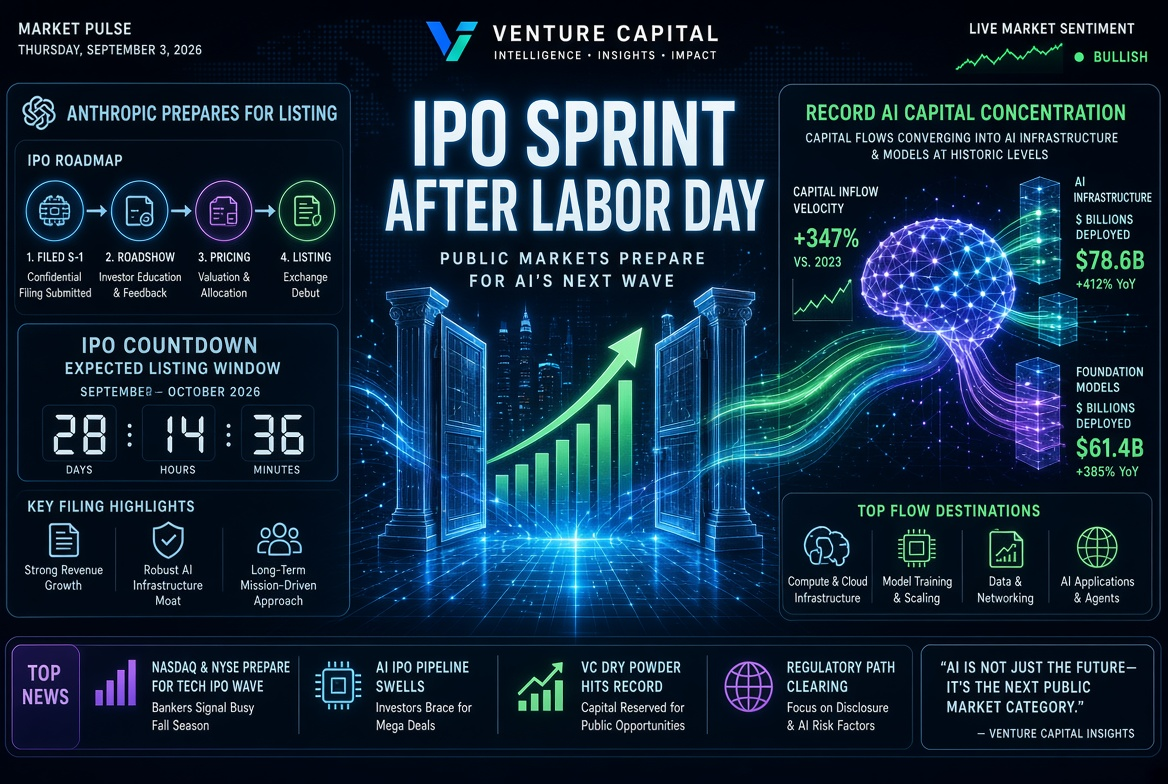
- Revival of the IPO market. Initial public offerings of tech companies are back in the spotlight: successful IPOs inspire new candidates to prepare for public listings, confirming the opening of the long-awaited "window" for exits.
- Focus on defense, space, and cyber startups. Venture funds are reallocating capital to strategic industries—ranging from defense and space to cybersecurity—in response to new geopolitical challenges.
- Revival of biotech and digital health investments. After a prolonged downturn, the biotech and medtech sectors are once again attracting significant capital, relying on recent success stories and scientific breakthroughs.
Return of Mega Funds: Big Money Back on the Market
The largest investment players are triumphantly returning to the venture market, signaling a renewed appetite for risk. Global funds are announcing unprecedented capital-raising rounds. The American giant Andreessen Horowitz (a16z) has raised over $15 billion for new funds, bringing its total assets under management to a record $90 billion. Japan is not lagging behind: SoftBank has launched its third Vision Fund, amounting to approximately $40 billion, while simultaneously strengthening its position in the AI sector. At the end of 2025, SoftBank invested $22.5 billion in OpenAI, marking one of the largest single investments in the history of the startup industry. Other players are also actively replenishing their "war chests": for example, Lightspeed Venture Partners closed new funds totaling over $9 billion (a record in its 25-year history), and Tiger Global, recovering from recent losses, returned to the market with a $2.2 billion fund, reaffirming its ambitions.
The influx of such "big capital" fills the market with liquidity and intensifies competition for the most promising deals. Sovereign funds from Gulf countries and state institutions worldwide are also investing billions of dollars into tech projects, creating new mega platforms for funding innovation. It is estimated that the total amount of dry powder available to investors already amounts to hundreds of billions of dollars and is ready for deployment as confidence in the market strengthens. The return of such large sums confirms the investment community's faith in further growth in the technology sector and a desire not to miss the next significant technological breakthrough.
AI Startup Boom: Mega Rounds and New Unicorns
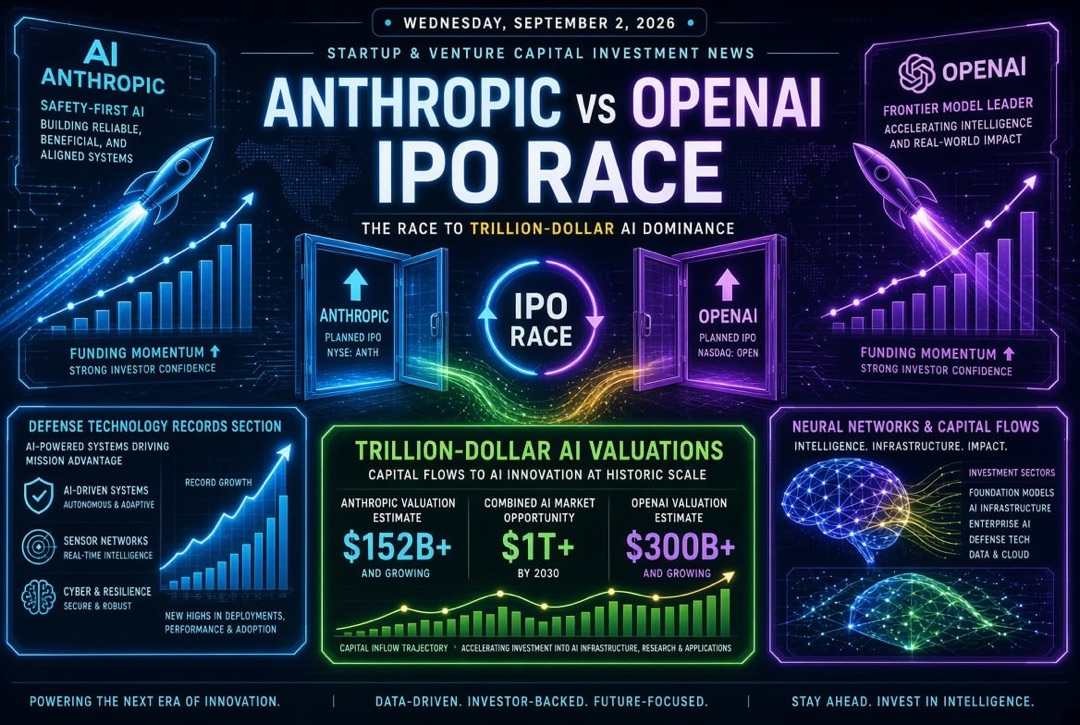
The artificial intelligence sector remains the primary driver of the current venture boom, demonstrating unprecedented funding volumes. Investors are eager to position themselves at the forefront of the AI revolution and are willing to invest colossal amounts in the industry leaders. In just the first weeks of 2026, deals of unprecedented scale have been announced: for instance, Waymo (Alphabet's autonomous driving unit) secured around $16 billion in new financing at a valuation of ~$126 billion, making it one of the most expensive startups in history. Elon Musk's startup xAI received about $20 billion in investments with strategic participation from Nvidia—a phenomenal amount for a private company. Industry leader OpenAI is reportedly in talks to raise up to $100 billion at a valuation of around $800 billion—such a large private round has never been seen before (participants in the discussions include SoftBank, as well as corporations like Nvidia, Microsoft, Amazon, and Middle Eastern funds). Not to be outdone, OpenAI's competitor, Anthropic, is reportedly aiming to raise up to $15 billion at a valuation of around $350 billion.
On this wave of excitement, new unicorns are rapidly multiplying: just in recent months, dozens of companies worldwide have surpassed a valuation of $1 billion. In the U.S., startups in generative video and voice AI are achieving unicorn status at lightning speed (such as Higgsfield, Deepgram, and others). In Europe, significant AI rounds (e.g., ~$350 million for the German company Parloa at a valuation of ~$3 billion) confirm the global nature of the AI boom. Investor appetite for AI ventures remains robust, although experts caution about the risks of overheating and inflated expectations. Notably, venture capitalists are now actively investing not only in applied AI products but also in the infrastructure for them—from powerful chips and data centers to security and monitoring systems. Such a mass influx of capital accelerates progress in the industry but requires the market to carefully monitor the sustainability of business models to prevent the current euphoria from turning into a sharp cooling.
Climate Technologies and Energy: Mega Deals on the Rise
Amid the global shift toward sustainable energy, substantial capital is also flowing into climate tech projects. In 2025, the total amount of dedicated climate venture funds exceeded $100 billion (with most funds raised in Europe), reflecting unprecedented investor interest in "green" innovations. Large private rounds in this sector are no longer surprising. For example, American company TerraPower, which develops compact nuclear reactors, secured about $650 million for the development of its technology, while startup Helion Energy attracted $425 million to create the first commercial fusion reactor. Earlier in January, climate project Base Power (Austin, Texas), which develops a network of home battery systems and "virtual power plants," raised approximately $1 billion (Series C) at a valuation of ~$3 billion, becoming one of the largest deals in the history of climate tech.
Venture funds are increasingly betting on solutions capable of accelerating the decarbonization of the economy and meeting growing energy demand. Significant investments are being directed toward energy storage, new types of batteries and fuels, electric vehicle development, carbon capture technologies, as well as "climate fintech"—platforms for trading carbon credits and insuring against climate risks. Whereas climate and energy projects were previously considered risky for VC due to long payback periods, private and corporate investors are now willing to adopt a long-term perspective, expecting substantial returns from innovations in this area. Sustainable technologies are rising to the forefront of the venture market, gradually advancing the "green" transition of the economy.
Fintech Consolidation: Billion-Dollar Exits and a Wave of M&A
A new wave of consolidation is unfolding in the fintech sector, signaling the maturation of the fintech market. Major banks and investors are keen to integrate advanced fintech solutions, resulting in several high-profile deals being announced in January 2026:
- Capital One has agreed to acquire startup Brex (a corporate expense management platform) for approximately $5.15 billion. This acquisition is the largest "bank-fintech" purchase in history, underscoring traditional financial giants' desire to innovate.
- European fund Hg Capital is acquiring the American financial platform OneStream for about $6.4 billion, buying out shares from previous investors (including KKR).
- Exchange operator Deutsche Börse announced the purchase of investment platform Allfunds for €5.3 billion to strengthen its position in the WealthTech sector.
- US Bancorp is acquiring brokerage firm BTIG for approximately $1 billion, expanding its presence in the investment services market.
- Along with acquisitions by corporations, fintech "unicorns" are also stepping onto the acquisition path. For instance, Australian payment service Airwallex, a unicorn, is expanding its business in Asia by acquiring the South Korean fintech company Paynuri.
The activation of mergers and acquisitions indicates that, as the industry matures, successful fintech companies are either becoming part of larger players' portfolios or are expanding their influence through strategic acquisitions. For venture investors, this trend presents new opportunities for profitable exits, while for the market, it signifies the consolidation of key players and the emergence of multi-product platforms based on acquired startups.
IPO Market Awakens: Startups Go Public Again
After a prolonged hiatus, the global market for initial public offerings of tech companies is showing a solid revival. The year 2025 exceeded analysts' expectations in terms of high-profile IPOs: in the U.S. alone, no fewer than 23 companies went public with valuations exceeding $1 billion (compared to only 9 such debuts the previous year), and the total capitalization of these offerings exceeded $125 billion. Investors are once again ready to welcome profitable and fast-growing companies onto public markets, especially if the startup has a strong narrative connected to AI or other "hot" technologies. At the end of 2025, successful debuts were seen from fintech giant Stripe and neobank Chime (Chime's shares rose approximately 40% on the first day of trading), restoring confidence in the opening of the long-awaited IPO "window."
In 2026, this trend is expected to continue: several major startups are hinting transparently at preparations for stock issuance. Among the most anticipated IPO candidates are:
- Major fintech unicorns: payment platforms Plaid and Revolut.
- Leaders in AI: AI model developer OpenAI, big data platform Databricks, and AI startup for business Cohere.
- Other tech giants: for example, space company SpaceX (if market conditions are favorable).
The successful public offerings of these companies have the potential to give the market an additional boost, although experts remind us that volatility could suddenly close the current "IPO window." Nonetheless, the renewed activity of startups on the exchange strengthens the belief that investors are ready to reward companies with strong growth and profitability metrics, while venture funds are gaining the long-awaited opportunities for substantial exits.
Defense, Space, and Cyber Startups in Spotlight
Geopolitical tensions and new risks are reshaping the priorities of venture investors. In the U.S., the trend of American Dynamism is gaining momentum—investing in technologies related to national security. Notably, part of the funding from these new mega funds (such as a16z) is directed specifically toward defense and deeptech projects. Startups developing solutions for the military, space, and cybersecurity are increasingly attracting nine-figure sums. For instance, California-based Onebrief, a military planning software company, recently raised about $200 million in funding at a valuation exceeding $2 billion and even made a small acquisition of a profile startup to enhance its platform capabilities. Meanwhile, specialized players are rapidly growing: Belgian startup Aikido Security, offering a cybersecurity platform for code and cloud systems, reached unicorn status (valuation ~$1 billion) in less than two years of development.
Such successes reflect the growing market demand for technologies that ensure defense and cybersecurity. Investments are being directed toward everything from supply chain protection (for example, British project Cyb3r Operations raised ~$5 million to monitor cyber risks) to new satellite reconnaissance tools. Furthermore, support for defense and space startups is being enhanced by not only private funds but also governmental programs in the U.S., Europe, Israel, and other countries keen on gaining a technological advantage. Thus, "dual-use" technologies related to security have firmly secured a place in the focus of the venture market alongside commercial projects.
Revival of Investment in Biotech and Digital Health
After several tough years of "biotech winter," the life sciences sector is showing signs of warming. Major deals at the end of 2025 restored investor confidence in biotech: pharmaceutical giant Pfizer agreed to acquire Metsera (a developer of obesity treatments) for $10 billion, while AbbVie purchased ImmunoGen for approximately $10.1 billion. These acquisitions confirmed that demand for promising drugs remains high. Against this backdrop, venture investors are again willing to finance biotech startups with substantial sums. In early 2026, the first signs of revitalized funding appeared, with American startup Parabilis Medicines, developing innovative oncology drugs, attracting approximately $305 million—one of the largest rounds for the sector in recent times. Investments in medical technologies and digital health are also growing, especially at the intersection with artificial intelligence.
Market participants note that in 2026, biotech and medtech segments are expected to gradually emerge from the crisis. Investors are diversifying their investments, paying attention not only to traditional areas (oncology, immunology) but also to emerging niches—genetic technologies, treatments for rare diseases, neuro-technologies, and medical AI solutions. A surge in mergers and acquisitions in biopharma is anticipated as large pharmaceutical companies experience a "hunger" for new products in light of patent expirations. While the IPO market for biotech still has not fully recovered, large late-stage rounds and strategic deals provide startups in this space with the necessary capital to advance their developments. Thus, biotechnology and healthcare are once again emerging as attractive areas for venture investments, promising investors significant growth potential—provided that the scientific viability of projects is ensured.
Looking Ahead: Cautious Optimism and Steady Growth
Despite the rapid surge in venture activity at the beginning of the year, investors remain cautious, mindful of the lessons learned from recent market cooling. Capital has indeed resumed flowing into the technology sector, but startup evaluation criteria have tightened: funds expect teams to present clear business models, economic efficiency, and understandable pathways to profitability. Company valuations are once again climbing (especially in the AI segment), yet investors are increasingly focusing on diversifying risks and the long-term sustainability of portfolios. The return of liquidity—from billion-dollar venture funds to new IPOs—creates opportunities for large-scale growth but simultaneously intensifies competition for outstanding projects.
There is a high likelihood that in 2026, the venture capital industry will transition into a phase of more balanced development. Funding for breakthrough sectors (AI, climate technologies, biotech, defense, etc.) will continue, but there will be a greater emphasis on the quality of growth, transparency in management, and compliance of startups with regulatory requirements. This more measured approach should help the market avoid overheating and lay the foundation for sustainable innovation development in the long term.