The Global Energy Sector Enters a New Phase: Oil Prices Decline, Gas Remains Risk-Sensitive, and Energy Continues to Depend More on Infrastructure
On Tuesday, June 23, 2026, the global fuel and energy sector approaches the trading day with a mixed balance of factors. On one hand, the oil market received signals of a decrease in geopolitical premium: negotiations around Iran, temporary easing of restrictions on Iranian oil, and the gradual recovery of tanker movement through the Strait of Hormuz have lessened fears of an immediate raw material shortage. On the other hand, the markets for oil products, LNG, electricity, coal, and gas generation remain tense.
For investors, market participants in the fuel and energy sector, oil companies, fuel traders, refineries, gas suppliers, electricity operators, and renewables companies, the main takeaway for the day is that the raw material market no longer reacts solely to oil prices. Refining, logistics, energy security, the flexibility of power grids, and the ability of countries to quickly adjust their energy balance are now taking center stage.
Oil: Risk Premium Declines After US-Iran Negotiations
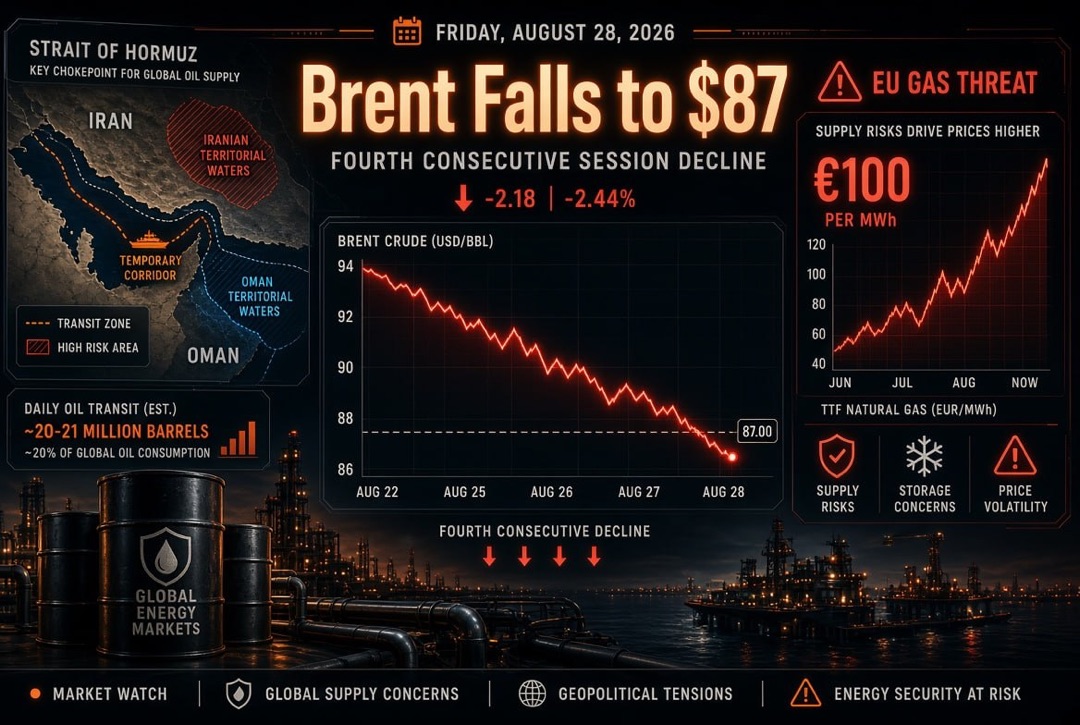
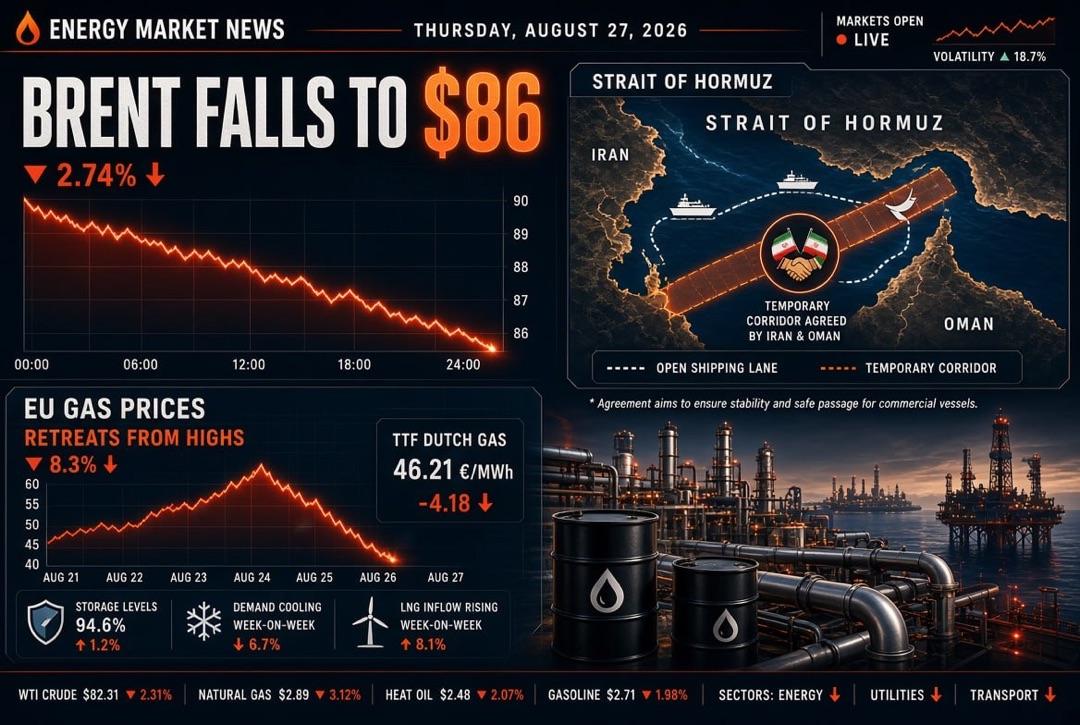
The headline news in the oil and gas market is the sharp cooling of oil prices following signals of progress in US-Iran negotiations. Brent fell below the psychologically important level of $80 per barrel, with WTI also declining as concerns over Middle Eastern supply eased.
For the oil market, this signifies a shift from a panic scenario to a more complex risk assessment model. Traders are no longer factoring in an immediate supply shock, yet it is still premature to fully remove the geopolitical premium. The Strait of Hormuz remains a key artery for global oil and LNG trade, and any new escalation could quickly return volatility.
- For oil companies, the stability of export routes is crucial;
- For refineries, the availability of crude and freight costs are key;
- For investors, the dynamics of inventories, refining margins, and OPEC+ decisions are essential;
- For fuel companies, the prices of gasoline, diesel, jet fuel, and fuel oil are of utmost importance.
The Strait of Hormuz: Movement Recovers, but Logistics Remain Vulnerable
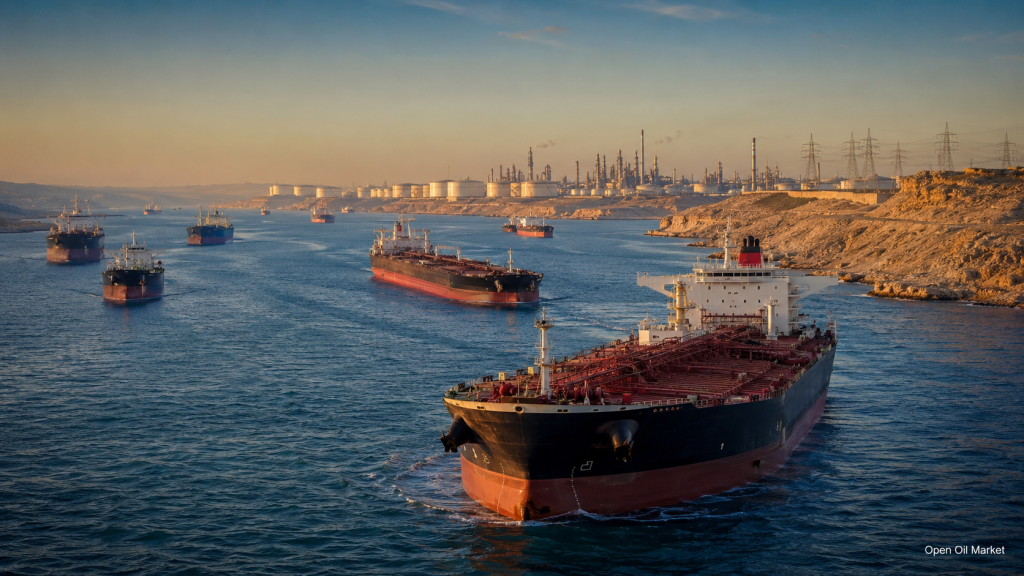
The gradual recovery of tanker movement through the Strait of Hormuz has become a key factor in market stabilization. However, the volumes of ships passing through remain below normal levels, and market participants are closely monitoring insurance rates, transit conditions, freight costs, and potential political restrictions.
For the global oil and gas sector, this is a pivotal moment. Even if physical supplies begin to recover, the supply chain does not return to normal instantly. Buyers in Asia, Europe, and the Middle East continue to maintain elevated insurance inventories, while traders assess not only the price per barrel but also the reliability of transportation routes.
The global energy market has entered a period where logistics is becoming almost as crucial as extraction. This heightens the significance of ports, terminals, tanker fleets, insurance, pipeline infrastructure, and strategic reserves.
Oil Products: Shortage of Refined Fuels More Critical Than Oversupply of Crude Oil
One of the most significant topics of the day is the persistent tension in the oil products market. Even with improved access to crude oil, the gasoline, diesel, jet fuel, and fuel oil markets are remaining tighter. Asia is receiving more crude, yet exports of light and middle distillates remain constrained compared to pre-crisis levels.
This is particularly important for refineries and fuel companies. High refining margins maintain interest in increasing refinery throughput, but constraints persist in the availability of low-sulfur feedstock, the technical condition of facilities, logistics, and seasonal demand. In Europe, the increase in jet fuel and diesel production is linked to the completion of maintenance at several plants, while in Asia, China's export restrictions continue to impact the regional balance.
Key risks for the oil products market as of June 23 include:
- Persistently high prices for diesel and jet fuel;
- Weak recovery in fuel exports from Asia;
- Increased demand for electricity and cooling during the hot season;
- Redistribution of fuel oil and vacuum gas oil among the Middle East, Asia, and Europe.
Gas and LNG: Market Stabilized, but Price of Safety Increased
The gas market remains sensitive to events surrounding the Strait of Hormuz, as key LNG routes pass through the region. The European gas market has so far withstood stress, but inventory levels and competition for LNG supplies maintain elevated nervousness. For Europe, Asia, and emerging markets, the primary concern lies not only in the current price of gas but also in the ability to fill storage ahead of the next heating season.
Attention is drawn to China, which is preparing additional capacity for LNG reception, including from Russian cargo flows. This demonstrates that the largest consumers are striving to diversify supplies and capitalize on price opportunities even amid sanction pressures. For the global gas market, such a strategy indicates increasing fragmentation: some countries are reducing their dependence on risky supplies while others are utilizing discounts and alternative routes.
Electricity: Data Centers Become a New Driver of Demand
Electricity is emerging as one of the main directions of the global energy agenda. The growth of data centers, artificial intelligence, electric vehicles, industry, and air conditioning is changing demand structures. In the US, regulators are demanding faster connections for large consumers to the grids, while energy companies are increasingly entering into direct agreements with tech corporations.
A notable case is the agreement between Chevron and Microsoft for gas generation for a data center in Texas. This project demonstrates a new model: a large electricity consumer receives dedicated generation, while the oil and gas company becomes a participant in the market infrastructure for the digital economy. For the gas sector, this is an important signal: natural gas remains in demand not only as a transitional fuel but also as a reliable power source for energy systems.
Renewables and Electrification: Energy Crisis Accelerates Transition, but Gas and Coal Remain
Renewable energy is gaining additional momentum against the backdrop of countries striving to reduce dependence on imported hydrocarbons. Solar energy, wind generation, batteries, storage, and networking solutions are becoming integral to energy security policies, not just climate agendas.
However, the transition to renewables remains complex. China aims to supply data centers with green electricity, but instability of demand and requirements for continuous operation complicate the integration of solar and wind generation. This strengthens the demand for storage, flexible grids, gas generation, and system services.
For investors, this means that the most interesting opportunities are not only with solar panel or wind turbine manufacturers but also in segments such as:
- Energy storage;
- Network infrastructure;
- Quick-start gas generation;
- Digital management of energy systems;
- Cable, transformer, and power infrastructure.
Coal: Energy Security Resurrects Old Tools
Despite the growth of renewables, coal remains a crucial element of global energy. China is intensifying projects to convert coal into liquid fuels, gas, and chemical products, seeking to reduce reliance on oil and gas imports. This is a contradictory but logical step from an energy security perspective: the country is leveraging its domestic raw material base to hedge against external shocks.
Meanwhile, coal generation remains sensitive to climate policy, emission costs, and investor pressure. In Europe, coal is structurally losing ground, but in Asia, it continues to serve as a backup and primary source of electricity. For energy market participants, this indicates that coal is not disappearing from the energy balance but is becoming a tool for insurance during periods of gas shortages, LNG disruptions, and high loads on power grids.
Corporate Events: Investments in Extraction and Infrastructure Continue
Amid price volatility, major energy companies continue to invest in extraction, refining, and international cooperation. Azule Energy, a joint venture of BP and Eni, has approved a major offshore project in Angola valued at over $5 billion. This signals to Africa that mature oil-producing regions continue to compete for capital, technology, and production maintenance.
In Latin America, Petrobras and Pemex are preparing agreements for technical and strategic cooperation in oil and gas projects. For the market, this could signal a step towards strengthening regional cooperation, especially amid the need to modernize extraction, refining, and energy infrastructure.
In the US, discussions are underway to ease regulations for drilling on federal lands, including reducing costs for operators. Such an approach could support oil and gas extraction but will simultaneously intensify debates around methane, environmental concerns, and long-term climate policy.
What Matters for Investors and Energy Market Participants on June 23
The main feature of the current moment is that the energy market has ceased to be linear. A decline in Brent does not automatically mean a reduction in fuel costs, and an increase in renewables does not negate the need for gas, coal, refineries, and network infrastructure. It is vital for investors and companies within the oil and gas sector to take a comprehensive view of the entire value chain.
- Oil: Monitor US-Iran negotiations, transit regimes through the Strait of Hormuz, and OPEC+ decisions.
- Gas and LNG: Assess European inventories, Asian demand, and new supply routes.
- Oil Products: Focus on refinery margins, diesel, gasoline, jet fuel, and fuel oil.
- Electricity: Consider demand from data centers, AI, industry, and air conditioning.
- Renewables: Explore opportunities in storage, networks, and energy system flexibility.
- Coal: View it as a backup tool for energy security, especially in Asia.
For oil companies, fuel traders, refineries, gas suppliers, electricity operators, and investors, June 23, 2026, becomes a day where the key question does not simply revolve around "where oil prices are headed," but rather: which parts of the global energy system will be most vulnerable in the next shock. The answer increasingly lies not only in extraction but also in refining, logistics, power grids, gas generation, LNG, renewables, and strategic reserves.