Current Cryptocurrency News as of January 24, 2026: Bitcoin Near $90,000, Global Crypto Market Status, Top 10 Cryptocurrency Dynamics, Key Trends, and Investor Expectations.
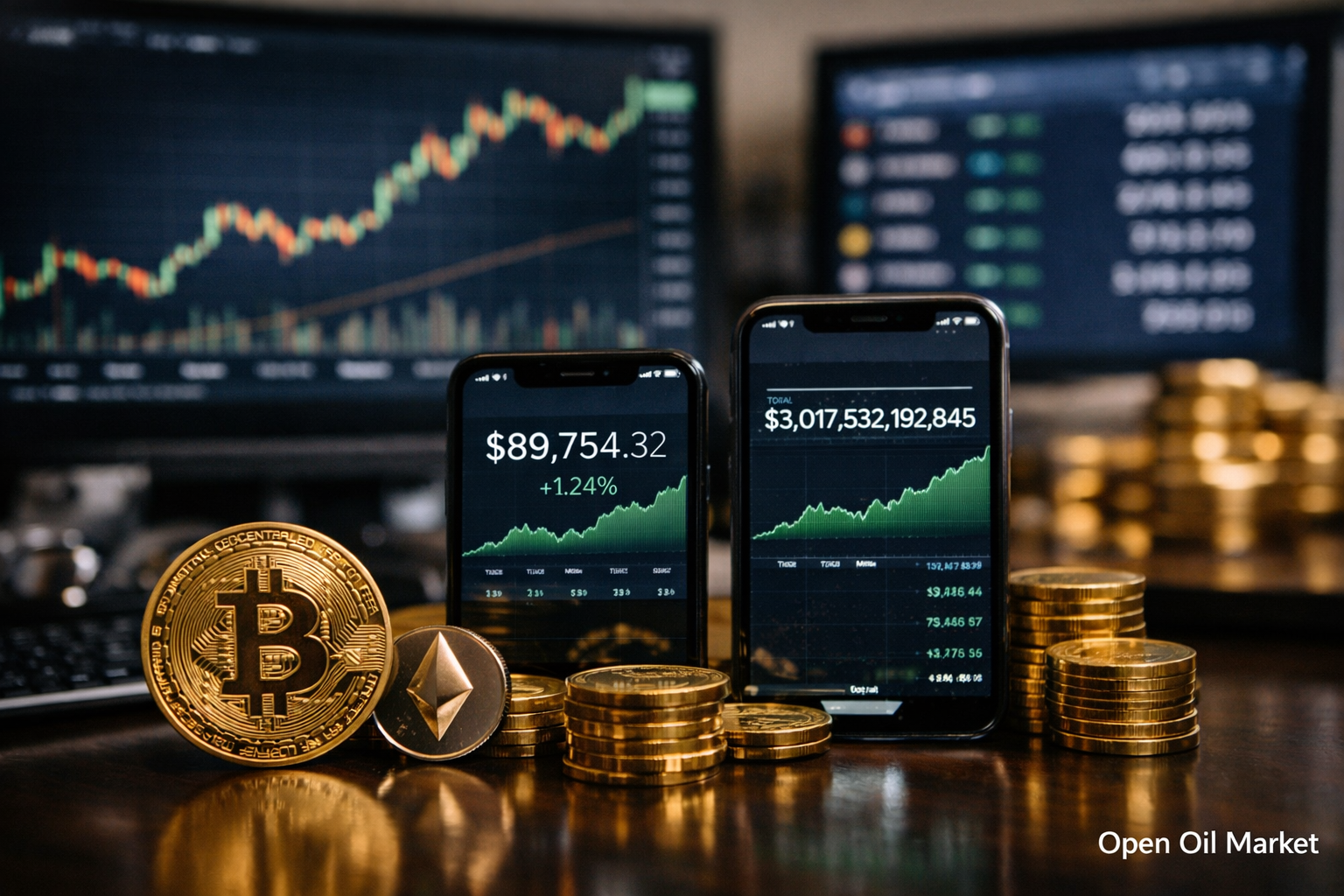
For investors closely monitoring cryptocurrency news, the current market situation appears optimistic: the total market capitalization has exceeded $3 trillion, with Bitcoin trading around $90,000, approaching its historical high. Ethereum and several other leading altcoins are striving to recover following a recent correction. Below we explore the key trends and events in the crypto market as of the morning of Saturday, January 24, 2026.
Cryptocurrency Market Overview
Currently, the total cryptocurrency market capitalization surpasses $3 trillion, having gained about 1% in the last 24 hours. Bitcoin (BTC) has traded in a range of approximately $88,000 to $90,000 over the past day and is currently valued at about $89,000, which is 0.9% lower than yesterday morning's level. Ethereum (ETH) fluctuates around $2,900, losing approximately 2.5% over the day.
Among other major assets, there is mixed performance. Binance Coin (BNB) trades around $890 (−0.3% for the day), Ripple (XRP) at $1.90 (−2.6%), and Solana (SOL) at approximately $127 (−2.0%). Meanwhile, Tron (TRX) stands out with an increase of nearly 3% (to $0.31), becoming one of the few altcoins with a daily gain among the top 10. At the same time, stablecoins Tether (USDT) and USD Coin (USDC) maintain their peg to the dollar at $1, providing necessary liquidity in the market.
Bitcoin at Historic High
In recent weeks, Bitcoin has surpassed previous records and approached the psychologically significant mark of $100,000. As the flagship cryptocurrency consolidates around $89,000 to $90,000, traders are evaluating the chances for a breakout. Several analysts note that breaking the $100,000 level could open the way for Bitcoin to enter a new phase of growth, although short-term fluctuations due to profit-taking cannot be ruled out.
The rise of BTC is supported by an influx of institutional capital following the launch of the first spot Bitcoin ETFs at the end of 2025, as well as expectations for a loosening of monetary policy by the U.S. Federal Reserve. Fundamental indicators for the network remain strong: the total computing power of miners (hashrate) has recently set a historical high, indicating the network's resilience and security. On-chain data show that long-term holders continue to accumulate BTC, demonstrating confidence in the cryptocurrency's future.
Ethereum and Other Market Leaders
Ethereum (ETH), the second-largest cryptocurrency by market capitalization, trades around $2,900. Following impressive growth in 2025, Ethereum has yet to reach its historical peak (approximately $4,800 in 2021); however, investors remain optimistic due to the ongoing development of its ecosystem. With the network's transition to a Proof-of-Stake mechanism, millions of ETH are locked in staking, yielding holders around 5% annually and reducing the coin's supply on the market. Ethereum remains the backbone for most DeFi applications and NFT platforms, sustaining high demand for ETH from developers and users.
Binance Coin (BNB), the fourth-largest asset (approximately $890), is displaying relative stability. This token continues to play a key role in the Binance ecosystem—from paying exchange fees to utilizing applications on Binance Smart Chain—thus maintaining interest from traders and investors. XRP (approximately $1.90), which ranks fifth by market capitalization, has strengthened its position following clarifications regarding the token's legal status in 2025. Ripple's cryptocurrency benefits from increased usage in international payments and transfers, particularly in the Asia-Pacific region. Solana (SOL) remains among the market leaders; the high-performance platform has recovered to approximately $127, attracting projects due to its fast and cost-effective transactions and justifying investor trust after the challenges of previous years.
Altcoins: Mixed Dynamics and Local Rallies
Despite the overall strengthening of the market, a widespread "altcoin season" has yet to be observed. The Altcoin Season Index indicates that most alternative coins have recently lagged behind Bitcoin in terms of growth, and Bitcoin's share of the total market capitalization has risen to approximately 60% (a maximum in several years). Investors are exercising caution, favoring the most reliable assets among the leaders.
Nevertheless, some altcoins are experiencing sharp price spikes amid speculative demand. For instance, the lesser-known token SENT surged over 100% in the past day, while several other second-tier projects showed gains in the tens of percent. Such local rallies indicate that some market participants are still willing to take on increased risks in pursuit of quick profits.
Institutional and Corporate Interest in Cryptocurrencies
The crypto industry continues to attract major players from Wall Street and the corporate sector. In the U.S., the first spot ETFs for Bitcoin and Ethereum were launched at the end of last year, simplifying access to digital assets for institutional investors. At the beginning of 2026, these funds recorded the largest outflow of funds in the past two months, as some investors opted to cash in profits after the substantial price increase. However, overall interest from financial institutions remains high: the Nasdaq recently raised limits on trading volumes for options on cryptocurrency ETFs.
Investment flow into crypto companies also continues. For example, the venture firm YZi Labs invested in preparing for the IPO of custodial service BitGo—this move suggests trust in the market infrastructure. Public corporations are also increasing their presence: the 25 largest corporate holders now own at least 4,000 BTC each, emphasizing the business's pursuit of diversifying its reserves through digital assets.
Regulation: Global Oversight Intensifies
The rapid growth of the cryptocurrency market is prompting regulators worldwide to enhance oversight of the industry. In 2026, several initiatives are being implemented to increase transparency and security in digital finance.
- U.S.: Financial regulators SEC and CFTC have announced a joint forum on cryptocurrency issues, signaling a desire for coordinated oversight and maintaining U.S. leadership in the global financial system.
- Europe: In the European Union, the comprehensive MiCA regulation has come into effect, establishing uniform rules for crypto assets and industry companies across all EU countries.
- Asia: Regulators in Singapore, Hong Kong, and the UAE are introducing licensing regimes for cryptocurrency exchanges and blockchain projects, aiming to attract innovation to their jurisdictions while simultaneously protecting investors.
The global trend is evident: governments are striving to integrate cryptocurrencies into the legal framework. Increased attention from regulators may boost confidence among major players in the market, although the introduction of new regulations occasionally leads to short-term uncertainty.
Macroeconomics and Its Impact on the Crypto Market
The macroeconomic environment remains a critical factor influencing cryptocurrency dynamics. Inflation in the U.S. and Europe has decreased compared to peak levels in previous years, easing pressure on central banks regarding tightening monetary policy. The Federal Reserve signals the possibility of the first interest rate cuts in the second half of 2026, and markets are already pricing in these expectations into asset prices. The prospect of a more lenient monetary policy encourages capital inflow into riskier assets, including cryptocurrencies.
Stock indices have recently been moving positively, creating a favorable backdrop for digital assets. Furthermore, there is ongoing discussion globally regarding a reassessment of traditional currency relationships: BRICS countries are strengthening the role of gold and national currencies in mutual settlements, reducing dependence on the dollar. In this context, Bitcoin is increasingly viewed as "digital gold"—an alternative means of hedging and preserving capital in a changing world economy.
Top 10 Most Popular Cryptocurrencies
As of January 2026, the top ten largest and most popular cryptocurrencies are as follows:
- Bitcoin (BTC) — ~$89,000. The first and largest cryptocurrency, "digital gold," dominates with a market share of around 60%.
- Ethereum (ETH) — ~$2,900. Leading smart contract platform and foundation for DeFi and NFT ecosystems.
- Tether (USDT) — $1. The largest stablecoin pegged to the dollar, widely used for trading and payments.
- Binance Coin (BNB) — ~$890. Token of the Binance ecosystem, utilized for fee payments and in Binance Smart Chain applications.
- XRP (XRP) — ~$1.90. Cryptocurrency for cross-border payments by Ripple, aimed at banks and payment systems.
- USD Coin (USDC) — $1. The second-largest stablecoin, issued by the Centre consortium (Coinbase, Circle).
- Solana (SOL) — ~$130. High-speed blockchain for smart contracts, attracting projects with fast and low-cost transactions.
- TRON (TRX) — ~$0.31. Platform for dApps and stablecoin issuance, popular in the Asia-Pacific region.
- Dogecoin (DOGE) — ~$0.13. The most well-known meme coin, supported by enthusiasts and occasionally rises on media attention.
- Cardano (ADA) — ~$0.36. Blockchain platform with a scientific approach to development, continuing to expand its ecosystem of decentralized applications.
Conclusion and Outlook
Thus, the cryptocurrency market is approaching the weekend of January 24, 2026, with a state of relative stability and optimism. Investors are watching to see if Bitcoin can achieve the new peak of $100,000, taking into account macroeconomic signals and regulatory decisions while assessing further risks and opportunities. If favorable conditions remain—low inflation, institutional capital influx, balanced regulation—digital assets may continue to grow. At the same time, high volatility remains a characteristic of cryptocurrencies, so a balanced approach to investments and diversification are essential.