Current Cryptocurrency News for Tuesday, February 10, 2026. Bitcoin, Ethereum, Altcoins, Regulation, and Key Trends in the Global Crypto Market for Investors.
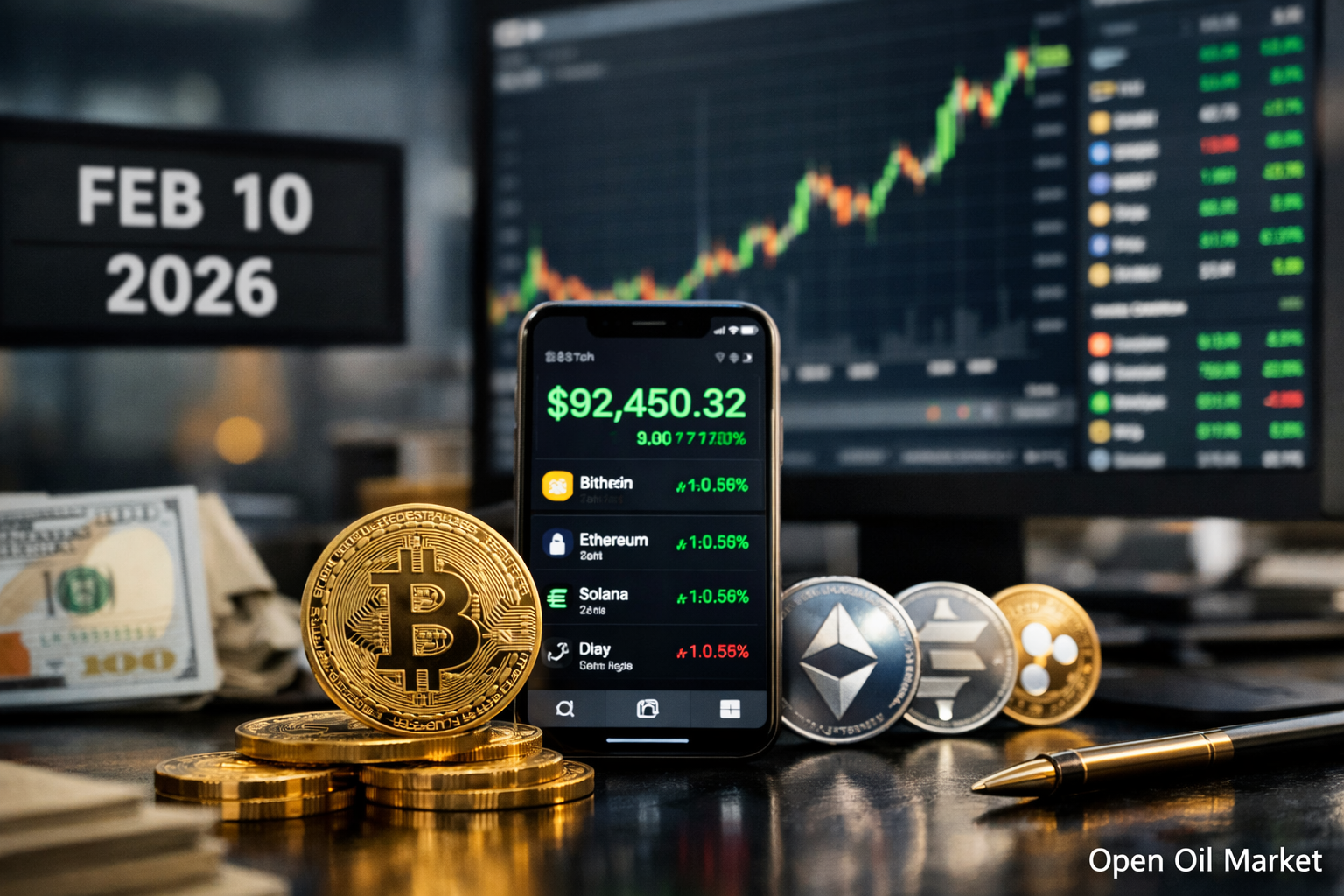
As of the morning of February 10, 2026, the cryptocurrency market is showing signs of recovery following one of the sharpest sell-offs in recent months. Bitcoin is trading around the $70,000 mark, bouncing back from a recent annual low of approximately $60,000, recorded during the panic sales on February 6. Ethereum (ETH) is hovering around $2,100 after dropping to about $1,750 last week. The total market capitalization of cryptocurrencies is estimated at around $2.4 trillion—nearly $2 trillion below the October 2025 peak of approximately $4.4 trillion—highlighting the continued caution of investors. Sentiment remains tense: the "Fear and Greed" index for digital assets is in the extreme "fear" zone (below 10 out of 100), reflecting the prevailing anxiety among market participants.
Such a sharp decline in prices at the beginning of February was triggered by a combination of unfavorable factors, ranging from strong signals from the U.S. Federal Reserve to a series of large liquidations on derivative exchanges. Nevertheless, the technical rebound observed in recent days has been supported by buyer interest, as they look to take advantage of falling prices. A moderate influx of capital has pushed Bitcoin back above the psychologically important level of $70,000, even though risk appetite remains weak. Investors are closely monitoring the macroeconomic situation and preparing for the release of key inflation and labor market data in the U.S. (expected on February 11) that could set the tone for the market's further movements.
Market Overview: Correction and Cautious Rebound
Only a few months ago, at the end of 2025, the cryptocurrency market was reaching historical highs; however, as 2026 began, the dynamics shifted sharply downward. Rapid tightening of external conditions has dampened global risk appetite. Following a series of record highs for Bitcoin and Ethereum last autumn, January's price crash of 2026 marked the most serious test for the industry in the past year and a half. In just the first week of February, the market declined by nearly a third before finding a local bottom. The overall capitalization of the industry has shrunk by approximately 45% from peak levels, with stablecoins temporarily becoming the leaders in trading volume as many traders moved their funds to these "safe havens" amid the storm.
At the beginning of the second week of February, there are signs of a tentative stabilization in the market. Select assets that were previously oversold are leading the recovery; however, broad rallies are not yet taking place. High trading volumes during the rebound indicate genuine demand, but resistance at the $72,000 to $73,000 level for Bitcoin remains unbroken. Market participants continue to cautiously assess the prospects: the persistence of hard rhetoric from central banks and geopolitical uncertainty restrains a confident return of capital to risk assets. Until the macroeconomic background clarifies, the market is likely to continue balancing between attempts at growth and fears of new sell-offs.
Bitcoin: Annual Low and Signs of Support
Last week, Bitcoin (BTC) fell to its lowest levels in over a year, dropping below $60,000 amid the panic on February 6. Since the October peak of around $120,000, the leading cryptocurrency has lost about 50%, primarily due to profit-taking by large players and a reduction in market liquidity. Additionally, news regarding Kevin Warsh's nomination to head the U.S. Federal Reserve acted as a trigger for the sell-off—investors worry that Warsh's commitment to tight monetary policy could lead to further tightening of financial conditions. These concerns exacerbated the sales wave, culminating in BTC's short-term drop to about $60,000.
Even with the recent correction, Bitcoin maintains its status as the largest crypto asset, dominating approximately 55% to 60% of the total market capitalization and remaining one of the most significant financial instruments globally. Long-term holders of BTC ("whales") are, for the most part, reluctant to part with their coins, viewing Bitcoin as a strategic reserve and an analogue of "digital gold." Moreover, some large corporations holding significant reserves of BTC have publicly expressed their intention to capitalize on declining prices to bolster their holdings. This interest from major players provides support to the market and confirms confidence that the fundamental value of Bitcoin remains high despite current volatility.
Ethereum: Price Decline Despite Technical Progress
The second-largest cryptocurrency by market capitalization, Ethereum (ETH), has also experienced substantial declines. In recent weeks, the price of ETH has dropped to approximately half of its peak value of around $5,000, briefly falling below $2,000. A sharp daily decline of over 10% at the beginning of February led to a cascade of automatic liquidations in the futures market, intensifying the downward momentum. However, even after the correction, Ethereum remains a key platform in the crypto industry, and its technological development continues unabated.
In January, the Ethereum network successfully executed another protocol upgrade (hard fork codenamed BPO), aimed at enhancing scalability and efficiency within the blockchain. The expansion of Layer-2 ecosystem solutions, which decrease the strain on the main network and transaction fees, is ongoing. A significant portion of the released ETH is still locked in staking or held long-term, which limits the token's supply in the market. Institutional interest in Ethereum remains high: in 2025, the first exchange-traded funds (ETFs) linked to Ethereum emerged in the U.S., attracting over $3 billion in investments within their initial months of operation. Major funds and companies continue to include Ethereum alongside Bitcoin in their foundational long-term crypto portfolios, despite the current price fluctuations.
Altcoins: At the Epicenter of Volatility
The broad market for altcoins has borne the brunt of the recent sell-off. Many tokens that have previously surged have lost 30% to 60% of their highs during the early part of 2026, as investors reduced their most speculative positions. Capital is flowing from volatile altcoins into more reliable assets or exiting the crypto market altogether; this is confirmed by the growing share of stablecoins in overall market capitalization and an increase in Bitcoin's dominance. Currently, Bitcoin's share again exceeds 60%, reflecting a reallocation of funds from altcoins to the flagship crypto asset amid the turbulence.
Tokens such as XRP, Solana, and BNB that were recently in the market spotlight, exhibiting preemptive growth due to positive news, are also following the general trend downward. XRP (Ripple) surged above $3 last summer on the wave of a legal victory for Ripple in the U.S., returning to the ranks of market leaders. Now, however, XRP has retractd to around $1.4, nearly half of those peaks. Solana (SOL) is showing a similar trend: after an impressive rise (above $200) in the wake of ecosystem recovery in 2025, SOL has corrected by more than 50% to about $85, although it remains significantly higher than last year's lows and continues to be considered one of the leading platforms for DeFi and Web3. Binance Coin (BNB), which reached a record high of around $880 in 2025 despite regulatory pressure on the Binance exchange, has fallen to approximately $500 during the general downturn, but has since regained some losses and is currently trading around $640. This still positions BNB within the top 5, thanks to its wide application in trading and decentralized services.
Other major altcoins such as Cardano (ADA), Dogecoin (DOGE), and Tron (TRX) are also under pressure and trading significantly below their historical highs. However, they retain their positions among capital leaders due to still substantial market valuations and the support of enthusiastic communities. In periods of high uncertainty, many participants prefer to wait out the storm in stablecoins (USDT, USDC, etc.) or in Bitcoin, which limits the influx of new capital into the altcoin segment until the overall situation clarifies.
Regulation: A Course Towards Clarity
Regulatory changes in the cryptocurrency sphere are gaining momentum globally, with authorities striving to keep pace with the industry's development. In the U.S., the administration is advancing a comprehensive digital assets bill (Digital Asset Market Clarity Act) intended to clearly delineate the powers of regulators (SEC and CFTC) and establish clear guidelines for the crypto market. This bill, along with accompanying initiatives concerning stablecoin oversight (including a requirement for 100% backing of issued digital dollars), aims to end the practice of "regulating through enforcement" and ensure transparency for legally operating crypto companies. In January, the bill’s consideration in the Senate was temporarily postponed due to disagreements within the industry (particularly regarding yield restrictions in decentralized finance), but discussions are expected to continue in the coming months with support at the highest government levels.
While Congress discusses new rules, American regulatory bodies continue to monitor the market closely. At the end of 2025, the SEC took a series of high-profile actions against overtly fraudulent schemes ("AI Wealth," Morocoin, etc.) demonstrating its determination to clean up the industry. Concurrently, courts and regulators are gradually clarifying the legal status of key crypto assets. A notable example is Ripple's victory in the XRP case: the court confirmed that XRP is not a security. Such precedents reduce legal ambiguity for investors and companies in the U.S., laying a foundation for further market development.
In Europe, the single MiCA regulation took effect at the start of the year, establishing clear rules for the circulation of crypto assets across all EU countries. The European Union is also preparing to implement tax reporting standards for cryptocurrency transactions (DAC8 rules, taking effect in 2026) to enhance transparency and combat tax evasion. In the Asian region, regulators are also stepping up their efforts: for example, Japan plans to lighten the tax burden on crypto trading (reducing the tax rate to around 20%) and is considering launching the first crypto ETFs, seeking to strengthen the country's position as a hub for digital assets. Overall, there is a global trend moving away from restrictive measures towards the integration of the crypto market into the existing financial system through clear regulations and licensing. As clearer rules emerge, institutional investors' trust in the industry is likely to grow.
Institutional Trends: Pause and New Opportunities
After a record influx of institutional capital into crypto funds in 2025, the beginning of 2026 has marked a pause. The sharp market volatility in January-February led to a temporary outflow of funds from some crypto ETFs and trusts, as managers locked in profits and reduced risks in anticipation of a stabilization of the situation. However, strategic initiatives from major players remain intact. For example, in January, the exchange operator Nasdaq removed its limits on the size of positions in cryptocurrency ETF options (including funds on Bitcoin and Ethereum), aligning them with rules for traditional commodity ETFs. This step broadens hedging and trading opportunities for institutional investors and signifies the further penetration of crypto products into mainstream markets.
Public companies that have invested in cryptocurrencies mostly maintain their positions despite the price declines. One of the largest corporate holders of Bitcoin (an American company holding thousands of BTC on its balance sheet) has indicated that it still believes in the long-term potential of the asset, even as market prices briefly dipped to their average purchase price. The management of this firm hinted that it may increase its BTC holdings in light of declining prices. Overall, many institutional investors have taken a wait-and-see approach: some have indeed reduced their exposure in the short term, but interest in crypto assets as an asset class remains high. Major banks and asset managers continue to develop crypto products and infrastructure, anticipating a resurgence in demand for digital assets once macro conditions and regulatory clarity improve.
Macroeconomics: Tight Policy and a Flight to Quality
The external macroeconomic backdrop at the beginning of 2026 remains challenging for risk assets, and cryptocurrencies have acutely felt this pressure. In the U.S., a leadership change at the Fed is on the horizon: nominee Kevin Warsh is known as a proponent of tight monetary policy. Expectations of higher interest rates and a continued reduction of the Federal Reserve's balance sheet intensify investors' concerns—after all, it was excess liquidity in recent years that largely fueled the cryptocurrency rally. Additional nervousness was introduced at the end of January due to political uncertainty: budget disagreements raised the prospect of a government shutdown in the U.S., which temporarily weakened risk appetite. Only an emergency agreement in Congress helped avoid a shutdown, but the overall atmosphere remains tense.
Internationally, risks have also increased. The U.S. administration has threatened new tariffs against the European Union, reviving fears of escalating trade wars. In Japan, a sharp spike in government bond yields has destabilized local financial markets, pulling some global liquidity from risk assets. These events have triggered a classic "flight to quality": investors have flocked to protective instruments, shedding volatile positions. Gold prices skyrocketed to historic highs, surpassing $5,000 per ounce, and the U.S. dollar index significantly strengthened. Against this backdrop, Bitcoin and other crypto assets temporarily lost their status as "digital gold"—at least in the eyes of those investors urgently seeking shelter from risks. Instead of cryptocurrencies, capital temporarily shifted to traditional safe-haven assets and highly liquid instruments.
However, as macroeconomic uncertainty begins to dissipate (for instance, if Fed policy stabilizes or geopolitical tensions ease), interest in the crypto market could swiftly revive. Market participants are closely watching key statistics this week, including U.S. Consumer Price Index (inflation) data to be released on February 11. The combination of fresh inflation indicators and delayed publication of employment data may provoke increased volatility in global markets. Should macro indicators point to a relaxation of inflationary pressures, this could lay the groundwork for expectations of a dovish tilt from central banks—a factor that might restore some interest in risk assets, including cryptocurrencies.
Top 10 Most Popular Cryptocurrencies
- Bitcoin (BTC) – the first and largest cryptocurrency (share ~60% of market capitalization). BTC is trading around $70,000, remaining the foundation of most crypto portfolios and serving as "digital gold" for investors.
- Ethereum (ETH) – the second largest token by market capitalization and the leading smart contract platform. ETH is currently priced around $2,100; it underpins the DeFi ecosystem and numerous decentralized applications, playing a key role in the crypto economy.
- Tether (USDT) – the largest stablecoin pegged to the U.S. dollar in a 1:1 ratio. Widely used in the market for trading and capital storage; with a market capitalization of approximately $80 billion, USDT is one of the main sources of liquidity in the crypto ecosystem.
- Binance Coin (BNB) – the native token of the global cryptocurrency exchange Binance and the BNB Chain blockchain network. BNB holders receive discounts on fees and access to ecosystem products; currently, the coin is trading near $640 following a recent correction. Despite regulatory pressures on Binance, BNB remains in the top 5 due to its wide application in trading and DeFi.
- XRP (Ripple) – the cryptocurrency of the Ripple payment network, designed for fast cross-border transfers. XRP is currently priced around $1.4, approximately half of its recent local peak (the token surged above $3 last summer in light of legal clarity regarding its status in the U.S.). Nonetheless, XRP retains its position as one of the largest coins and attracts heightened attention from banks and funds.
- USD Coin (USDC) – the second most popular stablecoin, issued by Circle and fully backed by dollar reserves. Known for its high transparency and adherence to regulatory requirements; widely used in trading and DeFi (market capitalization around $30 billion).
- Solana (SOL) – a high-performance blockchain platform known for low fees and transaction speed. SOL surged above $200 in 2025, reviving investor interest in the project, and is currently trading approximately half that price (~$85) following the overall market correction. Solana is seen as one of Ethereum's competitors in DeFi and Web3 due to its scalability.
- Cardano (ADA) – the cryptocurrency of the Cardano platform, developed using a scientific approach. ADA remains in the top 10 due to its substantial market capitalization (tens of billions of tokens in circulation) and active community, although its current price (~$0.30) is significantly below its historical peak.
- Dogecoin (DOGE) – the most famous "meme" cryptocurrency, initially created as a joke but growing to become one of the largest assets. DOGE is trading around $0.10, supported by community loyalty and periodic celebrity attention. Despite high volatility, Dogecoin remains among the largest coins, demonstrating remarkable resilience in investor interest.
- Tron (TRX) – the token of the Tron blockchain platform, oriented towards decentralized applications and digital content. TRX (~$0.28) is sought after for issuing and transferring stablecoins (a significant portion of USDT circulates on the Tron network due to low fees), allowing it to remain among market leaders alongside other top assets.
Prospects and Expectations
In the short term, sentiment in the cryptocurrency market remains cautious. The investor sentiment index signals "extreme fear," in contrast to the euphoria observed just a few months ago. Many analysts warn that the recent correction could deepen if external risks persist. Forecasts suggest that in a negative scenario, Bitcoin might re-test the level of about $60,000 or even dip below it—especially in the event of further shocks in traditional markets or tightening of regulatory rhetoric. Such high volatility and recent price drops serve as a reminder for investors of the need for careful risk management in their crypto portfolios.
Nonetheless, the mid- to long-term outlook for the cryptocurrency market generally remains positive. The industry continues to implement technological innovations, new promising projects are being launched, and major players have not lost interest in digital assets—many view the current downturn as an opportunity to strengthen their positions. Historically, after periods of rapid growth (as was seen in 2025), the market often transitions into a phase of cooling and consolidation before resuming its upward trend. Fundamental drivers—from mass adoption of blockchain technologies to the integration of cryptocurrencies into the traditional financial sector—have not disappeared, and several experts remain optimistic.
Some investment firms maintain ambitious price targets. There are projections that if the macroeconomic environment improves, Bitcoin could once again surpass the $100,000 mark and head toward new records within the next year or two. Of course, much will depend on the actions of regulators and central banks: if the Fed moves towards easing its policy in light of slowing inflation, and legislative clarity reduces legal risks, capital inflow to the crypto market could resume at an accelerated pace. For now, investors are advised to maintain a balance between vigilance and strategic vision, remembering that volatility is an inherent part of the cryptocurrency market's development and the flip side of high long-term opportunities.