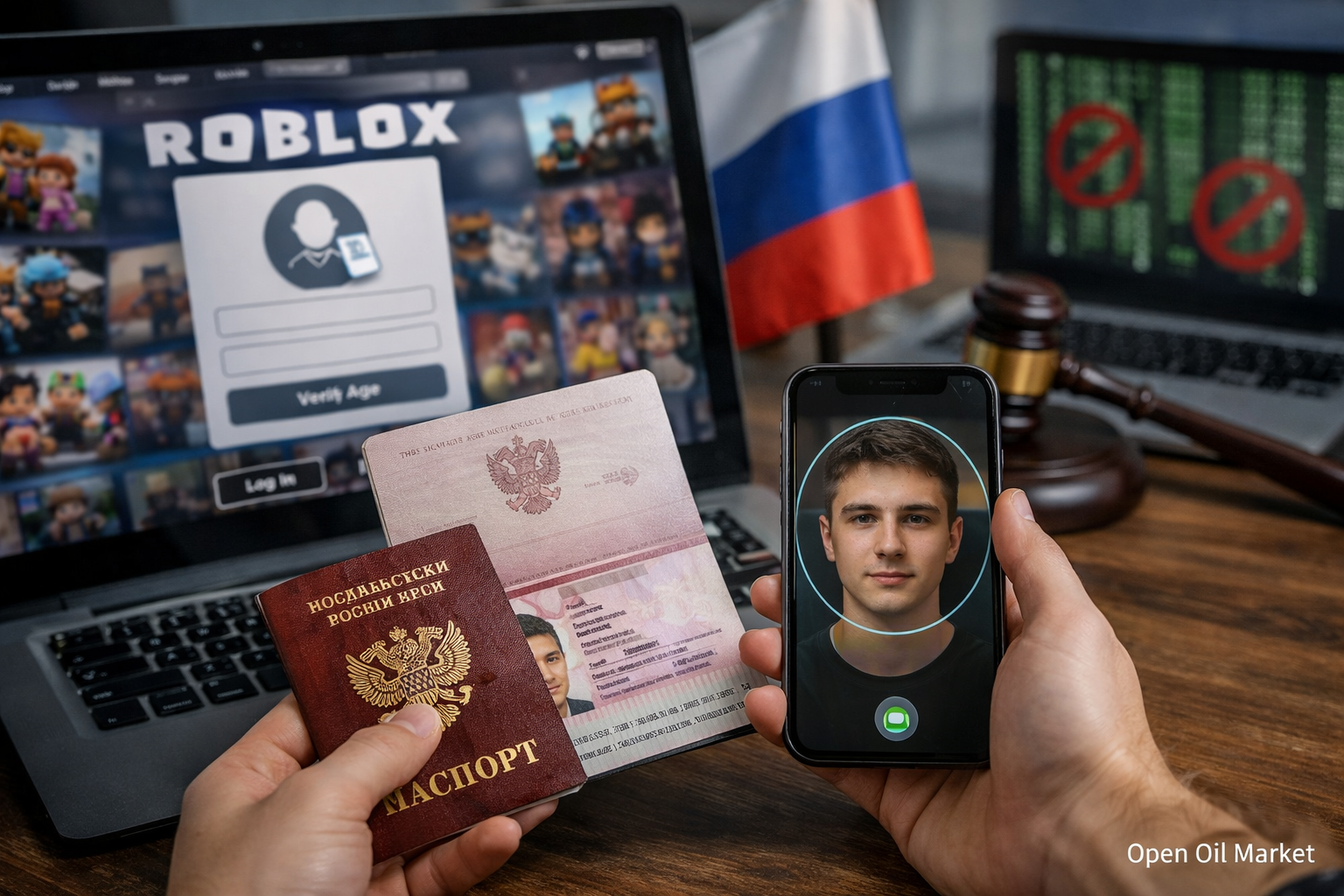
Analyzing Whether Roblox Will Be Unblocked in Russia by 2026: How the New Age Verification Influences Regulatory Decisions, Remaining Risks, and What Investors and the Market Should Expect.
Why Roblox is Blocked in Russia
The question of "Will Roblox be unblocked in Russia?" has resurfaced as a significant topic for the market at the beginning of 2026: the platform remains one of the key ecosystems for user-generated content (UGC) in the gaming industry, with a strong child audience and robust social mechanics. However, Roblox has been blocked in Russia since December 3, 2025. This regulatory stance was tied to the dissemination of prohibited materials and the presence of content deemed inappropriate for children, along with concerns over moderation and communication control.
For investors, it is crucial to understand that the blocking of Roblox in Russia is not a "technical access issue" but rather a consequence of conflicting demands regarding content, moderation, and minor safety. Therefore, any innovation introduced by the platform—including age verification in Roblox—does not automatically serve as a basis for unblocking Roblox.
What Has Changed: Mandatory Age Verification in Roblox and Access to Chats
Roblox has implemented mandatory age verification for users worldwide to access social features, primarily chats. Age verification in Roblox can occur through automated assessment via selfies (device camera) or identity confirmation using a document. After the procedure is completed, users are categorized into age groups, and rules surrounding communication and visibility of contact information become stricter for minors.
The key business rationale behind this decision is to mitigate risks related to child safety and preempt potential regulatory complaints in various countries. This is especially pertinent for a platform where a significant portion of the daily audience consists of children, and communications (chat, voice, social connections) directly impact engagement and monetization.
- Without age confirmation, certain social features become inaccessible (primarily in-game chats).
- After verification, users are categorized into age groups, and communication is restricted by “age proximity” rules.
- For children, there are heightened restrictions on contact information and interaction with older age groups.
Why Age Verification Does Not Guarantee Unblocking Roblox in Russia
From the perspective of Russian regulation, the critical focus is not just on age restrictions but also on the availability and dissemination of prohibited content, the effectiveness of moderation, the prompt removal of materials, compliance with minor protection requirements, and, in some cases, requirements related to information infrastructure and oversight interaction. Age verification in Roblox addresses part of the issue (segmentation of communication and reduction of risks in chats) but does not resolve the core question: how the platform prevents the emergence of prohibited materials and how it responds to regulators' inquiries.
Additionally, regulators typically expect measurable changes rather than mere "promises to enhance safety":
- sustained reduction in the share of violative content in search results and recommendations;
- transparent moderation procedures and complaint escalation;
- prompt removal of materials based on types of violations;
- systematic mechanisms to prevent re-uploading;
- established communication channels with Roskomnadzor.
What is Usually Required for Unblocking: Regulatory and Operational Conditions
The unblocking of Roblox in Russia, when considering the regulation of digital platforms, often depends on a combination of legal and operational steps. Age verification could be one element of a "compliance package," but it is not the sole factor.
- Confirmed readiness for compliance: moderation procedures, reporting on complaints, adherence to requirements regarding prohibited information.
- Technical control mechanisms: filtering, restrictions on material dissemination, settings for child safety online.
- Process interaction: established communication channels with regulators, clear timelines for responses, responsible parties or teams.
- Reduction of recurrence of violations: it is important not just to remove content temporarily but to demonstrate sustained effectiveness.
For investors, this implies that the risk of a sudden return of Roblox to the Russian market is low unless the platform exhibits comprehensive compliance performance that extends beyond just one feature such as age checks.
Scenarios for 2026: From Continued Blockage to Partial Access
A pragmatic assessment of Roblox's prospects in Russia reveals several potential scenarios. These are important not only for users but also for investors who are evaluating geographic risks and the platform's resilience to regulation.
- Base Scenario (most likely): Roblox remains blocked in Russia, while global age verification evolves in response to demands from other jurisdictions.
- Partial Easing Scenario: With active engagement and demonstrable improvements in moderation, selective changes to access conditions may occur, but this typically requires time and verifiable outcomes.
- Unblocking Scenario: This is possible only with sustained compliance with content and child safety requirements, including communication control, removal of prohibited materials, and reduction in repeated violations.
Importantly, even if the unblocking of Roblox in Russia becomes a subject of negotiations, the speed of resolution may be limited by procedural factors. For business planning, it is prudent to assume that uncertainty will persist.
Investor Perspective: How Regulatory Risks Affect Roblox Valuation
For investors, Roblox represents a bet on a scalable UGC ecosystem where social features, chats, and collaborative gaming scenarios support retention and monetization. The increased oversight (including age verification in Roblox) carries a dual effect:
- Positive: reduction in legal and reputational risks in key jurisdictions, increased trust among parents and advertisers, strengthening its position in discussions about child safety.
- Negative: potential friction in onboarding, risks of incorrect age classification, increased operational costs for support and moderation.
For assessing "Roblox in Russia," investors need to look beyond regional revenue contributions: while the region's share may be secondary, the very fact of the blockage serves as a marker of regulatory vulnerability for digital platforms. This influences multiples through a risk premium and expectations regarding compliance costs.
Practical Implications for the Ecosystem: Developers, Brands, Media
Even with Roblox's continued blockage in Russia, the new implementation regarding age segmentation and chats alters the product logic of the platform. This is crucial for developers and brands targeting the global market, including audiences from Russia, Moscow, St. Petersburg, and regions, as well as Russian-speaking users outside the country.
- Developers will need to account for communication restrictions based on age groups (designing cooperative mechanics, moderation within games, creating safe communication scenarios).
- Brands will need to reassess integration strategies, especially if products target teens and children: age validation heightens the requirements for creatives and messaging.
- Media and marketing will need to adjust attraction funnels: segments of the audience without verification may lose access to critical social triggers.
Risks and “Weak Points” of the New Model: What Could Go Wrong
Age verification in Roblox sends a strong signal to the market, but it carries typical risks that may impact audience engagement and trust:
- Age assessment errors and the complexity of appeals could irritate users and parents.
- Sensitivity around biometrics: some audience segments may react negatively to selfie verification and document uploads.
- Shifts in communications “around” the system: if chats are restricted, some discussions may migrate to external messengers, reducing control over the environment.
For investors, these risks mean that the impact of safety initiatives should be evaluated through metrics such as DAU/engagement, conversion rates to paying segments, and trends in complaints/incidents, rather than solely through public statements made by the company.
Will Roblox Be Unblocked in Russia and What to Monitor
Under the current set of input information, mandatory age verification in Roblox enhances the platform's global resilience against regulatory complaints but does not serve as a direct "key" to unblocking Roblox in Russia. The likelihood of unblocking Roblox will depend on a broader package of measures: moderation quality, speed of prohibited material removal, demonstrable reductions in repeated violations, and the format of interaction with Roskomnadzor.
It makes sense for investors and market participants to monitor regularly:
- official signals about negotiations and collaboration formats;
- changes in Roblox's product rules related to content and chats;
- further steps by regulators regarding online child safety and UGC platforms;
- engagement and monetization metrics against the backdrop of increasing oversight.
Practically speaking, "Roblox in Russia" in 2026 remains a case study of the regulatory risks facing digital platforms: even robust global security measures do not always resolve local issues when a dispute hinges on systemic moderation and compliance with prohibitive content requirements.