Global Startup and Venture Capital News for November 19, 2025: Mega AI Rounds, New Funds, M&A Deals, IPO Growth, and Key Market Trends
By mid-November 2025, the global venture capital market demonstrates sustained activity. Investors worldwide are actively financing technology startups again—mega-rounds are being sealed at record amounts, and IPO plans are coming to the forefront once more. Major tech players and venture funds with substantial investments are back in the game, while governments across different countries are ramping up support for innovation. As a result, private capital continues to flow into the startup ecosystem, reflecting an increased risk appetite amid market stabilization.
The rise in venture activity is observed across all regions. The US is leading confidently (especially in the AI sector), Europe is strengthening its position with new large funds and deals, while Asia is witnessing increased investments in advanced technologies supported by governmental initiatives. The Middle East is also ramping up efforts by channeling oil revenues into tech projects and developing regional tech hubs. A global venture upswing is forming, although investors are still acting selectively and cautiously.
Below are the key events and trends shaping the venture market agenda for November 19, 2025:
- Mega-investments in AI from tech giants.
- Large funding rounds in fintech and other sectors.
- A new rise in investments in biotechnology and medicine.
- The return of large venture funds (mega-funds) to the market.
- A wave of M&A deals and major exits.
- The revival of the IPO market and new stock market entries.
- Global trends: regional shifts and cautious optimism among investors.
Mega-investments in AI from Tech Giants
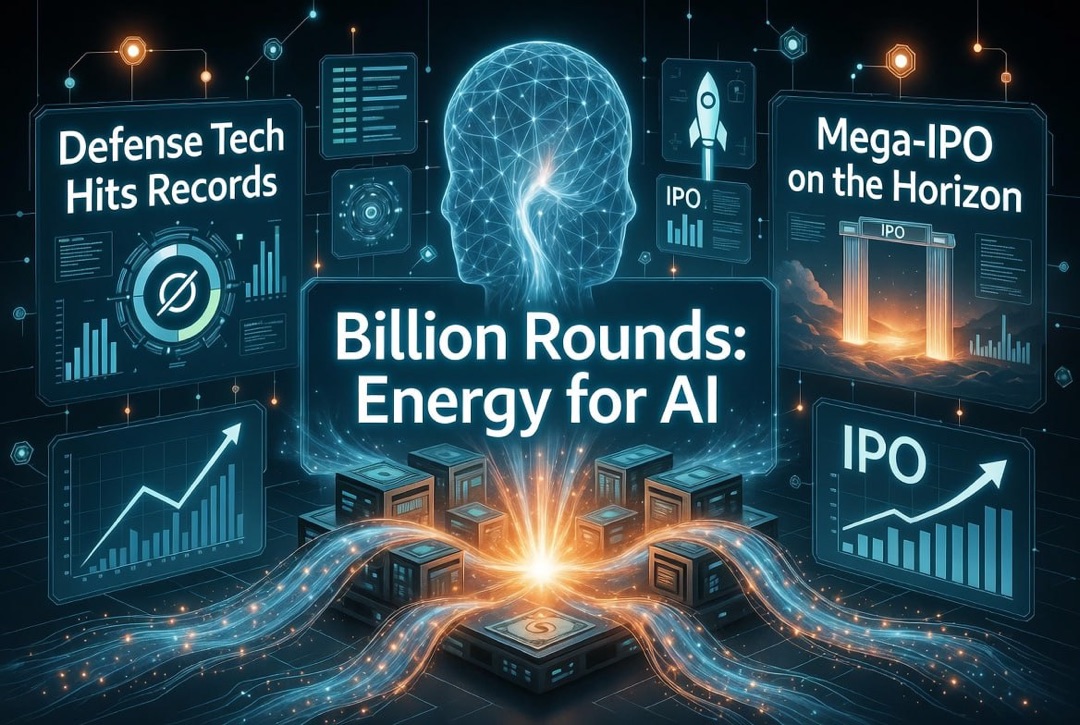
The artificial intelligence sector continues to break records in capital attraction. Amazon founder Jeff Bezos announced the launch of a new AI startup called Project Prometheus with a phenomenal initial funding of $6.2 billion. Bezos personally took on the role of co-CEO of the company, which will focus on developing "physical AI" to accelerate engineering and manufacturing processes. This unprecedented round positions Project Prometheus among the largest startups in terms of initial investment volume in history, highlighting the unrelenting enthusiasm of investors in the AI space.
Other recent deals in the AI segment also indicate high interest in the area. Major AI startups are securing hundreds of millions: for instance, computer vision platform Metropolis received $500 million in early November (valued at about $5 billion), while cybersecurity project Armis attracted $435 million in a pre-IPO round (valuation of $6.1 billion). According to industry analysts, AI accounts for over half of all venture capital deployed in 2025 (around $193 billion since the beginning of the year). Thus, AI remains a key driver of venture capital investment, with both large corporations and funds continuing to actively invest in AI-focused projects.
Large Funding Rounds in Fintech and Other Sectors
Beyond AI, significant funds are also being attracted by startups in other industries, primarily in financial technology. For instance, American fintech platform Ramp raised $300 million in November in a new funding round, with the company valued at $32 billion. This round has propelled Ramp among the world's most valuable private fintech startups and confirmed that investors are willing to support successful business models even in a more selective market. Ramp's success, offering corporate clients innovative solutions for expense and payment management, demonstrates that demand for efficient fintech platforms remains strong.
Significant investments are also flowing into startups in telecommunications, energy, space technologies, and other sectors. For example, infrastructure project Celero Communications raised $140 million to develop optical networks in data centers, while Japanese startup Sakana AI secured $135 million for creating advanced chips and AI models for the national defense sector. These deals reflect the broad scope of venture capital—from financial services to deep tech projects—and confirm investors' readiness to invest across diverse sectors capable of scaling.
A New Surge in Investments in Biotechnology and Medicine
Venture funding in biotech and healthcare is experiencing a renewed surge. Biotech companies are securing large rounds for the development of advanced drugs and medical technologies. For instance, British startup Artios Pharma raised $115 million in a Series D round to expand research in oncology (ATR inhibitors for cancer treatment). Capital is being directed toward supporting breakthrough scientific developments, with investors showing increased interest in promising drug platforms and medtech devices.
Major pharmaceutical corporations are also actively acquiring innovative biotech startups, underscoring this sector's value to the ecosystem. A recent example is Johnson & Johnson's agreement to acquire American biotech startup Halda Therapeutics for $3.05 billion. Such multi-billion dollar deals signal to the market that leading players are willing to pay a premium for promising medical developments. Overall, life sciences remains one of the key sectors for venture investments: in addition to direct funding, startups in this space have a clear exit path through strategic deals with industry leaders.
The Return of Large Venture Funds to the Market
Venture capital is once again being saturated with large funds, signaling a restoration of trust from institutional investors. A number of leading investment firms have announced the creation of so-called mega-funds—funds with volumes of a billion dollars or more. For instance, Japanese conglomerate SoftBank is forming its third Vision Fund worth about $40 billion, focused on investments in AI, robotics, and other advanced technologies. Sovereign funds from Gulf countries have also ramped up their activity, channeling oil dollars into technology projects and developing state megaprograms to support startups in the Middle East.
New substantial funds are emerging in both Europe and North America. For example, European venture investor Sofinnova Partners recently closed a €650 million fund to support biotech and medtech startups—even market volatility has not hindered attracting such significant capital. In the US, earlier this year, Emergence Capital raised $1 billion for investment in cloud services and AI startups. In addition to mega-funds, a rise in specialized venture funds is observed: for instance, a new $110 million fund focused entirely on legaltech startups was recently announced. As a result, venture investors have amassed record amounts of dry powder—hundreds of billions of dollars ready to be invested in promising projects.
A Wave of M&A Deals and Major Exits
A wave of consolidation has returned to the market: mergers and acquisitions are once again becoming a vital part of the startup ecosystem. Corporations and late-stage investors are actively considering acquiring promising teams and technologies, creating new exit opportunities. A recent example is the pharmaceutical giant Johnson & Johnson's acquisition of biotech company Halda Therapeutics for $3.05 billion, providing Halda's investors with one of the largest exits of the year. Activity is also observed in the tech sector: Cisco Systems acquired startup EzDubs, a developer of real-time AI translation services, to integrate its solutions into its communication product lineup. Additionally, quantum company IonQ has announced plans to acquire startup Skyloom Global to accelerate the development of quantum networking technologies.
Not all major deals go smoothly—investor caution is evident in certain instances. For example, cryptocurrency exchange Coinbase pulled out of its planned acquisition of fintech startup BVNK (a stablecoin platform) for $2 billion, likely due to increasing regulatory risks. Nevertheless, overall M&A dynamics in 2025 indicate an increase in the number and volume of deals compared to the previous year. Strategic investments and purchases by major players help startups obtain the necessary resources for scaling up or entering new markets, ultimately revitalizing the venture ecosystem.
The Revival of the IPO Market
The primary public offering (IPO) market is experiencing a notable revival after a period of stagnation in previous years. In 2025, the number of technology companies going public has significantly increased. In the US alone, more than 300 IPOs have taken place since the beginning of the year, which is about 60% more than in the same period of 2024. Successful debuts on the stock market by several unicorns have restored investor confidence that the window of opportunity for public offerings has reopened. Companies that previously postponed IPO plans are resuming preparations for listing.
Among the most anticipated IPO candidates are several global high-tech startups. These include American fintech giant Stripe, enterprise AI software developer Databricks, neobank Chime, and other companies preparing to offer their shares to investors in the coming quarters. On an international scale, there is also movement: for example, Swedish startup Einride (developer of autonomous electric trucks) announced plans to go public on the New York Stock Exchange through a merger with a SPAC company, with a valuation of around $1.8 billion. This indicates that the desire for the public market is global—startups from Europe and Asia are also seizing the opened IPO window to attract capital and accelerate growth.
Global Trends and Market Outlook
The combination of recent events points to the formation of a new growth cycle in the global venture sector. Abundant funding in cutting-edge fields (primarily AI, fintech, biotech) along with the emergence of large funds and improved exit conditions create a favorable environment for startups. Competition for leading positions in key technology areas is intensifying: large corporations are not only aggressively investing in promising young firms but also attracting the best teams and developments from the startup ecosystem.
At the same time, a certain degree of caution remains. Macroeconomic factors (including high interest rates and geopolitical uncertainty) continue to prompt investors to take a measured approach when assessing new projects. Capital remains selectively allocated—in favor of teams with compelling technologies and sustainable business models. However, the overall sentiment remains optimistic. Many countries are expanding innovation support programs (such as national initiatives in AI and tech startups in Asia and Europe), complementing the efforts of private capital. Thus, the global venture market is entering 2026 with signs of a noticeable revival, where high expectations for growth are balanced by greater discipline and focus on long-term value.