Latest Startup and Venture Capital News as of March 7, 2026, Including Major AI Funding Rounds, Emerging Tech Companies, Global VC Market Growth, and Key Trends for Investors and Funds
The main feature at the beginning of March is a sharp increase in capital concentration. Following an exceptionally strong February, the global venture capital market entered March with record momentum. However, this growth is primarily driven by a few gigantic deals rather than a uniform revival of the entire ecosystem. For investors, this serves as an important marker: the startup market is once again capable of generating colossal amounts of funding, but access to these flows is only available to companies with scale, rapid growth, and technological advantages.
- Major rounds are once again shaping the global VC market agenda;
- Main capital is flowing into AI, autonomous systems, and infrastructure;
- Early-stage activity remains vibrant, but competition for leaders is intensifying;
- For funds, the focus is increasingly on entry quality and control over the best teams rather than the number of deals.
Such a market is favorable for strong brands, multi-stage funds, and strategic investors but poses challenges for generalist players focused on broad portfolios without a clear industry advantage.
Artificial Intelligence Has Solidified Its Position as the Primary Recipient of Global Venture Capital
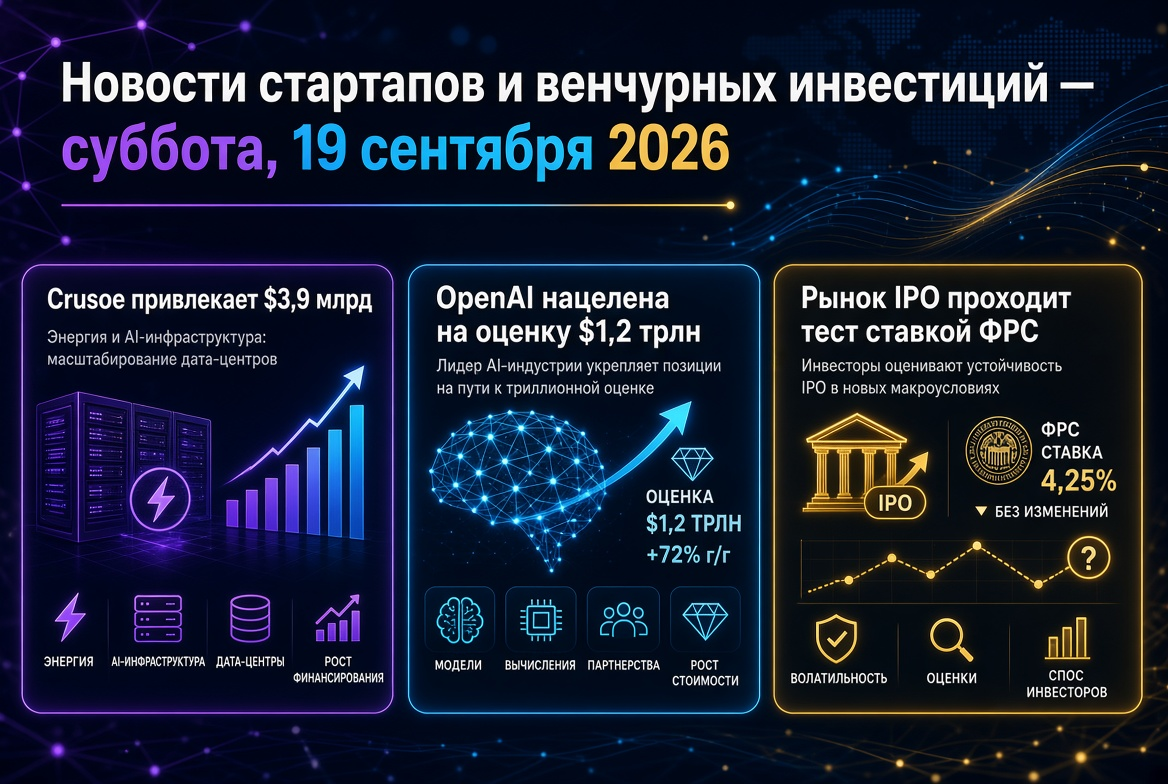
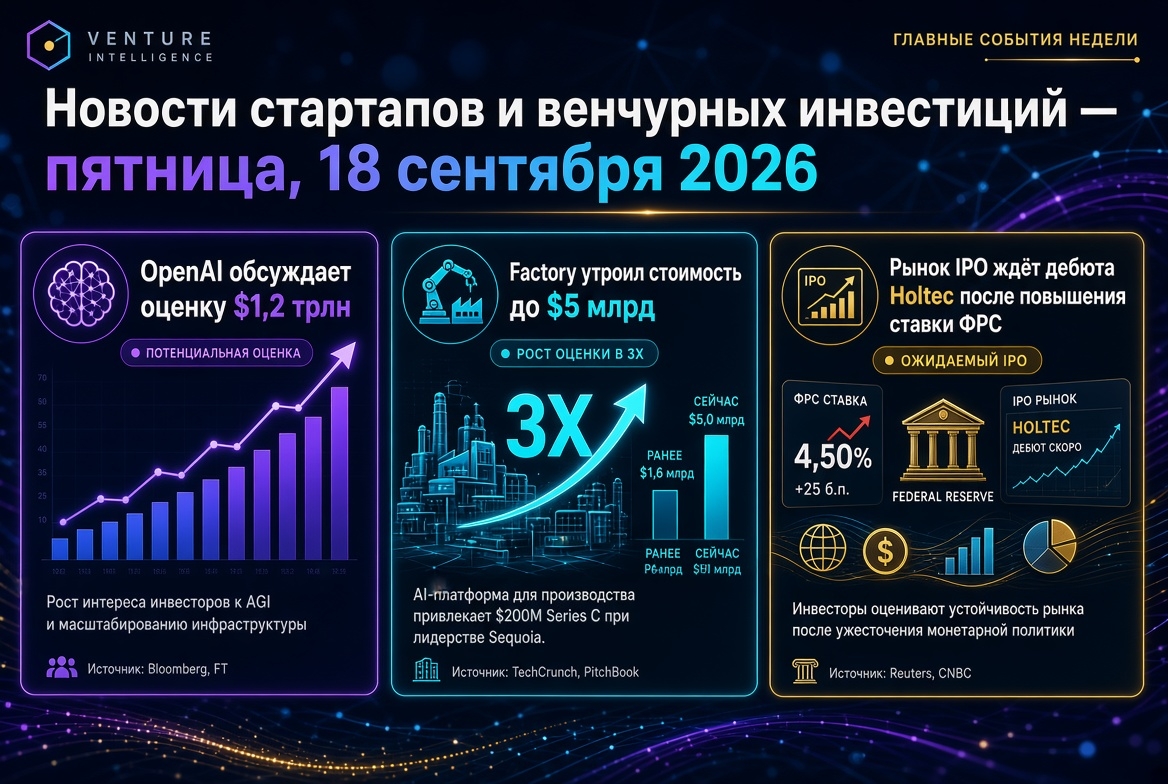
The AI segment has ceased to be merely one of the investment themes and has effectively become the core of the modern venture cycle. Recent major deals confirm that investors are willing to allocate tens of billions of dollars to platform companies vying for infrastructural dominance. This supports valuations throughout the sector while simultaneously raising the standards of expectations for early-stage startups.
A new hierarchy is emerging in the market:
- Frontier models and foundational AI companies;
- Infrastructure for computing, orchestration, and cloud deployment;
- Vertical AI products for healthcare, finance, security, and industry;
- Robotics and embodied AI as the next layer of capitalization.
For venture investors, this means that a startup's valuation increasingly depends not just on revenue or growth rates but also on its position in the AI value chain. If a company is embedded within the core infrastructure of the new cycle, the valuation premium becomes significantly higher.
Infrastructure Startups Are Leading the New Investment Wave
One of the most important trends of the week remains the influx of capital into infrastructure projects that ensure the reliability and scalability of AI systems. Funds are increasingly financing not only models and applications but also tools without which autonomous agents, corporate AI services, and distributed computing cannot operate in an industrial mode.
This is why companies addressing challenges in orchestration, resilient code execution, cloud deployment, and computational efficiency are receiving heightened attention. In this context, the market is shifting from a "demo economy" to a "production economy of AI," where not only the most noticeable interfaces win but also the least visible yet critically essential technological layers.
- The infrastructure for AI agents is becoming a full-fledged investment class;
- Engineering reliability and fault tolerance are beginning to directly impact valuations;
- Growth is being seen not only in American but also in European deeptech teams.
For the startup market, this is a positive signal: beyond frontier models, there remains significant space for building companies with high entry barriers.
Robotics and Embodied AI Are Transitioning from “Long Wait” to Significant Bets
While in 2024-2025 robotics was often seen as a promising but capital-intensive area with a long horizon, in 2026, investor sentiment is clearly shifting. Major rounds in humanoid robotics and autonomous systems indicate that substantial capital is ready to fund not only software but also physical AI platforms.
This is especially important for two reasons. First, robotics is becoming a natural extension of the generative AI boom: capital is seeking the next large market for applying models. Second, the involvement of industrial partners increases the likelihood of commercial deployment rather than mere laboratory demonstrations.
For venture funds in 2026, embodied AI is no longer an exotic area, but one of the most prominent growth segments, particularly in logistics, manufacturing, transport, and warehouse automation.
MedTech and Digital Health Are Returning to Priority Areas
Another important signal is the strong return of capital to medical and quasi-medical startups. Investors are increasingly funding platforms operating at the intersection of AI and healthcare: from clinical support for physicians to digital therapy, telemedicine, and tools aimed at enhancing provider efficiency.
Against this backdrop, the market is maturing. Simply presenting an idea for the digital transformation of healthcare is no longer sufficient to attract a significant funding round. Clear integration into the existing medical infrastructure, proven demand, regulatory compliance, and metrics for user or corporate client retention are now essential.
The rising interest in digital health is also strategically important. It suggests that venture capital is gradually moving away from narrow dependence on consumer AI and returning to verticals where technology can provide direct economic benefits and long-term competitive advantages.
Cybersecurity Strengthens Its Position as a Necessary Topic in the New Technological Cycle
The boom in artificial intelligence automatically intensifies the demand for cybersecurity. As more companies implement generative models, AI agents, and development automation, the risk of new types of vulnerabilities increases. Thus, security-tech is no longer viewed as a supplementary story but as a necessary component of the entire AI infrastructure.
Venture investments in cybersecurity are shifting in several directions:
- Safety in development and AI-assisted coding;
- SOC platforms with automation and machine analytics;
- Protection of digital identities for people, machines, and AI agents;
- Security solutions for enterprise clients with a rapid deployment pace.
For startups, this means the potential for rapid growth even outside the general information noise surrounding generative AI. For investors, it presents an opportunity to find less overheated yet strategically significant assets.
Europe and India Strengthen Their Own Venture Presence
While the U.S. retains leadership in the global startup market, regional growth centers have become increasingly prominent in recent weeks. Europe is bolstering its position through AI infrastructure, semiconductors, cloud services, and technological sovereignty. Meanwhile, India is demonstrating the maturity of its fintech ecosystem and readiness for larger public offerings.
This is crucial for global funds for two reasons:
- The geography of quality deals is expanding;
- Local markets are increasingly producing their own champions rather than just providing teams for the U.S.
If in prior years a global strategy often meant an almost automatic bet on the American market, in 2026, regional diversification once again appears rational—especially in sectors where local data, industrial bases, national clouds, or regulatory specifics are crucial.
IPOs and M&A Deals Are Again Becoming Part of the Investment Thesis
The venture capital market is gradually regaining what it lacked during the downturn: clearer exit scenarios. Although the IPO window remains sensitive to public market volatility, companies are significantly more active in preparing for offerings. Concurrently, strategic deals and technological acquisitions, particularly in AI infrastructure and cloud services, are on the rise.
This changes the return calculations for funds. While in 2023-2024, the main focus was on preserving runway and awaiting a better environment, in 2026, it is once again possible to build more substantive exit models:
- Via IPOs for mature fintech and platform companies;
- Via M&A for infrastructure, cloud, and security startups;
- Via the secondary market and funds accessing private markets.
The emergence of new access tools for private assets also indicates that the private market is becoming an increasingly institutionalized and liquid segment of global capital.
What This Means for Venture Investors and Funds
As of March 7, 2026, the startup and venture capital market can be described as one of significant opportunity, but even greater selectivity. There is plenty of money available in the market. However, the cost of error is also increasing; capital is concentrating among leaders, and premiums are awarded only to startups with a real chance of becoming infrastructure, industry standards, or objects of strategic interest.
Key takeaways for investors right now are as follows:
- AI remains a central theme, but the main value is shifting to infrastructure and applied verticals;
- Robotics, medtech, and cybersecurity are becoming strong secondary pillars of the new cycle;
- Europe and India deserve increased attention as sources of scalable deals;
- The exit logic is returning, meaning the quality of late-stage opportunities is again critically important;
- In 2026, success won't come from doing more deals but from recognizing new infrastructure leaders ahead of others.
For the global venture capital market, this is not merely a phase of revival. It marks the beginning of a new architecture of capital in which startups, venture capital, AI, IPOs, M&A, and deeptech are increasingly converging into a unified investment landscape. This is why the coming months may be defining for funds that wish to capture the best entries of the new cycle before the next surge in valuations.