Current Startup and Venture Capital News as of June 28, 2026: Mega Funds in Artificial Intelligence, Significant Fintech Rounds, Robotics Growth, Defense Technologies, and a Cautious IPO Window
As of Sunday, June 28, 2026, the global venture capital market enters the second half of the year with a noticeable capital shift towards artificial intelligence, AI infrastructure, robotics, fintech, and defense technologies. For venture investors and funds, the current agenda presents a paradox: on one hand, large rounds reaffirm appetite for risk, while on the other hand, the public market is increasingly scrutinizing technology company valuations.
The main theme of the week is the concentration of capital around AI startups and companies capable of transforming artificial intelligence into industrial, financial, and defense infrastructure. Venture investments are becoming more selective: funds are willing to pay high multiples, but only for startups with clear revenue, strong technological protection, access to data, and a realistic pathway to IPO or a strategic deal.
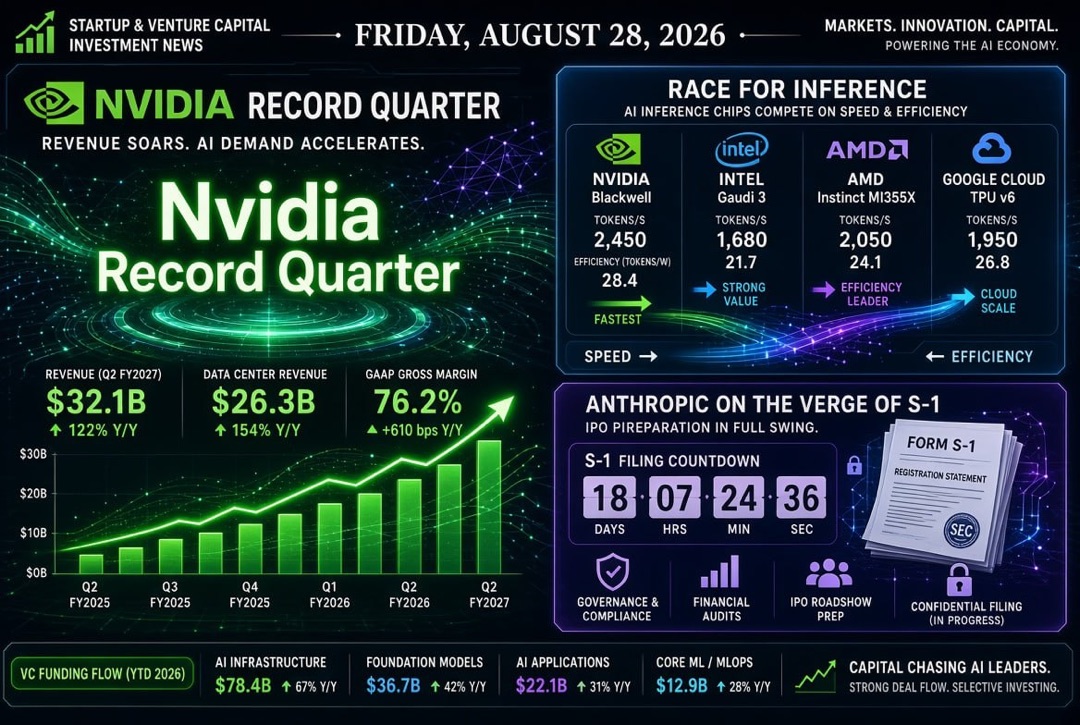
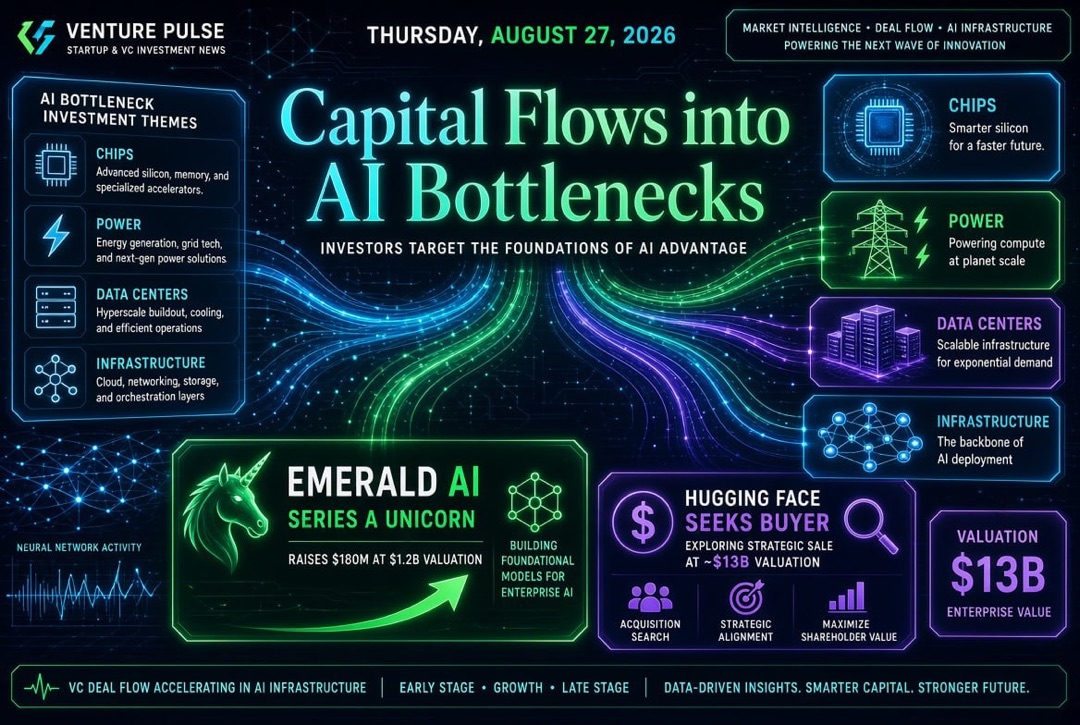
AI Mega Funds Return Significant Capital to the Venture Market
One of the key signals for the market has been the strengthening of major venture funds that are once again accumulating multi-billion dollar capital for investments in AI startups. This new cycle differs from the boom of 2020–2021: now the funds are directing money not only towards generative models but also towards infrastructure, enterprise applications, healthcare, consumer AI, robotics, and business automation tools.
For venture funds, this signals a transition from a simple bet on "artificial intelligence" to a more complex strategy:
- AI infrastructure — computing, data, security, middleware, and tools for model deployment;
- AI-native applications — products where artificial intelligence is the core of the business model;
- vertical AI startups — solutions for healthcare, finance, industry, logistics, and education;
- robotics and physical AI — moving AI from the digital realm to the real economy.
It is this logic that is shaping a new wave of venture investments: investors are seeking not just rapid user growth but the long-term infrastructural role of a startup in the global technology supply chain.
Fintech Back in the Spotlight: Airwallex, CRED, and Global Payments
Fintech remains one of the most resilient sectors for venture capital. Amidst the growth of cross-border trade, B2B payments, embedded finance, and AI analytics, investors are once again actively looking at companies capable of scaling globally and reducing the costs of financial infrastructure.
Large rounds in fintech demonstrate that the market is willing to fund not only early-stage startups but also mature companies that already have international revenue, strong banking partnerships, and a clear path to profitability. Three areas are particularly important:
- payment infrastructure for businesses;
- AI tools for financial and risk management;
- credit, insurance, and treasury services within digital platforms.
For global investors, this confirms that fintech startups are becoming attractive again if they focus not only on growing their customer base but also on monetizing transaction flows.
India Strengthens Its Position in the Global Startup Ecosystem
The Indian venture market remains one of the most dynamic outside the U.S. Major deals in fintech and consumer digital services indicate that India is gradually shifting from a "low-ticket mass market" model to that of large technology platforms capable of attracting global capital.
For venture investors, India is appealing for several reasons: a vast user base, rapid digital payment growth, government support for technology infrastructure, strong engineering talent, and the development of local AI models. At the same time, funds are becoming more cautious: not all startups receive capital, only those with proven economics, strong branding, and the potential to expand beyond the domestic market.
Robotics and Physical AI Become New Investment Core
One of the most notable changes in 2026 is the growing interest in robotics and physical AI. While the previous wave of artificial intelligence was mostly associated with text, code, images, and enterprise software, capital is now shifting towards systems capable of operating in the physical world: in factories, warehouses, construction sites, logistics, mining, and defense sectors.
Robotics startups are becoming attractive to funds because they connect several strong trends:
- a labor shortage in industry and logistics;
- falling costs of sensors and computing;
- improvements in the quality of autonomous models;
- demand from corporations and government contractors;
- the potential for long-term contracts and high software margins.
For the venture market, this is an important signal: the next major cycle may not only develop in cloud software but also in technologies linked to industrial automation and the real sector.
Defense Tech: Defense Startups Become an Institutional Asset
Defense technologies have definitively stopped being a niche category for venture investors. Amid rising geopolitical tensions, increased defense budgets, and demand for drones, autonomous platforms, cybersecurity, and satellite infrastructure, defense tech is turning into one of the fastest-growing segments of the venture market.
Funds are increasingly viewing defense startups not as politically complex exceptions, but as technology companies with significant government contracts, long-term agreements, and high barriers to entry. The most sought-after areas include:
- drones and autonomous systems;
- AI for battlefield data analysis;
- cybersecurity and critical infrastructure protection;
- satellite communication and surveillance;
- software for defense procurement and analytics.
For investors, the key question is not only the market size but also the startup's ability to navigate complex certification cycles, engage with government procurement, and scale production.
IPO Market Open but More Demanding on Valuations
The IPO window for technology companies remains open; however, investors are paying closer attention to revenue quality, margins, expense structure, and dependence on capital expenditures. Following a series of significant public debuts, the market has begun to re-evaluate companies whose valuations outpace financial results more rigorously.
For venture funds, this means a shift in exit logic. It is no longer sufficient to merely bring a startup to "unicorn" status. The public market demands evidence: sustainable growth, transparent unit economics, clear corporate governance structures, and a realistic path to profitability.
As a result, the strongest startups may gain access to IPOs, but average companies will remain in the private market longer, seeking secondary deals, strategic sales, or consolidation with larger players.
Early Stages: Seed and Series A Rounds Become Costlier but Higher Quality
In the early stages, venture investments are also changing. Seed rounds and Series A are getting larger, especially in AI, deep tech, health tech, and robotics, where high initial costs require more capital before scaling sales. However, along with this, the requirements on founders are increasing.
Funds are focusing on the following criteria:
- a strong technical team;
- access to unique data or infrastructure;
- rapid transition from prototype to commercial contracts;
- a clear defense against copying from Big Tech;
- potential for global scaling.
This creates a healthier market structure: funds reward not the loudest presentations but teams capable of quickly proving their product and financial viability.
Europe, Asia, and the Middle East: Capital Becomes More Regional
The global venture market is becoming less homogeneous. The U.S. still leads in AI, frontier models, and large late rounds, but Europe is strengthening its position in defense tech, climate tech, industrial AI, and deep tech. Asia remains strong in fintech, consumer platforms, payments, and local AI models. The Middle East is increasingly leveraging sovereign capital to develop its technological hubs.
For venture investors, this underscores the need for regional specialization. The universal strategy of "looking for the next SaaS in Silicon Valley" is no longer as effective. Promising deals are increasingly emerging in markets such as India, Singapore, Germany, France, the UAE, and Saudi Arabia, where government policy and corporate demand create new growth opportunities.
What Matters to Venture Investors and Funds
On June 28, 2026, the startup and venture investment agenda appears constructive but not without risks. Capital is returning, mega funds are active again, AI startups are drawing the largest rounds, fintech shows resilience, and robotics and defense tech are forming a new investment cycle. However, the market is no longer prepared to fund growth at any cost.
Venture investors and funds should pay attention to several key factors:
- Quality of Revenue. Startups with real clients and recurring contracts will receive a premium on their valuation.
- AI Infrastructure. Companies selling tools for the entire AI ecosystem appear to be the most resilient.
- Physical AI. Robotics and autonomous systems emerge as one of the main themes for the second half of the year.
- Defense Tech. Defense technologies are evolving from a niche segment into an institutional asset class.
- IPO Discipline. The public market will reward not only growth but also financial transparency.
The key takeaway for the market: venture investments in 2026 are entering a phase of more mature selection. Startups with strong technology, clear economics, and global markets will continue to attract capital. Companies without proven monetization and sustainable advantages will face tougher conditions. Therefore, the coming months will be a test not only for founders but also for the funds themselves: those who can distinguish short-term AI hype from long-term technological infrastructure will prevail.