Startup and Venture Investment News for Monday, January 12, 2026: Major Investment Rounds in AI, Biotech, and Fintech, Deals Involving Leading Venture Funds, and Key Trends in the Global Market.
The venture market greeted 2026 on a high note: following a record influx of capital into startups in 2025 (especially in the field of artificial intelligence), this year shows no signs of slowing down. In the first days of January, multi-billion dollar deals have been announced across various sectors—from AI and biotech to fintech and infrastructure. Below are the key startup and venture investment news for January 12, 2026.
Major Deals of the Week
The first full working week of 2026 has been marked by several large-scale funding rounds. Among the largest deals are:
- xAI (generative AI) — raised $20 billion (Series E round). Elon Musk’s startup, known for its AI chatbot and connection to the platform X (formerly Twitter), secured backing from a broad array of venture and strategic investors. This unprecedented investment has brought xAI's total funding to record heights and is estimated to have increased the company's valuation to around $230 billion.
- DayOne Data Centers (data center infrastructure) — over $2 billion (Series C round). The Singapore-based startup building hyper-scale data center networks attracted funding led by Coatue Management with participation from Indonesia’s sovereign fund. The capital will be used for expanding sites in Europe (notably in Finland) and the Asia-Pacific region to meet the growing demand for “AI-ready” infrastructure.
- Parabilis Medicines (biotechnology) — raised $305 million (Series F round). The biotech company from Cambridge, USA, developing cancer drugs based on a peptide platform, received substantial funding to continue its clinical research. The round was led by prominent industry investors, reflecting market confidence in the prospects of oncology therapies.
- Rain (fintech, crypto payments) — raised $250 million (Series C, valuation ~$1.95 billion). The New York-based fintech startup creating infrastructure for stablecoin payments attracted a quarter billion dollars under the leadership of Iconiq just months after its previous round. The rapid growth in valuation (a 17-fold increase since March of last year) indicates high investor interest in technologies bridging traditional finance and digital currencies.
AI Startups Continue to Attract Capital
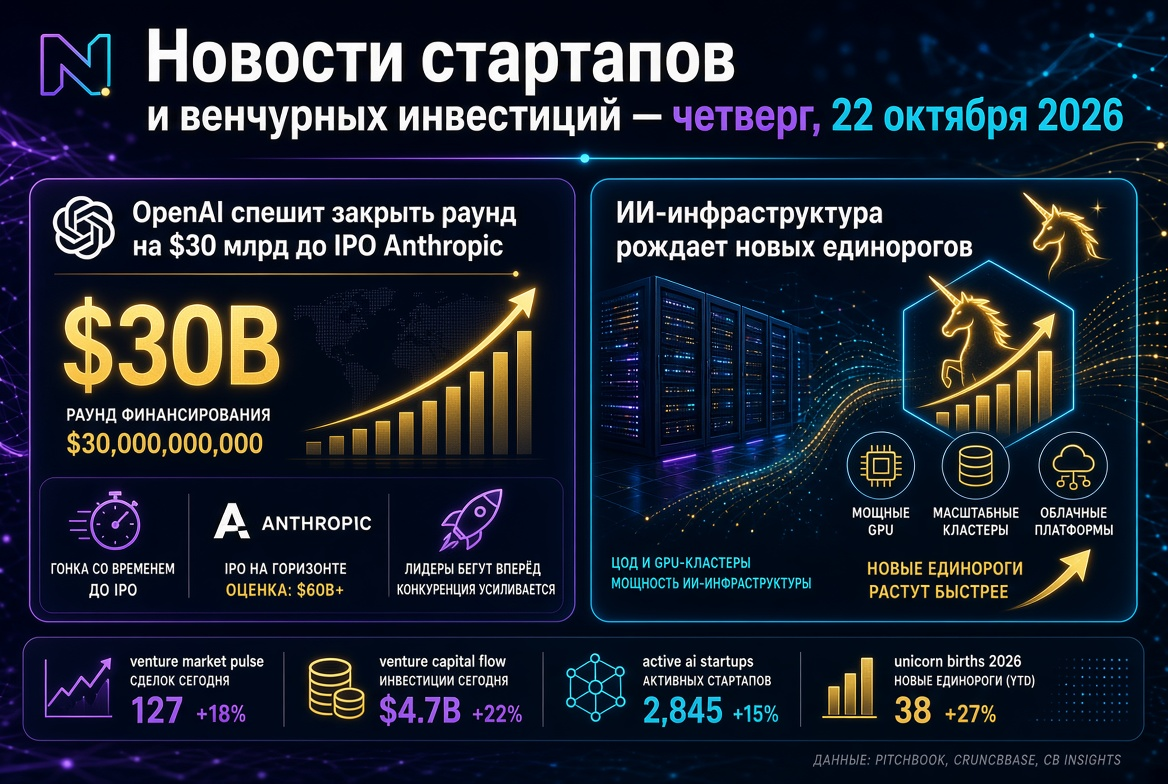
The field of artificial intelligence continues to be the driving force of the venture market. In 2025, global investments in AI startups set records (according to PitchBook, only leading Silicon Valley companies attracted about $150 billion over the year). Now, at the start of 2026, the influx of funds shows no signs of slowing. In addition to the mentioned mega-round for xAI, other significant investments have occurred in the AI segment:
- LMArena (AI model evaluation platform, San Francisco) — raised $150 million in new funding. The round was led by Felicis and UC Investments, with the post-money valuation of the startup reaching $1.7 billion (almost three times higher than a year ago at the seed stage).
- Lyte (AI for robotics, Mountain View) — emerged from “stealth mode” and disclosed it has raised a total of $107 million in funding. The company develops machine “vision” and understanding technologies for robotics, allowing robots to safely navigate physical spaces.
Biotechnology and Health: Major Investments
Following a surge in interest in biotech during the pandemic, healthcare and biotechnology startups continue to receive solid support from venture funds. The first week of the year brought several rounds exceeding $100 million for companies developing innovative therapies and medical technologies:
- Soley Therapeutics (neurodegenerative diseases, San Francisco) — $200 million (Series C) for developing a platform to treat neurological and metabolic disorders. Investors highly valued the prospects of the cell stress detection technology, which could underpin efforts to combat severe diseases.
- Diagonal Therapeutics (genetic diseases, Massachusetts) — raised $125 million (Series B) to develop therapies for hereditary diseases using “cluster” antibodies that correct disruptions in cell signaling.
- EpiBiologics (biopharma, California) — raised $107 million (Series B) to create a platform for tissue-specific protein degradation. The round was led by corporate venture arms of large pharmaceutical companies, confirming the industry’s strategic interest in new drug development approaches.
Fintech Sector: Steady Investor Interest
Financial technology startups at the beginning of 2026 are demonstrating steady capital attraction, although the number of mega “unicorn” deals has been lower than in AI or biotech. The fintech sector is gradually emerging from the downturn of recent years and is attracting both growth rounds and strategic investments:
- In addition to the major round for Rain at $250 million, several fintech startups in the U.S. attracted investments in the range of $10–25 million, indicating a gradual revival in the industry following the holiday lull.
- Globally, the fintech market shows signs of recovery: according to Crunchbase, the total volume of venture investments in financial technologies for 2025 reached ~$52 billion (27% higher than the previous year). Although this is still below the records of 2021, the growth signals a return of investor confidence in this sector.
There is also activity in the crypto market: capital continues to flow into digital asset infrastructure, and some large crypto companies (such as Ripple) managed to attract hundreds of millions of dollars in 2025, creating a positive backdrop for relevant startups in 2026. Overall, fintech companies are currently focusing on sustainable growth and preparing for public market entry as it revives.
Infrastructure and Deep Technologies: Data Centers and Quantum Computing
Besides software innovations, investors are actively funding companies that create the foundation for future technological breakthroughs—from data centers to quantum computing. The largest infrastructure deal at the beginning of the year has already been mentioned: the data center project DayOne with $2 billion reflects high demand for capacities for cloud and AI workloads. Similarly, several areas of deep technologies are developing:
- Photonic (quantum networks, Vancouver) — raised $180 million (first tranche of the round) for the commercialization of network quantum computing technology. The startup intends to use the funds to scale its platform and has raised approximately $375 million in total investments since its inception.
- D-Wave (quantum computing, Canada) — announced plans to acquire the startup Quantum Circuits (USA) for $550 million (the deal will be partially paid in shares and partially in cash). This consolidation brings together different approaches to quantum technologies and signals the beginning of market consolidation in deep technologies.
Investments in infrastructure also include projects in semiconductors, telecommunications, and cybersecurity. Thus, 2026 begins with substantial investments not only in applied services but also in fundamental technologies without which these services would not be possible.
Mega Funds and Venture Capital Strategies
Despite the high deal activity, the venture capital industry itself is undergoing structural changes. In 2025, the volume of funds raised by venture capital firms from investors (LP) significantly decreased compared to previous years, and the number of new funds reached a decade-low.
Nevertheless, the largest VC firms continue to attract capital in record amounts. For instance, Andreessen Horowitz (a16z) closed new funds totaling over $15 billion, including a growth fund of $6.75 billion, a fund for AI infrastructure of $1.7 billion, and a fund for defense and other strategic sector startups at $1.1 billion.
Exits and Upcoming IPOs
A sign of the recovery of the venture ecosystem is the resurgence of large exits—both through company sales and preparations for initial public offerings. The start of 2026 brings good news on this front:
- Corporations are actively acquiring startups again: Atlassian has agreed to acquire the creators of the Arc browser (the startup The Browser Company) for approximately $610 million. This deal will enable Atlassian to integrate an innovative browser with artificial intelligence features for corporate users, expanding its product portfolio.
- CrowdStrike is moving forward with a deal to acquire the startup SGNL (cybersecurity) for about $740 million. This will be one of the largest acquisitions in the cybersecurity sector in recent times and will strengthen CrowdStrike's position in digital identity protection.
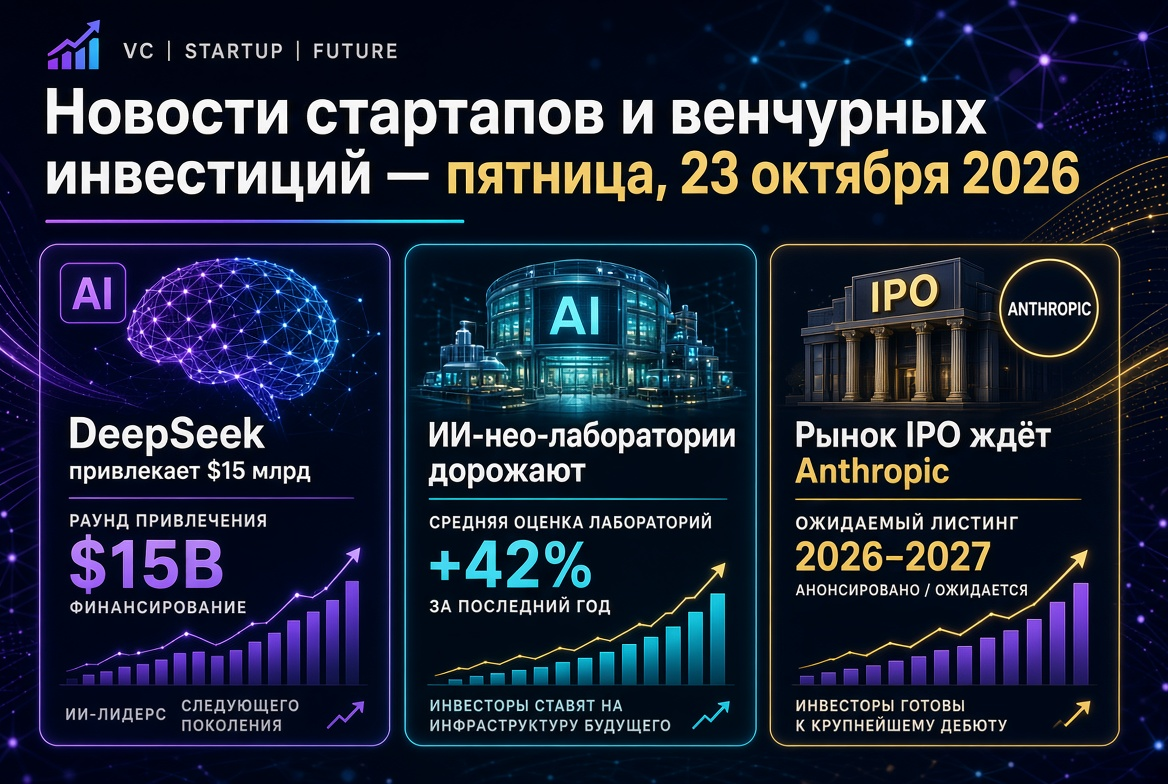
- High-profile IPOs are on the horizon: the communication platform Discord has confidentially filed for an initial public offering, signaling readiness to go public in the coming months. This is one of Silicon Valley's largest “unicorns,” and its listing will be a bellwether for market appetite for rapidly growing tech companies.
The resurgence of large exits and approaching IPOs of technology leaders promises to make 2026 a pivotal year for the venture industry, restoring liquidity and investor confidence.