Startup and Venture Investment News for February 27, 2026: Mega-Rounds in AI and Autonomous Transport, Growth in Biotech, Cybersecurity, and Climate Tech. Analysis of the Global Venture Capital Market for Funds and Investors
By the end of February 2026, global venture investments are increasingly shifting towards larger deals and infrastructure stories. The focus of funds and LPs is on projects where scaling challenges stem not from marketing but from computations, data access, regulation, and industrial integration. This shift is altering the logic behind funding rounds: early-stage projects increasingly resemble late-stage ones, while late-stage projects take on characteristics of private IPOs.
- Capital concentration is intensifying: mega-rounds and “hype premium” valuations remain the privilege of category leaders.
- Diligence timelines are extending, and deal conditions more frequently include tranches, KPIs, and structured investor rights.
- Demand for “applied AI” is higher than for experimental projects: buyers are seeking integration into processes rather than demonstrations.
AI Mega-Rounds: The Race for Computation and Depleted Alternatives
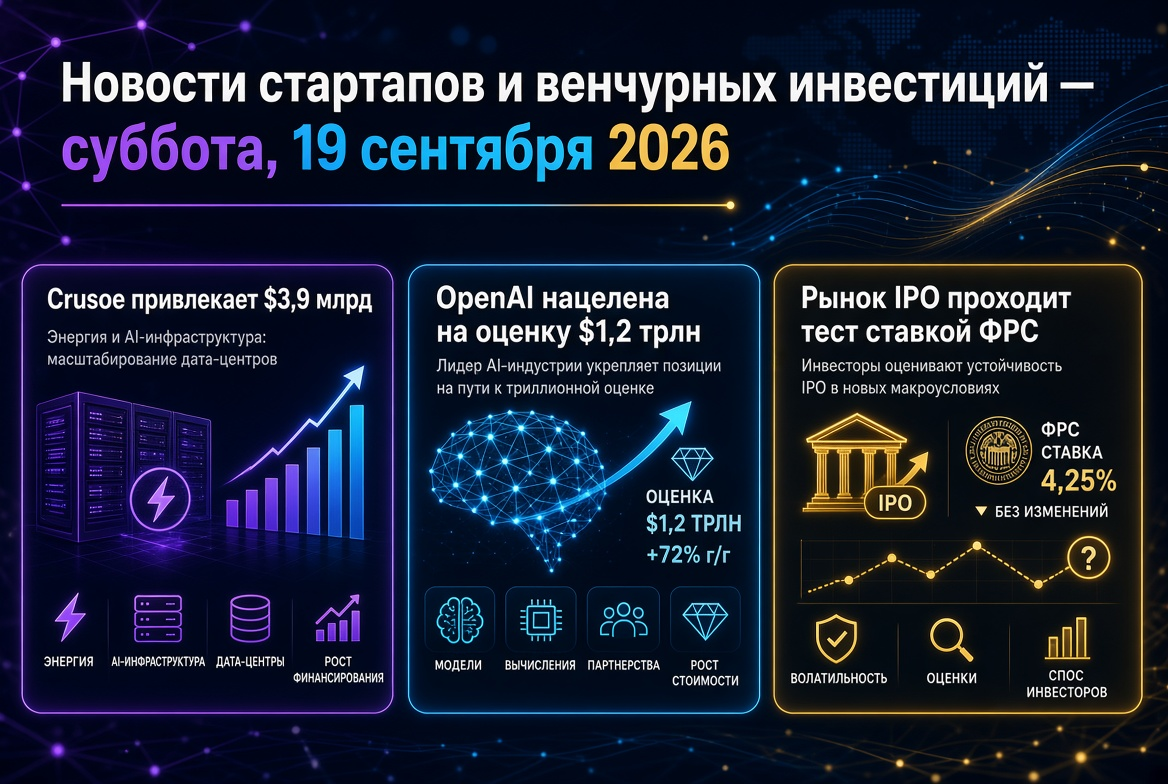
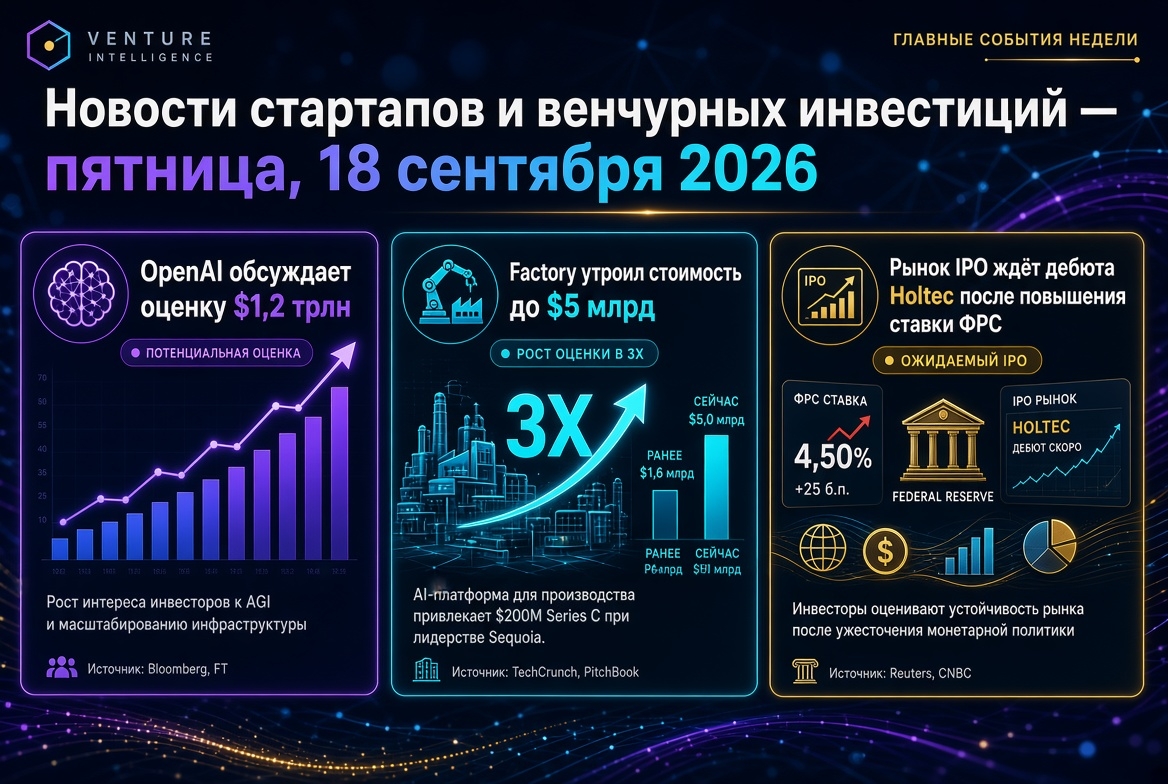
Artificial Intelligence remains the primary magnet for venture capital. The reason is straightforward: strong teams have the opportunity to quickly capture the infrastructure layer of the market—models, data, clouds, development tools, security. As a result, venture investors are willing to fund not only software but also hardware, with funding rounds increasingly measured in hundreds of millions and billions.
The critical nerve centers on access to GPUs/accelerators, data centers, and corporate sales channels. This drives funds to invest in AI infrastructure (cloud platforms, inference optimization, task orchestration) and seek partnerships with major tech companies.
- AI Infrastructure: clouds, execution tools, inference cost optimization.
- AI Applied Verticals: security, medicine, industry, finance.
- AI Hardware Base: alternatives to dominant accelerator and network infrastructure suppliers.
Autonomous Transport: “Capital + Automakers” Again Shift the Center of Gravity
The autonomous transport and robo-taxi segment is once again at the forefront of the venture agenda. Here, venture capital is increasingly aligned with strategic investors: automotive corporations, urban mobility platforms, and chip manufacturers. The logic is clear: autonomy represents a long cycle, complex certification, and a high cost of data, so the market prefers players who can simultaneously scale technologies and implement them into operational fleets.
- Large rounds in autonomous transport signal the return of “long” money to highly capital-intensive projects.
- Strategic partnerships are becoming not an option, but a condition for growth: access to fleets, datasets, hardware platforms.
- Europe is strengthening its position in applied autonomy based on cooperation with global manufacturers.
AI Chips and Corporate Infrastructure: Betting on Lower Inference Costs
Concurrently, there is growing interest in the niche of AI accelerators and “corporate AI,” where record performance on benchmarks is less crucial than inference economics under real loads. For venture investors, this is a rare scenario where a combination of deep technology and understandable commercial demand can yield rapid revenue growth: companies are optimizing computation expenses, building private clouds, and moving critical models closer to the data.
In 2026, the investment thesis is clear: whoever offers enterprises a more predictable cost of inference and easy integration into IT frameworks is likely to secure long-term contracts. Thus, venture investments are flowing not only into hardware but also into software layers: compilers, deployment tools, monitoring, security, and data management.
Biotech and “Smart” Pharma: AI in R&D Moves IP closer
Biotech remains one of the few segments where the IPO window appears more resilient than in the enterprise-SaaS sector. Investors are willing to discuss public offerings if a company shows a clear clinical trajectory, strong partnerships, and provable development economics. An important nuance: AI in drug discovery alone doesn’t sell a story—it must shorten timelines and increase success rates rather than merely being a “fashionable overlay.”
- The US maintains its leadership in liquidity and infrastructure for biotech IPOs.
- Europe is ramping up early venture investments in genetics and platform approaches, but exits are still often oriented toward the US.
- Asia is more actively participating in syndicates, especially regarding manufacturing and scaling.
Cybersecurity: AI Attacks Accelerate Demand for AI Protection
Cybersecurity is one of the most “pragmatic” recipients of venture capital in 2026. The rise of automated attacks and the expansion of risk surface (models, data pipelines, MLOps, APIs) create a market for startups that can demonstrate measurable time savings for SOC teams and reduced losses. Venture capital is concentrating on segments:
- Software Supply Chain Security (secrets, keys, dependencies, repositories).
- Protection of AI Infrastructure (models, data, dataset poisoning, prompt leaks).
- Automated Response and incident analytics based on machine learning.
A separate trend is the strengthening of European players in cyber risks and cyber threat insurance: this creates synergy between SaaS, underwriting, and risk analytics, which is appealing to growth funds.
Fintech: The “Second Wave” — Infrastructure and Risk Management Over Aggressive Growth
Fintech in 2026 appears more mature: venture investments are moving away from subsidizing growth towards models with sustainable unit economics. The most sought-after startups are those that help banks and companies manage risks, compliance, and fraud, as well as improve back-office efficiency. For the global audience, this means an increase in deals in:
- RegTech and AML utilizing AI for transaction analysis and customer behavior.
- Credit Scoring and real-time anti-fraud.
- B2B Payments and liquidity management tools for businesses.
At the same time, funds are increasingly demanding transparent funding structures and predictable margins—especially in consumer products.
Climate Tech and Industrial Decarbonization: Fewer Slogans, More Capital-Intensive Projects
Climate tech is returning to the agenda in a more “industrial” form. Venture capital is increasingly funding solutions that can be adopted in factories, logistics, and energy: energy storage, network management, improving data center efficiency, recycling materials, new industrial processes. In Europe, regulatory goals and corporate decarbonization programs are the main drivers, while in the US, it’s a blend of corporate demand and technological entrepreneurship.
- Deals are more frequently structured: project financing, pilots with corporations, long-term contracts.
- Success depends on implementation: having an industrial partner becomes an evaluation factor.
- Intersection with AI Infrastructure: energy efficiency in computation and data centers is a distinct investment theme.
Exits and IPOs: The Window Opens Selectively, while M&A Becomes the “Norm”
On the horizon of late February 2026, the exit market appears uneven. IPOs remain a possibility for a limited number of companies—most often in biotech and select infrastructure segments. For the majority of startups, strategic deals and consolidation are more realistic: major players are acquiring technologies, teams, and access to corporate clients. For venture funds, this means a more proactive approach with portfolios: preparing for buyers’ due diligence, strengthening financial discipline, and building a “metrics showcase” in advance.
What This Means for Venture Investors and Funds: Practical Takeaways
- The focus on AI remains fundamental, but those who sell implementation and economics rather than promises will win.
- Mega-rounds will continue to set the tone for the venture capital market, widening the gap between leaders and “middle-tier” companies.
- Biotech appears as one of the main candidates for public exits, but investors will require proof of a clinical track.
- Cybersecurity and fintech infrastructure are stable directions for venture investments in light of rising risks.
- Climate tech is shifting towards industrial scale, where partnership and capital-intensive growth models are essential.
The week’s conclusion for the global startup market is clear: capital is available, but it has become more discerning. Winning teams combine technological advantage, a clear go-to-market approach, and the ability to scale in the real economy—from data centers and automotive to medicine and cybersecurity.