Overview of Startup and Venture Capital News for March 24, 2026, Focusing on AI, Deeptech, and IPO Market Opportunities
The key takeaway from recent weeks is clear: AI startups continue to attract a disproportionately large share of global venture capital. This is no longer just a trendy sector but a central investment vertical through which funds are re-evaluating nearly the entire technology market.
For venture investors, this signifies several important implications:
- Valuations in the artificial intelligence segment remain elevated;
- Competition for the best deals is intensifying;
- The premium is increasingly being paid not for the idea itself but for access to computing infrastructure, teams, and distribution.
In practice, the startup market is becoming more distinctly divided into two layers. The first includes AI leaders and infrastructure players capable of attracting capital through very large checks. The second comprises a broader layer of quality, yet non-"narrative" companies, which must demonstrate their efficiency with much greater rigor. For funds, this environment increasingly shifts venture investments from a broad approach towards concentrated bets.
Major Deals Confirm the Capital Shift Towards Infrastructure and Applied AI
The most notable startup news of the past few days demonstrates that money is flowing towards areas where there is either fundamental technological protection or clear applied demand.
Several directions appear especially strong:
- Legal AI. Startups automating the work of legal teams and corporate functions are now perceived as a mature investment theme rather than an experimental market.
- Semiconductor Deeptech. Funding rounds in companies related to equipment and new chip manufacturing approaches reflect demand for basic technological infrastructure.
- Physical AI and Robotics. Investors are increasingly seeking companies that are transferring AI models from software into real production processes.
This is an important signal for the startup market. In 2026, venture investments are increasingly directed not towards the "promise of audience growth," but towards technological platforms that can be integrated into the long-term industrial value chain.
Deeptech Moves from Niche to Center of Global VC Mandate
If deeptech previously occupied a supplementary role in many funds' portfolios, it has now become one of the key bets. Funding for funds focused on semiconductors, cybersecurity, robotics, energy transition, and university spinouts is on the rise in Europe. This makes the startup market more engineering-driven and less reliant on purely consumer stories.
The reasons are clear:
- growing strategic demand from governments and corporations;
- the necessity of technological sovereignty;
- interest in sectors where margins can be protected through IP and complex development;
- a desire for funds to have exposure to long, yet less replicable business models.
For venture funds, this means that deeptech can no longer be viewed as an optional theme. It has become an essential part of the global investment agenda alongside AI startups and B2B software.
New Valuation Logic: Access to Computing and Partnerships is Becoming Part of Value
Another hallmark of 2026 is the shift in the very nature of startup valuation. Where previously key metrics included revenue, growth, and unit economics, access to:
- GPUs and cloud capabilities;
- strategic alliances with major infrastructure providers;
- contracts with industrial or corporate clients;
- the ability to rapidly convert research teams into commercial products.
This is why deals surrounding applied AI and infrastructure are regarded particularly highly by investors. In such a cycle, venture investments flow not simply into a startup, but into a future position in the computing, automation, and corporate implementation market. For funds, this alters due diligence models: assessment increasingly includes not only the product and market, but also the sustainability of the company’s access to scarce resources.
M&A in Technology Accelerates, but Regulatory Risk Increases
The startup market is becoming more active in terms of strategic acquisitions. Large tech companies are tightening control over the ecosystem through the acquisition of teams, development tools, and applied platforms. This is especially evident in AI and developer tools, where the race is on for speed of product delivery and control over developer workflows.
However, a new factor for investors has emerged — increased regulatory scrutiny. Any forms of acquihiring, licensing with subsequent team hiring, or structures that allow bypassing traditional deal procedures will face more rigorous evaluation.
For funds, this means:
- exiting through a sale to a strategic player remains a viable scenario;
- the structure of the deal becomes as important as its price;
- legal preparation and antitrust analysis need to be factored in earlier than in past cycles.
In other words, venture investments can still be monetized through M&A, but the exit route is becoming more complex and demanding in terms of quality support.
IPO Window Cracks Open, but Not for Everyone
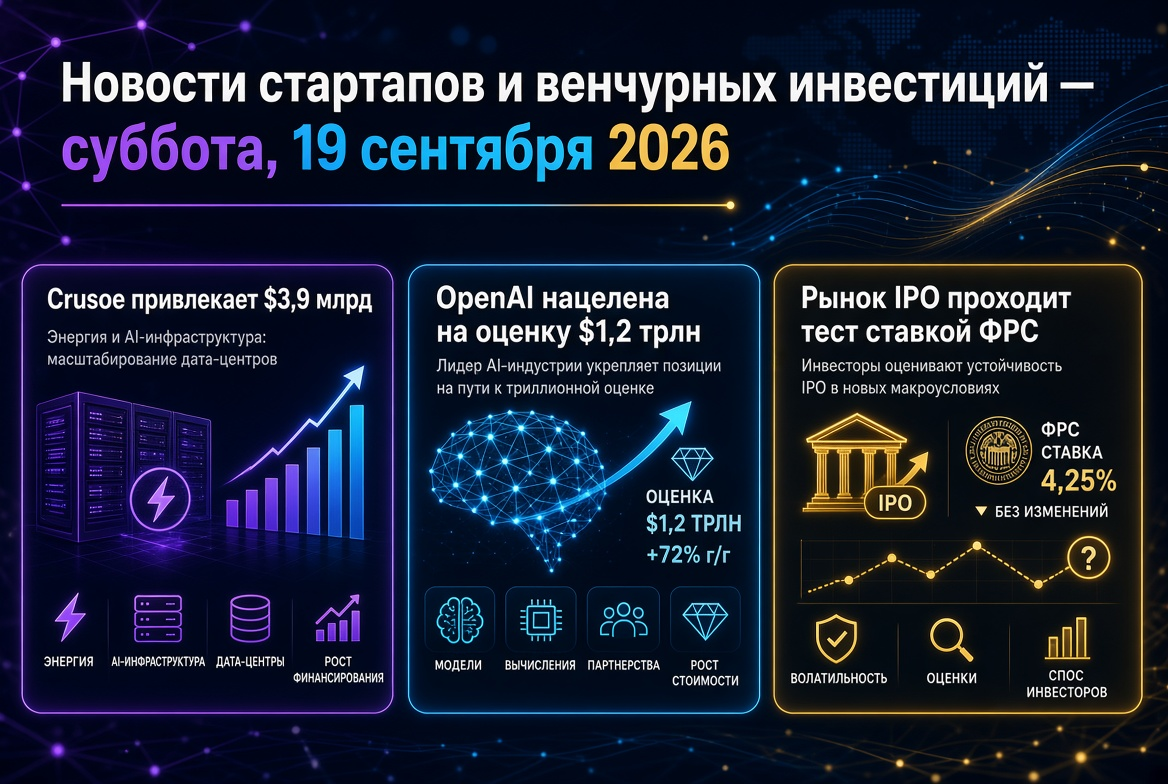
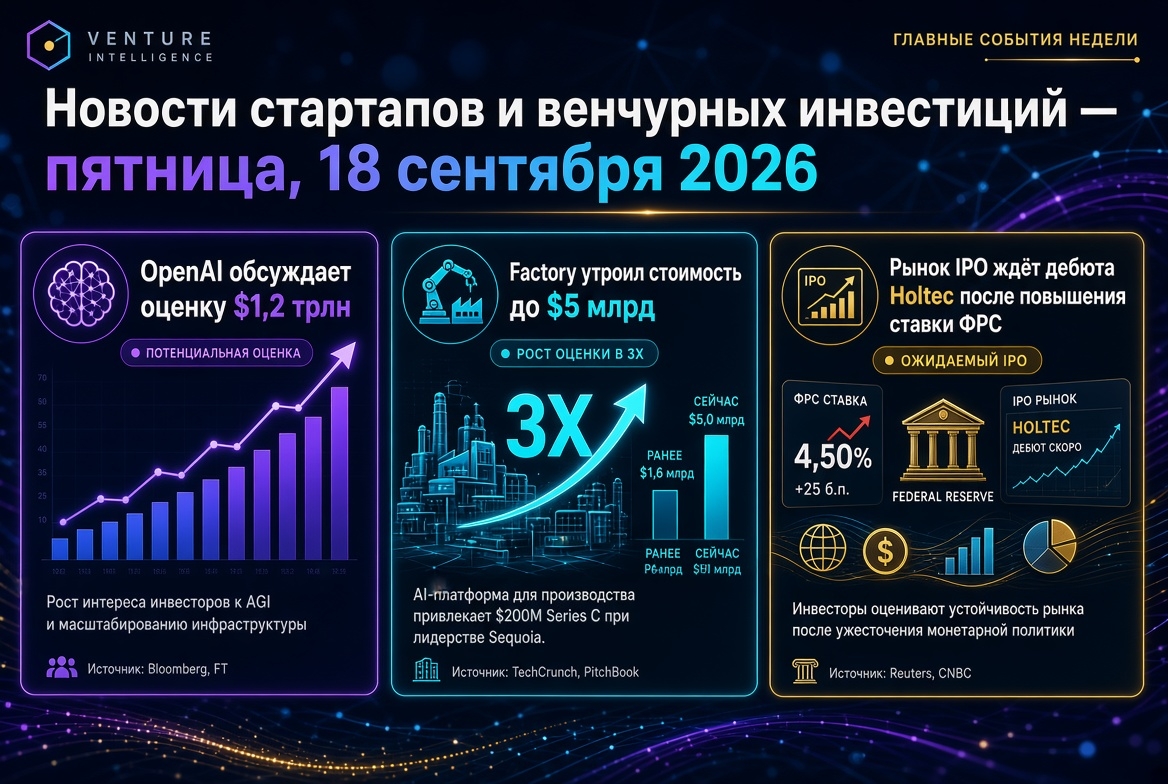
One of the most discussed topics in the global market is the renewed interest in IPOs. In various regions, there are growing signals that the exit window is starting to open: large listings are becoming more active in Asia, new technology company listings are being discussed in India, and several players in the US have already moved to confidential filing of documents.
However, it is important not to overestimate the scale of this turnaround. The IPO market remains selective. Public investors are willing to entertain stories with strong profitability, stable revenues, industry leadership, and a clear equity story. For most startups, this is not a mass opportunity but a narrow corridor for the best assets.
For venture funds, the practical takeaway is:
- the exit market is improving compared to 2023-2024;
- liquidity will first return to large and the most quality names;
- portfolio companies will need to demonstrate maturity sooner than anticipated.
Capital Geography Expands: India, Europe, and Asia Strengthen Their Positions
If previously the main logic of the global venture market revolved around the US—Silicon Valley axis, by 2026 the picture has become noticeably more multipolar. India is ramping up its IPO agenda and relaxing some investment restrictions to support deeptech and startups. Europe is enhancing regulatory initiatives aimed at simplifying company launches and increasing ecosystem competitiveness. Hong Kong and other Asian venues are also demonstrating a growing appetite for listings.
For global funds, this means that capital allocation must become more flexible. Today, startup and venture investment news can no longer be viewed solely through an American lens. Strong funds will have an advantage where they can quickly assess regional regulatory windows, local supply chains, and new liquidity centers.
What This Means for Investors and Funds Right Now
As of March 24, 2026, the startup market sends a clear signal to investors: the era of abundant and relatively cheap capital has ended, yet quality opportunities still exist. They are just now concentrated in a narrower set of themes and require greater discipline.
The most promising directions currently appear to be:
- AI infrastructure and applied corporate AI;
- deeptech with strong technological protection;
- robotics and physical AI;
- semiconductors and tools for chip manufacturing;
- legal, financial, and industrial vertical software platforms.
However, the key risk remains unchanged: overpaying for a theme. If in 2025 the market allowed premiums for belonging to AI, in 2026 funds will be more discerning in distinguishing between companies with a real moat and those merely leveraging trendy narratives to boost valuations.
The startup and venture investment news for Tuesday, March 24, 2026, illustrates a market that is both hot and more demanding. Capital is available, interest in technology companies is high, and the IPO window no longer appears closed. However, it is primarily the startups that combine strong technology, access to infrastructure, clear commercialization, and execution discipline that will win out.
For venture investors and funds, the main takeaway is straightforward: in 2026, it is no longer sufficient just to have exposure to startups. What matters is the precision of choice. The best part of the market today lies at the intersection of AI, deeptech, infrastructure, and well-prepared future exits. That’s where the next cycle of global venture profitability is being formed.