Current Startup and Venture Capital News as of January 17, 2026: Record AI Rounds, Launch of Mega Funds, Growth in Defense and Biotechnology Investments. An Overview for Venture Investors and Funds.
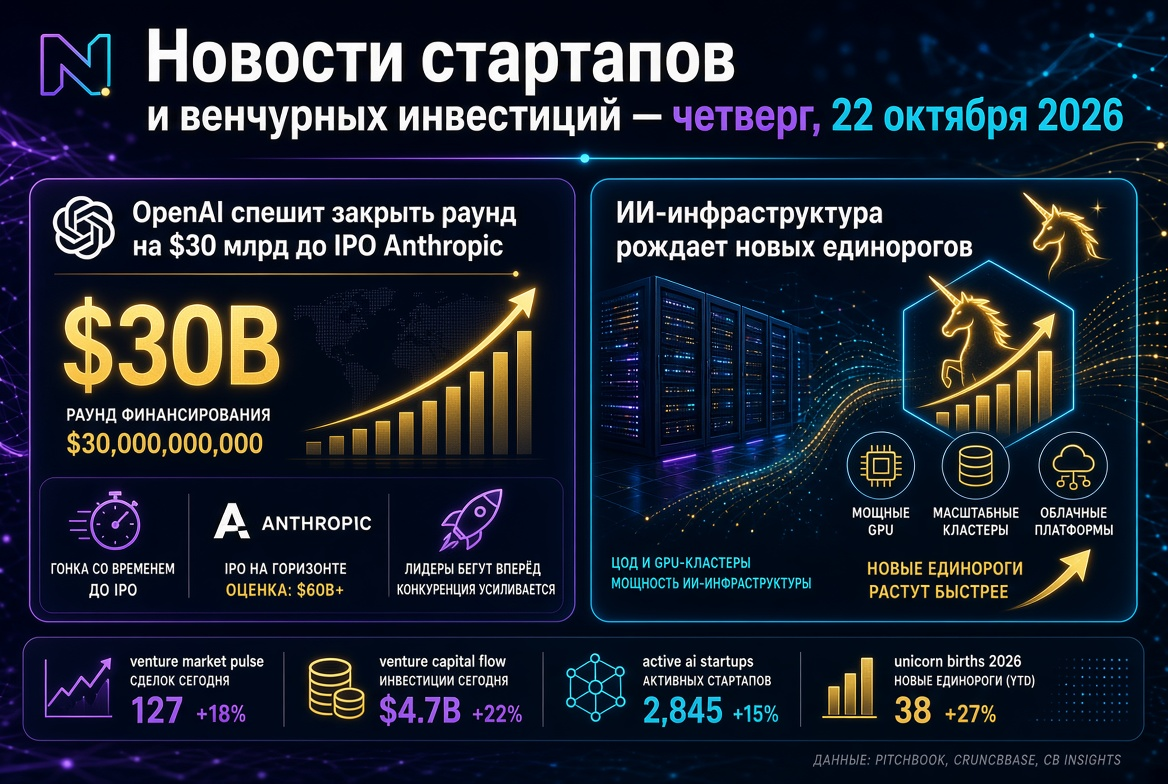
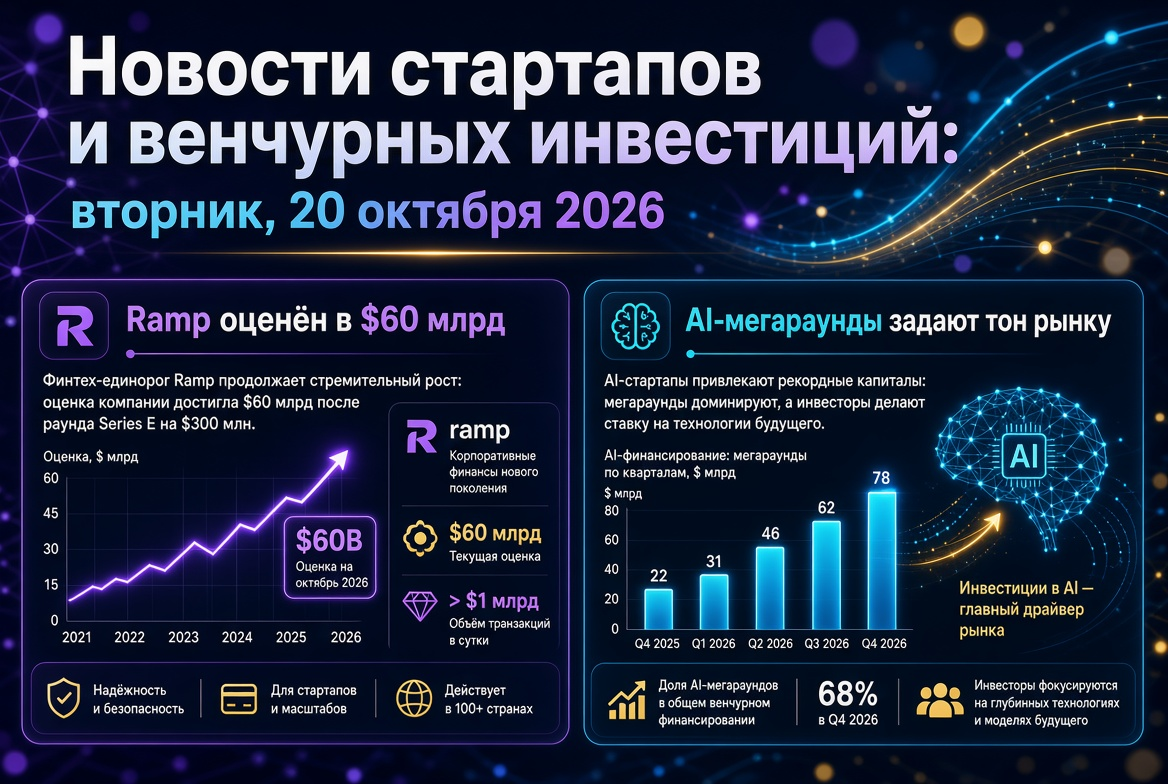
The world of startups and venture capital has kicked off 2026 with significant events. The major news of the week includes a record funding round of $20 billion for the AI startup xAI from Elon Musk, the launch of several new giant venture funds, and an increased focus from investors on defense technologies. These trends indicate that, despite market caution following a challenging past year, investors are ready to allocate substantial capital to cutting-edge sectors.
Record xAI Round Confirms AI Boom
The most notable news is that the startup xAI attracted a record-breaking $20 billion in its Series E funding round. Elon Musk's company significantly exceeded its initial fundraising target of $15 billion, securing backing from a consortium of major investors, including Qatar's sovereign fund. Strategic partners such as NVIDIA and Cisco will aid xAI in scaling its computational capabilities for training new models.
The funds raised will be directed towards the accelerated development and deployment of xAI's AI products, including advancing the next generation of the Grok model. The xAI round has become one of the largest in venture capital history, vividly demonstrating that the demand for AI projects remains huge, despite discussions of potential overheating in the industry.
Large Investments in AI Startups Continue
In addition to xAI, other AI startups also attracted significant investments this week:
- Skild AI: The Pittsburgh-based robotics and AI startup secured $1.4 billion in funding led by Japan's SoftBank Group, bringing its valuation to over $14 billion. The company is developing a universal "brain" for robots capable of managing various types of machines and adapting to changing conditions in real-time.
- Higgsfield: The San Francisco startup creating a generative video platform powered by AI raised $80 million at a valuation of approximately $1.3 billion. Higgsfield's product has already generated about $200 million in annual revenue, primarily serving social media marketers, indicating strong demand for AI content tools.
- LMArena: This California project focused on quality assessment of AI systems raised $150 million in a Series A round, valued at around $1.7 billion just months after its product launch. This surge reflects investor interest in infrastructure solutions within the AI ecosystem that enhance model reliability and efficiency.
These examples confirm that the investment boom in AI is not confined to a single player. Across the spectrum of AI startups—from robotics to content generation and model enhancement tools—the influx of venture capital remains at record highs.
New Mega Funds Demonstrate Investor Confidence
Major venture funds have also started the year with records. Andreessen Horowitz (a16z), one of Silicon Valley's giants, announced the raising of over $15 billion in new capital across five funds. This is the largest capital raise in a16z's history and one of the biggest in the industry. Among the new funds are $6.75 billion for late-stage startup growth investments, a dedicated $1.7 billion fund for AI infrastructure, and $1.12 billion for projects in strategic areas (defense, housing, logistics, etc.).
This "mega fund" from a16z is particularly noteworthy against the backdrop of a general decline in venture fundraising in 2025, when new fund volumes fell to a decade low. Nonetheless, the major players have proven capable of accumulating substantial capital even in challenging conditions. This indicates continued trust from limited partners (LPs) in leading venture firms. It is expected that a16z and other mega funds will allocate a significant portion of the raised capital to the most promising areas—primarily artificial intelligence, as well as national security and infrastructure-related projects.
Defense Technologies – A New Priority for the Venture Market
Technologies related to defense and security are coming to the forefront of investor interests. In the United States, there is a push to maintain technological superiority: part of a16z's new mega fund (the American Dynamism fund) focuses on defense, aerospace, cybersecurity, and related fields. Amid global competition with China, U.S. venture capitalists are ramping up support for dual-use startups.
Similar trends are manifesting in Europe. The German investment firm DTCP is gathering the largest venture fund in Europe aimed at defense startups, with a targeted volume of around €500 million. Initial anchor investors have already joined this fund. European countries are striving to strengthen their defense technologies, and the successes of several specialized startups are fueling market interest.
Examples of venture capital partnerships with industry in this sector are multiplying. California-based aerospace startup JetZero recently secured $175 million from a group of investors led by B Capital and Northrop Grumman. JetZero is developing an economical aircraft based on a "flying wing" design, capable of reducing fuel consumption by 30%, and has already secured a contract with the U.S. Air Force. Such deals illustrate how defense giants and industrial corporations are directly investing in innovations that align with strategic interests.
Biotechnology and Medicine Attracting Capital
The biotechnology and medical startup sectors also received a new influx of venture capital at the beginning of 2026. This week, several specialized funds in this area were announced:
- Bio & Health Fund from a16z: Out of the overall package of new funds from Andreessen Horowitz, $700 million is earmarked for biotech and healthcare. These funds will support U.S. startups developing drugs, medtech, and applying AI in biology, aiming to maintain the technological leadership of the U.S.
- Penn–BioNTech Fund: The German pharmaceutical company BioNTech, in collaboration with the University of Pennsylvania and partners, established a $50 million fund to support biotech startups in Pennsylvania. It will finance promising therapeutic methods and early-stage diagnostic technologies.
- Servier Ventures: The French pharmaceutical group Servier has created its own venture fund of €200 million intended for investments in European startups in the fields of oncology and neurology. This move reflects the desire of major pharmaceutical companies to complement internal R&D by financing external innovations in key areas.
These initiatives demonstrate sustained investor interest in biotechnology and medical research sectors, despite the difficulties of the past year. After a tough period when valuations of many biotech companies dropped, the market for medical innovations is once again attracting capital. Pharmaceutical companies and venture funds are ready to invest in new drugs and technologies, anticipating long-term returns.
Other Noteworthy Deals of the Week
In addition to the aforementioned significant events, several other interesting deals took place in the startup ecosystem:
- Type One Energy: The American fusion energy startup received $87 million in funding led by Breakthrough Energy Ventures. These funds will accelerate the development of a prototype fusion reactor that promises clean energy for the future.
- Project Eleven: A startup developing quantum-resistant cryptography attracted $20 million in a Series A round led by Castle Island Ventures. This demonstrates that even after a downturn in the crypto sector, innovative projects continue to secure funding.
- Diamond Kinetics: The Pittsburgh-based sports tech startup raised $12 million to develop its live-streaming platform for sports competitions. Even niche sectors like sports technology continue to attract venture funding if they demonstrate growth potential and audience monetization.
Trends and Forecasts: Cautious Optimism
The venture market enters 2026 with cautious optimism. Despite ongoing economic risks and high interest rates, investors are adapting to the new reality. The focus is now on the sustainability of business models and proximity to profitability—the era of growth “at any cost” is behind us, giving way to a drive for efficient capital allocation. Many funds are paying more attention to thorough project selection and careful assessment of startups.
The window for IPOs, which was nearly closed in 2022–2024, is beginning to open. Several successful public offerings occurred at the end of 2025, and in 2026, a number of unicorns are eyeing the public market under favorable conditions. It is also expected that M&A processes will activate in 2026—corporations with cash reserves are ready to acquire promising startups at more reasonable prices, providing investors with the long-awaited exits.
Overall, the global venture investment market will continue to develop unevenly. The U.S. and China will maintain their leadership positions, but Europe, India, the Middle East, and other regions are also building their startup ecosystems. The year 2026 promises new challenges and opportunities for the industry. The first weeks of the year are already showing that the venture community is ready for the next stage of development.