Global Startup and Venture Capital News for Tuesday, February 10, 2026: Mega Rounds in AI, the Return of Mega Funds, IPO Activity, and Key Deals in the Global Venture Market.
As we enter 2026, the global venture capital market is advancing on the wave of a confident recovery following the downturn in previous years. 2025 was one of the record years in terms of startup funding (only surpassed by the peak years of 2021-2022), signaling that the lull is behind us. Investors worldwide are once again actively financing technology projects—multibillion-dollar deals are being struck, and IPO plans for promising companies are taking center stage. Major players are returning to the market with substantial sums, while states and corporations are ramping up their support for innovation. Consequently, private capital is flowing forcefully back into the startup ecosystem, fueling its growth at all stages.
Venture activity is on the rise across all regions. The USA, and particularly Silicon Valley, remains the leader (primarily due to the AI sector). The Middle East has witnessed a historic surge: in 2025, the region's startups attracted approximately $3.8 billion (+74% compared to the previous year) due to an influx of international capital, primarily into Saudi Arabia and the UAE. In Europe, venture capital investments remain at a high level. Emerging markets are also experiencing a revival: India has already surpassed China in venture investments, while Southeast Asia and Gulf countries are showing an upward trend against a relative decline in China. The startup ecosystems in Russia and the CIS are striving to keep pace by launching local funds and support programs despite external constraints. A new global venture boom is forming, even though investors continue to act selectively and cautiously, mindful of the lessons learned from the recent market correction.
- The return of mega funds and large investors. Top venture players are raising record-sized funds and sharply increasing investments, saturating the market with capital and heating up risk appetite.
- Record rounds in AI and new "unicorns." Unprecedentedly large deals are elevating startup valuations to unseen heights, especially in the artificial intelligence segment.
- Revitalization of the IPO market. Successful public offerings of tech companies and new filing applications confirm that the long-awaited "window" for exits has reopened.
- Diversification of industry focus. Venture capital is directed not only towards AI but also towards fintech, environmental projects, biotechnology, defense developments, and even crypto startups.
- A wave of consolidation and M&A deals. Major mergers, acquisitions, and strategic investments are reshaping the industry landscape, creating opportunities for exits and accelerated growth.
- Local focus: Russia and the CIS. Despite constraints, new funds and initiatives for developing local startup ecosystems are being launched in the region, attracting investor attention.
The Return of Mega Funds: Big Money Back in the Market
The largest investment players are once again stepping onto the venture stage—a clear sign of the return of risk appetite. The American fund Andreessen Horowitz kicked off 2026 with the announcement of new funds totaling approximately $15 billion (including a multibillion-dollar growth fund). Lightspeed attracted roughly $9 billion at the end of 2025—another indicator of the return of big money to the industry. Sovereign funds from Gulf countries are also ramping up their activities: they are pouring tens of billions of dollars into technology projects and implementing large-scale startup sector development programs in the Middle East. Renowned Silicon Valley firms have amassed unprecedented reserves of uninvested capital (“dry powder”)—hundreds of billions of dollars ready for deployment as confidence returns to the market. The influx of "big money" is filling the startup market with liquidity, providing resources for new rounds and supporting the valuations of promising companies. The return of mega funds and large institutional investors not only intensifies competition for the best deals but also instills confidence in the industry for continued capital inflows.
Record Investments in AI and a New Wave of "Unicorns"
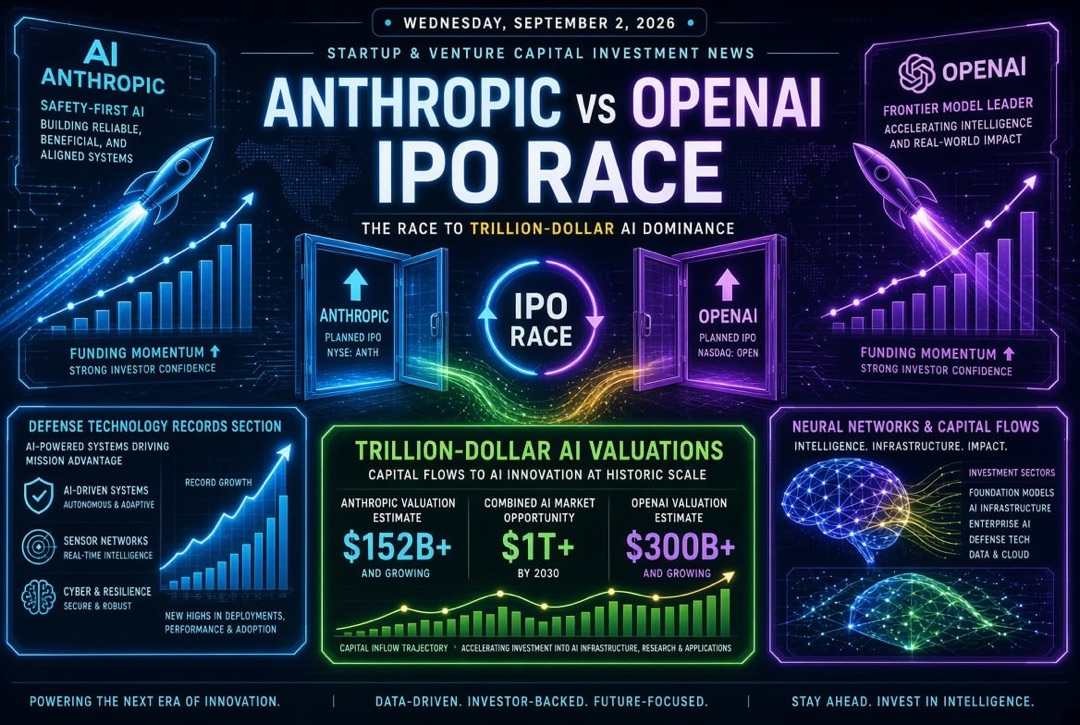
The artificial intelligence sector remains the key driver of the current venture surge, demonstrating record funding volumes. Investors are eager to position themselves in leading AI sector companies, directing colossal resources towards the most promising projects. For instance, OpenAI attracted around $40 billion in investments in 2025 (the company's valuation approached $800 billion) and, according to insiders, is discussing a new round of up to $100 billion—amounts previously unimaginable for a startup. Another AI developer, Anthropic, is negotiating to raise up to $20 billion at a valuation of around $350 billion. Notably, venture investments are directed not only towards end-user AI applications but also towards the infrastructure supporting them. The market is willing to finance even the "shovels and picks" for the new AI ecosystem—rumors suggest that one data storage startup has been negotiating a multibillion-dollar round at a very high valuation. The current investment boom is giving rise to a new wave of "unicorns"—companies with valuations exceeding $1 billion. Although experts warn of the risk of overheating, investor appetite for AI startups remains strong.
IPO Market Gaining Momentum: A Window of Opportunity for Exits
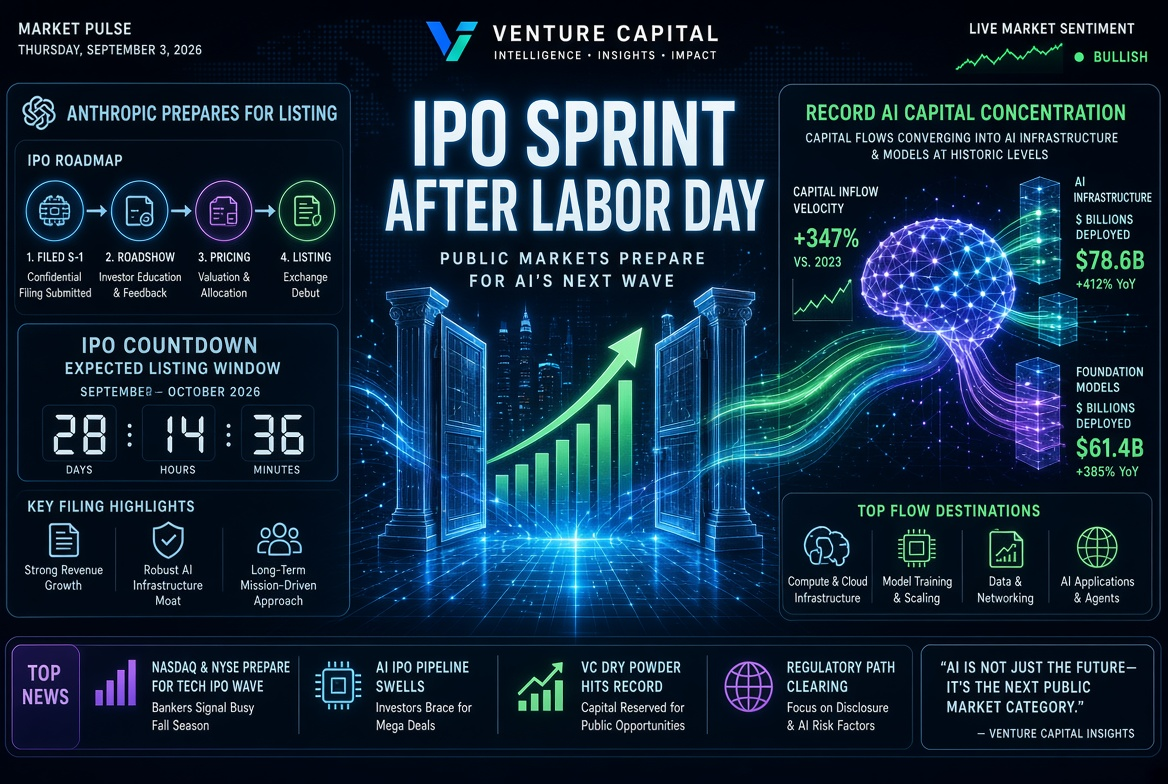
The global initial public offering (IPO) market is beginning to revive after a lull. The year 2025 proved fruitful: in the USA, 23 companies with valuations above $1 billion went public (only 9 such debuts occurred in 2024), and the total capitalization of these IPOs exceeded $125 billion, more than double that of the previous year. In Asia, Hong Kong initiated a new wave of placements, where several large tech companies collectively raised billions of dollars on the stock exchange. In the USA, for example, fintech unicorn Chime gained approximately 30% on its first trading day post-IPO. The resurgence of activity in the IPO market is critically important for the venture ecosystem: successful public exits allow funds to lock in profits and redirect freed-up capital into new projects. Experts expect that the IPO momentum will carry into 2026. Companies demonstrating profitability and the potential for growth through AI are seen as particularly strong candidates for successful offerings. Potential IPO candidates include both major fintech players and outstanding AI companies. Should macro conditions remain favorable, 2026 could bring a new wave of high-profile tech IPOs.
Diversification of Investments: Not Just AI
Venture funding now encompasses an increasingly broad range of industries and no longer solely focuses on AI. After the downturn of 2022-2023, fintech is reviving: significant funding rounds are occurring not only in the USA but also in Europe and emerging markets. Global fintech investments grew by approximately 27% over the year, returning to pre-COVID levels. Simultaneously, interest in climate and "green" technologies, as well as agritech, is increasing—these segments are attracting record investments amid the sustainable development trend. In biotechnology, capital inflow is again evident as new promising developments emerge. Security and defense projects are showing notable growth—investors are actively financing defense technologies amid increased attention to geopolitical and cyber security (in 2025, around $8.5 billion was invested in defense tech, more than double that of the previous year). Partial recovery of trust in the cryptocurrency market has allowed some blockchain startups to attract funding again. The expansion of industry focus makes the startup ecosystem more resilient and reduces the risk of overheating in individual segments.
Consolidation and M&A Deals: Scaling Up the Players
High valuations of startups and fierce market competition are pushing the industry towards consolidation. Major mergers and acquisitions are once again coming to the forefront, reshaping the power dynamics. For example, Google has agreed to acquire the Israeli cybersecurity startup Wiz for approximately $32 billion—a record sum for the Israeli tech sector and one of the largest venture deals in history. These mega-deals reflect the willingness of tech giants to acquire key technologies and talents. Overall, the activation of M&A activity indicates market maturation. Mature startups are either merging with one another or becoming acquisition targets for large corporations, and venture funds are finally getting the chance for long-awaited profitable exits. The revival of the IPO market further stimulates this process—examples of successful public offerings set valuation benchmarks and encourage strategic investors to bolder acquire promising teams.
Russia and the CIS: Local Initiatives Amid Global Trends
Despite external constraints, new steps are being taken in Russia and neighboring countries to develop the startup ecosystem. In 2025-2026, several new venture funds totaling about 10-15 billion rubles have been announced, aimed at supporting early-stage projects. FRII has lifted revenue thresholds and is prepared to invest up to 35 million rubles at the earliest stages, filling the gap of seed capital. Some local startups have already attracted hundreds of millions of rubles from Russian investors, and authorities have once again allowed foreign funds to invest in local tech companies (this gradually restores interest from foreign capital). Although the volumes of venture investments in the region remain modest compared to global levels, they are steadily growing. Large companies are also engaging in innovations—for example, Rosselkhozbank launched its own venture studio to pilot agri- and fintech startups. Such initiatives are expected to provide a new impetus to the local market and integrate it into global trends.
Overall, the venture market is entering 2026 with cautious optimism. Capital is returning to innovations, but investors are placing special emphasis on quality and sustainable growth.