Global Startup and Venture Capital News for Wednesday, February 4, 2026: Major Investment Rounds, Deals in AI and Deep Tech, Venture Fund Activity, and Key Trends in the Global VC Market.
The global startup and venture capital market continues to gain momentum at the beginning of 2026. Following a downturn in previous years, private capital is once again actively flowing into technology companies worldwide, record deals are being struck, and anticipated public offerings are re-emerging on the agenda. Leading investors are stepping up with new massive funds, governments are bolstering support for innovation, and optimism is returning to the startup ecosystem. At the same time, competition is intensifying — both venture giants and new players are vying for the best projects, fueling further market growth.
Venture activity is increasing across all regions. The US maintains its leadership (especially due to the AI investment boom), the Middle East has seen a dramatic increase in investments fueled by generous infusions from sovereign funds, Europe is experiencing a resurgence in deals (with Germany surpassing the UK in the number of venture investments for the first time), and record rounds are being recorded in India and Southeast Asia amid a relative slowdown in China. The startup ecosystems in Russia and neighboring countries are striving to keep up with global trends by launching local funds and support programs, although their market volumes remain modest for now. Overall, 2026 is opening with a new venture upswing, but investors remain cautious, meticulously evaluating risks and the potential of startups, and focusing on the quality of business.
- The return of mega funds and large investors. Leading venture firms are raising unprecedentedly large funds and sharply increasing investments, refilling the market with capital and reigniting appetite for risk.
- Unprecedented AI mega rounds and a wave of new "unicorns." Unusually large investments in artificial intelligence are driving valuations of startups to historic highs, leading to the emergence of many new unicorn companies.
- Revival of the IPO market: a race for technology companies to go public. Successful public offerings of tech leaders and announced IPO plans confirm that the "window of opportunity" for exits has reopened.
- Diversification of investments across sectors. Venture capital is increasingly directed not only towards AI but also to fintech, climate tech, biotech, defense, crypto, and other promising fields.
- A wave of consolidation and M&A deals. Significant mergers, acquisitions, and strategic investments are reshaping the industry landscape, creating new opportunities for exits and accelerated growth for startups.
- Local focus: Russia and the CIS. Despite external constraints, the region is witnessing the emergence of new funds and initiatives to support local startups, gradually attracting investor interest towards regional projects.
The Return of Mega Funds: Big Money Back in the Market
The largest investment players are triumphantly returning to the venture market, signaling a new rise in risk appetite. Global funds are announcing unprecedented capital raising rounds: for instance, Japan's SoftBank launched its third Vision Fund, amounting to around $40 billion, focusing on advanced technologies, while American firm Andreessen Horowitz (a16z) raised over $15 billion for new funds targeting AI, defense, and other key areas in less than two years after its previous round. Others are not far behind: Lightspeed Venture Partners closed funds totaling over $9 billion - a record figure in the firm’s 25-year history. Even Tiger Global, recovering from recent setbacks, is back on the market with a new fund of approximately $2.2 billion, reaffirming its ambitions.
Sovereign investors are also becoming more active: Middle Eastern sovereign funds are pouring billions into tech projects and launching large-scale initiatives to develop startup ecosystems. For example, in 2025, the volume of venture investments in the Gulf countries increased by about 74% – Saudi Arabia, the UAE, and Qatar are creating regional tech hubs, investing oil dollars into innovation. Concurrently, new venture funds – both corporate and public-private – are emerging worldwide, targeted at supporting promising startups.
The influx of such "big capital" is filling the market with liquidity and heightening competition for the most lucrative deals. For startups, this means broader access to financing, and for the industry as a whole – a return of trust: the presence of hundreds of billions of dollars in "dry powder" signals investor confidence in the continued growth of the tech sector.
Unprecedented AI Mega Rounds and New Unicorns
The artificial intelligence sector remains the primary driver of the current venture uplift, setting historical records for deal volumes. Investors are eager to secure their positions at the forefront of the AI revolution, ready to finance colossal rounds to support the leaders in the race. In the early weeks of 2026, unprecedented-scale deals have already been announced: OpenAI (the creator of ChatGPT) is negotiating a new funding round of up to $100 billion at a valuation of around $800 billion—such private fundraising is unprecedented in history. SoftBank is expected to contribute significantly (up to $30 billion) to this mega round, and the participation of corporations like Nvidia, Microsoft, and Amazon, along with Middle Eastern funds like the Abu Dhabi Investment Authority and MGX, is also under discussion.
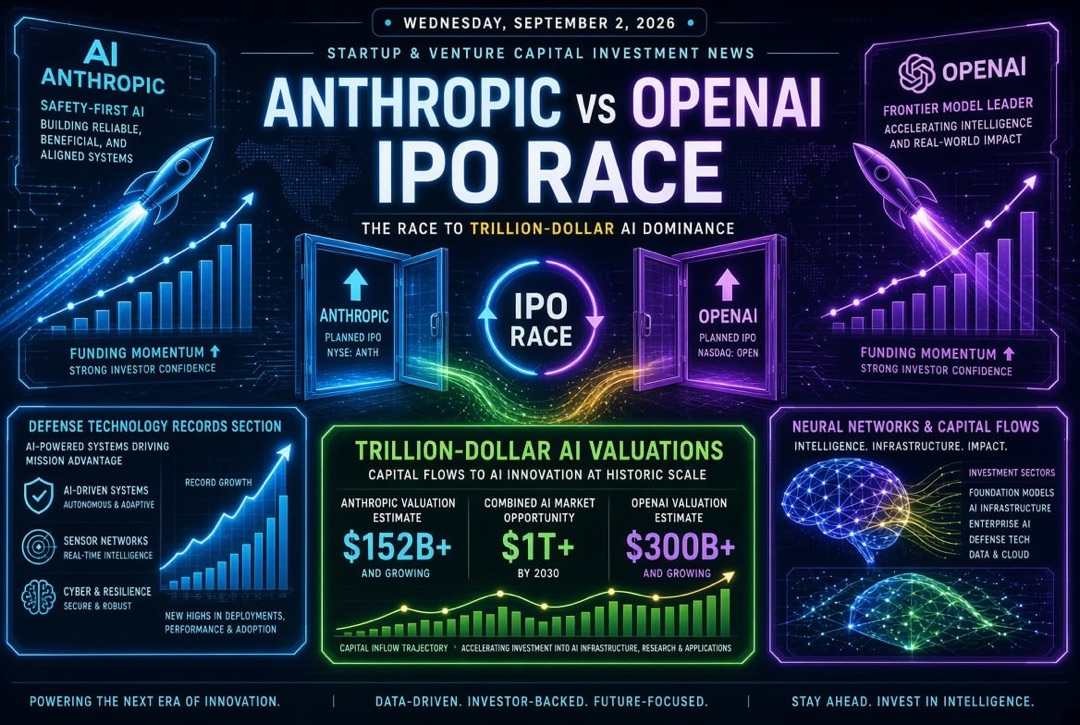
OpenAI’s biggest competitor, startup Anthropic, is likewise attracting unprecedented capital: it’s currently receiving up to $15 billion at a valuation of about $350 billion, striving to keep pace in the race. Thus, both leading AI companies are effectively competing for the title of the most valuable startup in history, paving the way for a new wave of unicorns. In the excitement, other ambitious projects are also finding investors: precedents are emerging where even at the seed stage, startups attract hundreds of millions of dollars (for example, in the US, the lab Humans&, founded by Big Tech veterans, secured $480 million in seed investments—a record figure for an initial round).
These colossal inflows are rapidly expanding the "unicorn" club. In just the past few months, dozens of companies globally have surpassed a valuation of $1 billion—particularly numerous new unicorns are appearing in generative AI, cloud services, and defense technology sectors. Although experts warn of overheating and inflated expectations risks, the appetite for AI investments remains unyielding. Moreover, venture capitalists are increasingly financing not only applied AI products but also the infrastructure for them—from powerful chips and data centers to security and regulatory tools. This investment boom is generally stimulating progress in the industry but requires market participants to closely monitor the sustainability of business models to prevent euphoria from giving way to abrupt cooling.
The IPO Market Comes Alive: The Race for Large Startups to Go Public
After a prolonged lull in the global IPO market, movement is once again emerging. Successful public debuts of tech companies at the end of 2025 demonstrated that the window of opportunity for going public has reopened. In Asia, Hong Kong is leading the charge, where several large startups have recently raised billions through IPOs—investors in the region are once again ready to participate in offerings. The situation in the US and Europe is also improving: American fintech unicorn Chime successfully went public on Nasdaq in January 2026 (with shares rising approximately 40% on its first day), and shortly prior, the much-anticipated IPO of payment service Stripe renewed faith in public markets.
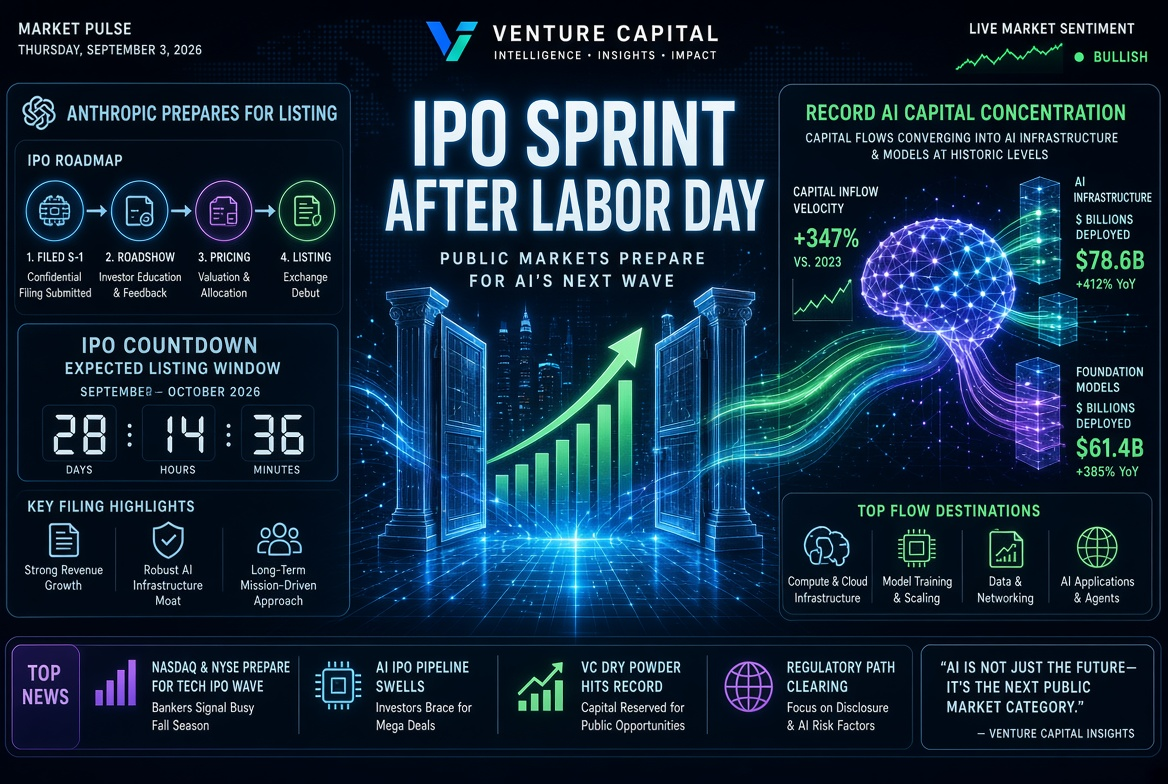
Now, even larger listings are on the horizon. Elon Musk's aerospace company SpaceX is officially planning an IPO in mid-2026, with ambitions to raise up to $50 billion at a valuation of around $1.5 trillion—if realized, SpaceX's listing will become the largest in history, nearly doubling the record set by Saudi Aramco ($29 billion in 2019). Additionally, AI race leaders are keen to capitalize on the current window: OpenAI and Anthropic are reported to be seriously preparing for a public offering by the end of 2026, with OpenAI striving to outpace its rival. Rumors suggest that before the IPO, Elon Musk may merge his AI startup xAI with SpaceX to strengthen positions ahead of the public listing.
The revival of IPO market activity is of immense significance for the venture ecosystem. Successful offerings return capital to investors, allowing funds to secure profitable exits and reallocate resources into new projects. Given that "quick" exits through acquisitions have been fewer in past years, the long-awaited opportunity to take a startup public is a welcome prospect for all market participants. Of course, investors remain selective—the public only sees the most mature and promising companies—but the very fact that tech unicorns are once again ready to go public instills cautious optimism in the industry. If external conditions remain favorable, 2026 could be a record year for the number and volume of tech IPOs.
Diversification of Investments: Fintech, Climate, Biotech, and Beyond
While artificial intelligence leads among trends, venture capitalists in 2026 are actively broadening their sector focus, decreasing market dependency on a single sector. Following explosive growth in AI investments, interest in other areas is on the rise again:
- Fintech: The return of large rounds in financial technology projects worldwide—from the US and Europe to India and Africa. Banking services, payment platforms, and business solutions are once again attracting significant capital.
- Climate Technology: Record investments in green energy, energy storage, agri-tech, and sustainable development projects in the wake of a global focus on ecology.
- Biotech and Healthcare: A new influx of funds into biotech startups, med-tech, and digital health amid scientific breakthroughs and lessons learned from the pandemic—investors are returning to the sector in search of long-term growth.
- Defense and Space Technologies: Increased funding for startups related to national security, aerospace technology, drones, and cybersecurity—especially considering government priorities and geopolitical challenges.
- Crypto Industry: A gradual revival of interest in blockchain projects, cryptocurrency-based fintech, and Web3 as the digital asset market stabilizes and new regulatory frameworks are developed.
Thus, the venture market at the beginning of 2026 is characterized by broad capital distribution across various niches. Funds are searching for growth points not only in AI but also in finance, climate, medicine, defense, and other areas. This multi-sectoral approach makes the startup ecosystem more resilient and reduces the risk of "bubbles" in any one segment.
Consolidation and M&A Deals: Market Consolidation
High valuations for startups and fierce competition for technological leadership are leading to a new wave of consolidation. Large corporations and mature unicorns are increasingly acquiring promising teams or merging with them to accelerate growth and acquire critical technologies. Several multi-billion-dollar deals have already been announced, reshaping the balance of power in the industry. For instance, Google has agreed to acquire Israeli cybersecurity startup Wiz for approximately $32 billion – the largest acquisition of a startup in the industry’s history. In January, American bank Capital One announced its acquisition of fintech platform Brex for $5.15 billion, marking one of the most significant M&A transactions in the fintech sector. Not to be outdone, Apple is strengthening its position in AI by acquiring the AI developer for wearable devices Q.ai for about $1.6 billion (Apple’s largest purchase in the last decade).
These acquisitions demonstrate that even market leaders are willing to spend tens of billions of dollars to maintain competitive advantages in new technological races. The wave of M&A is changing the landscape: fast-growing startups are getting the chance to scale under the wings of large corporations, and venture investors are seeing much-anticipated exits and capital returns. Consolidation increases industry efficiency, allowing combined players to compete better globally. However, some analysts caution that if valuations remain inflated, excessive consolidation could stifle innovation—hence in 2026 deals, participants are striving to find a balance between rapid growth and maintaining the entrepreneurial spirit of startups.
Russia and the CIS: Local Initiatives Amid Global Trends
Despite external constraints, the venture ecosystem in Russia and CIS countries is also showing signs of revival, trying to follow global trends. Several new funds have been announced in the region, totaling about 10-12 billion rubles, aimed at supporting early-stage tech projects. Major banks and corporations are joining in on the initiatives, creating accelerators and venture divisions. Development institutions (like the Skolkovo Foundation) are expanding grant and co-investment programs, partially compensating for the outflow of Western capital.
Local startups are beginning to attract more substantial funding. A notable example is the Krasnodar-based food tech service Qummy, which secured around 440 million rubles in investments at a valuation of about 2.4 billion rubles, while Moscow-based company Motorica (a developer of high-tech prosthetics) raised over 800 million rubles from a private investor. Furthermore, authorities have officially allowed investors from "friendly" countries to once again invest in Russian startups, gradually restoring foreign capital's interest in the region. While the absolute volumes of venture investments in Russia and the CIS are still modest compared to Silicon Valley or China, they are steadily growing. Local investors are focusing on sectors that are in demand under current conditions: artificial intelligence, import-substituting technologies, cybersecurity, and industrial B2B services. Thus, the local market is attempting to leverage the global upswing, laying the foundation for future growth even amid constraints.
Conclusions: Cautious Optimism in the Venture Industry
The rapid start to 2026 is generating a sense of cautious optimism among market participants. On one hand, record funding rounds, the return of mega funds, and the emergence of successful IPOs signal that the worst period of decline is behind us and the venture market has transitioned to growth. On the other hand, the lessons of recent years compel investors to proceed with caution: capital is still allocated selectively, and startups need proof of viability and effective monetization. The presence of vast reserves of "dry powder" (funds ready for investment) also carries the risk of overheating if money is invested without due analysis.
Overall, the industry is entering a new phase of development, focusing on quality growth. The main beneficiaries are startups that can combine innovation with sustainable business models. Venture funds are paying increased attention to portfolio diversification and risk management in order to prevent the new upswing from repeating the mistakes of the previous bubble. As the macroeconomic situation stabilizes, interest rates approach their peaks, and geopolitical uncertainty gradually diminishes, appetite for risk may strengthen. If these conditions persist, 2026 promises to be a time of opportunity: strong teams with breakthrough ideas and thoughtful strategies now have a chance to attract capital and elevate their businesses to new heights. The venture market looks forward with cautious optimism, hoping for further revitalization while adhering to principles of sustainability and discipline.