Global Energy Sector on 23 May 2026: Oil, Gas, LNG, Refineries, Refined Products, Electricity, Renewables and Coal Amid High Volatility, Geopolitical Risks and Rising Energy Demand
The global energy sector is approaching Saturday, 23 May 2026, in a state of heightened uncertainty. For investors, energy market participants, fuel companies, oil companies, refinery operators and traders, the key theme remains not only the price of oil but also the resilience of the entire supply chain: from extraction and maritime logistics to processing, refined product exports, LNG supplies, electricity generation, the coal market and the development of renewables.
The main factor of the day is the ongoing impact of the Middle East crisis and constraints in the Strait of Hormuz region. The oil market has already adapted to the shock through lower demand, a reallocation of flows and active use of inventories, but the balance remains fragile. For the global energy sector, this means that even short-term news about diplomacy, shipments, inventories or refinery activity can sharply shift expectations for oil, gas, refined product and electricity prices.
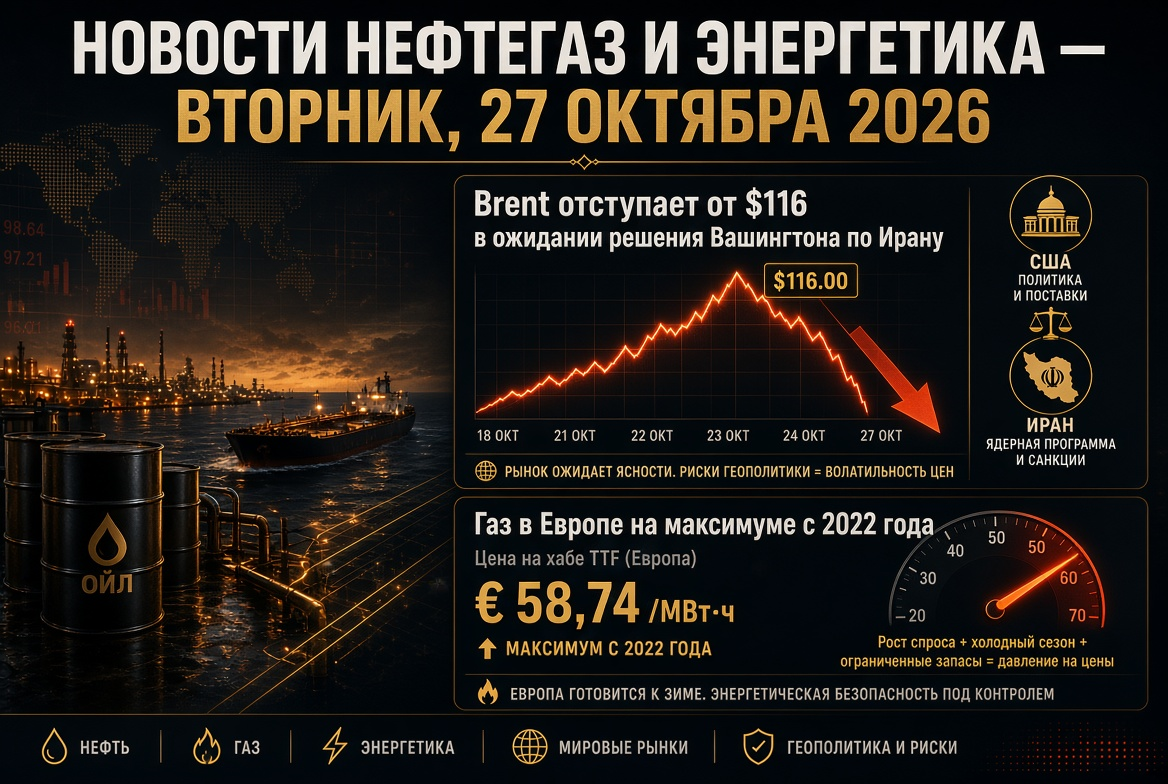
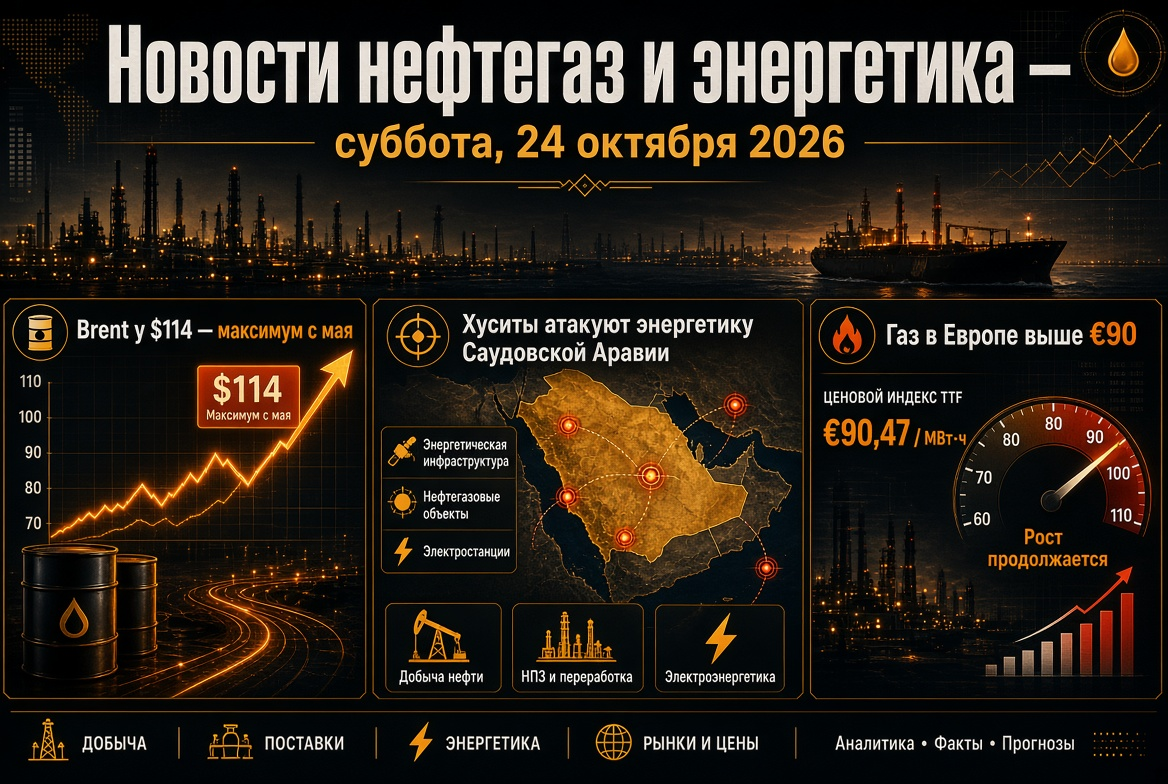
Oil: Brent remains in focus due to supply deficit and Hormuz risks
The oil market retains a geopolitical risk premium. Brent is holding at elevated levels as market participants assess the likelihood of a return to normal shipping through the Strait of Hormuz and the return of Middle Eastern barrels to the global market. For oil companies and investors, this creates a dual picture: high prices support cash flows from upstream assets, but simultaneously weigh on demand, refining margins and final fuel consumption.
A key feature of the current moment is that the oil market no longer reacts solely to the fact of the disruption itself. It is assessing the speed of supply recovery, the state of commercial inventories, exports from the Atlantic Basin and the behaviour of Asian refineries. If supply recovery is slow, global oil may stay expensive for longer than consumers expect. If diplomatic progress accelerates, Brent could come under downward pressure, but the inventory deficit will limit the scale of the decline.
Oil and refined product inventories: the market enters the summer season with a thin safety cushion
Data from the US market shows the oil balance remains tight. US commercial crude oil inventories have declined, petrol inventories are also below average levels, and distillates, despite a slight increase, are still in deficit territory relative to historical norms. This matters for the global market because the US has become a key balancing supplier of oil, petrol, diesel, jet fuel, LNG and other energy commodities.
For fuel companies and refineries, three indicators are particularly important in the coming days:
- the trajectory of crude oil inventories ahead of peak summer demand;
- refinery utilisation rates;
- the balance for petrol, diesel and jet fuel.
If demand for refined products continues to grow while feedstock supplies remain constrained, refining margins may stay elevated. This benefits some refineries but creates inflationary pressure for the transport sector, industry and end consumers.
Refineries and refined products: processing is becoming the main bottleneck in the energy market
In 2026, refining has become one of the most sensitive segments of the global energy sector. Feedstock shortages, infrastructure damage, export constraints and changes in trade routes mean the refined products market may be more strained than the crude oil market. For investors, this means increased attention to companies with access to stable feedstock, flexible logistics and deep conversion capacity.
Middle distillates are especially critical: diesel, gas oil and jet fuel. These products are directly linked to freight transport, aviation, agriculture, mining and industry. If the distillate deficit persists, the energy shock could extend beyond the oil market and amplify pressure on global inflation.
Gas and LNG: Asia and Europe compete for flexible supply
The gas market remains divided into regional zones. US natural gas production remains relatively strong, but global LNG prices are high due to constraints on Middle Eastern flows and competition between Asia and Europe. For LNG buyers, the key question is not only price but also physical cargo availability, delivery route and the reliability of export infrastructure.
For energy companies and industrial consumers, this situation creates several consequences:
- Asian importers are seeking to secure additional LNG volumes;
- European buyers must factor in the risk of more costly storage refills;
- US LNG exporters gain a pricing advantage on the global market;
- countries with high dependence on imported gas are increasing interest in coal, renewables and energy storage.
As a result, the gas market is becoming a central element of global energy security. Even with rising US supply, rapid commissioning of new LNG capacity is constrained by long investment cycles.
Electricity: demand grows due to data centres, industry and heat
The global electricity sector is entering a period of structural demand growth. Electrification of transport, expansion of data centres, artificial intelligence, industrial automation and cooling systems are increasing the load on grids. For investors in the energy sector, this shifts the logic of asset valuation: not only generation but also networks, storage, demand flexibility and access to low-cost capacity are playing a growing role.
Rising electricity consumption underscores the importance of three areas:
- gas-fired generation as a balancing source;
- solar and wind power as sources of new capacity;
- energy storage and grid infrastructure as tools for system resilience.
For electricity companies, this opens investment opportunities but also raises capital expenditure. The market increasingly values not just megawatts of installed capacity but a company's ability to ensure reliable supply during peak demand hours.
Renewables and storage: the energy transition becomes a matter of security, not just climate
Solar power, wind generation and energy storage systems are gaining additional momentum amid fossil fuel instability. Renewables are no longer viewed solely as a climate tool. For many countries, they are a way to reduce dependence on imported oil, gas, coal and refined products.
Interest in long-duration energy storage is growing particularly fast. Large-scale battery projects, including solutions for data centres and industrial zones, are becoming part of the new energy infrastructure. In an environment of gas and LNG volatility, storage helps smooth demand peaks, integrate renewables and reduce grid congestion risks.
For investors, this means that in 2026 the energy transition should not be seen as a separate 'green' theme but as part of an overall energy security strategy. Companies that combine generation, storage, digital load management and long-term contracts with consumers have a more resilient business model.
Coal: the market regains support from gas risks and Asian demand
The coal market remains contradictory. Over the long term, many countries aim to reduce the share of coal in their energy mix, but in the short term coal is again becoming a backup tool for energy security. Constraints in the LNG market, expensive gas and supply disruption risks are prompting a number of Asian consumers to look more closely at thermal coal.
Particular attention is focused on Indonesia, which plays a key role in global thermal coal trade. Any changes in Indonesia's export regulation, pricing or logistics can affect Japan, South Korea, China, India and other importing countries. For coal companies, this creates potential price support, but for the electricity sector it raises the risk of higher costs.
What matters for investors and energy companies on 23 May 2026
Saturday's agenda in oil, gas and energy shows that the global energy sector is in a phase of simultaneous commodity, infrastructure and technological transformation. Oil remains expensive due to geopolitics and inventories, the gas market depends on LNG and supply routes, refineries operate under challenging margins, electricity is becoming more costly due to demand growth, and renewables and storage are becoming elements of strategic resilience.
Investors, energy market participants, fuel companies and oil companies should monitor the following in coming days:
- news on the Strait of Hormuz and diplomatic negotiations;
- movements in Brent, WTI and crude spreads;
- inventories of petrol, diesel and jet fuel;
- refinery utilisation and changes in refining margins;
- LNG prices in Asia and Europe;
- decisions on Indonesian coal exports;
- growth in electricity demand from data centres and industry;
- investment in renewables, energy storage and grid infrastructure.
Conclusion: the energy market becomes more expensive, complex and strategic
The main takeaway for 23 May 2026 is that the global energy market no longer operates within a single-commodity logic. Oil, gas, electricity, renewables, coal, refined products and refineries have become part of an integrated system where a disruption in one segment quickly transmits to another. An oil deficit affects refining, expensive LNG supports coal and renewables, data centre growth transforms electricity markets, and logistics becomes as critical as extraction.
For investors, this creates a market with high volatility but also numerous opportunities. The most resilient companies are those with access to feedstock, flexible logistics, strong processing capacity, export channels, electricity network assets, renewable projects and energy storage solutions. In 2026, energy is definitively no longer just a commodity industry—it is an industry of infrastructure, security and capital-intensive technological solutions.