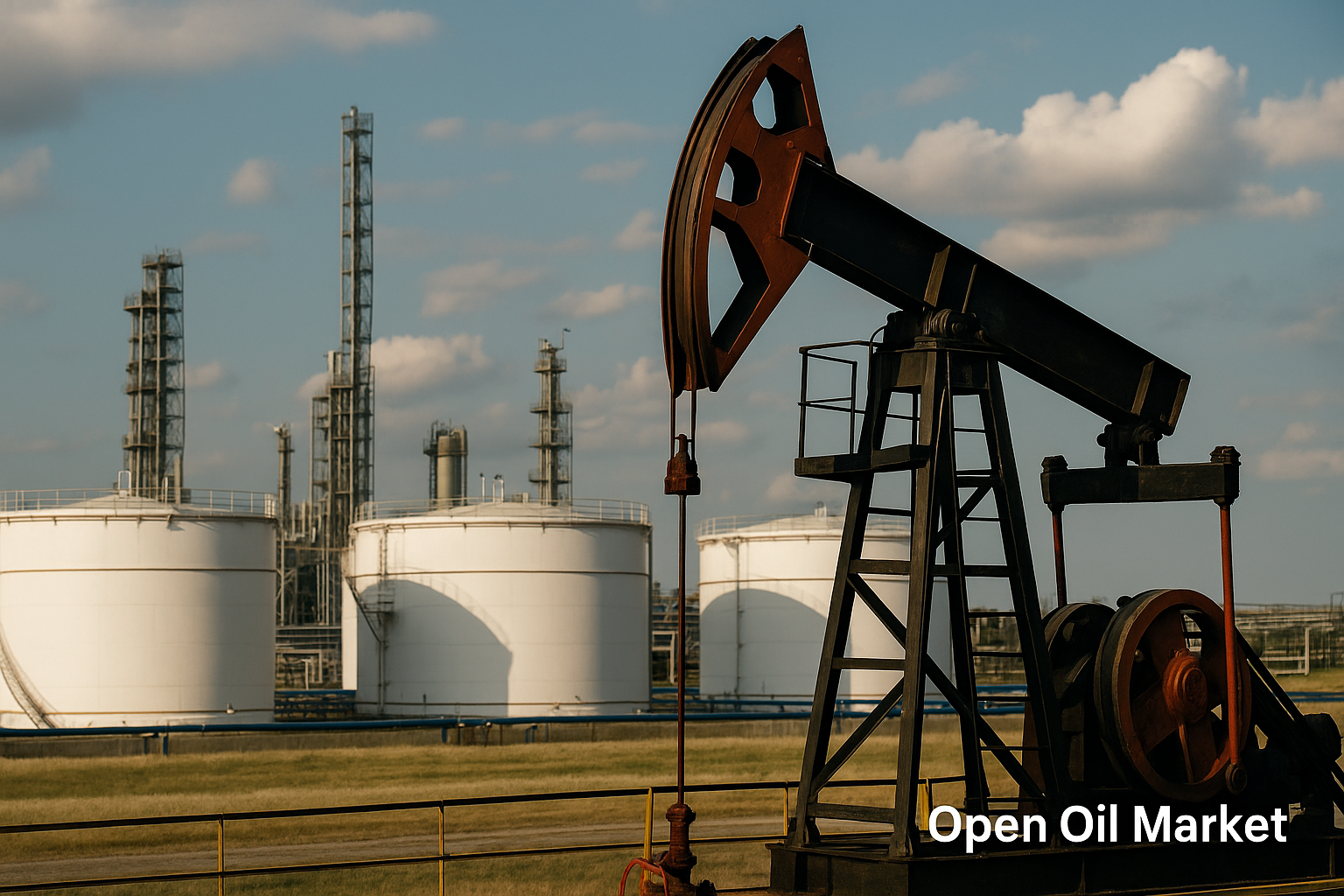
Current News in the Oil, Gas, and Energy Sector as of December 13, 2025: Oil and Gas Dynamics, Global Energy, Sanctions, Exports, Renewables, Coal, and Key Trends in the Global Fuel and Energy Complex. Analytical Review for Investors and Industry Participants.
Global Oil Market: Supply Surplus and Cautious Demand Limit Price Growth
Global oil prices stabilized at relatively low levels towards the end of the year: Brent trades around $60 per barrel, and WTI hovers around $58. Recent signals regarding a potential easing of the U.S. Federal Reserve's monetary policy have provided a slight boost to prices; however, in general, oil has decreased by approximately 15% since the beginning of 2025 amid the threat of an oversupply with moderate demand growth. The Organization of the Petroleum Exporting Countries and its allies (OPEC+) are adhering to a cautious production management strategy. At the December meeting, the alliance extended current quotas at least until the end of Q1 2026. OPEC+ continues to hold significant production capacity in reserve (around 3 million barrels per day) to prevent price crashes. With Brent around $60, cartel representatives emphasize market stabilization as a priority over the desire to immediately increase exports, considering the likelihood of weakened demand in the future.
Multiple key factors influence oil price dynamics:
- Demand. Global oil consumption is growing significantly slower than in previous years. Demand increase in 2025 is estimated at less than 1 million barrels per day (compared to approximately +2.5 million in 2023). Economic downturns and energy-saving measures following a period of high prices, combined with a slowdown in industrial growth in China, constrain consumption growth.
- Supply. OPEC+ countries ramped up production in the first half of 2025 as previous restrictions were eased; however, the threat of market oversaturation now restrains plans for further production increases. The decision to maintain production cuts at the beginning of 2026 reflects the coalition's readiness to prevent surplus: agreement participants can quickly adjust exports if prices decline.
- Geopolitics. The war in Ukraine and sanctions against major oil-producing countries (Russia, Iran, Venezuela) continue to restrict supply and support prices. No new significant shocks have occurred; rather, signals for dialogue are emerging (e.g., proposals from the U.S. and Turkey for negotiations), which somewhat reduces the "risk premium." As a result, the oil market remains within a relatively narrow price corridor without sharp jumps.
Global Gas and LNG Market: Stability in Europe and Increasing Supply
The situation in the gas market at the end of 2025 is relatively calm— a stark contrast to the frenzy of two years ago. The European Union is entering winter without signs of gas shortages: EU underground storage is over 70% full, significantly above the average for December. Gas prices in Europe (TTF hub) are holding around €30 per MWh, an order of magnitude lower than the peaks of 2022. The falling volumes of Russian pipeline gas are almost fully compensated by record LNG imports from alternative sources, with terminals actively receiving fuel from the U.S., Qatar, Norway, and other countries.
Global LNG supply continues to grow due to new capacity coming online. In the U.S., significant export terminals are launching (e.g., Golden Pass in the Gulf of Mexico), solidifying America's position as a leading supplier. Qatar, as part of its North Field expansion, plans to increase LNG output to 126 million tons per year by 2027, contracting substantial volumes for buyers in Europe and Asia. New projects are commencing operations in other regions (Australia, Africa), intensifying competition in the liquefied gas market.
At the same time, demand for gas is growing at moderate rates. In Asia, some importers are even redirecting excess purchased batches to the spot market due to a temporary weakening of domestic consumption. Overall, the expansion of supply and restrained demand keep global gas prices at relatively low levels. However, the weather factor remains critical: in the event of abnormal cold spells or supply disruptions in winter, brief price spikes may occur. The base scenario suggests price stability due to comfortable fuel reserves.
Geopolitics and Sanctions: West’s Hardline Stance and Search for Compromise
The standoff between Russia and the West over energy resources continues, although attempts at dialogue have emerged by the end of the year. G7 and EU countries maintain a hardline sanctions approach: there is an embargo on Russian oil, export restrictions on petroleum products, a price cap has been instituted, and financial sanctions complicate trading energy resources from Russia. Moreover, discussions are ongoing regarding new restrictions in early 2026— allies intend to close remaining loopholes and are ready to escalate pressures if the armed conflict persists.
Concurrently, the European Union is taking steps towards full independence from Russian fuel. On December 10, ambassadors from EU countries approved a plan to legislatively abandon energy carriers from Russia by the end of 2027— ceasing purchases of natural gas (including LNG), oil, and petroleum products. In Brussels, this step is regarded as the beginning of a new era meant to liberate European energy from reliance on Russian fuel permanently. The break with Russia is being formalized at the legislative level and stimulates the development of alternatives—from increasing LNG imports to accelerating the deployment of renewable energy sources. Moscow criticized the EU strategy, pointing out that replacing cheap Russian gas with more expensive imports will increase costs for Europe. Nonetheless, Brussels demonstrates determination to pay that price for geopolitical objectives; several countries (for example, Hungary) have already promised to challenge the ban on Russian gas in court, but the overall European course remains unwavering.
The U.S., according to media reports, has proposed to allies a plan for the gradual reintegration of Russia into the global economy following a peaceful resolution— including lifting sanctions and resuming Russian energy exports to Europe. However, EU leadership views such initiatives with caution, excluding any easing of its position without substantial progress in the Ukraine situation. Against this backdrop, diplomatic signals for compromise are intensifying. U.S. President Donald Trump stated on December 12 that he was "close to a deal" with Moscow and Kyiv for conflict resolution— marking the first hint at a potential peace agreement that could, in the future, alleviate some energy sanctions. Turkey has also offered its mediation: Recep Tayyip Erdoğan confirmed, during a meeting in Ashgabat, the readiness to host negotiations between Russia and Ukraine in any format. Although there are no concrete agreements yet, such statements nurture hope for a future relaxation of sanction pressures impacting the sector.
Russia Reorients to Asian Markets
Facing the loss of Western markets, Russia is increasing energy resource exports to Asia. China has become a key buyer: back in late August, the first batch of liquefied gas from the new “Arctic LNG-2” plant was shipped to the PRC. In autumn, Russian LNG supplies to China grew at double-digit rates— Beijing is actively increasing its fuel purchases at a discount of 30-40%, ignoring Western sanction pressures. The energy partnership between Moscow and Beijing is strengthening, providing Russia with alternative outlets while offering China cheap raw materials for its economy.
India is also remaining one of the largest importers of Russian hydrocarbons. Following the introduction of European oil embargo, Indian refineries notably increased purchases of Russian Urals oil and other varieties at reduced prices. Russian leadership assured partners of its readiness to provide India with stable volumes of oil and petroleum products. Cheap raw materials from Russia help meet India's rapidly growing demand and contain domestic fuel prices, although New Delhi is trying to avoid a critical dependence on a single supplier.
To solidify the "eastern pivot," Russia is developing its export infrastructure. A project for a new gas pipeline, "Power of Siberia-2," is being discussed, which will traverse Mongolia to China and significantly increase gas supplies to Asia. Simultaneously, Russia is establishing its own tanker fleet for delivering oil to markets in India, China, and Southeast Asia, thereby reducing reliance on Western shipping companies and insurers. These steps aim to make the reorientation of energy flows to the East irreversible and decrease Russia's dependence on the European market. Concurrently, Russia is strengthening ties with Middle Eastern partners. During a meeting in Ashgabat, President Vladimir Putin discussed gas and electricity cooperation with Iranian President Masoud Pezeshkian. Work is also underway on strategic projects, such as the Bushehr nuclear power plant in Iran, as well as the development of the international transport corridor “North-South.” Such cooperation enhances Russia's integration into Eastern and Southern energy chains, partially compensating for the severing of ties with Europe.
Kazakhstan: Transit Risks and New Routes
The military conflict in Ukraine affects energy resource export routes. In early December, a drone attack damaged the marine terminal of the Caspian Pipeline Consortium (CPC) near Novorossiysk, through which Kazakhstan exports oil. Although shipments of Kazakh oil did not halt fully, Astana decided to accelerate route diversification. The Kazakh government announced it would redirect some oil from the giant Kashagan field to China and is considering increasing supplies via the Caspian Sea ports to reduce reliance on the traditional route through Russian territory.
To strengthen energy security, Kazakhstan also plans to build a new oil refinery (ORP) with foreign investment participation. Expanding domestic capacities for producing petroleum products will allow the country to reduce fuel imports and enhance the resilience of the oil and gas sector against external shocks.
Renewable Energy and Climate: Progress and Temporary Setbacks
The global energy transition continues to accelerate, although international climate agreements are stagnating. At the UN COP30 conference (November 2025, Belém, Brazil), a stringent plan to phase out fossil fuels could not be adopted— several major oil and gas exporters blocked the EU initiative for specific timelines for gradually ceasing production. The final agreement is a compromise, shifting the focus to financing climate adaptation and general goals for emission reductions without clear deadlines for abandoning oil, gas, and coal.
Despite the absence of new commitments, leading economies are practically increasing investments in "green" energy. The year 2025 became a record for new solar and wind power plants being brought online in many countries. China, India, the U.S., the European Union, and others are actively investing in renewable energy, storage systems, and hydrogen technologies, striving to reduce dependence on hydrocarbons.
In the short term, there are also temporary setbacks from the course of decarbonization. High natural gas prices in 2025 forced several states to increase coal burning for electricity generation to successfully pass through the winter season— global demand for coal remains high. Experts consider this step to be a temporary measure. As the share of renewable energy sources rises and energy storage technologies improve, the consumption of coal and other fossil resources will revert to a decline. Thus, the long-term trend toward a transition to clean energy remains, albeit with some delays along the way.
Forecasts: Early 2026
Analysts expect that in the first quarter of 2026, oil prices will come under moderate downward pressure due to high inventories and supply outpacing demand growth. In the absence of new shocks, the average Brent price could drop to the range of $55–60 per barrel. At the same time, geopolitical factors can sharply alter the pricing landscape: escalation of the conflict in Ukraine, introduction of new sanctions, and crises in key oil-producing regions (Middle East, Latin America) may induce significant price fluctuations.
For the gas market, weather will remain a determining factor. If winter in the Northern Hemisphere is mild and fuel reserves are sufficient, European gas prices will remain low. However, a few weeks of abnormal cold can rapidly deplete underground storage and provoke price spikes. Furthermore, competition between Europe and Asia for LNG may intensify if economic growth in Asian countries exceeds expectations.
Participants in the fuel and energy sector in 2026 will need to adapt to new conditions. Supply diversification, energy efficiency improvements, and innovation implementation (including the development of renewable energy sources and carbon capture technologies) will be essential for business resilience. The departing year 2025 vividly demonstrated the close interconnection between economics, politics, and ecology in shaping prices for oil, gas, and electricity. In 2026, this interconnection is likely to strengthen: the global market will balance between oversupply and deficit risks, while the global community and regulators will strive to reconcile energy security objectives with climate goals.