Key Trends in the Global Oil, Gas, Electricity, and Refining Markets, March 30, 2026: Oil Above $110, Tight LNG Market, Refinery Margins on the Rise, and Enhanced Energy Security
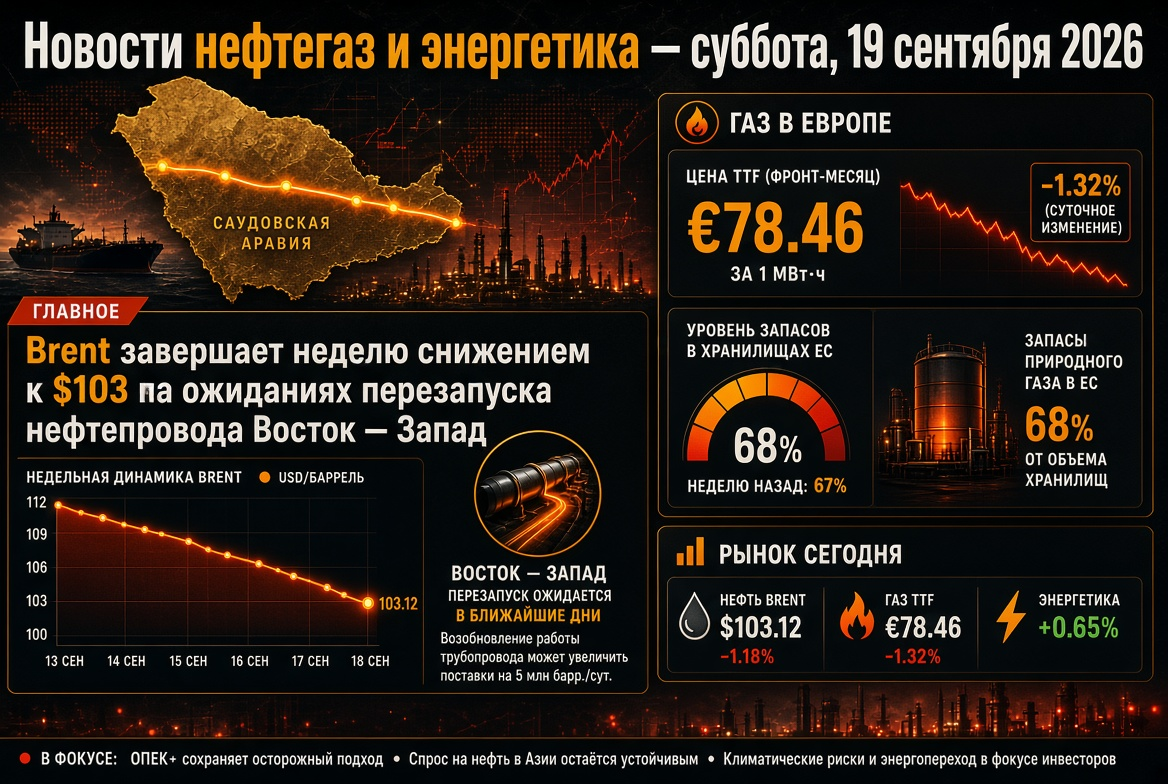
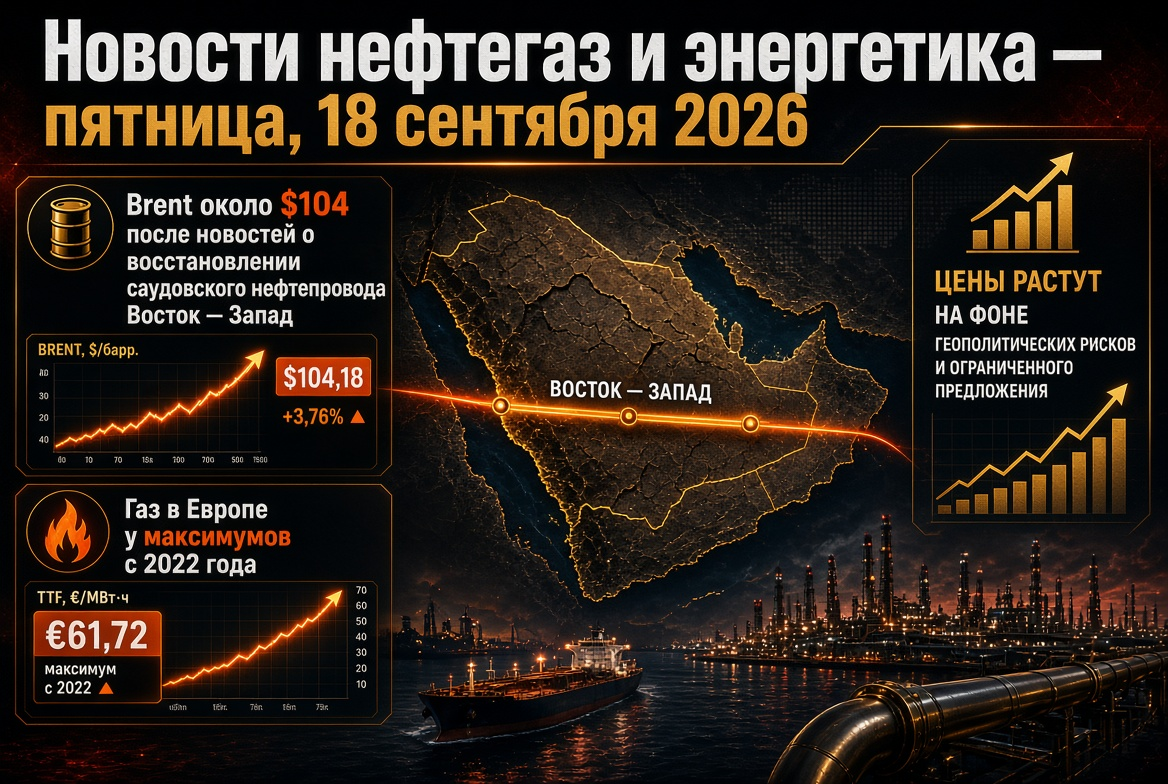
The oil market is finishing March in a state where fundamental indicators have once again yielded to geopolitics. For oil and petroleum products, not only supply and demand balances but also supply route stability, export security from the Persian Gulf, and the ability of producers to quickly compensate for disruptions are critical at this time.
- Brent is holding close to multi-month highs following a sharp rise throughout March.
- The market is pricing in the risk of supply disruptions for crude and refined products.
- Even moderate positive signals have not yet alleviated high volatility.
For investors, this means that the oil and gas sectors at the start of the week will remain sensitive to any news regarding supplies, exports, and the condition of transportation infrastructure. It is crucial for oil companies and traders to not only consider the absolute price level but also the stability of differentials between grades, as well as premiums in the physical market.
OPEC+ Increases Production, but the Market Focuses on Barrel Availability Rather than Volume
Formally, the market has received a signal of additional supply: OPEC+ is increasing production from April. However, this step has not become a decisive factor in stabilizing the global oil market. The reason is simple: in the context of heightened geopolitical tension, investors assess not the nominal production volume but the actual availability of export flows, routes, and tanker logistics.
- Additional barrels alone do not guarantee a quick normalization of the market.
- The risk premium remains higher than in a typical cyclical phase.
- Exporting countries are striving to reconfigure supplies and utilize alternative routes.
As a result, even OPEC+ decisions are perceived by the market more as stabilizing factors than as game-changers. For the oil and petroleum sector, this means that the importance of commercial stocks, export schedules, and logistical flexibility remains high.
Gas and LNG: The Market Remains Tight, and Asia and Europe Compete Again for Volumes
In the gas market, LNG remains the primary driver. Any risks to major export hubs immediately intensify competition between Europe and Asia for available cargoes. The focus is on supply flexibility, spot volumes, and the ability of importers to quickly substitute the loss of resources.
The following processes currently characterize the global gas market:
- Buyers are eager to secure volumes in advance;
- Asian consumers are actively competing for flexible cargoes;
- The European market remains dependent on imported gas and LNG;
- Price sensitivity in the industrial sector is back in the spotlight.
For gas companies and players in the energy sector, this serves as an important signal: in the short term, the gas market remains not only expensive but structurally nervous. This fosters interest in long-term contracts, self-production, pipeline gas, and the development of storage infrastructure.
Refineries and Petroleum Products: Refining Enters a Period of Increased Profitability
The current situation for refining appears more favorable compared to many fuel consumers. Restrictions in raw material and petroleum product supplies, as well as outages at specific capacities, are enhancing margins. Refineries are once again in the spotlight, as they become the link between expensive oil and the final fuel market.
Key implications for the petroleum products and refinery market include:
- Refining margins remain elevated;
- Diesel, gasoline, and jet fuel supplies are of particular importance;
- Any unplanned refinery outages exacerbate local shortages and price spikes;
- Companies with stable capacity utilization gain an operational advantage.
For fuel companies and refining operators, this is an environment where discipline, reliability of supply, and access to raw materials prevail. For investors, the downstream segment is once again emerging as one of the most attractive in the global energy sector.
Electricity: Expensive Gas Again Impacts Prices in Energy Systems
The electricity market is increasingly responding to rising gas prices. In those regions where gas-fired plants set prices in the wholesale market, the increased cost of fuel is quickly passed on to industrial consumers and end-users. This is particularly sensitive for Europe, where energy security and import prices remain strategic themes.
On Monday, it will be essential to monitor several developments in electricity:
- Industrial consumers' reactions to high energy costs;
- Further discussions on the design of the electricity market;
- Support measures for consumers and energy-intensive industries;
- Development speed of grid infrastructure and backup capacity.
For the electricity sector, this is not only a question of current tariffs but also of the long-term architecture of the market. The longer tension persists in the gas market, the greater the interest in diversifying generation sources and reducing reliance on imported fuel.
Renewable Energy and the Energy Transition: High Interest Persists, But Investors Are Cautious
Renewable energy is receiving mixed signals. On one hand, high oil and gas prices bolster the arguments for expediting the energy transition. On the other, high volatility, rising capital costs, and challenges with permitting processes make new projects financially more complicated.
The following picture is emerging for the renewable energy segment:
- Energy security makes solar and wind generation strategically more appealing;
- New projects face pressure from financing costs;
- Grid constraints and approval timelines continue to hinder the commissioning of capacities;
- Existing assets appear more resilient than early-stage projects.
For investors, this implies a need to adopt a more selective approach toward companies in the renewable energy sector. Priority will be given to projects with clear economics, ready access to the grid, and robust contractual models.
Coal: An Old Energy Source Receives Tactical Support Again
The coal market is not the main beneficiary of the current situation; however, rising gas and LNG prices are again increasing interest in certain grades of coal, particularly where they can replace gas in electricity generation. This is especially relevant for countries where the energy system needs rapid and inexpensive backup.
It is important to understand that this is not a complete reversal in the energy transition but rather a pragmatic tactic. In the short term, coal remains a tool for stabilizing energy supply, particularly in price-sensitive economies. For coal companies, this supports demand, but without guaranteeing long-term structural growth.
What This Means for Investors and Participants in the Energy Sector on March 30
At the start of a new week, the global energy sector remains a market of heightened selectivity. Rising oil prices, a tight gas market, strong refining performance, increasing electricity prices, and an ambiguous backdrop for renewable energy create not a singular trend but a collection of diverse opportunities and risks.
Key takeaways for Monday, March 30, 2026:
- Oil and gas retain a geopolitical premium in pricing;
- Gas and LNG remain vulnerable to supply disruptions and logistical issues;
- Refineries and the petroleum product market are supported by strong margins;
- Electricity and energy security once again become key issues for authorities and businesses;
- Renewable energy strategically benefits, but new projects require careful selection;
- Coal remains a tactical reserve in the context of expensive gas.
Thus, news in the oil, gas, and energy sectors for tomorrow provides a clear signal for the global energy sector: focus remains on supply resilience, refining efficiency, electricity pricing, and companies’ readiness to adapt to a new wave of raw material and energy turbulence. For investors, oil and fuel companies, participants in the oil, gas, electricity, renewable energy, coal, and petroleum markets, this indicates that March 30 will be marked by increased attention to risks, logistics, and operational execution quality.