Global Energy Market on July 8, 2026: Oil Awaits EIA's US Inventory Report, Strait of Hormuz Returns Geopolitical Premium, While Gas, LNG, Refineries, Oil Products, Electricity, Renewables and Coal Remain in Investors’ Focus
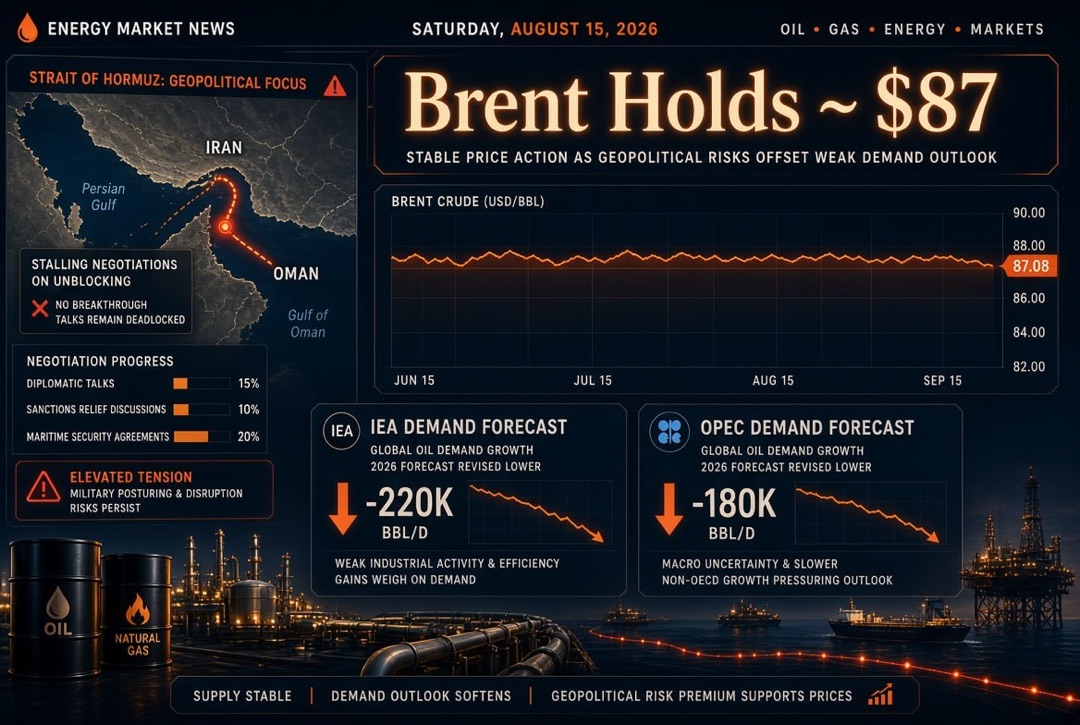
The global fuel and energy sector enters Wednesday, July 8, 2026, under heightened volatility. The main topic of the day is the return of a geopolitical premium in oil prices following attacks on vessels in the Strait of Hormuz, a vital corridor for a significant portion of global oil, LNG, and oil product trade. For investors, oil companies, energy market participants, traders, refineries, and fuel companies, this transition from a calm surplus scenario to a more nervous market implies that logistics are once again becoming a price factor.
The highlight on July 8 will be the US Department of Energy's EIA weekly inventory report on oil and oil products, set to release at 17:30 Moscow time. The data on commercial inventories of crude oil, gasoline, distillates, refinery utilization, and imports will indicate how resilient demand is in the world's largest economy during the peak summer fuel consumption season.
Oil: Hormuz Returns Risk Premium
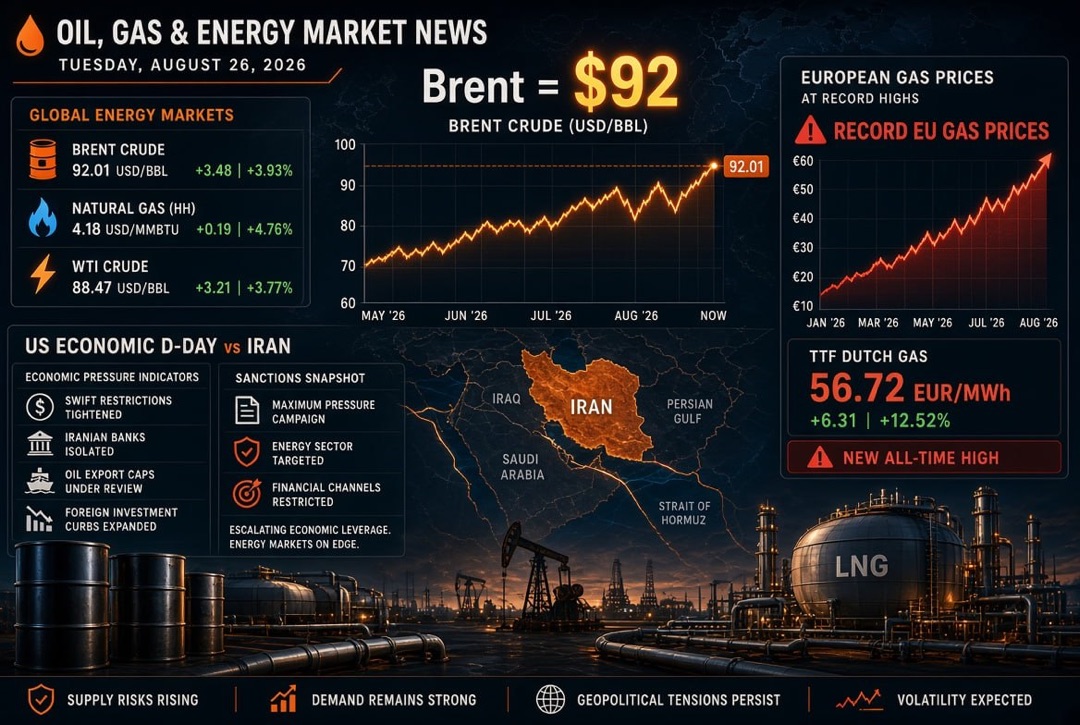
The oil market is once again responding not only to the fundamental balance of supply and demand but also to geopolitical events. Brent remains anchored near the $70–75 per barrel range, while WTI hovers around $68–71 per barrel. For global investors, this serves as an important signal: even with expectations of increased supply from OPEC+ and a gradual restoration of shipments from the Middle East, the market is not ready to entirely disregard the risk of transportation disruptions.
Key factors for the oil market on July 8 include:
- attacks on tankers in the Strait of Hormuz heightened shipping and insurance risks;
- the partial recovery of flows from the Persian Gulf has not yet returned the market to pre-crisis norms;
- investors are appraising the likelihood of further supply disruptions for oil, LNG, and petroleum products;
- the demand from China and India remains a key indicator for assessing the stability of Brent and WTI.
For oil companies, the current situation creates a dual effect: on one hand, rising prices support cash flows in the upstream segment; on the other, unstable logistics, insurance premiums, and the risk of sanctions complicate export routes.
EIA: The Key Macro Indicator for Oil and Petroleum Products
The EIA report on US oil inventories will be a pivotal event for the commodity market. Investors will focus not only on the total volume of commercial crude oil stocks but also on the structure of petroleum products. Gasoline and distillates are particularly significant, as they reflect the actual state of consumer and industrial demand.
Four data blocks are critical for the energy market:
- Crude Oil Stocks. A decrease in inventories will support Brent and WTI; an increase will intensify discussions about oversupply.
- Gasoline Stocks. In the US summer season, this indicator directly affects refinery margins and fuel prices.
- Distillates. Diesel remains a sensitive indicator of industrial activity, freight transport, and global commerce.
- Refinery Utilization. High utilization confirms strong demand for refining; low levels may indicate weakness in petroleum products.
Should the EIA report indicate simultaneous reductions in crude oil and petroleum product inventories, the market could gain fresh upward momentum. Conversely, if inventories rise, attention will swiftly shift to the risk of oversupply in the latter half of 2026.
OPEC+: Rising Quotas and Supply Dilemma
OPEC+ continues to gradually restore production to the market. The decision to increase quotas further from August reinforces expectations that global oil may shift from a deficit to a more balanced or even surplus scenario in the second half of 2026. However, the real impact hinges on how quickly Persian Gulf countries can restore their export routes and reduce their reliance on the Strait of Hormuz.
It is essential for investors to distinguish between two levels of analysis:
- Paper Quotas — a formal decision to increase output;
- Actual Deliveries — the real volumes of oil reaching the global market, taking into account logistics, sanctions, and insurance.
The current gap between quotas and the physical availability of crude is stabilizing the market, preventing a sharp decline despite expectations of increased supply.
Gas and LNG: Europe Prepares for Winter Amid High Security Costs
The gas market remains one of the most sensitive segments of the global energy landscape. The European TTF trades at a higher range compared to the previous year, as the market factors in the risk of LNG supply delays, competition with Asia, and the need for rapid gas storage capacities ahead of winter.
Germany is considering establishing a strategic gas reserve, signaling Europe’s new approach to energy security. Following the crises of recent years, gas has transcended its status as merely an industrial and power generation feedstock—now regarded as a component of national resilience.
For the global LNG market, this entails:
- increased competition between Europe and Asia for flexible LNG cargoes;
- support for long-term contracts and regasification infrastructure;
- the enduring significant role of Qatar, the USA, and Australia in the global gas trade;
- greater price sensitivity to any disruptions in the Persian Gulf.
Refineries and Oil Products: Refining Becomes the Weak Link in the Energy Market
The cessation of operations at a major refinery in Russia following drone attacks has intensified scrutiny on the vulnerabilities of oil refining. For the global market, this is significant not just as a local factor but as part of a broader trend: shortages of specific oil products can persist even amidst adequate supplies of crude oil.
Refineries remain a critical link between production and end consumers. If refining activities are disrupted, the market can face shortages in gasoline, diesel, aviation fuel, and fuel oil regardless of the volume of crude extracted. Consequently, on Wednesday, investors will closely monitor refining margins, diesel exports, and distillate inventory dynamics in the US.
For fuel companies and petroleum product traders, this means an increased focus on logistics, inventory management, and contractual discipline. The market is increasingly assessing not only the price of oil but also the availability of specific products in particular regions.
Electricity: Data Centers and AI Reshape Demand Structure
Power generation is emerging as a central component of the energy sector. The growth of data centers, artificial intelligence, and the electrification of transport and industry drives a rise in electricity demand across the USA, Europe, China, India, and the Middle East.
The US is expected to continue breaking energy consumption records in 2026–2027. The primary driver is the commercial sector, including data centers, cloud computing, and digital infrastructure. This alters investment logic: energy companies, grid operators, equipment manufacturers, and gas suppliers are gaining a new source of long-term demand.
For investors, three areas are particularly interesting:
- the construction of gas generation as a backup power source;
- the modernization of grids and energy storage systems;
- the rise in demand for renewables in regions with high data center loads.
Renewables and Energy Transition: Growth Continues Without Abandoning Gas
Renewable energy continues to expand its share in the global energy balance. Solar and wind generation remain the fastest-growing segments of power generation, especially in China, the USA, Europe, India, and the Middle East. However, developments in 2026 indicate that the energy transition is increasingly viewed not as a substitute for traditional energy but as its complement.
Renewables assist in reducing dependence on imported fuels but necessitate backup capacities, storage systems, flexible grids, and balancing generation. Consequently, gas retains its role as a transitional fuel, while coal remains an essential source of baseload electricity in several Asian countries.
For the stock market, this creates a balanced investment outlook: interest persists in both oil and gas companies with strong cash flows and companies focused on renewables, grid infrastructure, storage solutions, and electrical equipment.
Coal: Asia Supports Demand While Europe Reduces Dependence
The coal market remains regionally heterogeneous. In Europe, coal is gradually being displaced by gas and renewables, while in Asia, it retains a systemic role. China, India, Indonesia, Vietnam, and other emerging markets continue to utilize coal-fired generation to meet baseload demand and peak loads.
Important factors for the global coal market include:
- summer electricity demand in Asia;
- the pace of recovery in hydropower generation post-weather anomalies;
- LNG prices affecting competition between gas and coal;
- the export policies of Australia, Indonesia, Russia, and South Africa.
Coal is no longer perceived as the primary long-term driver of energy but remains a crucial element of energy security for rapidly consuming countries in 2026.
What to Watch for Investors on July 8
Wednesday, July 8, 2026, could prove to be a significant day for reassessing the balance in the global energy sector. The primary short-term trigger will be the EIA report on US oil and petroleum product inventories. The main medium-term risk is the stability of supply through the Strait of Hormuz. The major long-term trend involves the growth in electricity demand driven by AI, data centers, and electrification.
Investors should keep an eye on the following indicators:
- the dynamics of Brent and WTI post-EIA inventory publication;
- changes in gasoline and distillate inventories in the US;
- refinery margins and prices of diesel fuel;
- LNG shipments to Europe and Asia;
- the level of gas storages in the EU;
- news on alternative routes circumventing the Strait of Hormuz;
- the stocks of oil and gas companies, network operators, and equipment manufacturers for power generation.
The overall conclusion for the energy market remains pragmatic: oil and gas retain their strategic roles in the global economy, petroleum products are becoming increasingly sensitive links in the supply chain, electricity is gaining new structural demand, and renewables continue to grow, needing support from grids, storage, and traditional generation. For investors, this is not a one-trend market but a complex energy balance market, where companies with access to infrastructure, logistics, refining, and sustainable cash flows reap the benefits.