Latest News in Oil and Gas and Energy for Sunday, June 14, 2026: The Situation Around the Strait of Hormuz, Brent and WTI Oil Dynamics, LNG Market, Gas, Refineries, Petroleum Products, Electricity, Renewables, and Coal. Overview for Investors and Participants in the Global Energy Sector
On Sunday, June 14, 2026, the global energy sector finds itself in a state of cautious stabilization after a period of heightened geopolitical volatility. The key concern for investors, oil companies, petroleum products traders, gas market participants, refineries, and the electricity sector is not only the dynamics of oil prices but also how quickly global logistics can recover after tensions surrounding the Middle East and routes through the Strait of Hormuz.
For the global energy market, the current situation appears contradictory. On one hand, Brent and WTI oil prices have decreased amid expectations of diplomatic de-escalation and potential improvements in supply. On the other hand, the physical market continues to assess risks of disruptions, low inventory levels, high shipping insurance costs, increased demand for LNG, pressure on refineries, and accelerated investments in electricity, renewables, energy networks, and storage.
Oil: The Market Prices in a Reduction of Geopolitical Premiums
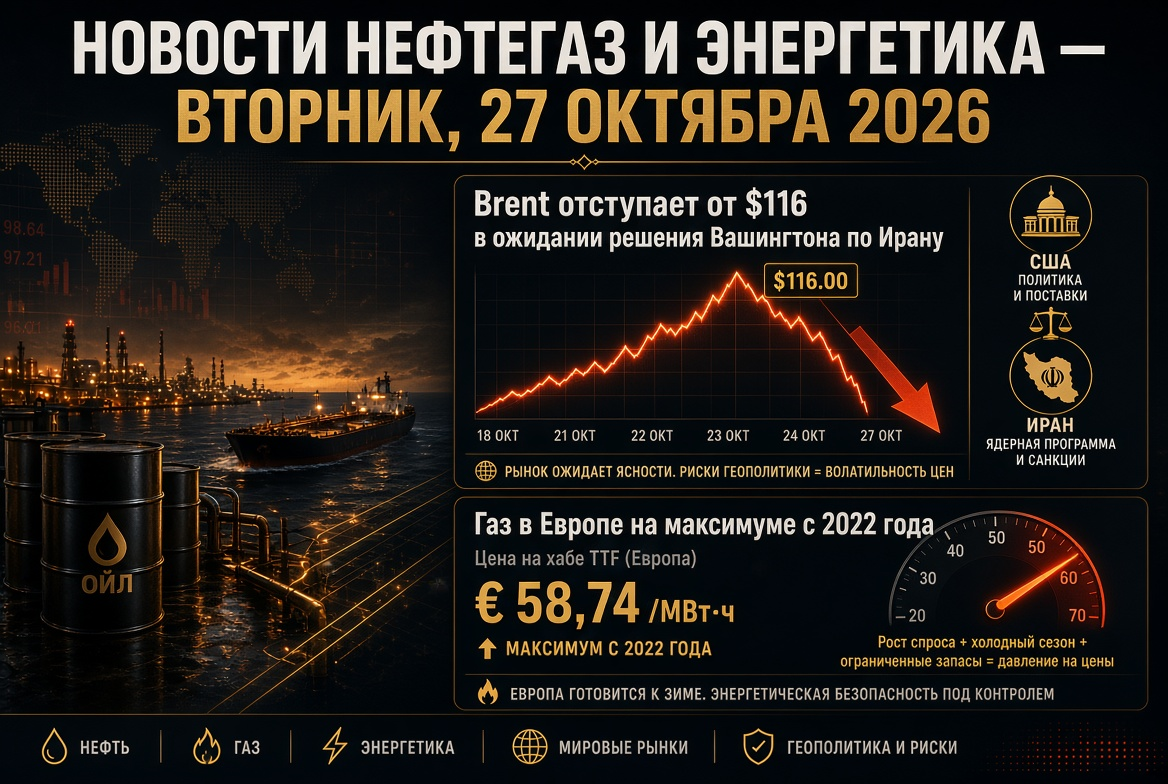
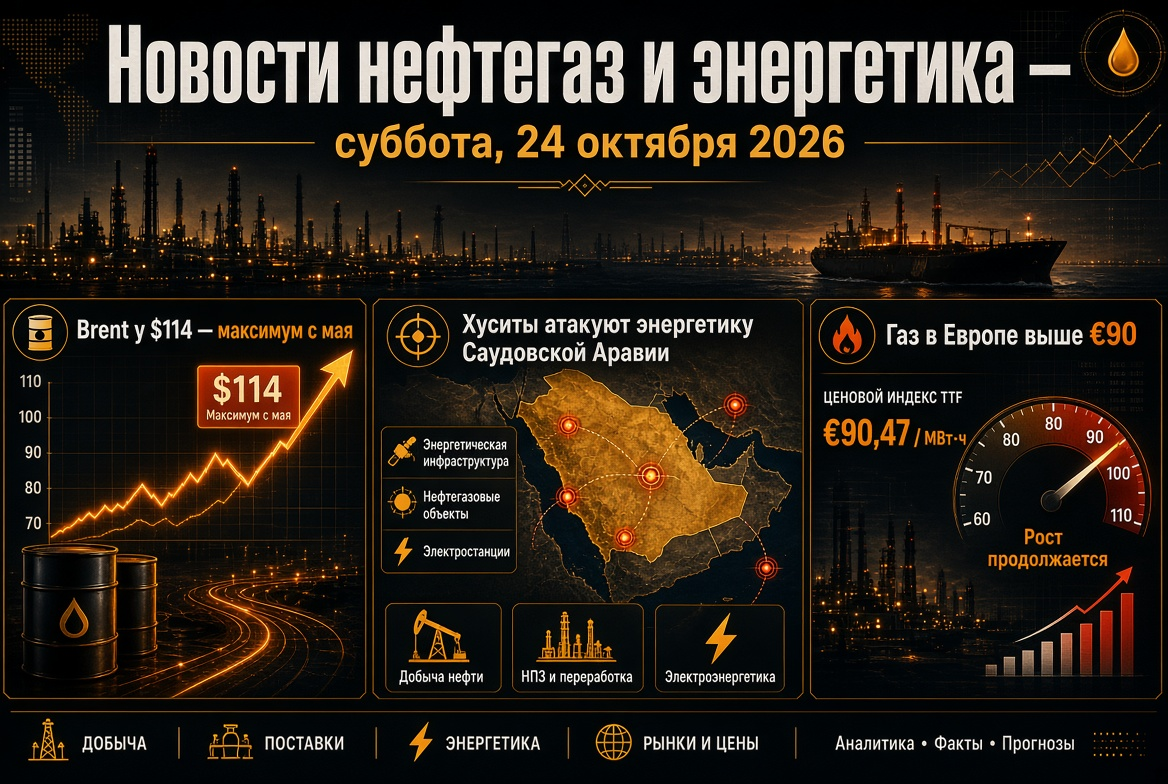
The key news in the oil and gas market is the drop in oil quotes following expectations of a partial normalization of the situation around the Persian Gulf. Brent has fallen to its lowest levels in several months, and WTI has also decreased; however, for investors, the important factor is not merely the movement of prices but its cause: the market has begun to partially discount the geopolitical premium priced into oil due to risks of supply restrictions through the Strait of Hormuz.
Nevertheless, the oil market remains highly sensitive to any news regarding shipping, sanctions, tanker insurance, and the export discipline of producers. Even if the diplomatic scenario evolves positively, oil companies and traders will focus not on statements but on the actual restoration of crude oil and petroleum product flows.
For participants in the energy market, three indicators are currently crucial:
- The real volume of tanker traffic through key Middle Eastern routes;
- The dynamics of commercial inventory levels of oil and petroleum products in the USA, Europe, and Asia;
- The refining margins at refineries, especially for diesel, gasoline, and aviation fuel.
OPEC and Demand Forecasts: The Oil Market Enters a Phase of Revising Expectations
Fresh forecasts for global oil demand indicate that the market is shifting from a scenario of sustained growth to a more complex model: demand remains high in absolute terms, but the rate of growth is slowing. OPEC continues to assess demand prospects more optimistically than some Western energy agencies; however, even within the industry, discussions are intensifying regarding the impact of high prices, weak industrial activity, electric vehicles, energy efficiency, and structural displacement of oil fuels.
For oil companies, this means that the strategy for 2026 must take into account not only the price per barrel but also the quality of demand. The most resilient segments remain petrochemicals, diesel, bunker fuel, aviation fuel, and markets in developing countries. Conversely, segments where consumers react quickly to price increases or have alternatives in the form of gas, electricity, and renewables are becoming more vulnerable.
Gas and LNG: Europe and Asia Compete for Long-Term Supply Security
The gas market remains one of the central elements of the global energy agenda. The USA is strengthening its role as the largest LNG supplier, while Europe continues to establish long-term contracts to reduce dependence on the volatile spot market. New agreements for the supply of American LNG to Southern and Central Europe indicate that buyers increasingly prefer lengthy contracts over short-term price flexibility.
For Europe, the key question is the price of energy security. Even with declining gas indicators, the market remains above the comfortable levels for the industry. For Asia, the situation is equally complex: LNG is required by China, India, Japan, South Korea, and developing economies, but high prices limit demand from cost-sensitive buyers.
In 2026, LNG is becoming not just a commodity but a strategic asset. For investors, this increases interest in:
- Export LNG projects in the USA and the Middle East;
- Regasification terminals in Europe and Asia;
- Gas transportation infrastructure and storage facilities;
- Companies operating at the intersection of gas, electricity, and industrial demand.
Refineries and Petroleum Products: Refining Margins Become an Indicator of Actual Demand
The refinery and petroleum products sector remains one of the most important for assessing the state of the global economy. While oil prices respond immediately to geopolitical events, the markets for gasoline, diesel, jet fuel, and fuel oil reveal a deeper picture: how resilient transportation demand is, how the industrial sector operates, and how solvent the end consumers are.
For refiners, 2026 remains a year of complex balancing. High raw material prices pressure margins, but limited supplies of certain fuel types support premiums for petroleum products. Diesel and aviation fuel are particularly important: they are sensitive to logistics, construction, industry, freight transportation, and the recovery of international air travel.
Electricity: Data Centers and Artificial Intelligence Create New Demand
One of the strongest long-term themes in energy is the growth in electricity consumption driven by data centers, artificial intelligence, industrial electrification, and transportation. The USA is predicted to update historical maximums for electricity consumption in 2026 and 2027. For the global market, this is a signal: the electricity sector is becoming not an auxiliary but a central infrastructure of the new economy.
The increasing load is changing investment logic. Not only electricity producers stand to gain, but also network owners, equipment suppliers, storage operators, gas generators, nuclear energy, and renewables. However, the shortage of grid capacity may become a limiting factor for technology companies and industry.
Renewables and Energy Storage: Green Energy Becomes Part of Energy Security
In 2026, renewable energy is increasingly viewed not just as a climate issue. Solar and wind generation, battery storage systems, and hybrid projects are more frequently regarded as tools for energy security. Investments in energy infrastructure, networks, and end consumption continue to grow, with large projects in solar generation and storage receiving multi-billion dollar financing.
For investors, the transition from mere capacity growth to project quality is important. The most promising projects are those with long-term power purchase agreements, access to networks, industrial consumer support, and the capacity to smooth peak loads. In the context of rising demand from data centers, such projects gain additional investment attractiveness.
Coal: The Market Remains Under Pressure but Retains Its Role as a Backup Fuel
The coal market is caught between two forces. On one hand, the long-term trend is towards decreasing coal's share in electricity generation, especially in developed economies. On the other hand, during periods of high gas prices, LNG instability, and peak electricity demand, coal remains a backup fuel in several Asian countries.
The year-on-year decline in coal imports by China shows that domestic production, pricing, and energy transition policies continue to influence maritime coal trade. However, it would be premature to write off coal entirely: India, China, and Southeast Asia still use it as a component of their energy balance and as a safety mechanism against gas supply disruptions.
What is Important for Investors and Participants in the Energy Market on June 14, 2026
The main takeaway for investors is that the global energy sector is entering a phase where oil price is no longer the sole indicator of the energy market's state. Oil, gas, LNG, electricity, renewables, coal, refineries, and petroleum products are increasingly interconnected through logistics, geopolitics, infrastructure, and capital costs.
In the coming days, market participants should pay attention to the following factors:
- Confirmation or denial of the restoration of supplies through key Middle Eastern routes;
- The dynamics of Brent and WTI after the geopolitical premium is partially lifted;
- Oil demand forecasts from OPEC, EIA, and other energy agencies;
- Gas prices in Europe and Asia, as well as new long-term LNG contracts;
- Refinery utilization rates and refining margins for diesel, gasoline, and jet fuel;
- Increased electricity demand from data centers and industry;
- Investments in networks, renewables, energy storage, and gas generation.
For oil companies and fuel traders, managing supply risks and price volatility remains a priority. For the gas market, long-term contract frameworks and LNG infrastructure are essential. In electricity, networks, generation, and load balancing are critical. For investors, the search for companies that benefit not only from high raw material prices but also from structural demand growth in the global economy is pivotal.