Global Oil, Gas, and Energy Sector News for Wednesday, January 28, 2026: Oil and Gas, Electricity, Renewables, Coal, Refineries, and Key Trends in the Global Energy Sector for Investors and Market Participants.
Oil Prices and Market Factors
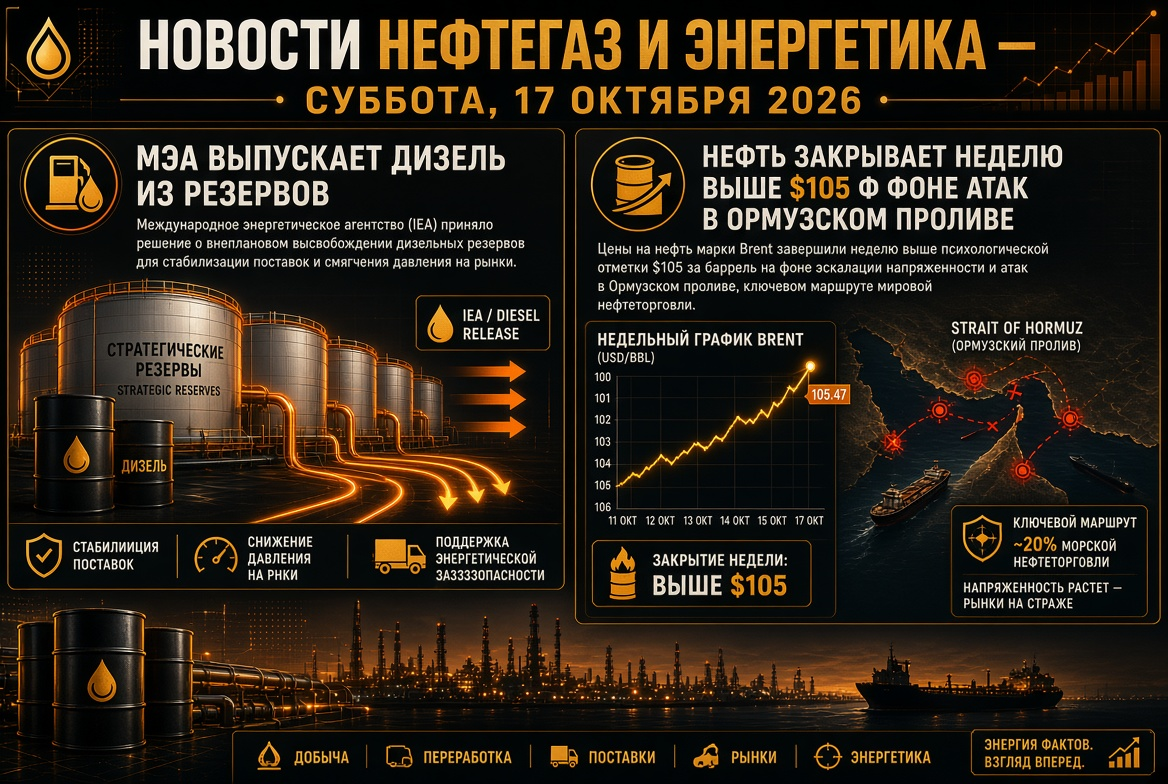
Worldwide oil prices are demonstrating moderate fluctuations amid mixed factors. As of the morning of January 28, 2026, North Sea Brent crude is trading around $65 per barrel, slightly below the levels at the beginning of the week. Investors and market participants are closely monitoring the restoration of supply from Kazakhstan: following the completion of repairs at the Caspian Pipeline Consortium terminal, Kazakhstan's oil exports are returning to full capacity. The news of the gradual resumption of production at the Tengiz field has alleviated concerns regarding supply shortages, exerting downward pressure on oil prices.
At the same time, geopolitics continues to influence the market. New U.S. sanctions against Iran have temporarily pushed prices upward, but the effect has been offset by reports of increased supply from other producers. Meanwhile, oil companies and fuel companies are adapting to the new conditions: OPEC+ countries are maintaining a stable level of production, balancing the market.
It's worth noting changes in demand structure: India has reported a 28% reduction in imports of Russian oil and is ready to decrease it further while diversifying its sources of raw materials. This signals a recalibration of trade flows—Russian refined products continue to enter global markets indirectly through intermediary countries, but Russia's share in global oil supplies is gradually declining due to sanctions pressure. Investors expect that in the absence of a global downturn, demand for oil will remain relatively stable.
Gas Market Influenced by Winter
In early 2026, gas markets are experiencing heightened volatility due to anomalously cold weather. The so-called "Beast from the East"—an influx of Arctic air—has led to a sharp increase in gas demand for heating in Europe. Prices for natural gas in the EU have risen significantly in recent days: TTF hub quotes increased from $450 to $500 per thousand cubic meters, while regional markets in Northern Europe saw prices briefly exceed $600. For instance, in Finland, gas prices reached $680 per thousand cubic meters, illustrating the tension between demand and supply balance.
European energy companies are actively drawing gas from storage: the total fill of European gas storage has dropped to ~46%, with some countries already at 30–40% (e.g., ~38% in Germany, 32% in the Netherlands). Such levels of reserves by the end of January raise concerns among market participants, considering that several months of the heating season are still ahead. If severe frosts continue in February and March, Europe could face fuel shortages.
High demand for LNG and stable pipeline gas imports from Norway are currently preventing Europe’s energy system from facing a deficit. The situation is exacerbated by the fact that Russia has virtually ceased gas deliveries to the EU via pipelines: following the cessation of most routes in 2022–2024, the share of Russian gas in Europe is at its lowest. Meanwhile, Gazprom is recording record gas consumption within Russia—amid strong cold, the company set a historical daily supply record for the domestic market for two consecutive days (reaching ~1839 million cubic meters on January 25). This indicates that Russia's export capacity is limited by domestic demand.
Unusually cold weather is also being observed in the U.S., causing disruptions in gas production. Reports indicate that wells in some fields are freezing, leading to a decline in daily production and a rise in prices in the American natural gas market.
Energy Systems and Weather Catastrophes
Extreme weather conditions are testing the resilience of energy systems in various regions around the world. In the United States, a powerful snowstorm at the end of January caused power outages: over 1 million consumers were left without electricity during the height of the storm, and even two days later, around 500,000 households were still without power. Electric utility companies and authorities are forced to implement emergency measures— for example, some industrial enterprises in the eastern U.S. are being offered compensation for temporarily reducing energy consumption to alleviate strain on the grid and avoid widespread blackouts.
In Europe, winter is also bringing problems: heavy snowfalls and winds have caused power outages in Scandinavia and the Baltic States. For example, in Finland, at the beginning of the year, tens of thousands of homes were without electricity for several days. Energy companies are mobilizing emergency crews and backup capacity to restore power supply as quickly as possible. The situation is complicated by high demand for electricity for heating: during cold nights, the load on energy systems is hitting seasonal records. To avoid capacity shortages, authorities in some EU countries are even bringing coal-fired power plants back online as a reserve, despite environmental costs.
These events highlight the vulnerability of energy infrastructure in the face of climate anomalies. Electricity is becoming a critically important resource, and the reliability of networks is coming to the forefront. In many countries, discussions are underway regarding investments in upgrading grids and creating backup generating capacity. There is also growing interest in distributed generation and energy storage to reduce dependency on central networks in emergencies.
Increased Sanctions and EU Energy Policy
The European Union continues its course toward complete independence from Russian energy sources, imposing new sanctions and legislative restrictions. The European Commission has officially stated its intention to propose a complete ban on oil imports from Russia by the end of 2026. Thus, an embargo covering the last channels of Russian oil supply could come into effect in the EU within a few months. Simultaneously, preparations are being made to phase out Russian nuclear fuel for nuclear power plants—while specific timelines for this step have yet to be determined, it is evident that Brussels is striving to exclude all Russian resources from the energy balance.
Furthermore, EU countries have finalized plans to completely eliminate Russian gas by 2027 and have strengthened the sanctions regime.
- Oil and Gas: The complete phase-out of Russian oil is scheduled for the end of 2026; LNG imports will cease by the end of 2026, and pipeline gas imports by the fall of 2027.
- Penalties: Violating the sanctions may result in fines of up to 300% of the transaction amount.
- Price Caps: The price cap on Russian oil has been lowered to $44.1 per barrel starting February 2026.
These measures demonstrate Europe's determination to accelerate its energy divorce from Russia. European refineries have adapted their logistics to alternative sources of raw materials—now the EU is increasing oil purchases from the Middle East and Africa, as well as stimulating supplies of petroleum products from India and other countries. In the gas sector, Europe is focusing on increasing LNG imports from the U.S., Qatar, and other partners, along with developing its renewable energy sources to replace gas. Although some individual states (such as Slovakia) express concerns about potential shortages and even contest certain steps, the overall European course remains unchanged—toward a long-term restructuring of the energy market.
Energy Trade Restructuring and New Alliances
Geopolitical shifts have led to a recalibration of global supply chains for oil, gas, and other energy resources. New partnerships between countries are emerging. Some examples of these changes include:
- Canada – India: The two countries are expanding trade in oil and gas. Canada will increase crude oil and LNG exports to India, while India will increase reverse shipments of petroleum products to Canada.
- Russia – China: Russia aims to increase exports of oil, natural gas, coal, and electricity to China, compensating for the loss of the European market.
- Europe and New Partners: The EU is diversifying its energy imports. It is increasing gas imports from Norway and Algeria, as well as LNG purchases from the U.S. and Qatar to replace Russian fuel.
Notably, many of the new agreements include cooperation not only in the realm of traditional energy resources but also in advanced technologies—hydrogen energy, biofuels, energy storage systems, etc. This reflects the market participants' ambitions to look toward the future, laying the groundwork for sustainable energy development.
Renewable Energy and Global Energy Transition
Despite the turbulence in fossil fuel markets, the world continues to push towards the development of renewable energy sources. At the January IRENA assembly in Abu Dhabi, global leaders reaffirmed their commitment to accelerating the energy transition. Even traditional oil and gas countries are announcing significant investments in solar and wind energy. Europe, as part of the REPowerEU plan, is also increasing renewable energy capacity to replace gas and achieve climate objectives.
Leading energy corporations are adapting to the new trend. Major oil companies are directing some of their extraordinary profits from oil and gas into green projects—ranging from wind farms to hydrogen production. Fuel giants are declaring carbon neutrality goals by 2050 and expanding their presence in renewable energy, bioenergy, and energy storage systems.
However, the energy transition faces obstacles. In some countries, shifts in political course (e.g., in the U.S.) temporarily complicate support for clean energy, but business and regional interest in renewables remains strong.