Current News in the Oil, Gas, and Energy Sector for Friday, December 19, 2025: Oil, Gas, Electricity, Renewables, Coal, Refineries, and Key Trends in the Global Energy Market
By the end of December, significant changes are evident in the global fuel and energy complex. The combination of multi-year lows in commodity prices and geopolitical shifts creates a mixed backdrop, drawing the attention of investors and market participants. On one hand, oil is trading at its lowest levels in recent years, fueled by expectations of oversupply and signals of progress in resolving the conflict in Eastern Europe. On the other hand, gas prices in Europe continue to decline, even amid winter cold, thanks to record liquefied natural gas (LNG) supplies. Simultaneously, global coal demand peaked in 2025 and is approaching the onset of a sustainable decline as the energy transition accelerates.
Against this backdrop, governments and companies are adapting their strategies. Some are making efforts to ease sanctions and stabilize supplies, while others are ramping up investments in both the oil and gas sector and renewable energy. Below is a detailed overview of key events and trends in the oil, gas, electricity, and commodity sectors as of the current date.
Oil and Oil Products
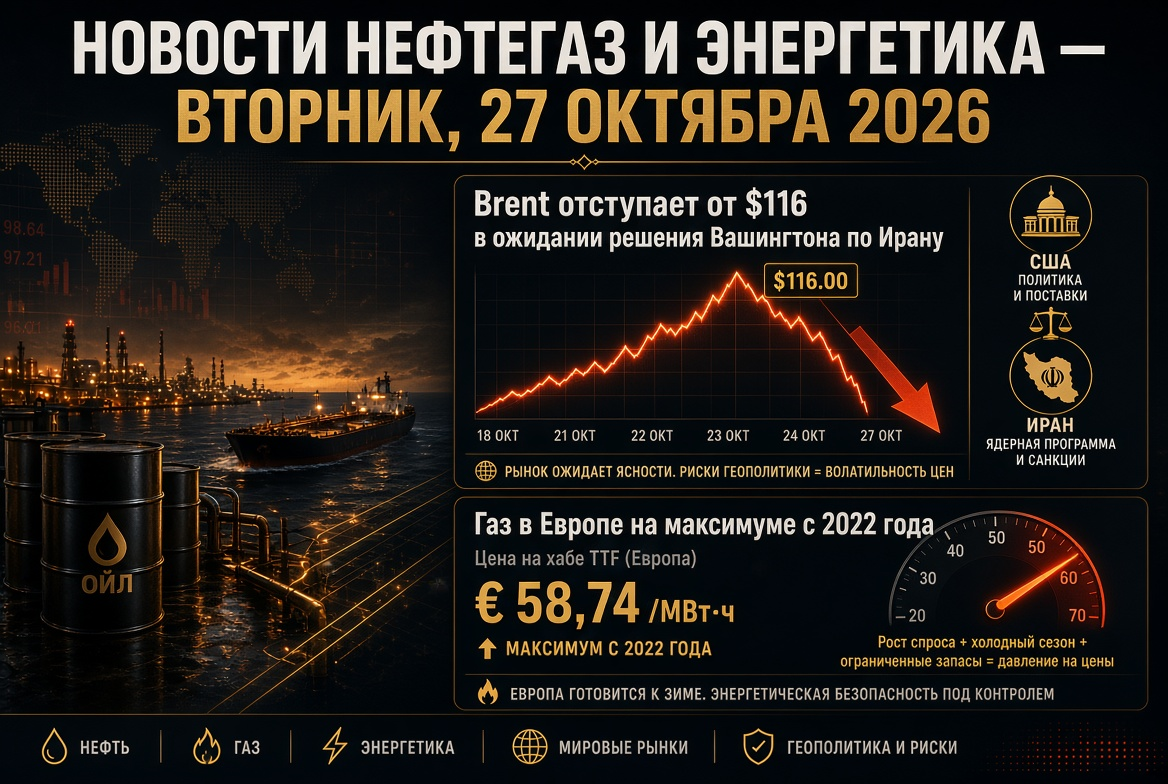
The global oil market remains under pressure, with prices nearing multi-year lows. The North Sea Brent is holding around $60 per barrel (occasionally dipping below this psychological threshold), while American WTI is trading around $55, marking the lowest levels since 2020. Key factors contributing to the decline in oil prices include:
- Expected supply surplus: A production surplus is projected for 2026. Non-OPEC countries (primarily the US and Brazil) have ramped up production to record volumes. Simultaneously, the growth rate of global demand is slowing – according to industry forecasts, demand growth in 2025 was approximately +0.7 million barrels per day (down from over +2 million in 2023), leading to inventory accumulation and pressure on prices.
- Hopes for peace in Ukraine: Progress in negotiations between Russia and Ukraine has led to expectations of partial sanctions relief and the return of some Russian oil exports to the market. The prospect of a ceasefire has bolstered forecasts of increased supply, contributing to falling oil prices.
- OPEC+ Policy: After several months of gradual increases in production quotas, the OPEC+ alliance decided to pause further increases in Q1 2026. The cartel is signaling caution amid the risk of market oversaturation and willingness to adjust production if necessary, although no unscheduled actions have been officially announced.
Influenced by these factors, oil has significantly dropped in price compared to the beginning of the year. There is a possibility that Brent and WTI will end 2025 at their lowest values since mid-2020. The fall in raw material prices has already affected the oil product market: gasoline and diesel have decreased in price in most regions. In the US, retail gasoline prices have dropped significantly in almost all states ahead of the festive season, reducing consumer spending. European oil refiners, having switched to alternative feedstocks instead of Russian oil, have stable supplies. Global refineries maintain a high level of processing, benefiting from cheaper oil, although fuel demand remains moderate. Refining margins are generally stable; no shortages of gasoline or diesel are observed in the global market.
Gas Market and LNG
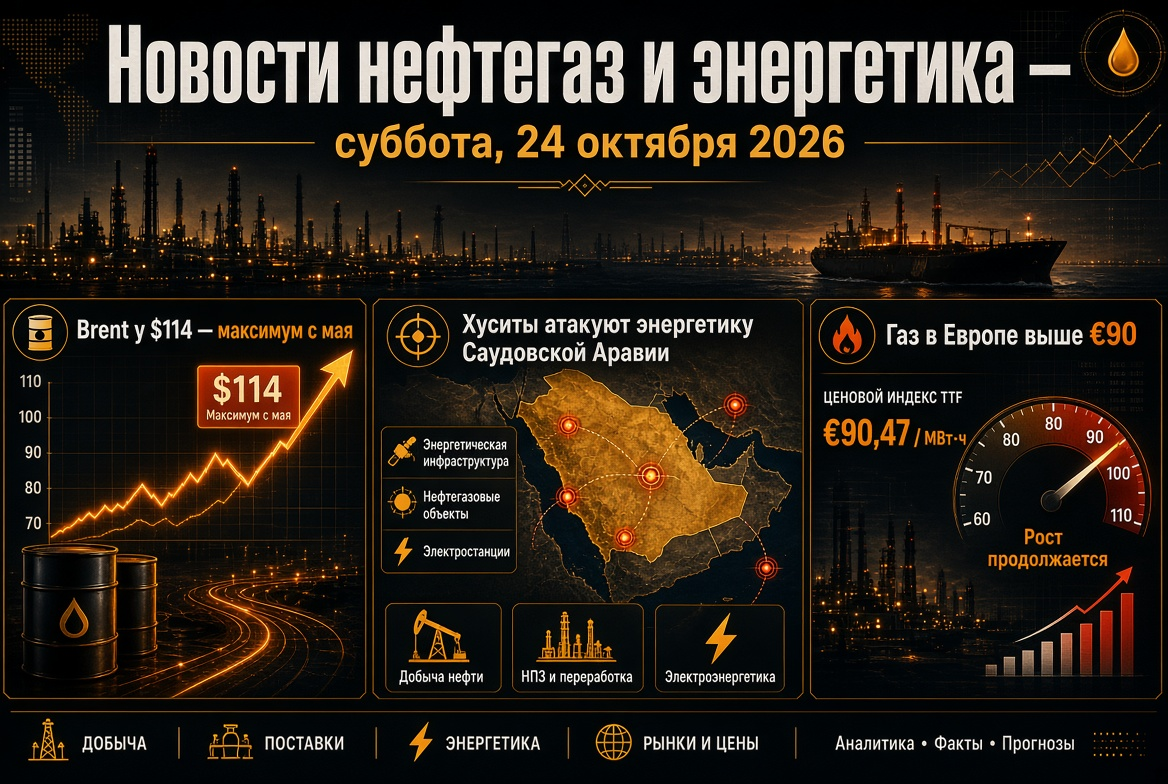
The gas market is currently facing a paradoxical situation: despite an early and cold winter, natural gas prices in Europe continue to decline. Prices at the Dutch TTF hub have dropped below €30 per MWh – the lowest level since spring 2024, nearly 90% below the peaks of the 2022 crisis and about 45% lower than at the beginning of the current year. The main reason is an unprecedented influx of liquefied natural gas, which compensates for the decline in pipeline supplies from Russia. Gas storage in the European Union is filled to about 75%, which, although lower than long-term averages for December, combined with record LNG imports, provides sufficient resources for stable pricing even during cold weather.
- Europe: High volumes of LNG imports have kept gas prices low despite rising consumption during the heating season. In 2025, more than half of European LNG imports came from US suppliers redirecting cargoes from Asian markets. This has led to a noticeable narrowing of the spread between European and lower American gas prices.
- USA: In North America, gas futures rose amid forecasts of abnormally cold weather. At the Henry Hub, prices exceeded $5 per MMBtu due to the threat of polar vortex conditions and the associated surge in heating demand. However, domestic gas production in the US remains high, suppressing price increases as the weather normalizes.
- Asia: The Asian gas market is relatively balanced by the end of the year. Demand from key countries (China, South Korea, Japan) has been moderate, allowing some additional LNG cargoes to be directed to Europe. Prices at Asian hubs, such as JKM, remained stable and avoided sharp spikes, as competition for cargo between Europe and Asia has diminished compared to the 2022 situation.
As a result, the global gas market enters winter with much more confidence than a year ago. Available reserves and flexible import supplies are adequate to meet needs even during periods of severe cold. The flexibility of the LNG market plays a key role: tankers are rapidly redirected in favor of Europe, smoothing regional imbalances. If temperatures this winter remain within historical averages, the price situation for gas consumers will remain favorable.
Coal Sector
The traditional coal sector reached an all-time high in consumption in 2025, but outlooks indicate a soon slowdown. According to the International Energy Agency, global coal consumption grew by approximately 0.5% to a record 8.85 billion tons. Coal remains the largest source of electricity generation worldwide, but its share is expected to gradually decline: analysts predict that demand for coal will plateau, followed by a downturn by 2030 due to the expansion of renewable energy and nuclear generation. Meanwhile, dynamics vary by region:
- India: Coal consumption decreased (only the third decline in the last 50 years) due to an extraordinarily strong monsoon season. Heavy rains increased hydropower generation and reduced demand for electricity from coal-fired power plants.
- USA: Coal usage, on the contrary, increased. This was driven by high natural gas prices in the first half of the year and support for the sector at the political level. The new presidential administration in Washington paused the decommissioning of several coal power plants, temporarily increasing demand for coal for generation.
- China: The largest coal consumer in the world maintained its usage at last year's levels. China burns 30% more coal than the rest of the world combined, but a gradual decline in consumption is expected by the end of the decade as massive capacities of wind, solar, and nuclear power come online.
Thus, 2025 is likely to be a peak year for the coal industry. Going forward, increased competition from gas (where feasible) and especially renewables will push coal out of the energy mix in many countries. Nonetheless, in the short term, coal remains in demand in developing economies in Asia, where energy consumption growth currently outpaces the construction of new clean capacities.
Electricity and Renewable Energy
The electricity sector continues its transformation under the influence of climate agendas and fuel price fluctuations. In 2025, the share of renewable energy sources (RES) in global electricity generation reached new heights: many countries have commissioned record solar and wind power capacities. For instance, China has aggressively expanded solar generation, while Europe and the US have introduced new offshore wind farms and large photovoltaic projects, stimulated by government support and private investment. By the end of the year, global investments in "green" energy remain at a high level, closely approaching fossil fuel investment volumes.
The rapid growth of RES, however, raises the challenge of ensuring the stability of energy systems. This winter in Europe has highlighted the variability of weather: periods of weak winds and short daylight have increased the load on traditional generation. At the start of the season, EU countries had to temporarily increase gas and coal generation due to an anticyclone that led to a drop in wind power generation, resulting in price hikes for electricity in certain regions. Nevertheless, thanks to the increase in RES capacities and the significant share of gas in the mix, serious supply issues have been avoided. Governments and energy companies are also actively investing in energy storage systems and upgrading networks to smooth peak loads and integrate renewable energy.
Climate commitments continue to set the development trajectory for the sector. At the recent global climate summit (COP30) in Brazil, calls were made to accelerate the energy transition. Several countries agreed to triple the introduction of RES capacities by 2030 and achieve significant improvements in energy efficiency. Meanwhile, in many regions, there is a resurgence of interest in nuclear energy: new nuclear power plants are being built, and the lifespan of existing ones is being extended to provide base load generation without emissions. Overall, the electricity sector is moving toward a cleaner and more sustainable future, although the transitional period requires a delicate balance between supply reliability and environmental objectives.
Geopolitics and Sanctions
Geopolitical factors still exert a significant influence on global energy markets. The conflict in Eastern Europe and associated restrictions remain in focus:
- Peace negotiations: In December, the most significant progress in peace dialogue regarding Ukraine since the onset of the conflict was noted. The US expressed willingness to provide Kyiv with security guarantees similar to NATO, and European mediators noted constructive strides in negotiations. Hopes for a ceasefire have increased, although Moscow states that it will not agree to territorial concessions. Growing optimism regarding a possible cessation of hostilities has sparked discussions about the prospects for partial sanctions relief against Russia in the future.
- Sanction pressure: Simultaneously, Western nations have indicated their readiness to intensify pressure if the peace process stalls. Washington is preparing another package of restrictions against the Russian energy sector, which may be implemented in the event of a breakdown in negotiations. Earlier, in the autumn, the US and the UK already expanded sanctions against oil giants Rosneft and Lukoil, complicating their ability to attract investments and access technology.
- Infrastructure risks: Combat operations and diversions continue to threaten energy infrastructure. The Ukrainian side recently intensified drone strikes on oil infrastructure deep within Russian territory. In particular, fires were reported at refineries in the Krasnodar region and along the Volga due to drone strikes. While these incidents locally slightly reduce the overall supply of fuel, they underscore the persistent military risks for the industry until a durable peace is achieved.
- Venezuela: In Latin America, geopolitics similarly affects the oil market. Following partial easing of sanction regimes against Venezuela in the autumn, the US tightened control over compliance with trade conditions. In December, an incident occurred involving the detention of a tanker carrying Venezuelan oil due to suspected licensing violations. State-owned company PDVSA faced demands from buyers to increase discounts and revise supply terms. This complicated Venezuela’s efforts to ramp up exports despite the recent US authorization to temporarily increase production in exchange for political concessions from Caracas.
Overall, the sanctions standoff between Russia and the West, along with other international disputes, continues to inject uncertainty into the global energy sector. Investors are closely monitoring political developments, as any changes – from breakthroughs in peace negotiations to new restrictions – are capable of significantly impacting prices for oil, gas, and other energy carriers.
Corporate News and Projects
Major energy companies and infrastructure projects worldwide are wrapping up the year with several important events and decisions:
- Aramco Enters Indian Market: Saudi Aramco has renewed its plans to invest in a large refining complex in India. The company is close to acquiring a stake in the massive West Coast Refinery project, aiming to establish a foothold in the rapidly growing Indian market and secure long-term outlets for its oil.
- New Project in Guyana: A consortium led by ExxonMobil has approved the development of another large offshore field in Guyana, aiming for production to start by 2028. Oil production in Guyana continues to grow rapidly, solidifying the country’s position as one of the most dynamically growing new oil producers.
- Record Wind Farm in the North Sea: The construction of the world’s largest offshore wind farm, Dogger Bank, with a total capacity of 3.6 GW, has been completed in the North Sea. The project was implemented by a consortium of European energy companies and has the capability to supply electricity to up to 6 million households in the UK. This milestone marks a landmark achievement in the development of renewable energy and demonstrates the potential of large-scale "green" projects.
Overall, players in the oil, gas, and energy sector are adapting to the new market reality. Some are reassessing their asset portfolios considering geopolitical risks and changing market conditions (like Aramco, exploring new sales markets), while others are seizing favorable opportunities to increase production and execute projects (like ExxonMobil and its partners in Guyana). At the same time, investments continue in both traditional oil and gas directions as well as in the energy transition – from wind energy to hydrogen. The industry faces the need to balance between short-term profitability and long-term decarbonization objectives, and this balance is determining key strategic decisions for companies on the brink of 2026.