Oil and gas and energy news for Friday, 5 June 2026: Brent and WTI dynamics, Strait of Hormuz risks, gas and LNG market, refinery margins, oil products, coal, renewables and key takeaways for investors
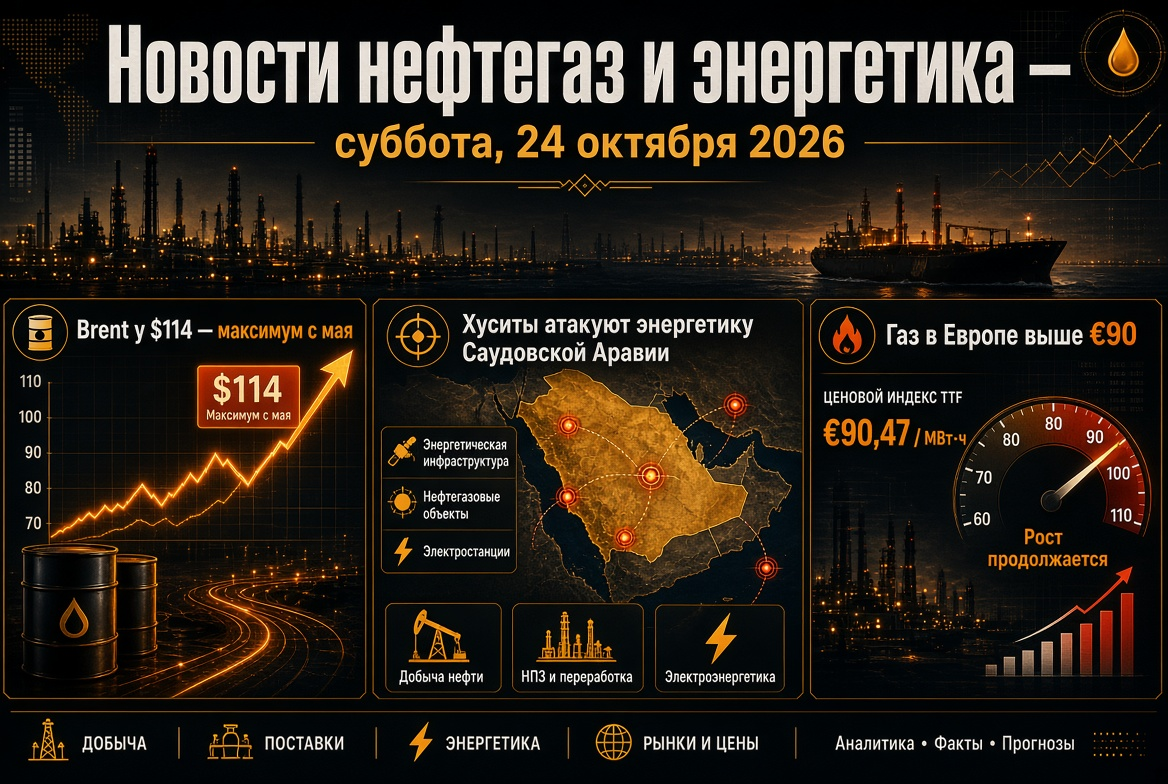
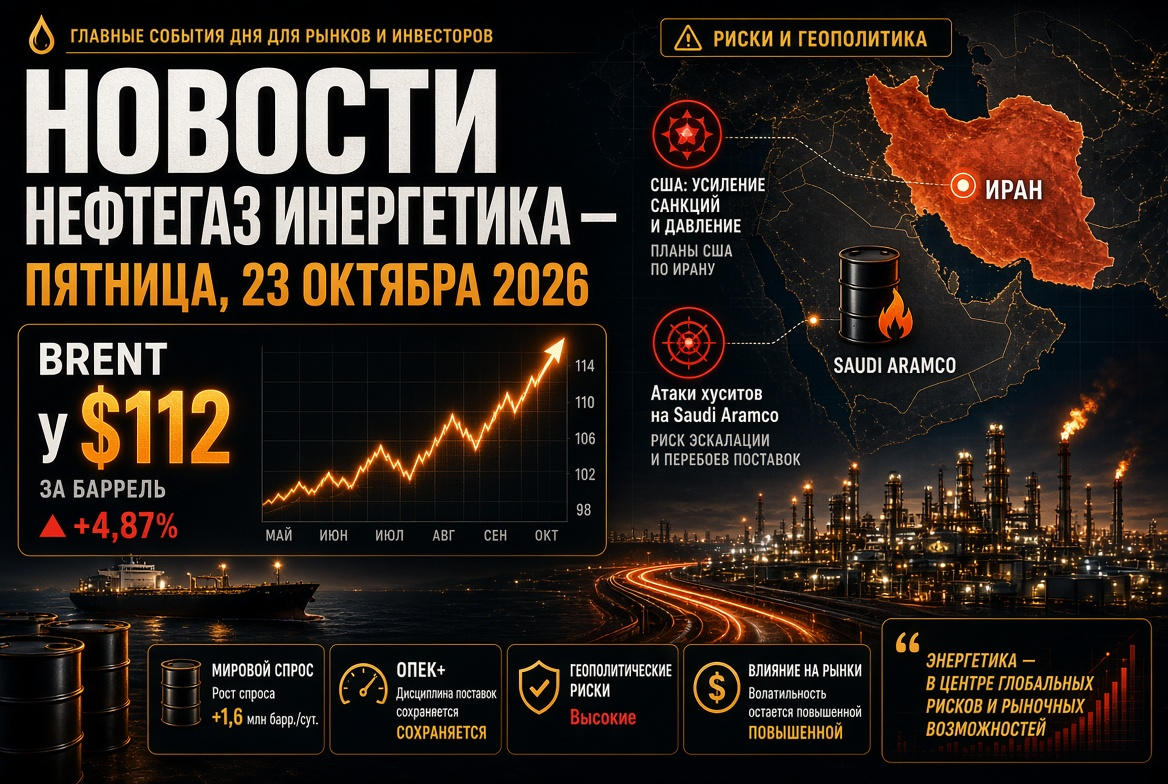
The global fuel and energy complex enters a new phase of high volatility as of Friday, 5 June 2026. The central theme for investors, oil companies, fuel traders and energy market participants is the combination of a declining geopolitical premium in oil prices alongside persistent risks to supply through the Middle East. Brent and WTI crude have corrected after rising in previous weeks, yet the market has not returned to a calm state: the logistics of crude, LNG, oil products and aviation fuel remain sensitive to any news concerning the Strait of Hormuz, Iran, OPEC+ and supplies from Gulf states.
For the global energy sector, this means investors are once again assessing not only the price per barrel but also the resilience of the entire chain: oil production, transportation, refining, diesel and petrol exports, Europe’s gas balance, Asian demand for LNG, coal’s role in electricity generation and the pace of renewable energy development. What comes to the fore is not a single asset but energy security as an investment category.
Oil: Brent and WTI decline but the risk premium remains high
The global oil market is showing a nervous correction at the start of June. After a period of sharp gains in Brent and WTI, some traders are locking in profits amid expectations of possible de‑escalation in the Middle East. The decline was prompted by hopes for progress in negotiations and a partial easing of military risk. However, for investors, the overall level of prices matters as much as the daily direction: oil remains significantly above levels that are comfortable for importers and global industry.
Key factors in the oil market
- ongoing constraints on maritime logistics through the Strait of Hormuz;
- declining oil inventories in certain regions against a backdrop of supply disruptions;
- uncertainty over future OPEC+ decisions;
- rising costs for tanker insurance and freight;
- high sensitivity of oil products to refinery operations.
For oil companies, high prices support cash flow, but the overall market situation is more complex. If oil remains expensive for too long, it begins to weigh on demand, transport, industry and fuel consumption. Hence the investment focus is shifting from a simple bet on rising oil prices to an analysis of margins, inventories, export routes and the ability of companies to ensure physical deliveries.
OPEC+ and Saudi Arabia: stability matters more than formal quotas
OPEC+ remains central to global oil policy, but in 2026 the importance of formal quotas has diminished. Against a backdrop of geopolitical disruptions, transport constraints and technical production issues, what matters more is not the stated output level but the actual ability to bring oil to market. Meetings between representatives of Saudi Arabia and Russia underscore that the largest producers are intent on maintaining coordination and preventing a breakdown of trust in the alliance.
At the same time, an expected increase in production targets does not necessarily mean a rapid rise in physical supply. If logistics remain constrained and some capacity faces unscheduled maintenance or export difficulties, additional barrels may serve more as a signal to the market than as an immediate price‑lowering factor. This is an important nuance for investors: the market evaluates not only OPEC+ decisions but also the actual availability of crude.
Gas and LNG: Europe intensifies the battle for reserves ahead of winter
The gas market remains one of the most vulnerable segments of global energy. Europe continues to build storage levels in underground facilities, but the starting base for the season is still tight. Any prolonged disruption to LNG supplies from the Middle East could intensify competition between Europe and Asia for spot cargoes of liquefied natural gas. In such a scenario, gas prices can react faster than oil prices because the LNG market is less flexible and more dependent on routes, tanker fleets and long‑term contracts.
For European industry, expensive gas implies a risk of rising production costs in chemicals, metals, fertilisers and power generation. For LNG suppliers, by contrast, the current environment creates a window of opportunity. Investment in gas infrastructure, terminals, vessels and long‑term contracts is becoming one of the key directions in the global energy sector.
Oil products and refineries: processing margins become a standalone investment theme
The oil products market in June appears even more strained than the crude oil market. Petrol, diesel, aviation kerosene and bunker fuel depend not only on the barrel price but also on refinery utilisation, feedstock availability, regional demand and export logistics. In Asia, a notable development is the recovery of aviation fuel exports from South Korea to near‑pre‑crisis levels. This partially relieves pressure on the jet fuel market but does not eliminate the overall shortage of flexible refining capacity.
High refinery margins show that processing is once again becoming a strategic asset. For oil companies, owning refining capacity and a marketing network enhances business resilience. For independent traders and fuel companies, access to supply, working capital, logistics and inventory management become critical.
Most sensitive oil product segments
- diesel for industry, construction and agriculture;
- petrol during the summer driving season;
- jet fuel against a backdrop of recovering international travel;
- fuel oil and marine fuel for maritime logistics;
- bitumen and petrochemical feedstocks for infrastructure projects.
China and Asia: fuel price regulation signals demand pressure
From 5 June, China has lowered regulated retail prices for petrol and diesel, reflecting the shift in global oil conditions and the authorities’ desire to support domestic demand. However, the price adjustment itself does not negate a broader trend: high energy costs, rising electric vehicle penetration and cautious industrial activity are curbing fuel consumption. This is an important signal for the global oil market, as China remains one of the largest centres of demand for crude and oil products.
Asia simultaneously experiences diverging trends. On one hand, the region remains the main driver of global energy consumption. On the other, high prices push countries to make greater use of coal, gas, renewables and domestic regulation. India, China, South Korea and Southeast Asian nations increasingly balance energy security, import costs and climate commitments.
Electricity and renewables: clean generation growth meets grid challenges
Renewable energy remains a strategic investment direction, but events in 2026 show that rapid installation of solar and wind capacity requires major grid modernisation. The most telling example is India, where stricter requirements for forecasting renewable output have worried investors. For solar and wind projects, the main problem is not a lack of demand but the need to precisely manage variable generation.
This is a global challenge. The higher the share of renewables in the energy mix, the more investment is needed in:
- energy storage;
- digital load forecasting systems;
- backup capacity from gas and hydropower;
- inter‑regional transmission lines;
- balancing electricity markets.
For investors, this means that not only solar and wind farms are attractive, but also the infrastructure around them: grids, batteries, software, generation management equipment and service companies.
Coal: energy security brings traditional fuel back into focus
Despite the long‑term decarbonisation trend, coal retains a significant role in global electricity generation in 2026. In Asia, demand for thermal coal is supported by rising power consumption, hot weather, the growth of data centres and constraints in the LNG market. For countries dependent on gas imports, coal remains a backstop for energy security.
In the United States, political attention on the coal industry is also increasing, reflecting a broader shift towards grid reliability. For investors, the coal sector remains contradictory: ESG constraints limit access to capital, but the strong need for baseload generation keeps demand for fuel and infrastructure high. In the short term, coal will continue to act as a safety‑net asset in energy, especially during periods of gas price shocks.
Investment takeaways for global energy market participants
The main takeaway for 5 June 2026 is that the global energy sector remains a market for physical resource availability, not just exchange‑listed prices. Oil may decline on hopes of de‑escalation, but supply risks through Hormuz, tightness in LNG, high refinery margins and coal demand all indicate that the energy system is operating with a limited safety margin.
What investors should watch
- Oil: Brent and WTI will depend on the actual restoration of supply, not only on diplomatic signals.
- Gas and LNG: competition between Europe and Asia for spot LNG cargoes could intensify as winter approaches.
- Refineries and oil products: refining margins remain one of the strongest themes in the oil and gas sector.
- Electricity: the growth of renewables requires investment in grids, storage and balancing capacity.
- Coal: traditional generation retains importance as a tool for energy security.
For oil companies, fuel operators, power generators and global investors, the current situation creates both risks and opportunities. Those market participants who control not only production but also logistics, processing, marketing, inventories and access to capital will come out ahead. In 2026, energy is increasingly becoming an infrastructure‑focused market, where supply chain resilience matters more than short‑term price moves.