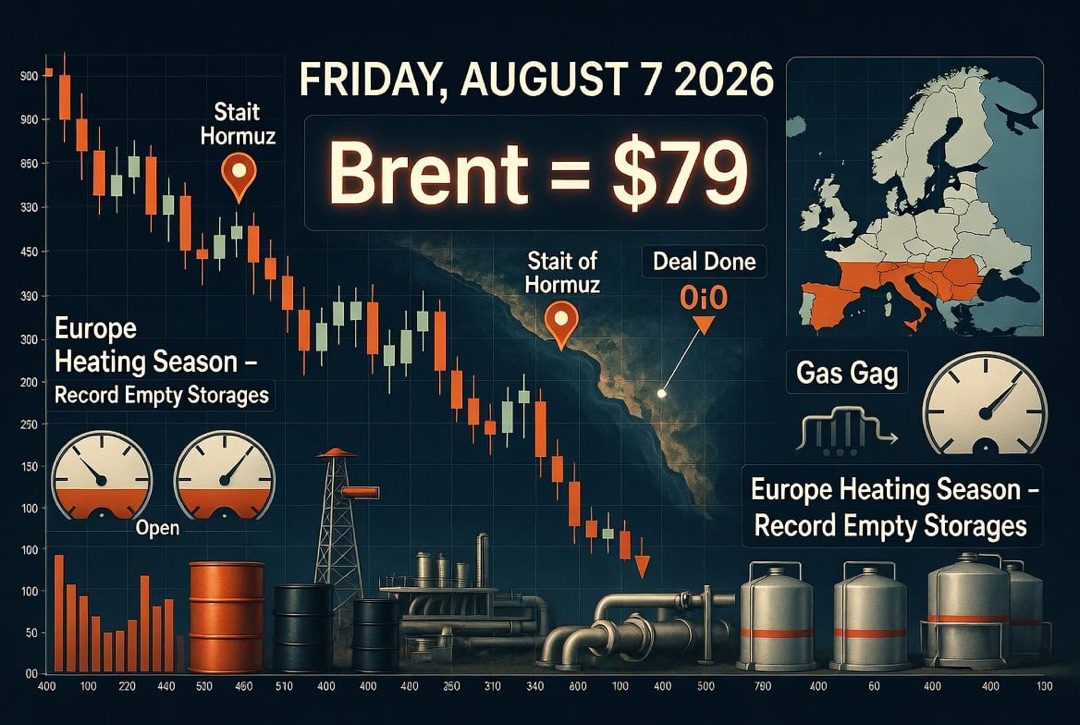
Current News in the Oil and Gas, and Energy Sector for Saturday, November 22, 2025: Peace Initiatives Pressuring Oil, Gas Market Ahead of Winter Peak, Sanctions, Renewable Energy, Coal, and Processing. Analysis for Investors and Energy Companies.
Saturday, November 22, 2025, greets participants in the global energy market with a contradictory environment. Oil prices remain under pressure in a relatively low range – Brent quotes hold around $62–63 per barrel after a week of decline, reflecting an oversupply and signals of potential peace negotiations regarding Ukraine, which is lowering the geopolitical premium in prices. In the European gas market, the start of the heating season occurs amid still high, albeit non-record levels of storage, providing a buffer and preventing prices from sharp spikes.
At the same time, Asian importers are closely watching LNG prices. The situation is complicated by the sanctions agenda: the implementation of new restrictions on Russian oil and gas companies compels exporters to reassess their routes. Meanwhile, the global energy transition is gaining momentum – investments in renewable energy sources (RES) and electric power are reaching new highs, although oil, gas, and coal still form the backbone of global energy supply.
Global Context: Oversupply and Modest Demand for Energy Resources
In 2025, the global energy landscape is characterized by steady but moderate demand growth and increasing supply. For investors, the key question remains the balance of oil and gas against the backdrop of high interest rates and a slowing global economy.
- Oil. After noticeable fluctuations in the autumn, prices for Brent and WTI stabilized near $60–64 per barrel. The market is factoring in a scenario of oversupply due to the systematic increase in production by OPEC+ countries and growing supplies from the US, Brazil, and other nations.
- Gas. The European market enters winter with comfortable storage levels (~75% of maximum capacity), which is lower than last year's record levels but still sufficient to start the season. Even in the case of severe weather, gas withdrawal may accelerate, causing price increases.
Oil Market: Sanctions, Discounts, and New Export Routes
As of November 22, 2025, the oil market's attention is focused on geopolitical factors and their impact on Russian exports. Amid tightening sanctions, Moscow is compelled to offer increasingly deep discounts on its oil to maintain supplies to Asian, Middle Eastern, and African countries. Major Indian refineries have announced a halt in purchases of Urals crude as the sanctions deadline approaches, intensifying pressure on Russian suppliers to find alternative buyers. As a result, the global oil market is effectively dividing into several price tiers, with traditional trade flows being redirected along new routes.
- Production and Quotas. OPEC+ countries have not yet signaled any new production cuts, restricting themselves to cautious statements. At current prices, most producers maintain profitability, but they fear further market oversaturation.
- Price Structure. Near-term Brent crude futures are trading lower than contracts for subsequent months (a contango is observed), reflecting expectations of an oil surplus in the short term. This structure poses risks for long-term projects, reducing incentives for investments, but supports consumers through lower spot market prices.
- Investments. Major oil companies in North America, the Middle East, and the Atlantic continue to develop only the most low-cost fields, approaching new capital expenditures with great caution in the context of tightening climate requirements.
Gas Market: Europe, Asia, and the Role of LNG
Gas remains a key fuel during the transition between traditional energy sources and renewable energy. The natural gas market in 2025 is shaped by three main factors: storage volumes, electricity demand, and geopolitical restrictions.
- Europe. EU countries are approaching winter with natural gas storage levels of approximately 75% – below last year’s levels but still enough to start the season. In the event of an extremely cold winter, fuel withdrawal may sharply increase, triggering a price surge.
- Asia. In China and other Asian countries, the increase in domestic production and long-term LNG contracts are reducing the market's sensitivity to price spikes. However, a significant surge in demand could intensify the competition between Asia and Europe for available LNG cargoes.
- LNG Market. The commissioning of new LNG export capacities in the US, Qatar, and East Africa continues, altering global gas flows. For investors, this means the growing importance of projects linked to global gas pricing indices, and considering not only local but also inter-regional price trends.
Electricity and Coal: High Loads and Climate Constraints
The electricity sector in 2025 demonstrates steady consumption growth amid digitalization and the electrification of transportation and industry. Meanwhile, coal, despite environmental pressures, remains a key source of generation in many countries, especially in developing nations.
- Electricity. In Europe and the US, energy companies are preparing for potential winter consumption peaks, increasing backup capacities and modernizing networks. As the share of RES grows, maintaining energy system stability is becoming a strategic priority.
- Coal. Global coal consumption in 2025 has transitioned from a growth phase to a stabilization phase. Stricter environmental requirements and the spread of RES are prompting mining companies to optimize costs and postpone the launch of new mines.
- Regulation. Many countries are introducing additional carbon payments and quotas to encourage the shift from coal to gas and renewable energy. These measures directly affect the generation structure and price dynamics of the electricity sector.
Renewable Energy and Energy Transition: Record Investments and New Challenges
Renewable energy sources are the main beneficiaries of the global energy transition. In 2025, investments in green energy and power grid modernization are setting historic records, surpassing the scale of investments in the fossil sector. This intensifies competition between the traditional fuel and energy complex and new clean energy sources.
- Investment Trend. Global investments in solar and wind energy, storage systems, and infrastructure in 2025 approached the total investments in oil, gas, and coal. This pressures the margins of traditional energy companies and forces them to rapidly diversify their business models.
- Technologies. The active development of industrial energy storage, hydrogen projects, and digital demand management systems is becoming a key growth driver. New solutions allow for more effective integration of RES into energy systems and reduce the need for peak gas and coal generation.
- Regional Disparity. Most “green” investments are concentrated in developed economies and China, while developing countries face a capital shortage for eco-friendly projects. This opens a niche for international financial institutions and private investors willing to invest in higher country-risk projects.
Refined Products and Refineries: Stable Margins and Internal Price Policy
The refined products market by the end of 2025 exhibits a more stable situation compared to the beginning of the year. For refineries in Europe, Asia, Russia, and the Middle East, a key challenge remains the flexible management of capacity utilization and product range.
- Refining Margin. Moderately low oil prices, coupled with stable demand for diesel and jet fuel, support high refining profitability. This encourages plants to increase the utilization of modern units, especially in regions with developed export logistics.
- Domestic Markets. Many countries (including Russia) continue to enforce protective measures for their domestic fuel markets – export restrictions, reverse excise taxes (“dampers”), and price regulation at gas stations. These mechanisms affect refinery operations, forcing them to find a balance between exports and meeting domestic demand.
- Eco-Standards. Strict fuel quality requirements (low sulfur content, emission reductions) stimulate new investments in refinery modernization – hydrocracking units, deep processing, and improving the ecological efficiency of processes. It is essential for investors to calculate the returns of such investments considering the potential introduction of carbon taxes.
Conclusion for Market Participants: Guidelines for November 22, 2025, and Beyond
For investors and companies in the fuel and energy sector at the end of 2025, it is particularly important to find a balance between short-term trends and long-term energy transition trends. Oil and gas quotations remain moderate, investments in RES have reached record levels, and sanctions pressure and regulatory uncertainties create a complex yet largely predictable agenda.
- In the short term, focus should be placed on the development of the sanctions situation, the dynamics of winter demand for energy resources, and OPEC+ decisions on production levels.
- In the medium term, it is critical to assess the resilience of energy companies' business models to tightening climate policies and the growing share of RES in the energy balance.
- Diversification remains a key strategy: a combination of quality oil and gas assets, infrastructure (pipelines, LNG terminals, power grids), and emerging segments of renewable energy allows for risk distribution and maintaining competitive advantages.
Thus, Saturday, November 22, 2025, demonstrates a state of fragile equilibrium for the oil, gas, and energy market: fundamental indicators remain relatively stable, yet geopolitical factors and environmental agendas require participants to maintain heightened vigilance and flexibility in decision-making.